

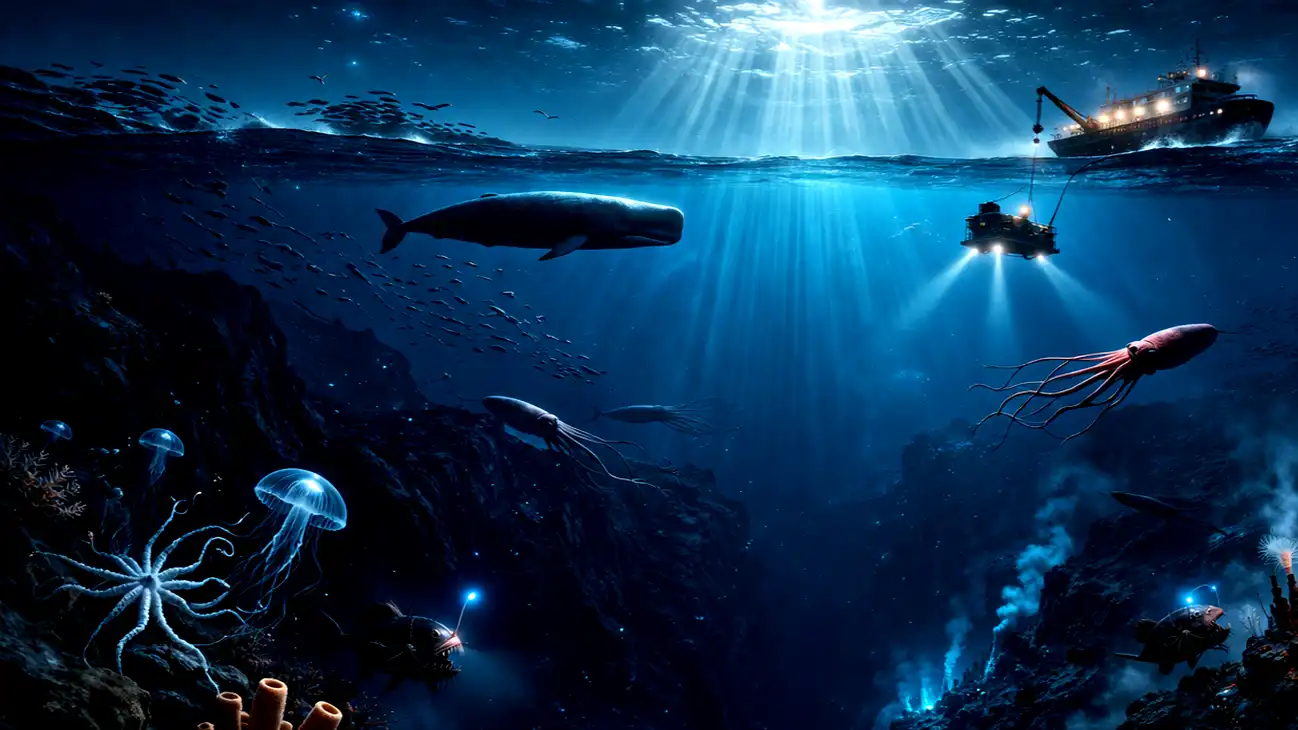
The oceans cover more than 70% of our planet, acting as the fundamental life-support system for all living organisms. They regulate our climate, absorb a staggering amount of the excess heat generated by human activity, and provide the primary source of protein for billions of people. However, recent scientific findings from the World Meteorological Organization (WMO) have sounded a deafening alarm: the marine environment is undergoing profound, rapid, and, in some cases, irreversible transformations. As sea levels accelerate and ocean chemistry shifts toward increased acidification, the global consequences are no longer theoretical—they are becoming an unavoidable reality of the modern era.
This critical assessment of the world’s oceans highlights a reality that transcends national boundaries and regional politics. The warming of our seas is not merely an environmental concern for coastal nations; it is a global economic, security, and humanitarian imperative. By synthesizing the latest data on ocean heat content, sea-level rise, and ocean acidification, we can better understand the magnitude of the challenge facing humanity and the urgent need for a coordinated global response.
The Warming Ocean: An Invisible and Exponential Threat
While atmospheric temperature increases often dominate the headlines, the largest portion of the Earth’s climate energy imbalance is stored in the ocean. The marine environment acts as a massive thermal reservoir, absorbing the vast majority of the heat trapped by greenhouse gas emissions. Unfortunately, this buffering capacity is reaching its limit, and the rate at which our oceans are absorbing heat shows no signs of slowing, leading to cascading effects throughout the global climate system.
This sustained thermal accumulation results in far more than just warmer water temperatures. It fundamentally alters the physical behavior of the ocean, leading to long-term consequences that are already impacting human society:
- Thermal Expansion: As water heats up, it naturally expands, accounting for a significant portion of the observed rise in global sea levels.
- Intensification of Marine Heatwaves: These localized extreme temperature events are becoming more frequent and severe, causing mass mortality in coral reefs, seagrass beds, and commercial fish populations.
- Altered Ocean Circulation: Warming waters affect the density and salinity gradients that drive global ocean currents, potentially disrupting the weather patterns that billions of people rely on for agriculture and water security.
The Accelerating Pace of Sea-Level Rise
The acceleration of sea-level rise is perhaps the most visible and economically disruptive consequence of a warming planet. As the oceans absorb heat and the polar ice sheets experience unprecedented rates of melt, the global mean sea level is rising at a pace that far exceeds historical averages. This is not a distant future concern; it is an active phenomenon already forcing the re-evaluation of coastal infrastructure, urban planning, and human settlement patterns across every continent.
The mechanisms driving this acceleration are compounding, creating a “multiplier effect” that complicates our ability to adapt. For global policymakers, the threat is twofold: the gradual, permanent loss of land due to rising sea levels and the immediate, destructive increase in the frequency and intensity of coastal flooding during storm surges. Protecting megacities, vital ports, and agricultural deltas from these encroaching waters will require an unprecedented level of capital investment and international cooperation, fundamentally shifting global economic priorities toward adaptation and resilience.
Ocean Acidification: The “Irreversible” Chemical Shift
Often referred to as the “other carbon problem,” ocean acidification is a direct result of the ocean absorbing vast quantities of atmospheric carbon dioxide (CO2). When CO2 dissolves in seawater, it forms carbonic acid, which lowers the ocean’s pH. The WMO’s findings regarding the “irreversible” nature of these pH changes underscore the depth of the challenge: even if global carbon emissions were to cease immediately, the chemical changes already set in motion will persist for millennia.
This acidification process is devastating for marine biodiversity, particularly for calcifying organisms. These species, which include corals, oysters, mussels, and various forms of plankton, serve as the foundational building blocks of the entire marine food web. The chemical shift makes it increasingly difficult for these organisms to build and maintain their calcium carbonate shells and skeletons. The collapse of these foundational species not only threatens marine biodiversity, but it also jeopardizes the food security of billions who rely on healthy fisheries and undermines the natural coastal protection provided by coral reefs.
Cascading Economic Impacts on Global Sectors
The health of the global economy is inextricably linked to the health of the ocean. When marine ecosystems falter, the impacts ripple across multiple vital sectors, creating systemic risks that global financial institutions are only beginning to quantify. The transition from healthy, productive seas to degraded, acidified environments poses a direct threat to the stability of international markets.
The economic ramifications are widespread and interconnected, impacting industries that form the backbone of the global economy:
- Global Fisheries and Food Security: As fish populations shift their ranges toward the poles in search of cooler waters or decline due to ecosystem collapse, the global fishing industry faces massive uncertainty, threatening the protein supply for a significant portion of the human population.
- Coastal Real Estate and Insurance: The combination of rising sea levels and intensified storm damage is rendering large swathes of coastal property uninsurable, potentially leading to massive asset depreciation and financial instability.
- Disruption of Global Trade: Vital maritime infrastructure, including major ports and shipping lanes, is increasingly vulnerable to extreme weather and rising sea levels, undermining the resilience of global supply chains.
A Mandate for Global Cooperation and Scientific Action
The critical report released by the World Meteorological Organization serves as a stark reminder that the ocean crisis is not a problem that any single nation can solve. The connectivity of the global ocean means that the actions taken by one region directly influence the marine health of another. Therefore, the strategy for addressing ocean warming and pH shifts must be fundamentally multilateral and science-led.
Effective action must prioritize several key areas of global focus:
- Drastic Emission Reductions: There is no substitute for rapid, deep reductions in global greenhouse gas emissions to mitigate the primary drivers of warming and acidification.
- Expanded Marine Monitoring: We must dramatically increase the density and technological sophistication of our global ocean observation networks to understand better and predict the rapid changes occurring in both deep and surface waters.
- Marine Protected Areas (MPAs): Establishing large-scale, interconnected networks of protected marine zones can enhance the resilience of marine ecosystems, helping them better withstand the stresses of warming and acidification.
- Sustainable Blue Economy: Transitioning toward a “Blue Economy”—where economic development is explicitly designed to be ocean-positive—is essential for balancing human needs with the biological limits of the marine environment.
Conclusion
The findings regarding accelerating sea-level rise and irreversible changes in pH are not just data points in a report; they are a call to action. They represent the cumulative result of our past choices and serve as a warning of the consequences of inaction. While the irreversible nature of certain ocean changes is sobering, it does not mean that the situation is hopeless. On the contrary, it emphasizes the imperative to slow the rate of change as much as possible, providing humanity with as much time as possible to adapt and innovate.
The ocean has been our silent partner, absorbing the brunt of human-induced environmental change for decades. We are now entering a period in which the ocean’s buffering capacity is being fundamentally strained. Moving forward, the global community must treat marine health as a core component of global security and economic stability. By aligning our international policies, scientific investments, and economic strategies with the reality of a changing ocean, we can begin the arduous but essential process of safeguarding our most vital global resource for the benefit of all humanity.















