

For generations, the global financial narrative was overwhelmingly dictated by Western institutions, with Wall Street and the City of London serving as the undisputed nerve centers of global capital flow. However, a profound and irreversible paradigm shift has fundamentally rewritten the architecture of global finance. The evolution of Asian capital markets is no longer a regional success story; it is a primary catalyst driving sweeping transformations across global sectors. As Asian economies transition from export-driven manufacturing bases to sophisticated, consumption-led hubs of innovation, their financial markets have deepened, diversified, and integrated seamlessly into the global system.
Today, the sheer volume and strategic deployment of Asian capital dictate international market trends. From funding the next generation of artificial intelligence and deep-tech innovations to underwriting the global transition toward renewable energy, Asia’s financial ecosystems are continuously reshaping industries worldwide. Understanding how these capital markets have evolved—and how their immense liquidity pools are being redirected—is essential for global investors, multinational corporations, and policymakers seeking to navigate the modern, multipolar economic landscape.
The Structural Maturation of Asian Financial Hubs
The geographic center of financial gravity has undeniably shifted eastward over the past few decades. Historically characterized by high volatility, limited liquidity, and restrictive foreign access, Asian capital markets have undergone a rigorous structural maturation. The rapid institutionalization of exchanges in Shanghai, Shenzhen, Mumbai, and Jakarta has heavily augmented traditional financial heavyweights like Tokyo, Hong Kong, and Singapore.
This maturation is characterized by the development of sophisticated debt markets, robust derivatives exchanges, and highly capitalized equity boards that rival their Western counterparts. Because domestic wealth in Asia has surged at an unprecedented rate, a massive, internally sustained liquidity pool has emerged. This domestic capital foundation shields Asian markets from the historic vulnerability of capital flight during global downturns, transforming these exchanges into stable, premier destinations for international listings and cross-border fundraising. Consequently, multinational corporations from Europe and the Americas increasingly look to Asian markets not just for consumer expansion, but as primary arenas for capital generation.
Fueling the Global Technology and Innovation Engine
Nowhere is the impact of Asian capital more visible than in the global technology sector. Asia has evolved from being the world’s factory floor to becoming its premier laboratory, and its capital markets are the vital lifeblood of this technological renaissance. Asian stock exchanges have strategically launched specialized technology boards designed to accommodate high-growth, innovative companies with flexible listing requirements, directly competing with the NASDAQ.
This aggressive capitalization has enabled Asian tech giants to expand their global influence. Through strategic investments and the immense purchasing power of their domestic markets, Asian firms dominate critical nodes in the global tech supply chain. The capital flowing through these markets accelerates innovation across multiple global sectors in the following ways:
- Semiconductor Dominance: Massive capital injections into Asian foundries and chip designers fund the hyper-expensive research and development required to keep the global digital economy, from smartphones to cloud computing, running seamlessly.
- Electric Vehicles (EV) and Battery Tech: Asian capital markets are underwriting the global automotive revolution. Billions are being raised to secure international raw-material supply chains, build gigafactories, and export affordable, high-tech EVs to Western markets.
- Artificial Intelligence and Automation: Sovereign wealth funds and institutional investors across Asia are aggressively funding AI startups and robotics firms, driving down the cost of global automation and exporting smart-city infrastructure worldwide.
The Green Finance Revolution and Global Sustainability
As the world confronts the existential threat of climate change, the mobilization of capital toward sustainable initiatives has become a universal priority. In this critical arena, the evolution of Asian capital markets is playing an outsized role. Recognizing both the severe environmental risks to their own densely populated coastal regions and the massive economic opportunity of the energy transition, Asian financial hubs have positioned themselves at the vanguard of global green finance.
Asian capital markets are currently among the world’s largest issuers of green bonds, sustainability-linked loans, and climate-focused exchange-traded funds (ETFs). By heavily subsidizing and capitalizing domestic renewable energy champions, Asian markets have driven down the global cost curves for solar panels, wind turbines, and utility-scale energy storage. When an Asian financial center launches a multi-billion-dollar green infrastructure fund, the ripple effects are felt globally; it accelerates the deployment of renewable technologies in emerging markets across Africa and Latin America, while simultaneously forcing Western energy conglomerates to accelerate their own decarbonization timelines to remain competitive.
Reshaping Global Supply Chains Through Strategic Investment
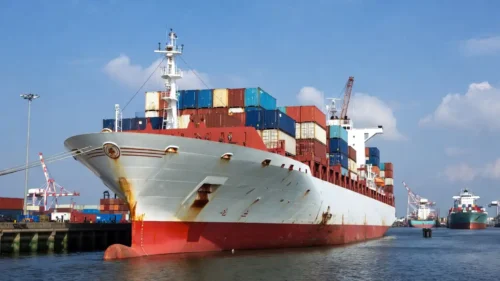
The flow of capital heavily dictates the resilience and configuration of global supply chains. Following severe disruptions to global trade networks in recent history, Asian capital markets have prioritized funding for robust, diversified, and highly digitized logistics infrastructure. Because Asia remains the linchpin of global manufacturing, the investments made here dictate how goods move across the entire planet.
Publicly traded Asian shipping conglomerates, port operators, and supply chain software developers are utilizing domestic capital to fund massive international expansions. They are acquiring strategic port terminals in Europe, investing heavily in digital freight-forwarding platforms, and financing transcontinental rail and maritime trade routes. By leveraging deep capital reserves, these Asian entities are creating hyper-efficient, vertically integrated logistics networks that lower shipping costs, shorten transit times, and set operational standards for the global retail and manufacturing sectors.
The Ascendance of Private Equity and Venture Capital
Beyond public equities and fixed income, the private markets in Asia have experienced a staggering evolution that is actively shaping global entrepreneurial ecosystems. Historically, Asian startups were highly dependent on Silicon Valley venture capital. Today, the dynamic has fundamentally inverted. Asian venture capital and private equity firms now possess massive, localized war chests, allowing them to fund domestic innovation while aggressively deploying capital into North American and European startups.
Asian sovereign wealth funds, giant pension schemes, and state-backed investment vehicles act as “megafunds” that can instantly validate and scale a company globally. These private market titans are hunting for disruptive technologies in biotechnology, fintech, and agritech. When a Western startup secures a major funding round led by an Asian venture firm, it gains more than just capital; it gains immediate strategic access to the world’s largest and fastest-growing consumer demographic, effectively bridging global innovation with unparalleled market scale.
Regulatory Reforms Attracting Global Institutional Investors
The rapid expansion of Asian capital markets would not be possible without sweeping regulatory reforms designed to align with, and sometimes surpass, international standards. Policymakers across the region recognize that to sustain market growth, they must continually attract foreign institutional investors (FIIs). Consequently, a wave of financial liberalization has swept across the continent.
Asian regulators have systematically dismantled historical barriers to foreign entry, relaxing foreign ownership limits, streamlining profit repatriation, and enhancing corporate governance protocols. The implementation of cross-border trading mechanisms, such as various “Stock Connect” programs, has allowed international capital to flow freely into previously restricted markets. Furthermore, the aggressive adoption of global Environmental, Social, and Governance (ESG) reporting standards by Asian exchanges ensures that international mutual funds and pension funds can safely allocate vast sums of capital into Asian equities without violating their own strict compliance mandates.
Conclusion
The evolution of Asian capital markets is not a temporary economic trend; it is a permanent structural realignment of the global financial architecture. By deepening their liquidity, modernizing their regulatory frameworks, and boldly funding the technologies of the future, Asian financial hubs have evolved from passive participants into aggressive architects of the global economy. Whether driving the critical advancements in the semiconductor industry, pioneering the massive rollout of green finance, or reshaping the physical and digital infrastructure of global trade, Asian capital is an undeniable force multiplier. For global investors and corporate strategists, integrating an understanding of these dynamic, evolving markets is no longer optional. It is an absolute necessity for anyone looking to capitalize on the overarching trends that will define global sectors for the foreseeable future.