
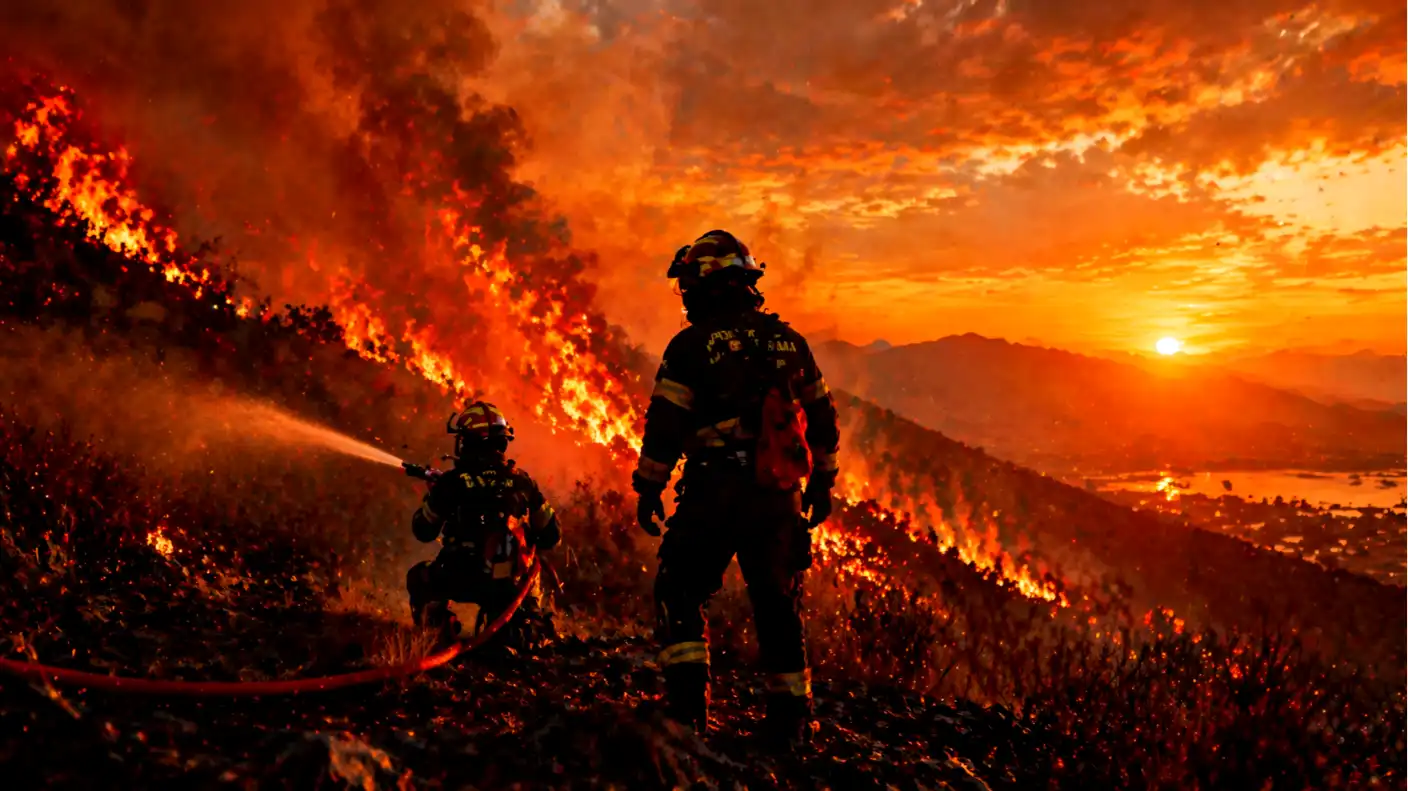
Our planet feels more fragile every day. While we often look for one big problem to solve, the reality is that several crises are unfolding simultaneously. Right now, experts in medicine and environmental science are sounding the alarm on two separate but equally dangerous issues: the rise of “forever chemicals” that never break down, and a fire season in the Western U.S. that starts earlier and burns hotter than ever before. These two problems—one hidden in our water and food, the other raging in our forests—show just how much our health depends on a stable environment.
When we talk about global health, we usually think of viruses or hospital care. We often forget that the water we drink and the air we breathe are the most important parts of our well-being. Today, we face a hidden enemy in our bloodstreams and a visible monster in our landscapes. These threats don’t just stay in one place; they travel through the global supply chain and the atmosphere, impacting communities far away from where the trouble starts.
The Invisible Enemy: Understanding PFAS
You have likely heard the term “forever chemicals,” but you might not know exactly what they are or why they stay around. Scientifically known as PFAS, these substances have been used in everything from non-stick pans to firefighting foam for decades. Manufacturers love them because they resist heat, water, and grease. Unfortunately, the same properties that make them useful also make them almost impossible for nature to destroy. They sit in our soil, linger in our water supplies, and accumulate in our bodies over time.
These chemicals earn their name for a very simple reason: they don’t go away. Once they enter the environment, they stay there. Even worse, they move through the food chain, meaning humans eventually take them in through fish, meat, and vegetables. As researchers dig deeper, they keep finding these chemicals in places we never expected, from remote mountain lakes to the drinking water in major cities.
We now have solid reasons to be worried about these chemicals in our system:
- Hormone Disruption: Many studies link these chemicals to changes in how our bodies handle hormones, which can affect everything from growth to reproduction.
- Immune System Damage: Research suggests that high levels of these chemicals make it harder for our bodies to fight off common infections.
- Increased Disease Risk: Doctors have found connections between long-term exposure to these chemicals and higher rates of certain types of cancer.
- Water Safety: Because these chemicals survive traditional water treatment, they often slip through the filters that keep our public water supplies clean.
The Western U.S. Fire Season: A Landscape in Peril
While we deal with the chemicals in our water, a very different threat is appearing in the forests. In the Western United States, the fire season is changing. It used to be a predictable time of year, but now it seems to start earlier and last longer. This shift isn’t a fluke; it’s a direct response to how the weather is changing. When you combine an early heatwave with record-low snowpacks, you basically create a giant, dry tinderbox just waiting for a spark.
Snowpacks act like a natural battery for water. When snow melts slowly in spring and summer, it keeps the forests cool and moist. But when winter doesn’t bring enough snow, or when a heatwave melts it far too quickly, the ground dries out by early spring. A dry forest is a flammable forest. This puts millions of people at risk, not just from the fire itself, but from the thick, toxic smoke that travels hundreds of miles and pollutes the air for weeks.
How Climate Change Makes Both Problems Worse
It is easy to see these as two separate issues, but they are both symptoms of a changing world. A hotter planet makes it easier for chemicals to spread and harder for our forests to stay moist. As the world warms, we see weather patterns shifting in ways that favor longer, drier summers and more intense storms.
Consider how these forces work together to make our lives more difficult:
- Rapid Thaw: Warmer temperatures cause mountains to lose their protective snow cover early in the year, leaving the soil beneath exposed to the sun and wind.
- Chemical Movement: Intense storms and flooding can pick up PFAS-contaminated soil and wash those chemicals into new, previously clean water sources.
- Health Stress: When we breathe smoke from wildfires, our immune systems get stressed. If we are already dealing with the effects of forever chemicals, this creates a “double hit” on our health.
- Infrastructure Failure: Wildfires can destroy the very water treatment plants we need to try to filter out the forever chemicals.
Protecting Our Communities in an Uncertain Time
We cannot fix these problems overnight, but we can change how we respond. The first step is to demand better information. We need to know where these chemicals are coming from and which communities are at the highest risk. At the same time, we need to change how we build our homes and manage our forests to deal with the reality of a longer fire season.
We can focus on several key areas to start building a safer future:
- Filtering the Water: We need to invest in new technology that can effectively remove PFAS from our public water systems, even if it costs more to build and maintain.
- Smarter Forest Management: We should focus on clearing brush and building better firebreaks near towns, recognizing that we can no longer rely on forests to remain naturally damp throughout the summer.
- Tougher Rules on Chemicals: We need to push for laws that stop companies from producing chemicals that we know will never disappear from the environment.
- Global Monitoring: Since these threats spread, we need countries to share data on both chemical safety and forest fire risk so we can respond as a global community.
Why We Need to Act Now
The alarm bells are ringing for a reason. These aren’t issues that will resolve themselves if we just ignore them. Every year we wait to address forever chemicals, the concentration in our water supply grows. Every year we delay fire-prevention efforts, more land turns to ash. The cost of doing nothing is far higher than the cost of taking action today.
We often think of the environment as something “out there,” separate from our daily lives. But these issues show that there is no “out there.” The forever chemicals are in our blood, and the wildfire smoke enters our lungs. By taking control of the chemicals we produce and how we manage our land, we are simply protecting the basic requirements for human health.
The Path Forward: Science, Policy, and Responsibility
The path ahead requires a blend of high-level policy changes and everyday responsibility. We need leaders who understand the science and are willing to stand up to industries that prioritize profit over clean water. At the same time, as individuals, we need to make smarter choices about what we buy and how we advocate for our local neighborhoods.
The solutions will not be perfect, and they will likely be expensive. But we are fighting for the quality of our future. Whether it is finding a way to filter out the poisons we put in our water or figuring out how to live safely alongside forests that are increasingly prone to fire, we have to keep learning and keep adapting. Our planet has shown us that it can handle a lot, but it is reaching a tipping point. It is our turn to show that we are willing to do the hard work to fix the systems that keep us safe.