

The fragile diplomatic roadmap to end the war in the Middle East faces its most severe test yet after a series of hostile maritime incidents. On Friday, Iran forcefully reasserted its right to control shipping through the strategic Strait of Hormuz and warned neighboring Gulf states against aligning with the United States. The aggressive declarations came less than 24 hours after a suspected Iranian drone strike targeted a Taiwanese-operated container ship off the coast of Oman. The fresh flare-up of violence has forced the United Nations’ shipping agency to halt its massive humanitarian evacuation program, dampening global hopes for a rapid recovery of trade.
The latest security crisis began on Thursday, when a Singapore-flagged, Taiwanese-operated container vessel named Ever Lovely came under attack. The ship, owned by Evergreen Marine, was sailing through the Gulf of Oman, roughly 13.8 kilometers southeast of Dahit in Oman’s Musandam region, when it was struck on its starboard side by an unknown projectile. While U.S. defense officials stated that an Iranian military drone carried out the strike, the ship’s operator confirmed that the crew, vessel, and cargo are safe, and the ship has successfully departed the area. Although the vessel sustained minor damage to its bridge windows, the incident represents the first direct attack on a commercial ship since the ceasefire was announced.
The immediate consequence of the attack was the complete suspension of the United Nations’ humanitarian maritime rescue program. The International Maritime Organization had recently initiated a phased, voluntary evacuation plan to guide over 11,000 stranded seafarers and hundreds of merchant ships out of the Persian Gulf, where they had been trapped for nearly four months. Following the attack, IMO Secretary-General Arsenio Dominguez announced a temporary pause in the operation, explaining that the agency must reconfirm that necessary security guarantees are still in place. Dominguez clarified that the attacked vessel was not transiting under the official UN evacuation framework, but the incident has nevertheless shattered shipping companies’ fragile confidence.
The political battle over who governs the strategic waterway exploded into the open on Friday when Iran’s Deputy Foreign Minister, Kazem Gharibabadi, published a highly combative statement online. Gharibabadi declared that safe passage through the Strait of Hormuz cannot be guaranteed under ambiguous arrangements, parallel routes, or unilateral decisions that ignore Iran’s role as a sovereign coastal state. He warned that any vessels utilizing alternative shipping lanes or unauthorized transit corridors outside of Tehran’s approved framework would not receive safety guarantees, putting the full responsibility for any subsequent accidents or attacks on the shipowners and operators themselves.
Gharibabadi’s remarks were a direct, furious response to a joint statement issued earlier by the United States and the six-member Gulf Cooperation Council. Meeting in the region, U.S. Secretary of State Marco Rubio and Gulf foreign ministers called for free, unconditional, and unrestricted navigation through the Strait of Hormuz, completely rejecting Iran’s recent demands to impose transit fees or tolls on commercial vessels. Rubio issued a blunt warning to Tehran, telling reporters that if Iran continues to threaten or block commercial ships in the strait, the United States will respond forcefully. This public collision has exposed a massive, unresolved rift in how the landmark peace deal will be implemented.
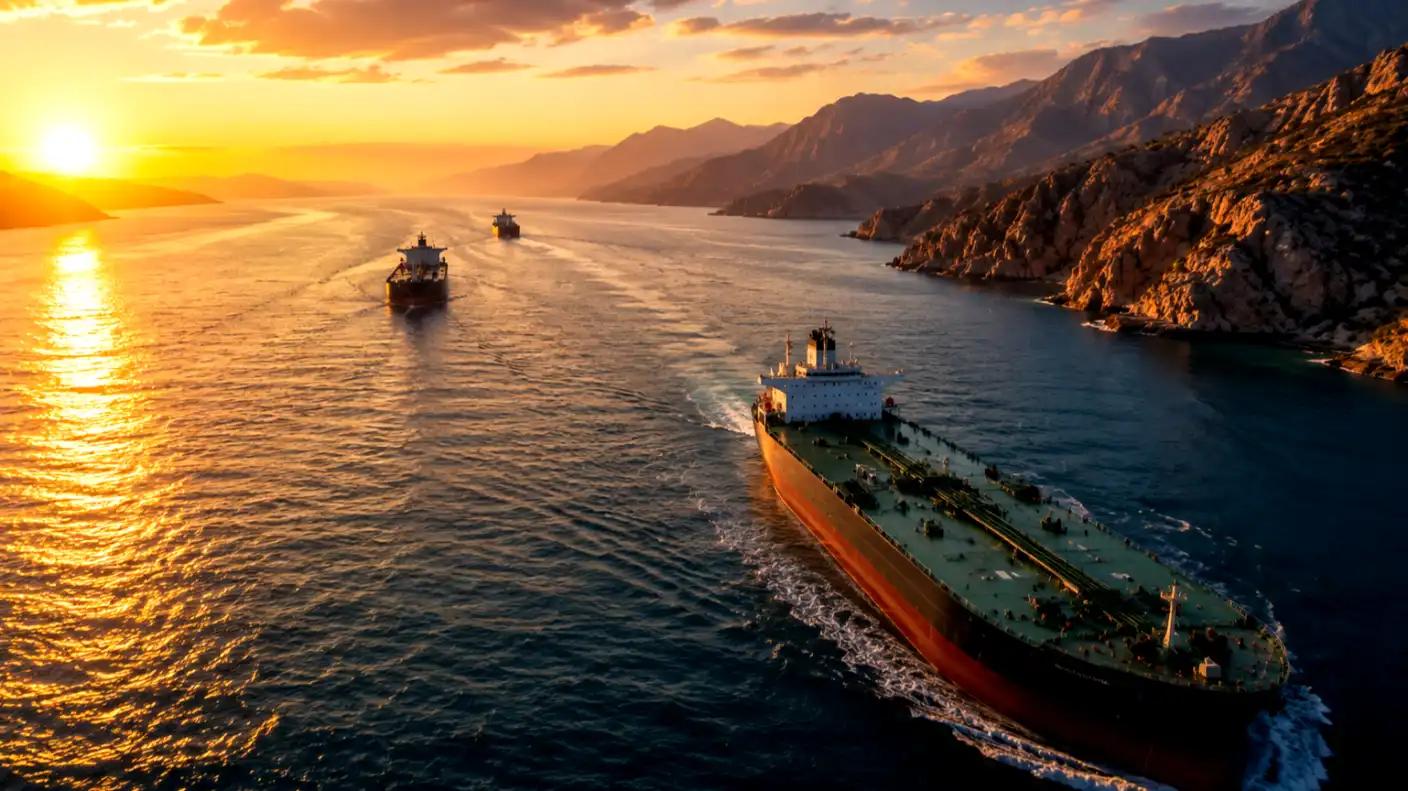
To reinforce its political demands with physical military power, the Islamic Revolutionary Guard Corps’ navy began actively enforcing its transit restrictions on Friday. Iranian state television reported that the IRGC navy successfully intercepted and turned back three foreign tankers attempting what it called an unauthorized passage of the strait. While the broadcast did not name the vessels or specify their cargo, it warned that the military would continue to take action against any ships that ignore its instructions. This aggressive enforcement has successfully slowed down the recovery of commercial traffic, forcing many operators to turn off their tracking signals or wait outside the Gulf.
Despite the escalating military and diplomatic tensions, some physical oil supplies have successfully begun to move once again. According to real-time ship-tracking data, state-owned energy giant Saudi Aramco officially resumed crude oil loadings on Friday at its massive Ras Tanura terminal in the Gulf. The terminal, which stands as the world’s largest oil export port, had been completely shut down for nearly four months due to the blockades. The resumption of Saudi loadings represents a major milestone for global energy markets, providing a vital source of supply that will help European and Asian buyers rebuild their heavily depleted inventories.
The resumption of Saudi oil shipments and the partial return of tanker traffic triggered a sharp decline in global energy costs, showing that physical supply is currently trumping geopolitical anxiety. Brent crude and U.S. benchmark crude prices dropped by more than 3% on Friday, putting oil on course for steep weekly losses as traders assessed the first waves of trapped supply leaving the Persian Gulf. Market analysts note that while paper traders are highly sensitive to the threatening headlines coming out of Tehran, the physical reality of oil actually moving through Omani territorial waters has successfully cooled fears of an immediate global energy shock.
While some supertankers have successfully exited the strait carrying up to 2 million barrels of oil each, the overall volume of shipping traffic remains extremely depressed. Before the joint U.S.-Israeli strikes on Iran in late February triggered the war, the Strait of Hormuz handled an average of 125 commercial vessel transits every single day. The volume of shipping traffic remains extremely depressed, representing a minor 1.5% decrease in total weekly gains compared to pre-war forecasts, as the vast majority of international shipping companies remain highly hesitant to send their multi-million-dollar vessels through a waterway littered with naval mines and subject to sudden drone attacks.
Ultimately, the escalating dispute over who controls the Strait of Hormuz serves as a stark reminder of the immense difficulty of securing a lasting peace in a highly fractured world. While the digital signing of the U.S.-Iran preliminary agreement was celebrated as a historic economic breakthrough, the physical reality on the ground shows that regional security remains incredibly fragile. As the UN pauses its evacuation efforts and Iran reasserts its right to govern the waterway, the global community is learning that paper treaties cannot easily erase months of military conflict. Until Washington and Tehran can find a way to agree on transit rights, the world’s most critical energy corridor will remain a dangerous flashpoint.















