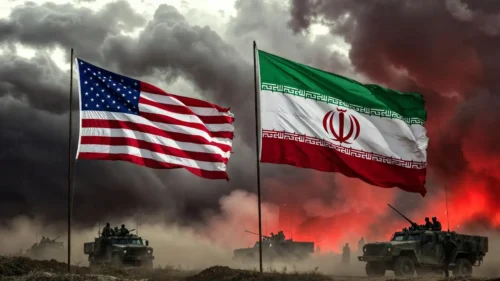


The landscape of international relations is defined by an intricate, ever-evolving web of partnerships, treaties, and mutual defense agreements. For decades, the United States has relied on these collaborative networks to project influence, deter conflict, and foster global economic stability. In an era increasingly defined by rapid technological advancement and complex geopolitical competition, the strategies deployed by Washington to maintain and adapt these alliances are more crucial than ever. The approach to coalition-building is no longer solely focused on traditional military deterrence; it has expanded to encompass economic security, supply chain resilience, democratic governance, and digital innovation. As the world shifts from a unipolar moment to a distinctly multipolar environment, US foreign policy must constantly recalibrate to address both the traditional concerns of state actors and the unprecedented challenges of transnational threats.
The mechanisms through which the United States manages its international relationships are deeply rooted in diplomatic history, yet they remain highly adaptable. Policymakers recognize that maintaining a dominant global position relies heavily on the strength, prosperity, and alignment of allied nations. Consequently, Washington’s political strategy involves a delicate balancing act: providing security guarantees while demanding fair burden-sharing, promoting open markets while protecting domestic industries, and leading global initiatives while respecting the sovereign autonomy of partner states. This dynamic interaction between American strategic goals and the interests of its global partners continues to shape the geopolitical order of the twenty-first century.
Understanding the present global architecture requires a thorough examination of the past. The foundations of current geopolitical partnerships were established over several transformative decades.
The Historical Context of US Global Alliances
The architecture of modern American global engagement did not materialize overnight. It is the product of deliberate policy decisions made during times of profound global crisis and restructuring. Prior to the mid-twentieth century, the United States famously oscillated between active international involvement and strict isolationism, often preferring to avoid entangling alliances. However, the sheer scale of global conflict and the catastrophic economic consequences of the World Wars forced a permanent paradigm shift in Washington’s strategic thinking. The realization that oceans could no longer guarantee security led to the proactive construction of a liberal international order designed to prevent future large-scale conflicts through collective security and economic integration.
This historical evolution established a precedent for American leadership in multilateral institutions. The creation of the United Nations, the Bretton Woods financial system, and various regional defense pacts formed the structural bedrock upon which contemporary political strategy is built. By examining the specific historical epochs that shaped these institutions, we gain valuable insight into the enduring nature of US geopolitical strategy and its fundamental reliance on strong, formalized partnerships.
The aftermath of global conflict fundamentally altered American foreign policy priorities. Policymakers realized that strategic isolationism was no longer a viable option for national security.
Post-WWII and the Cold War Era
The conclusion of the Second World War left Europe and parts of Asia devastated, creating a power vacuum that precipitated the Cold War. In response, the United States implemented the Truman Doctrine and the Marshall Plan, utilizing massive economic assistance as a strategic tool to rebuild shattered nations and insulate them from Soviet influence. This era witnessed the birth of the North Atlantic Treaty Organization (NATO), a revolutionary mutual defense pact that irrevocably tied American security to the defense of Western Europe. NATO represented a historic departure from traditional US policy, institutionalizing a permanent transatlantic alliance based on the principle that an attack on one member was an attack on all.
Simultaneously, in the Asia-Pacific region, the US established a “hub-and-spoke” system of bilateral security treaties with nations such as Japan, South Korea, and Australia. Unlike the multilateral structure of NATO, these bilateral arrangements allowed Washington to maintain tighter control over regional defense postures while containing communist expansion. Throughout the Cold War, these alliances were primarily military in nature, focused heavily on nuclear deterrence, forward troop deployments, and strategic containment. The overarching political strategy was clear: build a robust, interconnected network of free-market democracies capable of outlasting the ideological and military challenges posed by the Soviet bloc.
The unexpected collapse of the Soviet Union left the United States as the sole global superpower. This unipolar moment prompted a significant realignment of international diplomatic priorities.
The Post-Cold War Unipolar Moment
With the end of the Cold War, the immediate existential threat to the US-led alliance system evaporated, prompting a profound reevaluation of strategic objectives. During the 1990s and early 2000s, US political strategy shifted toward expanding the liberal international order, emphasizing democracy promotion, human rights, and global economic integration. NATO, rather than disbanding after fulfilling its original purpose, adapted to new realities by opening its doors to former Warsaw Pact nations. This eastward expansion was driven by the belief that integrating these nascent democracies into Western security and economic structures would ensure long-term stability on the European continent.
However, the post-Cold War era also introduced new complexities. The September 11 attacks dramatically pivoted US strategic focus toward counter-terrorism, leading to the formation of ad-hoc “coalitions of the willing” outside traditional treaty frameworks. The wars in Afghanistan and Iraq tested the endurance of legacy alliances, as partner nations grappled with the demands of out-of-area operations and asymmetrical warfare. Despite moments of significant diplomatic friction, this period underscored the immense capacity of US alliances to project power globally, while also revealing the limitations of military intervention in shaping political outcomes. This unipolar moment eventually gave way to a resurgence of great power competition, necessitating yet another strategic recalibration.
Modern alliance structures rely on several foundational principles to maintain long-term cohesion. These guiding tenets dictate how the nation interacts collaboratively with its global partners.
Core Pillars of Modern US Political Strategy
In the contemporary geopolitical landscape, the United States employs a multifaceted political strategy to cultivate and sustain its global alliances. Gone are the days when military might alone could guarantee international allegiance; modern statecraft requires a comprehensive, whole-of-government approach. American policymakers rely on a blend of ideological alignment, mutual economic benefit, and shared security concerns to bind partner nations together. These core pillars provide the conceptual framework that allows disparate nations, often with differing domestic priorities, to align their foreign policies with Washington’s broader strategic objectives.
By consistently reinforcing these pillars, the US attempts to create an international environment where cooperation is heavily incentivized and aggression is reliably deterred. The effectiveness of this strategy largely depends on the perceived reliability of American commitments and the tangible benefits that partner nations derive from the relationship. When these foundational elements are strong, the alliance network functions as a formidable force multiplier for US geopolitical influence.
The strategic framework is built upon distinct pillars of international cooperation. These specific areas ensure comprehensive collaboration across multiple geopolitical domains.
- Integrated Deterrence and Security: Developing interoperable military capabilities, conducting joint exercises, and providing an extended nuclear umbrella to deter acts of aggression.
- Economic Resilience and Integration: Fostering transparent trade practices, securing critical supply chains, and promoting foreign direct investment among allied nations.
- Democratic Values and Governance: Supporting human rights, anti-corruption initiatives, and the rule of law as a unifying ideological basis for partnership.
- Technological Innovation and Standards: Collaborating on advanced research and establishing normative standards for emerging technologies like artificial intelligence and telecommunications.
Geographic priorities have continually shifted to reflect emerging external threats and opportunities. Regional strategies are meticulously tailored to address specific localized security challenges.
Regional Alliances and Strategic Shifts
A globally dispersed alliance network demands highly customized regional strategies. The United States cannot apply a uniform diplomatic template across the globe; what effectively binds European partners may not resonate with allies in the Indo-Pacific or the Middle East. Consequently, US political strategy is defined by its regional adaptability. Washington continuously assesses shifts in the balance of power, regional conflicts, and economic trends to optimize its diplomatic and military footprints. This localized approach allows the US to address the unique anxieties and aspirations of its partners, ensuring that alliance structures remain relevant and effective.
In recent years, the distribution of American diplomatic attention and military resources has undergone significant realignment. While traditional commitments are maintained, there is a distinct pivot toward regions that are expected to define the global economic and security landscape of the coming decades. This redistribution of focus highlights the dynamic, non-static nature of US political strategy in a rapidly changing world.
Europe remains a vital cornerstone of American global security infrastructure. The transatlantic relationship continues to evolve dynamically in response to continental defense demands.
The Transatlantic Bond and NATO
The NATO alliance remains arguably the most successful and enduring political-military partnership in modern history. The US strategy toward Europe is fundamentally anchored in the belief that a secure, democratic, and economically prosperous Europe is essential to American national interests. In recent years, transatlantic strategy has focused heavily on burden-sharing, with successive US administrations pressing European allies to meet the agreed-upon defense spending target of 2% of their GDP. This push aims to ensure that NATO remains militarily capable and politically equitable.
Furthermore, recent conflicts on the European continent have revitalized NATO’s core mission of territorial defense. The alliance has responded by significantly increasing its forward presence in Eastern Europe, enhancing its rapid response capabilities, and modernizing its strategic concept to include new domains such as space and cyberspace. The accession of historically non-aligned nations into NATO underscores the renewed relevance of the transatlantic bond. The US strategy continues to focus on maintaining a unified political front with Europe to counter destabilizing regional actors while simultaneously cooperating on global issues like climate security and energy diversification.
The geopolitical center of gravity has steadily moved toward the Asian continent. Securing this vital maritime and economic corridor is now considered a top strategic priority.
The Indo-Pacific Pivot
Recognizing the immense economic potential and complex security dynamics of Asia, the United States has forcefully pivoted its strategic focus toward the Indo-Pacific. The core of this strategy revolves around the concept of a “Free and Open Indo-Pacific,” a vision that champions freedom of navigation, peaceful dispute resolution, and transparent economic practices. To operationalize this vision, the US has significantly upgraded its traditional bilateral alliances with nations like Japan, South Korea, the Philippines, and Australia, encouraging greater interoperability and regional security cooperation.
Beyond bilateral ties, a defining feature of the modern US strategy in this region is the embrace of “minilateralism”—small, issue-focused groups of allied nations. The elevation of the Quad (comprising the US, Japan, India, and Australia) serves as a prime example, focusing on vaccine distribution, maritime domain awareness, and climate change, alongside broader security dialogues. Similarly, the AUKUS security partnership between Australia, the UK, and the US aims to facilitate deep integration of defense technologies, including nuclear-powered submarines. These overlapping frameworks allow the US to weave a dense, flexible security architecture capable of managing the unique geopolitical complexities of the Indo-Pacific.
Strategic interests in energy markets and counter-terrorism heavily influence policies in this region. Traditional defense pacts are increasingly being supplemented by new diplomatic normalizations.
Middle East Diplomacy and Partnerships
US political strategy in the Middle East has historically been driven by the need to ensure the free flow of energy resources, support regional partners, and combat terrorist organizations. For decades, this approach relied on deep security partnerships with Gulf states and unwavering support for Israel. However, the dynamics of the region are shifting. As the US moves toward energy independence and redirects its primary strategic focus toward great power competition, its approach to the Middle East is transitioning from direct military intervention to facilitating regional security integration.
A critical component of this evolving strategy is the active promotion of diplomatic normalization between historic adversaries. Frameworks like the Abraham Accords have reshaped the regional alliance structure, fostering unprecedented economic and security cooperation between Israel and several Arab nations. The US strategy now centers on empowering these regional coalitions to manage local security challenges collectively, thereby reducing the necessity for massive, permanent American troop deployments. By fostering an interconnected network of allied states, the US aims to maintain regional stability and deter malign actors while optimizing its global resource allocation.
Developing regions are rapidly becoming crucial arenas for sustained diplomatic engagement. Building resilient partnerships in the Global South is deemed essential for long-term influence.
Latin America and Africa
While Europe and the Indo-Pacific often dominate strategic discourse, US political strategy heavily emphasizes engagement with Latin America and Africa. These regions possess immense demographic potential, vast natural resources, and growing political clout in international forums. In the Western Hemisphere, the US prioritizes democratic governance, counter-narcotics cooperation, and migration management through institutions like the Organization of American States (OAS) and various bilateral economic initiatives. Maintaining stable, prosperous neighbors is considered vital for US homeland security and economic vitality.
In Africa, the strategic landscape is increasingly defined by the need to counter the growing influence of rival global powers who aggressively seek resource extraction and diplomatic leverage. US strategy aims to differentiate itself by prioritizing sustainable development, public health initiatives, and institutional capacity building. Programs like the African Growth and Opportunity Act (AGOA) are utilized to integrate African economies into global markets. By focusing on mutual long-term growth and civil society empowerment, the US seeks to build resilient alliances in the Global South that are based on shared democratic values rather than mere transactional resource exploitation.
Financial leverage is frequently employed as a powerful complement to traditional diplomacy. Trade and commerce serve as fundamental components of international alliance building.
Economic Policies and Global Partnerships
In the twenty-first century, national security and economic security are completely inseparable. US political strategy utilizes economic statecraft as a primary mechanism for shaping global alliances. Washington leverages its massive consumer market, technological leadership, and control over the global financial system to incentivize strategic alignment and penalize geopolitical aggression. This approach recognizes that the enduring strength of an alliance is directly proportional to the economic prosperity it generates for its members.
Modern economic strategy has notably shifted away from the unchecked pursuit of unfettered globalization. Instead, policymakers prioritize supply chain resilience, domestic industrial capacity, and the protection of strategic technologies. This evolution has led to the development of new economic frameworks designed to deepen integration with trusted allies while simultaneously mitigating vulnerabilities associated with relying on geopolitical rivals.
Commercial agreements often function as binding political ties between allied nations. These frameworks go far beyond mere economics to establish deep institutional trust.
Trade Agreements as Political Tools
Historically, the US utilized massive multilateral trade agreements to anchor its political alliances, weaving nations into a complex web of mutual economic dependence. However, domestic political shifts have transformed this approach. Instead of pursuing comprehensive free-trade agreements with binding tariff reductions, contemporary US strategy favors flexible, standard-setting arrangements. A prominent example is the Indo-Pacific Economic Framework for Prosperity (IPEF), which focuses on supply chain coordination, clean energy transitions, and anti-corruption measures without offering traditional market access concessions.
Furthermore, the concept of “friend-shoring”—the intentional relocation of critical supply chains to allied and friendly nations—has become a central tenet of US alliance management. By incentivizing companies to move the production of critical goods like semiconductors and electric vehicle batteries to trusted partner nations, the US simultaneously strengthens the economies of its allies and enhances collective security. These modern economic pacts serve as vital political tools, aligning the industrial policies of allied nations and fostering a shared commitment to a transparent, rules-based global economy.
Financial penalties are increasingly utilized to enforce established international norms. Coordinating these economic measures with allies significantly magnifies their overall strategic effectiveness.
Sanctions and Economic Statecraft
When diplomatic persuasion falls short, the US heavily relies on economic sanctions to enforce its political strategy and deter aggression. The dominance of the US dollar in global trade and the centrality of the American financial system provide Washington with unmatched leverage. Targeted sanctions, export controls, and investment restrictions are deployed to isolate adversaries, cripple their military-industrial complexes, and impose severe costs on hostile behavior.
Crucially, the effectiveness of economic statecraft is profoundly magnified when executed in concert with global alliances. Unilateral sanctions often suffer from evasion and backfilling, but multilateral sanctions—coordinated through platforms like the G7 and the European Union—create an impenetrable financial blockade. The ability of the US to rally its allies to implement sweeping, coordinated economic penalties against aggressive state actors demonstrates the ultimate power of its alliance network. This synchronized financial deterrence is now a fundamental pillar of how the US and its partners enforce international law and maintain global stability.
Internal political dynamics directly shape the trajectory of foreign policy outcomes. The domestic political landscape dictates the predictability and reliability of international commitments.
Domestic Politics and Its Global Repercussions
Foreign policy is rarely formulated in a vacuum; it is inexorably linked to the domestic political climate of the United States. Global allies closely monitor American elections, legislative battles, and public discourse to gauge the reliability and longevity of Washington’s strategic commitments. The inherent cyclical nature of American democracy means that shifts in administrative control can lead to rapid realignments in diplomatic priorities. Consequently, US political strategy must navigate the tension between projecting international stability and responding to domestic electoral mandates.
For an alliance to be truly credible, it must possess strong bipartisan support and resonate with the broader American public. When domestic polarization bleeds into foreign policy, it can severely undermine the perceived dependability of the United States, prompting allies to hedge their bets. Therefore, successful strategic leadership requires policymakers to actively bridge the gap between global geopolitical necessities and domestic political realities.
Certain foreign policy objectives transcend party lines to ensure strategic continuity. However, ideological divides can occasionally complicate the execution of long-term global planning.
Bipartisan Consensus vs. Polarization
Despite the deep partisan polarization that characterizes much of contemporary US politics, there are notable areas of enduring bipartisan consensus in foreign policy. Both major political parties generally agree on the necessity of maintaining military superiority, securing critical supply chains, and countering the geopolitical influence of major global rivals. This consensus ensures a degree of strategic continuity across different administrations, allowing the US to implement long-term initiatives in regions like the Indo-Pacific and maintain firm commitments to core alliances like NATO.
However, ideological divides frequently surface regarding the methods and scope of international engagement. Debates over the utility of multilateral climate treaties, the acceptable levels of foreign defense assistance, and the wisdom of global democracy promotion often fall along strict partisan lines. This polarization can complicate treaty ratifications and lead to dramatic policy reversals when power changes hands in Washington. For allied nations, navigating these domestic political shifts requires diplomatic agility and a deep understanding of the diverse factions shaping American political strategy.
The American electorate’s willingness to support overseas engagement heavily influences leadership decisions. Public sentiment often acts as a natural democratic constraint on foreign policy adventurism.
The Role of Public Opinion
The sustainability of US global alliances ultimately rests on the consent of the American public. Following decades of protracted military engagements abroad, there is a palpable sense of war fatigue among the electorate. Public sentiment increasingly demands that foreign policy deliver tangible benefits to the domestic middle class, emphasizing economic security and industrial revitalization over abstract geopolitical theories. This shifting public opinion profoundly influences how leaders craft and communicate political strategy.
To maintain support for international alliances, US policymakers are increasingly framing global engagement through the lens of domestic prosperity. Strategies like “friend-shoring” are sold not just as geopolitical necessities, but as engines for domestic job creation and supply chain security. When the public perceives that alliances are reciprocal and directly contribute to their own safety and economic well-being, they are far more likely to support sustained global leadership. Conversely, if alliances are viewed as a disproportionate drain on American resources, populist pressures inevitably force a strategic contraction.
Technological innovation is rapidly becoming the most critical frontier of global geopolitical competition. Securing digital supremacy requires unprecedented levels of international institutional cooperation.
The Impact of Technology and Cyber Security
The geopolitical battles of the future will be waged as much in data centers and semiconductor foundries as they are on traditional battlefields. Technological supremacy has emerged as a central pillar of national security, prompting a massive integration of tech policy into US global alliance strategy. The United States recognizes that no single nation can dominate the modern technological landscape independently. Maintaining an edge in critical emerging technologies requires pooling research capabilities, protecting shared intellectual property, and harmonizing digital regulations among allied nations.
This new reality has given rise to the concept of the “Tech Alliance.” The US is actively working with partners to establish joint frameworks that dictate how data flows across borders, how artificial intelligence is ethically governed, and how critical digital infrastructure is protected from state-sponsored cyber espionage.
Collaborative efforts are increasingly concentrated on safeguarding critical digital infrastructure networks. The following technological sectors represent the primary focus of modern international partnerships.
- Semiconductor Supply Chains: Coordinating with nations like Japan, South Korea, and the Netherlands to secure manufacturing capabilities and restrict adversary access to advanced microchips.
- Telecommunications Infrastructure: Promoting clean network initiatives to ensure that allied 5G and future 6G networks are built by trusted, democratic vendors.
- Cyber Defense and Intelligence: Expanding joint cyber-warfare exercises, intelligence sharing mechanisms, and rapid response protocols to counter malicious digital actors.
- Artificial Intelligence and Quantum Computing: Establishing collaborative research pacts and ethical governance frameworks to maintain an innovative edge in revolutionary technologies.
No strategic framework operates without encountering significant vulnerabilities and external geopolitical pressures. The established international order faces numerous hurdles that continually test its structural durability.
Challenges to the US-Led Alliance System
While the US alliance network remains the most formidable collaborative structure in global history, it is not immune to pressure. The international environment is far more volatile and competitive than it was at the turn of the century. Washington’s political strategy must constantly contend with active efforts by geopolitical rivals to fracture its partnerships, as well as internal frictions generated by the diverse, and sometimes competing, interests of its allies.
Successfully managing these challenges requires a high degree of diplomatic finesse. The United States can no longer dictate terms unilaterally; it must rely on consensus-building and genuine compromise. Addressing the systemic vulnerabilities within its alliance structure is imperative for ensuring the long-term viability of the Western-led international order.
Emerging global powers are actively seeking to reshape the existing international architecture. Alternative multilateral organizations present a distinct institutional challenge to Western-led alliance networks.
The Rise of Competing Global Powers
The most pressing challenge to the US political strategy is the ascendance of competing powers intent on establishing a multipolar world order. These nations are actively building alternative diplomatic and financial architectures designed to bypass Western-dominated institutions. Organizations such as the expanded BRICS+ and the Shanghai Cooperation Organisation (SCO) offer nations in the Global South alternative sources of investment, security partnerships, and diplomatic cover without the political conditionality typically attached to US assistance.
Furthermore, there is a concerted effort among these rival blocs to promote dedollarization—reducing global reliance on the US financial system to insulate themselves from American sanctions. As these alternative networks mature, many non-aligned nations are adopting complex hedging strategies, balancing their relationships between Washington and emerging power centers to maximize their own strategic autonomy. The US must continually prove the superior value and reliability of its alliance system in an increasingly competitive geopolitical marketplace.
Allied nations occasionally desire greater independence in their sovereign foreign policy decisions. This pursuit of strategic autonomy can sometimes create operational friction within established alliance networks.
Strategic Autonomy Among Allies
Another significant challenge stems from within the alliance network itself. As the global security environment becomes more complex, several key US allies are actively pursuing policies of “strategic autonomy.” In Europe, this manifests as a desire to build independent defense capabilities and reduce reliance on American security guarantees, allowing the continent to chart its own course on issues ranging from technology regulation to regional diplomacy. While the US generally supports a more capable Europe, excessive divergence can complicate unified alliance responses to global crises.
Similarly, middle powers such as India, Brazil, and Saudi Arabia are increasingly reluctant to be neatly categorized into rigid geopolitical blocs. These nations possess sufficient regional influence and economic heft to pursue multi-aligned foreign policies, partnering with the US on specific security issues while simultaneously maintaining robust economic ties with America’s geopolitical rivals. Managing these complex, multifaceted relationships requires US political strategy to move away from binary “with us or against us” mentalities and embrace highly nuanced, flexible diplomatic engagements.
Adapting to a rapidly changing multipolar world is absolutely essential for sustaining geopolitical leadership. The next decade will demand highly innovative approaches to international diplomatic cooperation.
Future Outlook for US Global Strategy
Looking forward, the resilience of US global alliances will depend entirely on their capacity for adaptation. The rigid treaty structures that defined the 20th century are gradually giving way to more agile, purpose-built coalitions. The political strategy of the future will prioritize flexibility, allowing the United States to assemble overlapping networks of partners tailored to address specific, multifaceted challenges, from outer space security to global pandemic response.
Moreover, the integration of non-traditional security threats into core alliance mandates will become standard practice. Washington must ensure that its strategic partnerships remain as relevant to economic and environmental stability as they are to military deterrence. By continuously evolving its diplomatic toolkit, the United States aims to secure a stable, prosperous international order for decades to come.
To remain highly effective, future alliance strategies must strategically incorporate emerging global realities. The continued evolution of international partnerships will likely depend on these key adaptations.
- Embracing Minilateralism: Expanding reliance on small, highly focused diplomatic groupings to achieve rapid consensus and execute targeted regional objectives.
- Integrating Climate Security: Treating climate change and resource scarcity as core geopolitical security threats that require coordinated, multinational alliance responses.
- Institutional Reform: Actively modernizing international institutions like the World Bank and the UN to better reflect the geopolitical realities of a multipolar world and satisfy the demands of the Global South.
By committing to these adaptive strategies, the US can successfully navigate the complexities of modern geopolitics. The enduring strength of American political strategy does not lie in enforcing rigid compliance, but rather in fostering a voluntary network of capable, empowered, and aligned partner nations.
Conclusion
The political strategy deployed by the United States to shape and maintain its global alliances is a remarkably complex and continually evolving enterprise. From the ashes of the Second World War to the digital battlegrounds of the twenty-first century, the underlying philosophy has remained consistent: American prosperity and security are inextricably linked to the stability and success of its international partners. The transition from a unipolar world to an era of great power competition has certainly tested the durability of these partnerships, demanding new approaches to economic integration, technological collaboration, and regional diplomacy.
Despite the challenges posed by domestic political polarization and the rise of formidable geopolitical rivals, the US alliance network remains a unique and unmatched asymmetrical advantage on the world stage. By consistently adapting its strategic pillars, embracing flexible diplomatic frameworks, and addressing the diverse needs of its allies, the United States is well-positioned to sustain its global leadership role. Ultimately, the future of international relations will not be decided by unilateral dictates but by the strength, resilience, and unity of these deeply forged global alliances.