

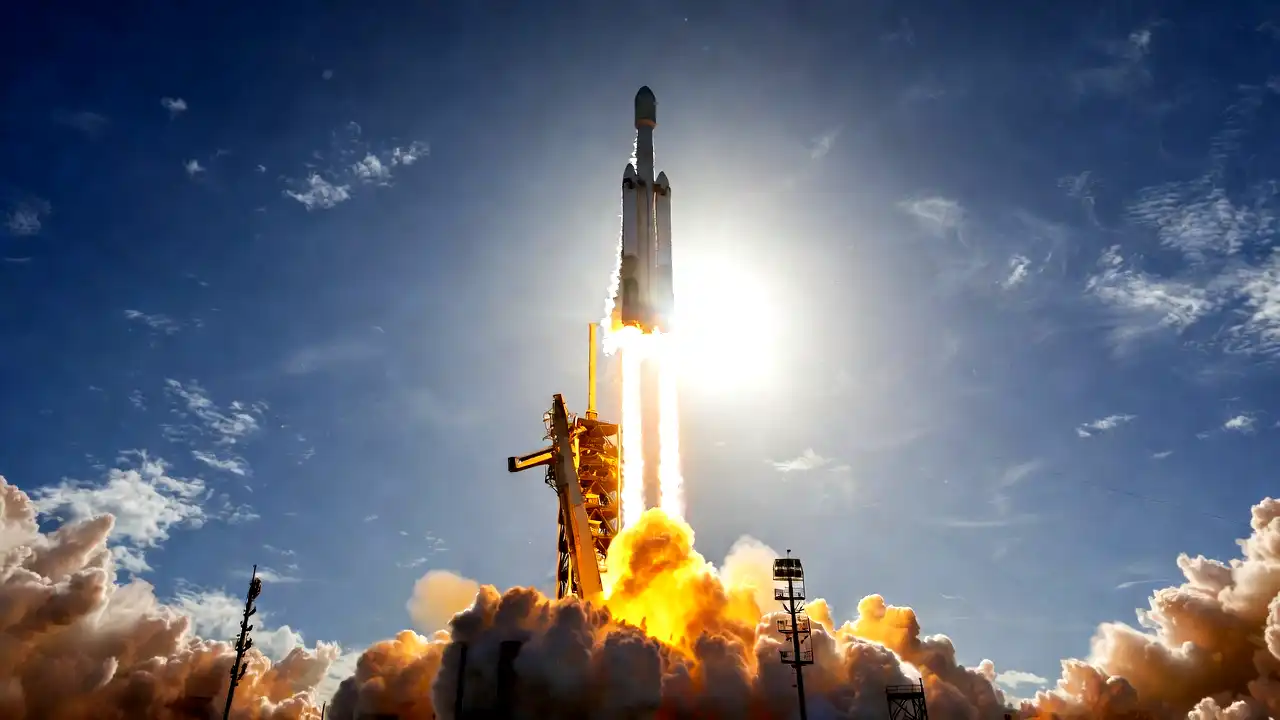
For decades, the narrative of space exploration was largely defined by a bipolar competition between a select few superpowers. However, the modern cosmos has transformed into a dynamic, multipolar arena driven by commercial interests, international coalitions, and a quest for sustainable off-Earth economies. As humanity reaches further into the cosmos, Japan’s space technology ambitions are quietly but forcefully reshaping the contours of this new space race. By leveraging its historic mastery of precision engineering, advanced robotics, and collaborative diplomacy, Japan has evolved from a quiet participant into a formidable architect of the global space economy.
Rather than competing purely on the scale of massive launch vehicles, Japan has strategically carved out high-value, highly specialized niches. From pioneering orbital sustainability and active debris removal to designing the sophisticated life-support systems required for deep space exploration, Japanese public and private entities are providing the critical infrastructure necessary for the next leap in human exploration. This article explores how Japan’s comprehensive space strategy operates, the technological sectors it seeks to dominate, and how its expanding ambitions are irrevocably altering the trajectory of the global space race.
The Evolution of Japan’s Space Paradigm
To understand the current trajectory of Japan’s extraterrestrial ambitions, one must recognize the profound paradigm shift in its domestic aerospace sector. Historically, the Japanese space program, spearheaded by the Japan Aerospace Exploration Agency (JAXA), was characterized by a strict focus on peaceful scientific discovery. The nation garnered deep international respect for its complex asteroid sample-return missions, deep-space probes, and contributions to the International Space Station. Yet, it largely avoided the geopolitical posturing associated with the space race.
Today, that approach has dramatically evolved to meet the demands of a commercialized and strategically vital orbital environment. Recognizing that space is now the backbone of global communications, national security, and future economic growth, Japan has aggressively transitioned its policies. The government has restructured its space directives to prioritize rapid commercialization, integration with national security, and international technological leadership. By transforming its space sector from a purely scientific endeavor into a core pillar of its broader economic and diplomatic strategy, Japan has positioned itself as an indispensable ally and a formidable competitor in the modern space economy.
Driving the NewSpace Economy Through Public-Private Synergies
The true engine behind Japan’s modern space renaissance is its vibrant “NewSpace” ecosystem, characterized by unprecedented collaboration between government agencies and aggressive commercial startups. JAXA has consciously shifted its role from being the sole developer of space technology to acting as an anchor tenant and facilitator for private enterprise. This public-private synergy provides commercial entities with the foundational research and financial safety nets required to take massive technological risks.
This collaborative environment has given rise to a highly competitive landscape of Japanese space startups that are aggressively targeting specialized segments of the global market. Several distinct areas of commercial focus highlight how these enterprises are contributing to the broader space race:
- Orbital Robotics and Servicing: Japanese firms are developing highly advanced robotic arms and automated servicing vehicles designed to repair, refuel, and upgrade aging satellites directly in orbit, fundamentally changing the economics of satellite deployment.
- Commercial Lunar Landers and Rovers: Private Japanese companies are designing modular lunar landers and micro-rovers, aiming to provide affordable, routine delivery services for scientific payloads and commercial cargo to the Moon’s surface.
- Next-Generation Propulsion Systems: Startups are pioneering alternative, highly efficient propulsion systems, including water-based thrusters and advanced ion engines, to meet the growing global demand for sustainable small-satellite mobility.
Lunar Exploration and International Coalitions
As the global space race shifts its focus toward establishing a permanent, sustainable human presence on the Moon, Japan has strategically embedded itself into the core of international lunar coalitions. Rather than launching an isolated, unilateral lunar program, Japan leverages its technological prowess to become an irreplaceable partner in multinational endeavors, most notably through its deep commitments to global frameworks such as the Artemis program.
Japan’s specific contributions to these international lunar architectures are highly specialized and absolutely critical for long-term survival in deep space. Leveraging the nation’s world-renowned automotive and robotics industries, Japanese engineers are leading the development of pressurized, habitable lunar rovers. These sophisticated vehicles are designed to act as mobile habitats, allowing astronauts to explore vast stretches of the lunar surface without the constant restriction of traditional spacesuits. Furthermore, Japan is providing crucial life-support technologies, environmental control systems, and modular habitat designs. By controlling these foundational technologies, Japan ensures that any international success on the Moon is intrinsically tied to Japanese engineering.
Pioneering Orbital Sustainability and Space Debris Mitigation
One of the most pressing existential threats to the expanding space race is the exponential accumulation of space debris in Low Earth Orbit (LEO). As thousands of new commercial satellites are launched globally, the risk of catastrophic orbital collisions threatens to render crucial orbital planes entirely unusable. In this critical domain, Japan has aggressively seized the global leadership mantle, recognizing that space sustainability is both an environmental necessity and a massive commercial opportunity.
Japanese aerospace startups, heavily backed by government grants and international partnerships, are pioneering the nascent field of Active Debris Removal (ADR). These companies are designing highly innovative spacecraft equipped with magnetic capture systems, robotic arms, and harpoon mechanisms designed to safely rendezvous with, capture, and de-orbit defunct satellites and rocket bodies. By commercializing space debris removal, Japan is effectively creating a new foundational sector within the space economy. As international regulatory bodies begin to mandate end-of-life disposal plans for new satellites, Japan’s early dominance in ADR technology positions it as the global tollkeeper for orbital cleanliness and safety.
Strengthening Global Security Through Advanced Satellite Networks
The militarization and strategic contestation of the orbital domain have compelled nations worldwide to invest heavily in space-based security infrastructure, and Japan is no exception. As regional security dynamics become increasingly complex, Japan’s space technology ambitions are closely intertwined with its need for autonomous intelligence, surveillance, and reconnaissance (ISR) capabilities.
To achieve this, Japan is rapidly deploying highly sophisticated constellations of Earth-observation satellites and advanced communication networks. These networks utilize cutting-edge Synthetic Aperture Radar (SAR) and high-resolution optical sensors, allowing for persistent, all-weather monitoring of terrestrial and maritime activities. Beyond domestic defense, this capability has profound global implications. Japan actively exports these satellite data services and dual-use technologies to allied nations, enhancing maritime domain awareness across the Indo-Pacific and beyond. By establishing a robust, independent network of security-focused orbital assets, Japan is fundamentally altering the balance of power and intelligence gathering in the modern space race.
Exporting Aerospace Excellence to the Global Supply Chain
While the launch of massive rockets and planetary rovers captures the public’s imagination, the true battleground of the modern space economy lies within the global supply chain. Japan understands that true leverage in the space race comes from manufacturing the specialized, high-tolerance components that the rest of the world relies upon. Consequently, the nation has positioned itself as a premier, Tier-1 supplier for the international aerospace industry.
Japanese industrial conglomerates are producing the world’s most reliable carbon composite materials, heat-resistant alloys, and radiation-hardened microelectronics required for modern spacecraft construction. From the precision optics used in European space telescopes to the specialized valves and sensors integrated into North American launch vehicles, Japanese technology is deeply embedded in the global space infrastructure. This strategic integration ensures that even when a foreign nation or private company achieves a major milestone in space, Japanese manufacturing excellence shares in the victory and the economic reward.
Conclusion
The new space race is vastly different from the ideological contests of the past; it is a complex, deeply interconnected pursuit of economic expansion, technological supremacy, and strategic security. In this multifaceted arena, Japan’s space technology ambitions have proven to be exceptionally far-sighted and highly effective. By transitioning its legacy of scientific excellence into a robust commercial and strategic engine, Japan has expanded the very definition of what it means to be a space power. Whether it is through leading the charge in orbital debris removal, designing habitable vehicles for lunar exploration, or supplying critical components to the global aerospace supply chain, Japan is charting a course that ensures its permanent and highly lucrative place in the cosmos. For global policymakers, international investors, and aerospace competitors, underestimating Japan’s quiet, methodical conquest of the orbital domain is no longer an option.