
The geopolitical landscape of the Middle East has been fundamentally altered by the unprecedented escalation of military engagements categorized under the umbrella of Operation Epic Fury. As of March 6, 2026, the region is witnessing a conflagration of historic proportions, marked by a massive volume of projectiles launched across multiple sovereign borders. Military officials, defense analysts, and independent open-source intelligence (OSINT) monitors have meticulously tracked the trajectory of this conflict, which traces its protracted roots back to the initial outbreak of regional hostilities on February 28, 2024. Over the past two years, the nature of warfare in the region has evolved from proxy engagements and isolated skirmishes into a full-scale, direct exchange of advanced munitions. Operation Epic Fury represents the apex of this escalation, demonstrating a highly coordinated, multi-front offensive strategy designed to overwhelm some of the most sophisticated air and missile defense architectures on the planet.
This comprehensive analysis delves deep into the staggering statistics emerging from the current 2026 conflict. By examining the sheer volume of ballistic missiles, cruise missiles, and one-way attack (OWA) drones deployed, we can begin to understand the tactical shifts that have defined this era of combat. Furthermore, the strategic distribution of these targets—split between the State of Israel and a broader coalition of United States and partner installations across the Gulf—reveals a deliberate effort to stretch defensive resources across a massive geographical expanse. To fully grasp the magnitude of Operation Epic Fury, it is essential to contextualize the current data against historical precedents, tracing the rising curve of escalation through previous operations in April 2024, October 2024, and the devastating Twelve-Day War of June 2025. Finally, this report will break down the severe economic burden of modern interception, highlighting the unsustainability of asymmetric warfare where multi-million-dollar defensive interceptors are expended to neutralize low-cost aerial threats.
The Dawn of Operation Epic Fury: The 2026 Escalation
The transition from chronic regional instability to the acute crisis of Operation Epic Fury did not occur in a vacuum. It was the result of a compounding series of geopolitical miscalculations, collapsed diplomatic channels, and a strategic doctrine that increasingly favored direct kinetic action over covert operations. Since the initial hostilities flared on February 28, 2024, the region has been trapped in an escalatory spiral. However, the events of early 2026 marked a paradigm shift. Unlike previous engagements, which were characterized by distinct, time-bound waves of attacks followed by periods of tense recalibration, Operation Epic Fury has been defined by its sustained, unrelenting tempo. Independent monitors and allied military commands noted early on that the volume of fire was not intended merely to send a political message, but to achieve localized air superiority by exhausting the interceptor stockpiles of defending nations.
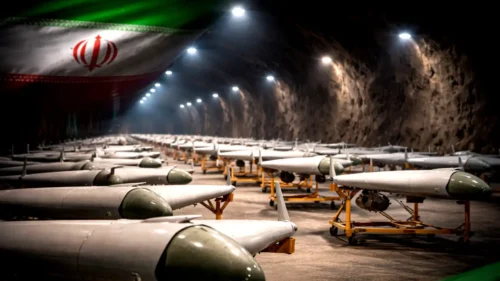
As of March 6, 2026, the statistical reality of the conflict paints a grim picture of modern mechanized warfare. Iran has launched over 2,500 total projectiles since the broader hostilities began in 2024, but the density of these launches has concentrated heavily in the immediate timeframe of Operation Epic Fury. This massive arsenal represents a culmination of years of domestic aerospace development, utilizing a combination of legacy systems and newly engineered autonomous platforms. The integration of high-speed ballistic missiles with slow-moving, low-flying suicide drones requires complex command and control capabilities, indicating a high level of operational maturity. By orchestrating the arrival times of various munitions, the offensive strategy forces defending radar systems to track and prioritize hundreds of distinct threats simultaneously, pushing human operators and automated defense algorithms to their absolute limits.
Analyzing the Arsenal: Missiles and Drones in Modern Combat
To understand the tactical complexity of Operation Epic Fury, one must deconstruct the diverse arsenal of the 2,500 total projectiles deployed. The strategy relies heavily on the concept of a “mixed threat environment,” where different types of munitions are launched to exploit the specific vulnerabilities of various defense systems.
Defense analysts have categorized the incoming ordnance to better understand the technological challenges facing allied forces. These distinct projectile classes require entirely different interception protocols and radar tracking methodologies.
- Ballistic Missiles
- Cruise Missiles
- One-Way Attack (OWA) Drones
The Role of Ballistic and Cruise Missiles
According to current conflict statistics, more than 500 ballistic and cruise missiles have been fired as part of the total 2,500 projectiles. These two categories of weapons represent the “heavy hitters” of the offensive arsenal, designed to inflict maximum structural damage upon impact. Ballistic missiles operate on a parabolic trajectory, exiting the Earth’s atmosphere before re-entering at hypersonic terminal velocities. Their sheer speed makes them incredibly difficult to intercept, providing targeted populations and military bases with merely minutes of early warning. The ballistic systems utilized in Operation Epic Fury have demonstrated increased precision, utilizing advanced guidance packages to target critical infrastructure, command centers, and air defense batteries.
Cruise missiles, conversely, present a distinctly different challenge to regional air defenses. Unlike their ballistic counterparts, cruise missiles remain within the atmosphere, flying at subsonic or supersonic speeds while hugging the terrain. By flying at extremely low altitudes, they utilize the natural curvature of the Earth and topographical features like mountains and valleys to mask their approach from early warning radar networks. The combination of these 500 ballistic and cruise missiles creates a vertical dilemma for defenders: they must simultaneously look straight up into the exosphere to intercept ballistic threats, while also scanning the horizon for low-flying cruise missiles slipping beneath the radar ceiling.
Swarm Tactics: One-Way Attack (OWA) Drones
While ballistic and cruise missiles provide the kinetic force, the true volume of the current 2026 conflict is driven by unmanned aerial systems. Over 2,000 “suicide” drones—primarily variations of the infamous Shahed models—have been deployed to overwhelm regional air defenses. These One-Way Attack (OWA) drones are the cornerstone of the modern asymmetric warfare doctrine. Propelled by simple, commercially available internal combustion engines, they are relatively slow and carry a smaller explosive payload compared to traditional missiles. However, their true value lies not in their individual destructive power, but in their sheer numbers.
The deployment of over 2,000 drones operates on the military principle of saturation. By launching these drones in massive, synchronized swarms, the offensive force intends to bleed the defenders dry. A typical Shahed drone costs tens of thousands of dollars to manufacture, making it highly expendable. When hundreds are launched simultaneously, they act as a sponge for allied air defenses, forcing the deployment of expensive surface-to-air missiles. Furthermore, the acoustic signature and psychological impact of these loitering munitions hovering over populated areas generate significant civilian distress. The primary tactical objective of these 2,000 drones is to distract, deplete, and degrade the defensive shield, thereby clearing the airspace for the more destructive, high-velocity ballistic missiles to reach their intended targets unimpeded.
Target Distribution and Regional Impact
The geographical scope of Operation Epic Fury is vast, reflecting a grand strategic objective to engage multiple adversaries across different fronts simultaneously. By diversifying the target distribution, the offensive forces ensure that no single allied nation can consolidate its defensive assets. The division of targets forces a complex diplomatic and military coordination challenge, as nations must decide whether to protect their own sovereign airspace or assist their regional partners.
Strategic commands have observed a highly calculated division of offensive attention across the Middle Eastern theater. This distribution strategy specifically targets two distinct geographical and political spheres of influence.
- Israeli sovereign territory and population centers
- United States and coalition partner sites across the broader Gulf region
The Focus on Israeli Territory
Current data reveals that approximately 40% of the Iranian launches during Operation Epic Fury have targeted Israeli territory. Israel’s geography presents a unique challenge, as it is a relatively small landmass densely populated with critical military, economic, and civilian infrastructure. The 40% allocation of over 2,500 projectiles means that roughly 1,000 distinct threats have been directed toward Israeli airspace. To counter this, Israel has relied upon its world-renowned, multi-tiered air defense architecture, which includes the Iron Dome for short-range threats, David’s Sling for medium-range cruise missiles, and the Arrow 2 and Arrow 3 systems for exo-atmospheric ballistic missile interception.
The sustained bombardment of Israeli territory has had profound societal and economic impacts. While the interception rates of the aforementioned defense systems remain technologically impressive, the sheer volume of the attacks has forced millions of civilians into bomb shelters on a near-daily basis. The disruption to the national workforce, the grounding of commercial aviation, and the localized damage from falling shrapnel and interception debris have placed an immense strain on the state. The fact that 40% of such a massive arsenal is focused on a single nation underscores the intensity of this specific front of the conflict, requiring continuous logistical resupply of interceptors from global allies to maintain the integrity of the defensive shield.
United States and Partner Sites in the Gulf
While Israel has faced a massive barrage, the majority of the offensive firepower has been directed elsewhere. The remaining 60% of the projectiles have targeted American military bases and allied infrastructure spread across the United Arab Emirates, Kuwait, Qatar, Bahrain, and Jordan. This target distribution is highly significant from a geopolitical perspective. It demonstrates a clear intent to disrupt the United States’ force projection capabilities in the Middle East and to punish nations that host American military assets or cooperate with Western defense coalitions.
The bases situated in Kuwait, Qatar, Bahrain, and Jordan serve as critical logistical hubs, naval headquarters, and forward operating bases for U.S. Central Command (CENTCOM). By targeting these locations, the offensive seeks to sever the connective tissue of the allied military apparatus. The attacks force U.S. forces to adopt a defensive posture, prioritizing base protection and personnel survival over power projection and offensive operations. Furthermore, this 60% distribution places immense diplomatic pressure on host nations. The populations and governments of Kuwait, Qatar, Bahrain, and Jordan are forced to navigate the precarious reality of having their sovereign territory transformed into active battlefields solely due to their strategic alliances with the United States.
Ground Zero in the Gulf: The Specific Case of the United Arab Emirates
Among the coalition partners, the United Arab Emirates has found itself bearing a disproportionately heavy burden of the regional fallout. The UAE is a global hub for international commerce, finance, and aviation; therefore, any disruption to its airspace has immediate and severe cascading effects on the global economy. The UAE’s geographic proximity to the origin points of the launches drastically reduces the early warning time available for its domestic air defense systems, which include the Terminal High Altitude Area Defense (THAAD) and Patriot PAC-3 batteries.
The local defense ministries have released highly detailed telemetry data regarding the incursions into their national airspace. These figures highlight the overwhelming volume of the local threat matrix.
- 186 confirmed ballistic missile detections
- 812 distinct drone incursions
The detection of 186 ballistic missiles and 812 drones within UAE airspace alone is a staggering statistic. It means that nearly 40% of the entire conflict’s drone fleet and roughly 37% of the total ballistic missile launches were routed through or targeted at the Emirates. The psychological toll on the expatriate and local population, coupled with the frequent redirection or cancellation of flights through major international hubs like Dubai and Abu Dhabi, represents a massive economic disruption. The successful interception of these 998 combined threats over the UAE requires flawlessly synchronized communication between Emirati military personnel and U.S. forces stationed within the country, highlighting the critical importance of interoperability in modern coalition warfare.
Historical Context and Escalation Patterns
To appreciate the severity of Operation Epic Fury in 2026, defense analysts must look backward. The current conflict statistics are not an anomaly; they are the predictable result of an identifiable pattern of escalation. By examining historical precedents, we can trace how operational doctrines were tested, refined, and ultimately expanded. Each previous engagement served as a proving ground for the offensive capabilities that are currently overwhelming the region.
Military historians have charted this trajectory by isolating three distinct periods of conflict prior to the current crisis. These operational milestones demonstrate a clear and steady increase in projectile volume.
- Operation True Promise in April 2024
- The single-wave barrage of October 2024
- The Twelve-Day War in June 2025
April 2024: Operation True Promise
The first major signpost on the road to Operation Epic Fury occurred in April 2024 with Operation True Promise. Prior to this event, the operational norm involved deniable proxy attacks and covert sabotage. Operation True Promise shattered that paradigm, representing a massive, direct strike that shocked the international community. During this operation, Iran launched roughly 170 drones, 30 cruise missiles, and 120 ballistic missiles, totaling approximately 320 projectiles. At the time, this was considered an unprecedented event, triggering emergency sessions of the United Nations Security Council and requiring a massive, coordinated allied response to successfully defend the targeted airspace.
However, in the context of the 2026 statistics, Operation True Promise now appears almost modest. The 320 total projectiles launched in April 2024 represent barely 12% of the 2,500+ projectiles launched in the current conflict. Yet, Operation True Promise was a critical learning experience for both sides. For the offensive planners, it provided invaluable telemetry data on how U.S., Israeli, and partner radar networks detected and prioritized threats. It revealed the response times of interceptor batteries and the effectiveness of allied electronic warfare in scrambling drone GPS guidance. Operation True Promise was essentially a live-fire reconnaissance mission that set the tactical foundation for future, larger-scale operations.
October 2024: The Single Wave Phenomenon
Following the multi-layered approach of April, the operational tactics shifted dramatically in the fall. In October 2024, the region witnessed a terrifying evolution in offensive strategy. Instead of launching a mixed wave of slow-moving drones followed hours later by missiles, offensive forces fired over 200 ballistic missiles in a single, massive wave. This operation stripped away the gradual buildup of a drone swarm and instead opted for sheer, sudden kinetic shock.
The October 2024 single-wave attack was a direct test of the maximum saturation point of allied ballistic missile defense systems. By launching over 200 high-speed exo-atmospheric threats simultaneously, the goal was to exploit the physical limitations of interceptor launchers. Even if a radar system like the AN/TPY-2 can track hundreds of targets, a Patriot or THAAD battery can only fire a finite number of interceptors before it must be manually reloaded—a process that takes precious time. The October 2024 event proved that overwhelming the defensive launch capacity in a highly compressed timeframe was a viable strategy, a lesson that was heavily incorporated into the intense, sustained ballistic barrages seen in the 2026 Operation Epic Fury.
June 2025: The Twelve-Day War
The immediate precursor to the current crisis occurred in the summer of the following year. The June 2025 engagement, heavily documented by international media as the “Twelve-Day War,” bridged the gap between the isolated strikes of 2024 and the protracted campaign of 2026. During this intense, nearly two-week period, Iran launched over 550 ballistic missiles and 1,000 drones. This conflict proved that the offensive supply chains and domestic manufacturing capabilities were robust enough to sustain high-intensity operations over an extended period.
The Twelve-Day War of June 2025 was a watershed moment. The 1,550 combined munitions launched during those twelve days demonstrated a logistical resilience that many international intelligence agencies had previously underestimated. It forced the United States and its regional partners to rapidly deplete their forward-deployed interceptor stockpiles, necessitating emergency airlifts of munitions from reserves in Europe and the continental United States. The Twelve-Day War normalized the concept of thousand-drone deployments and established the strategic blueprint that would eventually be scaled up to create the 2,500-projectile nightmare of Operation Epic Fury just nine months later.
The Economic Burden of Air Defense Interception
Beyond the immediate kinetic destruction and loss of life, Operation Epic Fury has unleashed a devastating financial war. Modern air defense is an inherently asymmetric economic proposition. The technological sophistication required to intercept a target moving at Mach 5, or to reliably strike a low-flying drone amidst civilian ground clutter, requires incredibly expensive hardware. When facing an adversary willing to deploy over 2,500 predominantly low-cost projectiles, the financial burden placed upon the defending nations becomes a strategic vulnerability in its own right.
Defense economists have been closely monitoring the burn rate of allied military budgets during this conflict. The financial metrics reveal an alarming disparity between the cost of the offensive and the cost of the defense.
- The high ratio of interceptors expended per incoming target
- The staggering multi-billion dollar cost accumulated in short timeframes
Interceptor Ratios and the Tactical Calculus
To ensure the absolute safety of civilian populations and critical military assets, defense commanders cannot rely on a one-to-one firing doctrine. If a defending battery fires a single interceptor at an incoming ballistic missile and that interceptor misses or malfunctions, the resulting impact could kill hundreds of people or destroy a multi-million-dollar radar installation. Therefore, the standard operating procedure dictates a much heavier response. Current conflict statistics from 2026 reveal that the U.S. and Israel are expending interceptors at a 3-to-1 or 4-to-1 ratio to ensure successful hits on incoming targets.
This means that for every single ballistic missile detected, defensive batteries are launching three to four interceptors. When applied to the 500 ballistic and cruise missiles fired during the conflict, allied forces may have expended upwards of 2,000 advanced interceptors just to counter the missile threat. Furthermore, the engagement of the 2,000 One-Way Attack drones, even when targeted by relatively cheaper systems or aircraft-fired air-to-air missiles, compounds the problem. The 3-to-1 or 4-to-1 ratio guarantees a high success rate—vital for maintaining public morale and structural integrity—but it mathematically guarantees the rapid depletion of defensive stockpiles, playing perfectly into the offensive strategy of economic and logistical exhaustion.
The Multi-Billion Dollar Price Tag
The financial culmination of these tactical doctrines is nothing short of staggering. Based on independent defense analysis and military disclosures, the estimated cost of maintaining this defensive shield reached an astounding $6.5 billion in just the first week of the 2026 conflict. This figure encompasses the replacement costs of systems like the SM-3 (Standard Missile 3), which can cost upwards of $10 million to $25 million per unit, Patriot PAC-3 MSE missiles at approximately $4 million each, and the relatively cheaper, yet heavily utilized, Iron Dome Tamir interceptors at roughly $50,000 each.
A $6.5 billion expenditure in a single week is an unsustainable financial burn rate for any nation, even global superpowers. It represents a massive diversion of national wealth away from domestic programs, infrastructure, and forward-looking defense research, funneling it directly into atmospheric detonations. The true strategic victory for the offensive forces in Operation Epic Fury may not be measured in the physical targets destroyed, but in the severe economic hemorrhage inflicted upon the U.S., Israel, and Gulf partners. Forcing an adversary to spend $6.5 billion in seven days to shoot down munitions that cost a fraction of that amount to produce is the ultimate realization of modern asymmetric economic warfare.
Geopolitical Ramifications of Operation Epic Fury
The sheer scale of Operation Epic Fury, evidenced by the launch of 2,500 projectiles and the subsequent $6.5 billion weekly defense cost, has accelerated major geopolitical realignments across the globe. The Middle East is no longer viewed simply as a theater for localized disputes; it has become the primary testing ground for the future of global warfare. The data gathered from this 2026 conflict is being meticulously analyzed by military establishments in Europe, Asia, and beyond, as every nation realizes that drone swarms and hypersonic ballistic saturation are the new standards of engagement.
For the United States, the allocation of 60% of the threat matrix against its partner sites forces a harsh reevaluation of its force posture. The political appetite for maintaining vulnerable forward operating bases in the UAE, Kuwait, Qatar, Bahrain, and Jordan is being heavily scrutinized in Washington. The host nations, conversely, are questioning the reliability and sustainability of Western air defense umbrellas if the interceptor stockpiles cannot outlast the enemy’s production lines. This friction threatens to fracture historical alliances, potentially driving Gulf nations to seek diversified security guarantees or pursue their own aggressive domestic military-industrial expansions to offset their reliance on American interceptors.
For Israel, the 40% target distribution reinforces the existential nature of its national defense strategy. The daily reality of repelling massive drone and missile barrages solidifies the nation’s military-first societal structure, likely delaying any long-term regional diplomatic normalization processes. The sustained attacks validate the absolute necessity of multi-layered defense but also highlight the vulnerability of being geographically isolated and entirely reliant on constant, flawless technological interception.
The Future of Warfare and Conclusion
Operation Epic Fury will undoubtedly be recorded as a defining moment in the history of 21st-century warfare. As of March 6, 2026, the statistics tell a story of an operational environment pushed beyond all historical precedents. The deployment of over 2,500 total projectiles, including 500 ballistic and cruise missiles and an overwhelming swarm of 2,000 One-Way Attack drones, has fundamentally validated the doctrine of aerial saturation. The targeted distribution, dividing the allied defense grid between Israel and a vast network of U.S. and partner sites in the Gulf, showcases a sophisticated grand strategy designed to strain coalition interoperability and logistical supply chains.
The historical progression is undeniable. From the 320 projectiles of April 2024 to the 200-missile wave of October 2024, and the 1,550 munitions of the June 2025 Twelve-Day War, the warning signs of this massive escalation were clearly visible to independent monitors and military officials alike. However, recognizing the pattern and defending against it are two entirely different tasks. The terrifying 3-to-1 and 4-to-1 interceptor ratios required to maintain airspace security have resulted in a crippling economic burden, evidenced by the $6.5 billion expenditure in a single week.
As Operation Epic Fury continues to unfold, the global defense community is learning a harsh lesson. The era of impenetrable, cost-effective air defense is over. The advantage currently lies with the mass production of low-cost, offensive unmanned systems and the ruthless application of ballistic saturation. Until allied nations can develop and field highly economical, infinite-magazine defense technologies—such as directed energy weapons or high-powered microwaves—they will remain trapped in an unsustainable financial and logistical war of attrition. Operation Epic Fury is not just a regional conflict; it is a violent, undeniable preview of the future of global combat.