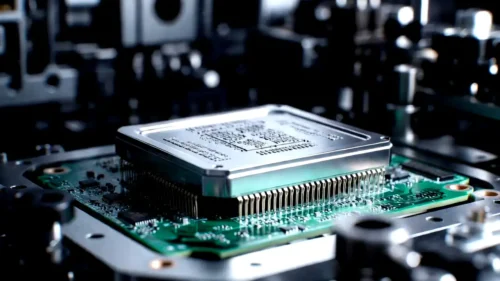


If you want to understand the modern trade war, look inside your computer. The tiny microchips that power your laptop, your car, and your phone sit at the absolute center of a massive global conflict. Governments no longer just fight over steel and wheat. They fight over computing power. And they use strict export limits to wage this battle.
A microchip is not easy to make. It requires billions of dollars, dust-free factories, and the smartest engineers on the planet. Only a few companies in the world know how to make the most advanced chips. These companies sell their chips to gadget makers all over the world.
Recently, powerful governments realized these chips run more than just video games. They run military drones, spy satellites, and advanced weapons systems. Politicians decided they could not let their rivals buy these powerful chips. They passed new laws completely blocking the export of top-tier technology.
If you run a chip company, this new rule ruins your business model overnight. You spent years developing a fast new processor. You lined up buyers in foreign countries. Suddenly, your own government tells you that you cannot put those chips on a plane. If you sell them to the banned country, the government will throw you in jail and shut your company down.
The chip company instantly loses billions of dollars in sales. They have warehouses full of expensive chips and nobody to sell them to. Because they lose all that money, they have less cash to invent the next generation of chips. The government’s rule hurts the very companies it relies on for technological leadership.
The banned country does not just give up and go back to the Stone Age. When they cannot buy the chips they need, they get angry. They pour massive amounts of government money into their own universities and tech companies. They hire away top scientists from other countries. They vow to figure out how to make the chips themselves.
In the short term, the export ban works. The rival country struggles to build advanced computers. But in the long term, the ban forces the rival to become completely independent. Once the rival figures out how to make the chips, they never need to buy them from anyone else ever again.
These tech export rules also trap innocent companies in the crossfire. A factory that makes simple remote controls might get cut off from basic parts because of confusing government paperwork. Customs agents seize computer parts at the border, unsure if they violate the new, complicated rules.
Governments think they can control the spread of technology by writing laws on a piece of paper. But knowledge always finds a way to travel. By blocking tech exports, countries just force their rivals to work harder and innovate faster. The trade war in technology creates parallel worlds, completely splitting the global internet and the devices we use to connect to it.