
Since the dawn of human civilization, the night sky has served as a canvas for our deepest curiosities and highest aspirations. For decades, the collective imagination of the globe was captivated by the Apollo missions, which briefly transformed the Moon from a distant celestial body into a destination. However, following the conclusion of that historic era, human spaceflight largely retreated to the familiar confines of low Earth orbit. Generations have grown up with astronauts living and working continuously aboard space stations, conducting vital research but never venturing beyond the immediate gravitational embrace of our home planet. Today, the narrative of human spaceflight is undergoing a monumental transformation. The Artemis program represents a renewed, unified global effort to return humans to deep space, not just to visit, but to establish a sustainable and enduring presence. At the very heart of this ambitious endeavor is the Artemis II lunar mission.
As the first crewed spacecraft to travel to the Moon in over half a century, Artemis II marks a massive step in space exploration, bridging the gap between the uncrewed tests of the past and the lunar surface landings of the future. This historic flight will see a crew of highly trained astronauts embark on a daring journey, initially orbiting the Earth to test critical systems, sending back breathtaking, high-definition images of our blue planet, and finally propelling themselves into a trajectory that will take them on a fly-around of the Moon. This mission is not merely an American triumph; it is a testament to international cooperation, technological ingenuity, and the unyielding human spirit. By pushing the boundaries of what is possible, Artemis II sets the stage for a new era of discovery that will ultimately lead humanity toward Mars and beyond.
The journey to the Moon is a multifaceted endeavor that requires a deep understanding of its historical context and global significance. To truly appreciate the magnitude of Artemis II, we must first look at the foundations upon which this new lunar era is built.
The Dawn of a New Lunar Era
The return to the Moon is not a repetition of past achievements, but rather a completely new paradigm in space exploration. The Artemis program, named after the twin sister of Apollo in Greek mythology, is designed with modern objectives and utilizes advanced technologies that were entirely unimaginable in the mid-twentieth century. This new era shifts the focus from a frantic, geopolitically driven space race to a strategic, sustainable, and scientifically rich campaign for deep-space habitation.
Understanding the transition from historical lunar exploration to the modern Artemis program reveals the profound evolution of our global spacefaring capabilities.
The Legacy of Apollo and the Artemis Vision
The Apollo missions were driven by the geopolitical pressures of the Cold War, serving primarily as demonstrations of ideological and technological superiority. The objective was clear and singular: land a human on the Moon and return them safely to the Earth before a rival nation could do so. Once that goal was achieved, the political will and financial backing for deep space exploration quickly waned. In stark contrast, the vision for the Artemis program is rooted in long-term sustainability and scientific discovery. Artemis aims to build a comprehensive infrastructure, including an orbiting lunar gateway and surface habitats, allowing humans to live and work in deep space for extended periods. Artemis II serves as the critical proving ground for this vision, ensuring that the vehicles, life support systems, and navigational protocols can safely sustain human life in the harsh radiation environment beyond low Earth orbit.
This monumental leap in capability is no longer the isolated pursuit of a single nation. The sheer complexity and cost of modern space exploration demand a unified, planetary approach.
A Global Collaborative Effort
While the United States space agency spearheads the Artemis program, the initiative is deeply international in its scope and execution. The modern era of space exploration recognizes that the challenges of deep space are too vast for any one country to tackle alone. Artemis II exemplifies this global collaboration, featuring critical contributions from international space agencies across Europe, Canada, Japan, and beyond. From the provision of essential spacecraft components, such as the European Service Module, which provides power and propulsion, to the inclusion of international astronauts in the crew, the mission is a triumph of global diplomacy. This collaborative framework not only distributes the financial and technological burdens but also ensures that all of humanity shares the scientific discoveries and inspirational benefits of the mission.
With the program’s foundational philosophy established, the mission’s intricate mechanics come into focus. The flight path of Artemis II is a marvel of orbital mechanics and precise engineering.
Unveiling the Artemis II Mission Profile
The trajectory of the Artemis II mission is meticulously designed to test the limits of both the spacecraft and its human occupants while maintaining stringent safety margins. Unlike a direct shot to the Moon, this mission profile incorporates several crucial phases in Earth orbit, allowing the crew and mission control to verify the functionality of life-support, communication, and manual-piloting systems before committing to the journey across the cislunar void.
The mission is divided into several distinct phases, each carrying its own set of critical objectives and challenges.
Launch and High Earth Orbit
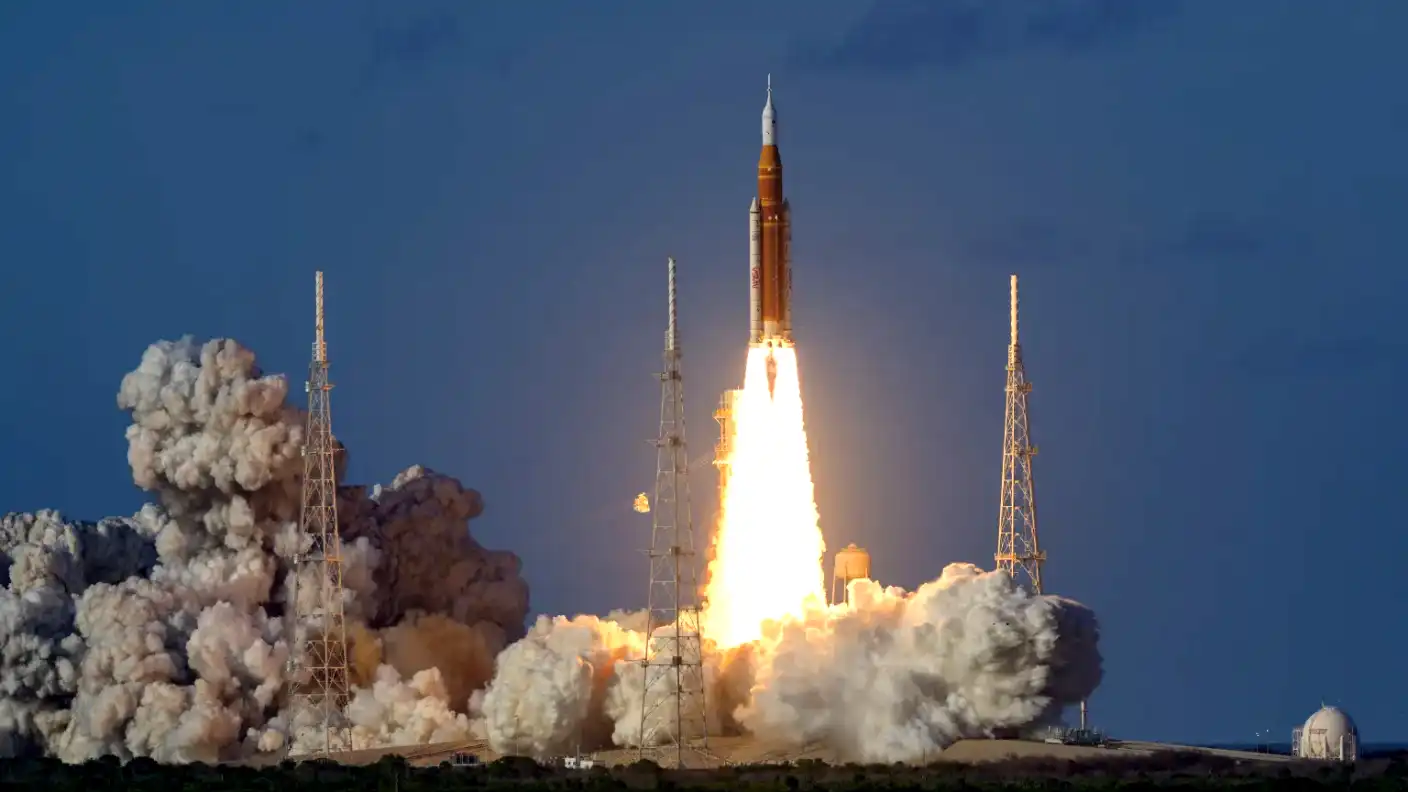
The mission begins with a thunderous launch from the spaceport, propelled by the most powerful rocket ever successfully flown. After the initial ascent and the shedding of the solid rocket boosters and the core stage, the crewed spacecraft will enter a highly elliptical orbit around Earth. This phase is uniquely critical to the Artemis II profile. Instead of immediately firing the engines for the Moon, the astronauts will spend an extended period—over a day—orbiting the Earth. During this high Earth orbit phase, the crew will conduct extensive checkouts of the spacecraft’s life support systems, thermal controls, and manual maneuvering capabilities. By remaining relatively close to home, the crew retains the option to abort the mission and safely return to Earth should any critical anomalies arise.
During this checkout phase, the crew will also utilize advanced communication arrays to share their journey with the billions of people watching from below. The visual data transmitted during this time will be historically significant.
Capturing the Cosmos: Images from Orbit
As the astronauts orbit Earth at altitudes far higher than those of the International Space Station, they will be treated to a vantage point few humans have ever experienced. A major highlight of this phase is the crew using upgraded optical communication systems to transmit ultra-high-definition video and images. These initial broadcasts will showcase the “blue marble” of Earth set against the infinite blackness of space, providing a profound visual reminder of the fragility and beauty of our home planet. These images serve a dual purpose: they act as a vital test of the deep space network and laser communication technologies that will be essential for future lunar surface missions, and they serve to engage and inspire the global public, bringing the visceral experience of spaceflight directly to screens around the world.
Once the spacecraft systems are fully verified and the breathtaking images from Earth orbit have been transmitted, the crew will prepare for the most critical maneuver of the mission.
The Lunar Fly-Around and Free-Return Trajectory
Upon receiving the “go” from mission control, the spacecraft will execute the Trans-Lunar Injection (TLI) burn, accelerating the crew out of Earth’s gravity well and toward the Moon. The Artemis II mission uses a free-return trajectory. This means that the spacecraft’s flight path resembles a massive figure-eight. The vehicle will fly around the far side of the Moon, using the Moon’s gravity to naturally slingshot the spacecraft back toward Earth without requiring an additional major engine burn. This trajectory is a vital safety feature, ensuring that even if the primary propulsion system failed after the TLI burn, the laws of physics would guide the crew safely back home. During the lunar flyby, the astronauts will travel farther into the solar system than any human has in decades, gazing upon the heavily cratered far side of the Moon before setting their sights on the fiery reentry into Earth’s atmosphere.
The successful execution of this complex mission profile is entirely dependent on the cutting-edge vehicles designed to carry humanity into the cosmos.
The Technological Marvels Powering the Journey
To send a crewed vehicle to the Moon, navigate deep space, and return it safely through the searing heat of atmospheric reentry requires technological systems of unimaginable power and precision. The Artemis II mission serves as the ultimate crewed flight test for two of the most advanced pieces of aerospace engineering ever constructed. These vehicles represent decades of research, development, and testing by thousands of engineers and scientists across the globe.
Understanding the capabilities of these machines highlights the immense technological leap that the Artemis program represents.
The Space Launch System (SLS)
The vehicle responsible for lifting the crew and their spacecraft off the launch pad is the Space Launch System (SLS). The SLS is a super-heavy-lift expendable launch vehicle designed specifically for deep space missions. Producing millions of pounds of thrust at liftoff, it is the only rocket currently capable of sending the crewed spacecraft, its service module, and all necessary cargo directly to the Moon in a single mission. The architecture of the SLS combines the proven reliability of upgraded legacy engines with state-of-the-art solid rocket boosters and a massive core stage filled with cryogenic liquid hydrogen and liquid oxygen. The sheer power of the SLS is a prerequisite for overcoming Earth’s immense gravitational pull and achieving the velocities required for trans-lunar injection.
Once the SLS has completed its job and separated from the payload, the astronauts will rely entirely on the capsule that will serve as their home, laboratory, and lifeboat for the duration of the mission.
The Orion Spacecraft and Life Support
The Orion spacecraft is the technological crown jewel of the Artemis program, designed specifically to sustain human life in the unforgiving environment of deep space. Unlike spacecraft designed for short trips to low Earth orbit, Orion is equipped with a highly advanced Environmental Control and Life Support System (ECLSS) capable of regulating atmosphere, filtering carbon dioxide, and managing moisture for extended periods without resupply. Furthermore, the spacecraft consists of a crew module, where the astronauts live and work, and a service module, provided by international partners, which houses the main propulsion system, solar arrays for power generation, and critical thermal control systems.
A paramount technological feature of Orion is its heat shield. Upon returning from the Moon, the spacecraft will enter Earth’s atmosphere at speeds exceeding Mach 32, generating temperatures hotter than the Sun’s surface. The advanced ablative heat shield is designed to withstand this extreme thermal environment, safely protecting the crew as the capsule decelerates before deploying its parachutes for a gentle ocean splashdown.
While rockets and capsules are marvels of engineering, the true heart of the Artemis II mission lies within the individuals who will fly them.
The Human Element: Meet the Vanguard of Deep Space
Space exploration is often discussed in terms of thrust, delta-v, and hardware, but the ultimate purpose of the Artemis program is human discovery. The crew of Artemis II represents the vanguard of a new generation of explorers. Their journey is not just a triumph of engineering, but a profound demonstration of human courage, endurance, and intellect. These astronauts are tasked with laying the operational groundwork that will keep future lunar surface crews safe.
The selection of the crew for this historic mission carries immense cultural and geopolitical significance, reflecting the modern values of the global spaceflight community.
A Diverse and International Crew
The era in which deep space exploration was the exclusive domain of a single demographic has ended. The Artemis II crew is purposefully diverse, reflecting the vast spectrum of humanity that they represent. The inclusion of the first woman, the first person of color, and the first international partner astronaut on a lunar mission shatters historical ceilings. It sets a new precedent for inclusivity in aerospace. This diversity is not merely symbolic; it ensures that a wide array of perspectives, problem-solving approaches, and operational experiences are brought to bear on the challenges of deep space flight. The international presence on the crew highlights the binding nature of international space treaties and cooperative agreements, proving that the future of exploration belongs to a united global community.
The individuals selected for this mission must possess extraordinary mental and physical resilience to survive the rigors of the journey.
The Psychological and Physical Demands
Traveling to the Moon subjects the human body and mind to extreme stressors that cannot be fully replicated on Earth. The astronauts of Artemis II will experience the disorienting effects of prolonged microgravity, which induces fluid shifts, muscle atrophy, and bone density loss. Beyond the physical toll, the psychological demands are immense. The crew will be confined to a volume roughly the size of a large van for over a week, entirely isolated from the rest of humanity.
As they travel hundreds of thousands of kilometers from Earth, they will experience the “Overview Effect”—a profound cognitive shift often reported by astronauts when viewing the Earth as a fragile, borderless sphere suspended in the dark void. Managing the psychological weight of this isolation, coupled with the high-stakes pressure of testing new spacecraft systems in a lethal environment, requires rigorous psychological training and unbreakable crew cohesion.
To ensure the safety of this crew and all who will follow them, Artemis II is packed with an array of scientific and technological experiments.
Scientific and Technological Objectives
While the primary goal of Artemis II is to prove the flight readiness of the Orion spacecraft with humans aboard, the mission is also a vital opportunity to gather scientific data and test new technologies. The information collected during this lunar fly-around will directly inform the design of future habitats, spacesuits, and operational protocols for Artemis III and beyond.
The mission objectives are meticulously planned to maximize the return on investment for the global scientific community. The following areas represent the core testing objectives:
- Manual Piloting and Proximity Operations: The crew will take manual control of the Orion spacecraft to test its handling characteristics, ensuring astronauts can manually dock with future lunar stations if automated systems fail.
- Deep Space Navigation: Testing optical navigation systems that use star tracking and lunar landmarks to determine the spacecraft’s exact position without relying solely on Earth-based tracking.
- Life Support Stress Testing: Pushing the carbon dioxide removal and thermal regulation systems to their limits to ensure they can handle the metabolic loads of a full crew during periods of high physical activity.
Among these objectives, two critical areas of focus are essential to the long-term viability of deep-space habitation.
Testing Deep Space Communications
Communication is the lifeline of any space mission. As humanity ventures farther from Earth, traditional radio-frequency communications suffer from limited bandwidth and latency. Artemis II will test advanced optical communication systems, using lasers to transmit massive amounts of data back to Earth. This technology enables the rapid transfer of high-definition video, complex telemetry, and scientific data packages at speeds far superior to those of traditional radio waves. The successful demonstration of these laser communication arrays during the Earth-orbit and translunar phases of the mission will revolutionize how we connect with future outposts on the Moon and, eventually, on Mars.
Equally important to communication is protecting the crew from the invisible hazards of deep-space environments.
Radiation Monitoring and Crew Safety
Beyond the protective bubble of Earth’s magnetic field, space is a highly radioactive environment. Astronauts traveling to the Moon are exposed to galactic cosmic rays and sudden solar particle events (solar flares) that can cause acute radiation sickness and long-term cellular damage. Artemis II will carry an array of sophisticated radiation sensors positioned throughout the Orion cabin and on the astronauts themselves.
Furthermore, the mission will test the effectiveness of physical radiation shielding, including specialized protective vests designed to shield the crew’s vital organs during sudden solar storms. The data gathered from these dosimeters and shielding tests is absolutely critical for establishing the safety protocols and habitat designs required for long-duration lunar surface missions and the eventual multi-year transit to the Red Planet.
The technological triumphs and scientific data resulting from Artemis II will reverberate far beyond the aerospace industry, influencing global politics and societal inspiration.
The Global Impact of the Artemis Program
The return of humanity to the Moon is a geopolitical and cultural milestone that transcends the mission’s technical achievements. The Artemis program operates as a powerful instrument of soft power, fostering international diplomacy and establishing the legal and ethical frameworks that will govern humanity’s expansion into the solar system.
By leading this global coalition, the participating nations are actively shaping the future of space commerce, resource utilization, and planetary defense.
The Artemis Accords and International Law
The foundation of this global collaboration is the Artemis Accords, a series of multilateral agreements designed to establish a common set of principles for the civil exploration and use of the Moon, Mars, comets, and asteroids. As nations prepare to send hardware and humans to the lunar surface, the potential for conflicts over landing sites, scientific data, and space resources increases. The Accords promote peaceful exploration, transparency, the interoperability of hardware, and the protection of space heritage sites (such as the Apollo landing zones). The Artemis II mission serves as the first crewed operationalization of these principles, demonstrating to the world that the next era of space exploration will be defined by international cooperation and the rule of law, rather than a chaotic land grab.
Beyond international treaties, the cultural impact of sending humans back to the Moon is perhaps the mission’s most profound legacy.
Inspiring the Artemis Generation
The Apollo missions inspired a generation of scientists, engineers, and dreamers, leading to a massive surge in technological innovation that fueled the digital revolution. Artemis II aims to ignite that same spark for the modern era. The “Artemis Generation” is growing up in a world where deep-space exploration is a reality, not just a historical footnote. By sending diverse crews to orbit the Moon and beaming back high-definition footage of their journey, the mission makes space accessible and relatable to billions of young people around the globe. This immense inspirational power is vital for driving global interest in Science, Technology, Engineering, and Mathematics (STEM) education, ensuring that the world has the intellectual capital required to solve the complex challenges of the coming centuries.
While Artemis II is a historic achievement in its own right, it is fundamentally a stepping stone toward an even more ambitious future.
Paving the Way for Artemis III and Beyond
The ultimate success of Artemis II is measured not just by the safe return of its crew, but by how effectively it prepares humanity for what comes next. The data, operational experience, and technological validations achieved during this lunar fly-around are the direct prerequisites for the ultimate goal of the Artemis program: returning human boots to the lunar dust.
The transition from orbiting the Moon to establishing a surface presence requires an entirely new suite of hardware and operational doctrines, all of which rely on the foundation laid by Artemis II.
The Stepping Stone to a Lunar Surface Landing
Artemis III is slated to be the mission that finally returns humans to the Moon’s surface, specifically targeting the lunar South Pole—a region believed to harbor vast reserves of water ice hidden in permanently shadowed craters. The success of Artemis III relies on the Orion spacecraft performing flawlessly, a fact that the Artemis II crew will prove. Furthermore, Artemis II will validate the docking procedures and life-support endurance required for Orion to eventually rendezvous with the planned Lunar Gateway—a small space station that will orbit the Moon—and with the commercial Human Landing Systems (HLS) that will ferry astronauts from lunar orbit down to the surface. Without the rigorous stress testing provided by Artemis II, surface landings would carry unacceptable levels of risk.
However, the Moon is not the final destination. It is merely a proving ground for the ultimate prize of human exploration.
Mars and the Horizon of Human Exploration
Every system tested, every protocol developed, and every ounce of radiation data collected during the Artemis II mission is ultimately directed toward a single, monumental horizon: the human exploration of Mars. The Moon serves as an ideal analog for Martian exploration. It is only a few days’ travel from Earth, allowing for relatively rapid aborts and resupply missions if something goes wrong. By learning how to build sustainable habitats, extract water from extraterrestrial soil, and operate complex life-support systems in the deep-space environment of the Moon, humanity is writing the survival manual for the multi-year journey to the Red Planet. Artemis II is the critical mission that shifts humanity from the theory of deep space travel to its operational reality, setting the wheels in motion for the first human footsteps on Martian soil.
Conclusion
The Artemis II lunar mission represents a watershed moment in the history of human civilization. It is the definitive turning point where humanity ceases its confinement to low Earth orbit and boldly reclaims its place in the deep cosmos. By sending a diverse, international crew to orbit Earth, test cutting-edge life-support and communication systems, and execute a daring flyaround of the Moon, Artemis II proves that our technological capabilities have finally caught up with our grandest ambitions.
This mission is a testament to the power of global collaboration, demonstrating that when nations unite behind a shared vision of peaceful exploration, the impossible becomes achievable. As the Orion spacecraft streaks back through Earth’s atmosphere, carrying the vanguard of the Artemis Generation safely home, it will also carry the data and operational confidence required to establish a permanent human presence on the Moon. Artemis II is not just a mission to orbit our closest celestial neighbor; it is the resounding declaration that humanity is, and always will be, a species of explorers, forever pushing the boundaries of the unknown as we reach toward Mars and the infinite stars beyond.