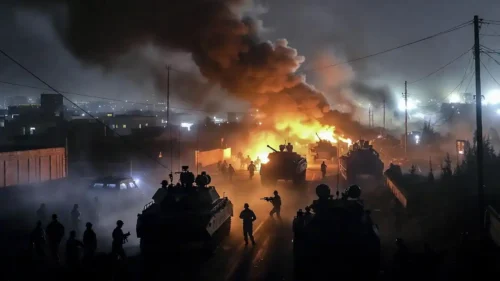

The geopolitical landscape of the Middle East has entered an unprecedented and volatile new chapter. The United States maintains a highly complex, deeply debated, and highly scrutinized position regarding its fundamental ability to sustain a long-term, high-intensity conflict with the Islamic Republic of Iran. As the initial phases of military engagement commence, a massive debate has erupted within the corridors of the Pentagon, defense think tanks, and the highest levels of the federal government. At the core of this debate is a singular, overriding question: Does the United States truly possess the industrial capacity and military stockpile required to wage a sustained, multi-year war in the Persian Gulf? While the political rhetoric projecting American dominance remains as resolute as ever, the underlying logistical and supply chain realities present a far more nuanced and challenging picture.
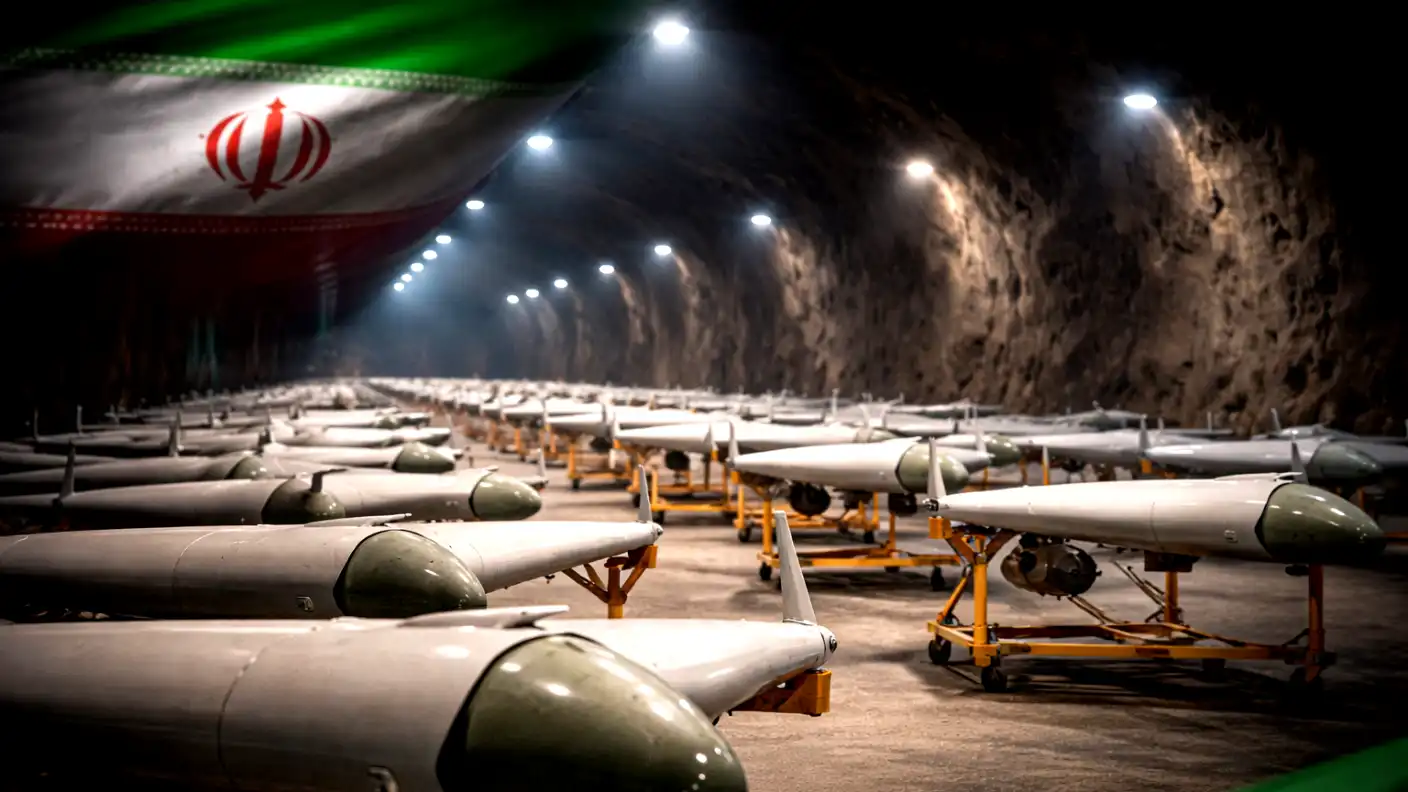
President Donald Trump has aggressively projected an image of absolute military supremacy, claiming on multiple occasions that the United States possesses a “virtually unlimited supply” of munitions, granting the military the capacity to fight “forever” if necessary. This framing is designed to project deterrence and absolute resolve. However, independent military analysts, defense contractors, and internal Pentagon readiness reports highlight significant, potentially critical gaps in high-end weaponry. The modern battlefield is no longer solely dictated by the sheer volume of troops or traditional armor; it is defined by precision, interception capabilities, and advanced technological dominance. Engaging Iran—a nation that has spent decades fortifying its asymmetric warfare capabilities, developing massive indigenous missile production facilities, and deeply embedding its military infrastructure into mountainous terrain—presents a logistical hurdle unlike any faced by the United States since the end of the Cold War.
The scope of this potential “forever war” requires a complete reevaluation of American military sustainability. Unlike counter-insurgency operations in Afghanistan or Iraq, a sustained conflict with Iran involves confronting a heavily armed, technologically capable nation-state. This necessitates a continuous, uninterrupted flow of advanced interceptors, smart bombs, and electronic warfare capabilities. To understand the true capacity of the American military apparatus, one must critically analyze the current status of the U.S. national stockpile, the deeply troubling economics of asymmetric warfare, the strategic vulnerabilities created in other global theaters, and the staggering financial burden of modern combat operations.
The Current State of U.S. Military Stockpiles
Assessing the true depth of the United States military stockpile reveals a stark dichotomy between older, traditional munitions and the highly advanced systems required for twenty-first-century warfare. The United States has spent decades accumulating vast reserves of certain classes of weaponry while simultaneously struggling to maintain adequate inventories of the cutting-edge systems that define modern defense strategies.
The “Unlimited” Arsenal of Mid-Tier Munitions
When President Trump confidently stated that stockpiles of medium and upper-medium grade weapons have “never been higher,” he was referring to a specific tier of the American military arsenal. Mid-tier munitions generally encompass standard artillery shells, traditional unguided rockets, older variants of air-to-ground missiles, and small arms ammunition. These are the foundational tools of conventional warfare, and the U.S. defense industrial base has historically excelled at mass-producing these items. For decades, factories across the United States have churned out these standard munitions to support various global deployments, training exercises, and strategic reserves.
The assertion that these supplies could sustain a conflict “indefinitely” is rooted in the sheer volume of these older reserves. The U.S. military possesses millions of rounds of traditional ammunition and thousands of standard bombs that have been stockpiled over consecutive administrations. In a theoretical scenario where a war devolves into a purely conventional, ground-based war of attrition, this massive reserve of mid-tier weaponry provides a significant buffer. The logistical infrastructure required to transport, store, and deploy these munitions is already well-established and deeply integrated into the military’s global supply chain.
However, the modern battlefield rarely relies exclusively on mid-tier munitions. While having an “unlimited” supply of these conventional weapons is undoubtedly a strategic asset, it does not guarantee victory against a technologically sophisticated adversary. Iran’s military strategy relies heavily on advanced ballistic missiles, swarming drone tactics, and sophisticated air defense systems. Countering these threats requires weapons that fall outside the “mid-tier” classification. Therefore, while the political rhetoric emphasizing these massive stockpiles serves a vital purpose in psychological warfare and domestic political messaging, military planners remain acutely aware that an abundance of older weapons cannot compensate for a deficit in the advanced technologies required to penetrate fortified enemy airspace and intercept hypersonic threats.
The Deficit in High-End Weaponry
In a rare moment of candid public assessment regarding military vulnerabilities, the President admitted that the United States is “not where we want to be” regarding its most advanced, highest-end weapons. This admission underscores a growing crisis within the defense procurement apparatus. High-end weaponry includes hypersonic glide vehicles, advanced stealth cruise missiles, long-range anti-ship missiles, and the most sophisticated electronic warfare pods. These systems represent the absolute pinnacle of military technology, designed to evade enemy radar, strike with pinpoint accuracy from hundreds of miles away, and neutralize highly fortified strategic targets.
The shortage of these high-end assets is not a sudden development but rather the culmination of years of structural challenges within the defense industrial base. Manufacturing these advanced weapons is an incredibly complex, time-consuming, and resource-intensive process. They require rare earth minerals, highly specialized microchips, incredibly tight manufacturing tolerances, and a highly skilled workforce of aerospace engineers and specialized technicians. Unlike mid-tier artillery shells, which can be stamped out by the thousands in traditional munitions plants, high-end cruise missiles are practically built by hand in limited-capacity facilities.
Furthermore, the stringent testing requirements and quality control measures necessary for these advanced systems significantly extend their production timelines. When a conflict requires the rapid deployment and expenditure of these elite weapons, the U.S. military rapidly burns through years of accumulated inventory. Replacing them is not a matter of simply turning up a dial on a factory floor; it requires years of lead time. This deficit severely limits the military’s ability to sustain high-intensity, long-range precision strike campaigns over an extended period, forcing tactical commanders to make difficult decisions about when and where to deploy their most valuable assets.
Critical Interceptor Deficits and Air Defense Challenges
Perhaps the most alarming vulnerability in the current U.S. military posture is the growing concern regarding the dwindling supply of critical air defense interceptors. Specifically, the military faces a severe deficit in the availability of Terminal High Altitude Area Defense (THAAD) and Patriot missile systems. These interceptors are the absolute backbone of the defensive umbrella, essential for protecting American military bases, naval assets, and allied infrastructure from incoming Iranian ballistic missiles and coordinated drone swarm attacks.
Iran has spent decades building the largest and most diverse ballistic missile arsenal in the Middle East, specifically designing weapons intended to overwhelm American defense systems. To counter this, U.S. forces rely heavily on the Patriot Advanced Capability-3 (PAC-3) and THAAD interceptors. However, the stockpile of these critical defensive weapons is dangerously low. Every time an Iranian missile is launched, U.S. commanders must expend one or more of these precious interceptors to ensure the safety of their forces. As the volume of incoming fire increases, the mathematical reality of the interceptor deficit becomes terrifyingly clear.
Military logisticians are currently evaluating the depth of our national reserves to ensure continuous combat effectiveness.
The following factors highlight the specific constraints within our strategic munitions reserves:
- Limited manufacturing facilities capable of producing THAAD system components.
- Extended supply chain delays for specialized solid-rocket motors required for interceptors.
- The necessity of maintaining a strategic reserve for homeland defense, further limiting deployable assets.
- The continuous degradation of existing radar and launch platforms due to high operational tempos.
The deficit in THAAD and Patriot missiles forces U.S. commanders into a highly precarious defensive posture. They are forced to prioritize which assets receive full defensive coverage and which must rely on secondary or tertiary defense measures. This interceptor shortfall not only threatens the immediate safety of deployed service members but also emboldens the adversary, who understands that a sustained barrage can eventually deplete the American defensive shield, leaving strategic targets entirely vulnerable to devastating strikes.
The Precision Weapon Drain and the Return to Gravity Bombs
Another major operational challenge currently confronting the Pentagon is the rapid depletion of precision-guided munitions (PGMs). PGMs, which include systems like the Joint Direct Attack Munition (JDAM) and various laser-guided bombs, have been the hallmark of American airpower for the last three decades. They allow military planners to strike targets with incredible accuracy, minimizing collateral damage and maximizing the effectiveness of every sortie flown. However, reports indicate that the U.S. is draining its stocks of precision-guided munitions at an alarming, unprecedented rate.
As the sophisticated Iranian air defenses are systematically degraded during the initial phases of conflict, U.S. tactical air commands are being forced to execute a major shift in their ordnance deployment strategy. Due to the rapid depletion of expensive guidance kits and smart bombs, the military is transitioning toward the use of larger, fundamentally less-sophisticated gravity bombs, typically ranging from 500 to 2,000 pounds. This tactical reversion represents a significant step backward in the evolution of modern aerial warfare and introduces a host of new operational risks.
Dropping unguided gravity bombs requires strike aircraft to fly lower, closer to their targets, and along more predictable flight paths compared to launching stand-off precision weapons. This vastly increases the vulnerability of multi-million-dollar fighter jets and their highly trained pilots to surviving enemy surface-to-air missiles and localized anti-aircraft artillery. Furthermore, the use of larger gravity bombs significantly increases the blast radius, intentionally causing wider destruction but simultaneously escalating the risk of unintended civilian casualties and broader infrastructural damage. This operational shift underscores the harsh reality that even the most technologically advanced military in human history is ultimately constrained by the physical limits of its munitions supply chain.
Asymmetric Warfare and the Brutal “Missile Math”
Sustaining a “forever war” against Iran requires more than just evaluating the depth of American stockpiles; it demands a rigorous analysis of the underlying production capabilities and economic realities of both combatants. The current conflict heavily features asymmetric warfare, where Iran utilizes relatively cheap, easily mass-produced weapons to challenge the highly expensive, sophisticated defensive systems of the United States. This dynamic has created a deeply unbalanced mathematical equation that severely threatens long-term U.S. military sustainability.
Production Versus Consumption Disparities
The core of the strategic challenge lies in the staggering disparity between American production capabilities and Iranian weapon consumption. The U.S. defense industry, optimized for precision and complexity over sheer volume, produces approximately 700 Patriot missiles per year. While these missiles are technological marvels with incredibly high interception success rates, the production rate of less than two missiles per day is woefully inadequate for the demands of a high-intensity, theater-wide conflict.
Conversely, Iran has developed a robust, decentralized, and highly resilient domestic arms industry. By relying on simplified designs, reverse-engineered technology, and commercially available components sourced through complex illicit networks, Iran can reportedly produce over 100 ballistic missiles and a staggering 5,000 kamikaze drones per month. This means Iran is capable of generating significantly more offensive threats in a single week than the United States can produce defensive interceptors in an entire year.
This production versus consumption disparity creates a ticking clock for U.S. commanders. In a prolonged conflict, Iran does not necessarily need to overpower the United States militarily; it merely needs to outlast the American supply of interceptors. By continuously launching waves of cheap drones and mass-produced ballistic missiles, Iran can force the United States to expend its limited, highly valuable defensive inventory. Once the American interceptor stockpile is depleted, Iranian forces would have uncontested access to strike U.S. regional bases, allied oil infrastructure, and critical naval chokepoints, drastically shifting the balance of power in the region.
The Financial Disparity of Modern Interception
Beyond the sheer volume of production, the United States faces a crippling economic challenge widely referred to in defense circles as the “Missile Math” problem. Analysts and defense economists note a stark, almost absurd cost disparity inherent in the current model of aerial interception. Iran has heavily invested in the development of low-cost, expendable loitering munitions and attack drones, such as the infamous Shahed series. These drones are essentially flying lawnmower engines strapped to explosives, often costing only a few thousand dollars per unit to manufacture.
In stark contrast, the defensive systems utilized by the United States to shoot down these rudimentary threats are astronomically expensive. A single U.S. Patriot interceptor missile costs over $4 million per unit. When a $4 million missile is fired to destroy a $20,000 drone, the United States suffers a massive economic loss on every single engagement, regardless of whether the interception is tactically successful. This financial disparity fundamentally undermines the long-term sustainability of the defensive campaign.
Defense analysts monitor this economic asymmetry to forecast the long-term viability of current military strategies.
Here are the primary consequences of this unsustainable financial exchange rate:
- Rapid depletion of discretionary defense funding allocated for overseas contingency operations.
- Increased pressure on congressional defense committees to authorize emergency supplemental spending packages.
- A strategic advantage handed to the adversary, who can bankrupt defense budgets through cheap attrition tactics.
- Forced reliance on alternative, less proven defensive measures such as directed energy weapons or localized electronic jamming.
The brutal reality of this “Missile Math” is that the United States cannot afford to fight a defensive war of attrition indefinitely. If the current cost ratios remain static, the financial burden of protecting regional assets will eventually exceed the political and economic willingness of the American public to sustain the conflict. To survive a long-term war, the U.S. military must urgently field cheaper interception methods, such as high-energy laser systems or specialized counter-drone kinetic interceptors, to restore a semblance of economic balance to the battlefield.
Global Strategic Risks and the Indo-Pacific
A prolonged military engagement with Iran does not occur in a geopolitical vacuum. The United States military is a global force tasked with projecting power and deterring aggression across multiple continents simultaneously. The immense logistical and material requirements of sustaining Operation Epic Fury in the Middle East have immediate and severe cascading effects on American military readiness across the globe, creating dangerous vulnerabilities that adversarial nations are eager to exploit.
Vulnerabilities in the Indo-Pacific Region
The most critical strategic risk associated with drawing down missile defense stockpiles for an Iran conflict is the resulting vulnerability in the Indo-Pacific region. The Department of Defense has long identified the potential for a large-scale conflict involving China—particularly concerning the defense of Taiwan and the contested waters of the South China Sea—as the primary pacing threat of the twenty-first century. Preparing for a potential Pacific conflict requires a massive concentration of naval assets, long-range stealth aircraft, and, crucially, a vast umbrella of advanced air defense interceptors.
However, the munitions and defense systems required to fight in the Pacific are precisely the same assets currently being rapidly consumed in the Middle East. Every Patriot battery deployed to protect bases in the Persian Gulf is a battery not defending airfields in Guam or Japan. Every advanced SM-6 missile fired from an Aegis destroyer to intercept an Iranian ballistic missile is a weapon permanently removed from the arsenal intended to counter China’s formidable Rocket Force. The U.S. simply does not possess enough high-end defense systems to simultaneously fight a massive war in the Middle East while maintaining a credible, overwhelming deterrent posture in the Pacific.
This zero-sum reality is not lost on global adversaries. A “forever war” with Iran serves as a strategic distraction that fundamentally degrades American global readiness. It forces the Pentagon to cannibalize its forces in the Pacific to sustain the immediate crisis in the Middle East. If U.S. stockpiles reach critical depletion levels, it could dangerously alter the strategic calculus of other nations, potentially emboldening them to launch aggressive actions while the American military is bogged down, overextended, and severely lacking in necessary reserve munitions.
Activating the Defense Production Act
Recognizing the severe industrial constraints and the looming threat to global readiness, the Trump administration is actively considering radical measures to force a massive expansion of the domestic defense industrial base. The primary tool under consideration is the invocation of the Defense Production Act (DPA). Originally passed in 1950 during the dawn of the Cold War, the DPA grants the President sweeping emergency powers to control domestic industry, prioritize government contracts over private commercial orders, and force private companies to ramp up production of critical materials required for national security.
Invoking the DPA for munitions production would represent a massive governmental intervention into the free market. The administration could legally compel major aerospace companies, such as Lockheed Martin, Raytheon Technologies, and Boeing, to halt commercial aviation projects and divert all available resources, engineering talent, and raw materials into the manufacturing of Patriot missiles, THAAD interceptors, and precision-guided bombs. Furthermore, the DPA could be utilized to force secondary industries, such as automotive manufacturers or commercial electronics firms, to retool their production lines to build drone components, radar arrays, or critical microchips.
Government officials are actively identifying key industrial sectors that could be mobilized under these emergency provisions.
The following industries would be immediately impacted by the activation of the Defense Production Act:
- Commercial semiconductor foundries required to pivot entirely to military-grade chip manufacturing.
- Civilian aerospace facilities mandated to assemble guidance kits and structural airframes for missiles.
- Chemical manufacturing plants ordered to drastically increase the output of specialized solid rocket propellants.
- Heavy machinery operators drafted to mine and process rare earth minerals domestically.
While invoking the Defense Production Act is a powerful tool to accelerate industrial output, it is not a magical solution that yields instantaneous results. Building highly complex modern weaponry requires specialized machinery, rigorous testing environments, and workers with high-level security clearances. Even with the full weight of the federal government compelling production, it could take months or even years to overcome supply chain bottlenecks and begin delivering significant quantities of high-end munitions to the front lines. The consideration of the DPA highlights the absolute severity of the current stockpile crisis and the desperate need to radically alter the trajectory of American defense manufacturing.
Economic Realities of Operation Epic Fury
Sustaining a long-term military conflict is fundamentally an exercise in macroeconomics. The ability of the United States to fight a “forever war” is inextricably linked to the strength of its economy, the size of its defense budget, and its willingness to absorb staggering financial costs. As Operation Epic Fury unfolds, the sheer financial velocity of the campaign is sending shockwaves through defense committees, financial markets, and the broader global economy.
The 2025 Defense Budget
To understand the economic foundation supporting this conflict, one must look at the immense scale of American military funding. The United States remains the undisputed world leader in defense spending. For the year 2025, the estimated defense budget has swelled to a staggering $935 billion. This massive allocation of capital represents approximately 3.21% of the total Gross Domestic Product (GDP) of the United States. On the surface, nearly a trillion dollars dedicated to defense suggests an unbreakable capacity to fund combat operations indefinitely.
However, a deeper analysis of the defense budget reveals a more complicated financial reality. The $935 billion is not a massive checking account dedicated solely to buying bombs and missiles. The vast majority of this budget is entirely consumed by mandatory, non-combat-related expenses. Hundreds of billions of dollars are required just to pay the salaries, healthcare, and pensions of millions of active-duty personnel, reservists, and civilian defense workers. Hundreds of billions more are locked into long-term research and development contracts, the maintenance of aging infrastructure, and the routine operation of thousands of military bases around the world.
Therefore, the actual slice of the budget available for immediate weapons procurement and emergency combat operations is surprisingly constrained. When a major conflict erupts, the military rapidly burns through its standard operational funding, forcing the administration to continually return to Congress to request massive emergency supplemental appropriations. This constant demand for additional funding can eventually trigger intense political battles over national debt, domestic spending priorities, and the long-term economic stability of the United States.
The Unprecedented Cost of Modern Combat
The staggering cost of modern warfare became immediately apparent during the opening phases of the current conflict. The initial phase of the military campaign, officially dubbed Operation Epic Fury, unleashed an unprecedented display of American aerial and naval firepower against Iranian strategic targets. However, this display of dominance came with a breathtaking price tag. Defense economists estimate that the first 100 hours of Operation Epic Fury alone cost an estimated $3.7 billion.
This incredible financial burn rate—averaging $37 million per hour—illustrates the unsustainable economics of high-intensity, high-tech warfare. This $3.7 billion figure encompasses the cost of thousands of tons of jet fuel burned by stealth bombers flying intercontinental missions from the continental United States. It includes the rapid expenditure of millions of dollars’ worth of precision-guided munitions and Tomahawk cruise missiles utilized to systematically dismantle Iranian air defense networks. Furthermore, it accounts for the immense logistical costs of rapidly mobilizing carrier strike groups, maintaining continuous satellite surveillance, and deploying rapid reaction forces across the region.
Financial analysts are rigorously tracking these operational expenditures to project the total fiscal impact on the national treasury.
The following elements constitute the primary drivers of the astronomical costs associated with Operation Epic Fury:
- The expenditure of highly sophisticated, multi-million dollar stand-off cruise missiles used in the opening salvos.
- The continuous, massive logistical tail required to supply aviation fuel to forward-deployed carrier strike groups.
- The immediate need to replace heavily degraded electronic warfare pods and expensive aerial targeting sensors.
- The hazard pay, deployment bonuses, and operational allowances distributed to hundreds of thousands of mobilized troops.
If a 100-hour operation costs nearly $4 billion, the financial projection for a multi-year, “forever war” scenario quickly spirals into the trillions of dollars. This level of sustained expenditure threatens to severely exacerbate the national debt, potentially triggering inflation and domestic economic instability. While the United States possesses the largest economy on the planet, even the American treasury is not immune to the financial gravity of a limitless, highly destructive war. The military might possess the tactical capability to fight indefinitely, but the economic realities dictate that a swift, decisive resolution is heavily preferable to an endless financial drain.
Geopolitical Repercussions of a Prolonged Conflict
Beyond the pure mechanics of military supply chains and defense budgets, a prolonged U.S.-Iran conflict carries massive geopolitical repercussions that would fundamentally alter the balance of power across the globe. As the U.S. focuses its industrial base and military might entirely on the Middle East, a vacuum of power and influence is inherently created in other critical regions.
Allied Support and Regional Stability
The ability to sustain a conflict is heavily dependent on the cooperation and logistical support of regional allies. The United States relies heavily on nations within the Gulf Cooperation Council (GCC) to host airbases, provide secure deep-water ports, and grant vital airspace transit rights. However, these allied nations are themselves highly vulnerable to Iranian retaliation. If the U.S. interceptor deficit limits the ability to protect allied oil refineries, desalination plants, and urban centers, these nations may quickly withdraw their support, demanding the U.S. de-escalate the conflict to protect their own sovereign survival.
Furthermore, a “forever war” in the region would cause immense disruptions to global energy markets. The Strait of Hormuz, a narrow maritime chokepoint through which a significant percentage of the world’s oil supply flows, would become a highly contested combat zone. Prolonged disruption of this vital artery would send global oil prices skyrocketing, triggering deep economic recessions in Europe, Asia, and potentially the United States itself. The resulting global economic chaos would severely test the resolve of the international community, likely leading to immense diplomatic pressure on the United States to end the hostilities, regardless of the tactical military situation on the ground.
The Threat of Escalation and Proxy Warfare
Iran’s strategic doctrine is built around the concept of “forward defense” and the extensive use of heavily armed proxy networks across the Middle East. A prolonged, direct conflict with the United States would inevitably trigger massive, coordinated responses from Iranian-aligned militant groups in Lebanon, Syria, Iraq, and Yemen. This expands the battlefield significantly, forcing the U.S. military to disperse its already stretched munitions stockpiles across multiple fronts simultaneously.
Engaging these proxy forces requires entirely different tactical approaches and heavily drains mid-tier munitions and drone interceptors. The longer the conflict drags on, the higher the probability that regional skirmishes escalate into a wider, uncontrollable regional war, drawing in neighboring powers and further complicating the logistical nightmare of supplying multiple battlefronts. A war that cannot be won quickly is a war that naturally expands, multiplying the risks, the costs, and the consumption of vital military reserves.
The Future of U.S. Military Readiness
The crisis surrounding Operation Epic Fury and the debate over the U.S. military’s capacity to fight a long-term war is forcing a monumental paradigm shift within the Department of Defense. The vulnerabilities exposed by the interceptor deficit, the brutal realities of missile math, and the depletion of precision munitions are serving as a brutal wake-up call to military planners and defense contractors alike.
Rebuilding the Industrial Base
To restore credible long-term deterrence and guarantee the capacity to fight and win future conflicts, the United States must embark on a massive, historic rebuilding of its defense industrial base. The current reliance on hyper-expensive, slow-to-produce weaponry must be heavily supplemented by new manufacturing paradigms. This involves deeply integrating advanced robotics, artificial intelligence, and 3D printing into munitions manufacturing to drastically accelerate production timelines and lower unit costs.
The Pentagon is actively restructuring defense contracts to prioritize not just the capability of a weapon, but the scalability of its production. Future defense procurements will likely mandate that contractors demonstrate the ability to rapidly surge production during wartime without relying entirely on fragile, international supply chains for critical microchips or rare earth elements. The goal is to create a robust, resilient, and highly adaptable domestic manufacturing ecosystem capable of meeting the voracious demands of modern warfare.
Technological Innovations on the Horizon
Solving the asymmetric “Missile Math” dilemma requires rapidly deploying next-generation technological innovations. The U.S. military is heavily accelerating the development and fielding of Directed Energy Weapons (DEWs), specifically high-energy lasers and high-power microwave systems. These advanced defensive technologies are designed to burn through drone swarms and disable the electronics of incoming missiles at a cost of mere dollars per shot, rather than millions.
Once these systems are perfected and widely deployed, they will completely upend the economic calculus of asymmetric warfare, restoring the advantage to the defending force. Additionally, the development of cheaper, mass-produced kinetic interceptors and swarming AI-driven defense drones will provide tactical commanders with layered, cost-effective alternatives to launching expensive Patriot and THAAD missiles at low-tier threats. The survival of American military supremacy depends entirely on successfully transitioning from a model of exquisite, expensive vulnerability to one of technological, highly scalable resilience.
Conclusion
The assertion by President Donald Trump that the United States possesses an unlimited supply of munitions to fight “forever” highlights a complex reality deeply entangled in the nuances of modern military logistics. While it is true that America’s stockpiles of conventional, mid-tier weaponry are massive and capable of sustaining traditional ground operations, the true nature of a conflict with a heavily armed adversary like Iran tells a vastly different story.
The glaring deficit in high-end weaponry, specifically the critical shortage of THAAD and Patriot interceptor missiles, exposes a dangerous vulnerability in the U.S. defensive posture. As precision-guided munitions are rapidly drained and forces are forced to revert to massive gravity bombs, the tactical risks to both pilots and civilians escalate dramatically. The brutal economic reality of “Missile Math”—where the United States expends millions to destroy drones costing only thousands—proves that a long-term defensive war of attrition is financially unsustainable. Furthermore, draining these critical stockpiles to fight in the Middle East severely compromises global readiness, leaving vital regions like the Indo-Pacific dangerously exposed to opportunistic adversaries.
Operation Epic Fury, with its staggering initial cost of $3.7 billion in merely 100 hours, serves as a profound testament to the immense financial and logistical burden of modern high-intensity warfare. While the U.S. defense budget remains the largest in the world, the sheer velocity of consumption on the modern battlefield threatens to outpace even the mighty American industrial base. Whether through the invocation of the Defense Production Act or the rapid fielding of next-generation directed-energy weapons, the United States must urgently revolutionize its military supply chains. Ultimately, the capacity to sustain a “forever war” is not merely a question of political will, but a strict, unforgiving calculation of industrial output, economic resilience, and technological adaptation.