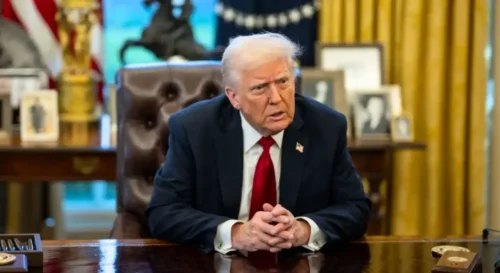

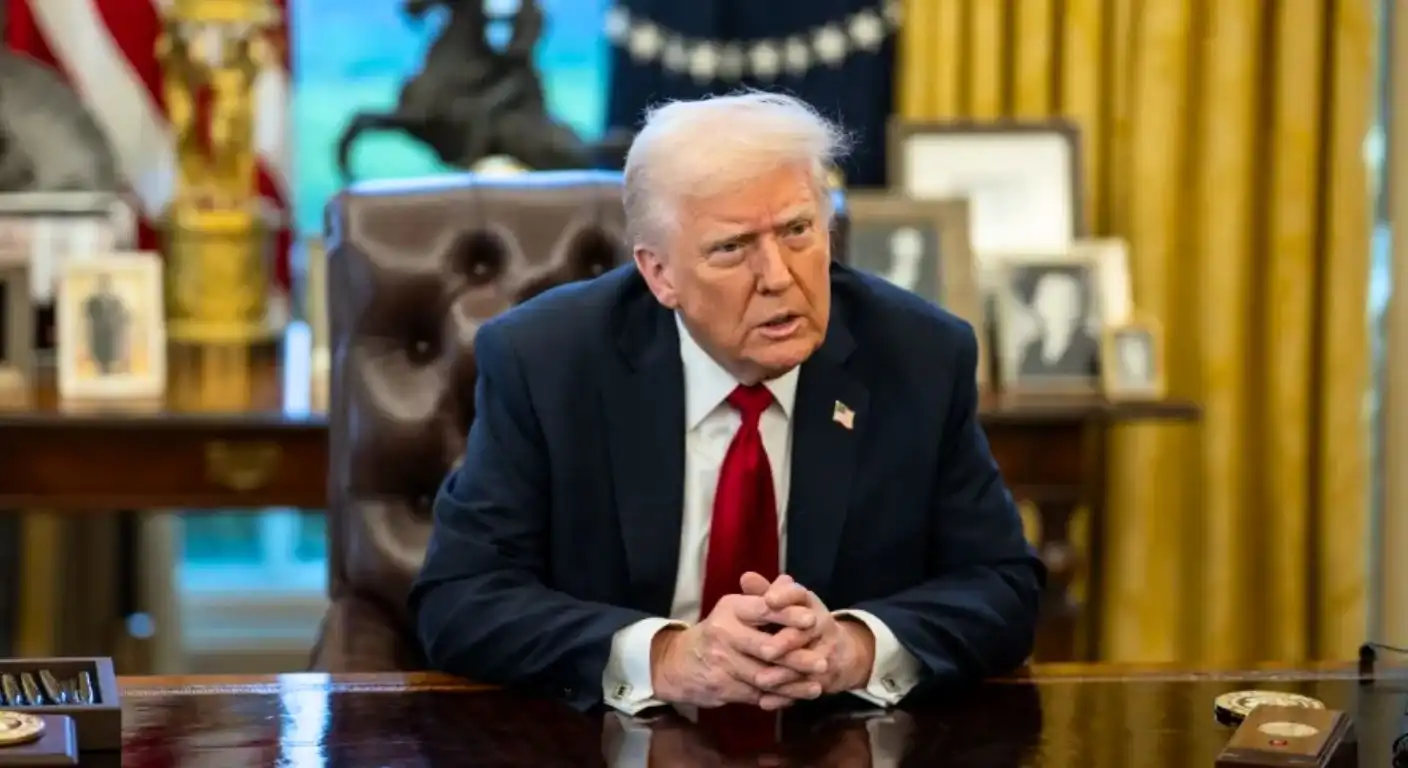
A massive question now hangs over the entire global economy this Tuesday. Everyone wonders if President Donald Trump will actually walk away from the war with Iran without reopening the Strait of Hormuz. On the same day that average American gas prices finally hit a painful $4 a gallon, Trump seemed completely open to the idea of leaving. He posted an angry message online telling other countries to build up some courage, sail to the Strait, and just take it themselves. He flatly stated that the United States will no longer be there to help anyone, because those same countries never helped America in the past.
This dramatic shift creates a massive problem for the financial markets. The president’s public statements often swing wildly from one extreme to the other. Just one day earlier, Trump delivered the exact opposite message to the public. He issued a harsh ultimatum demanding Iran open the waterway immediately, or else the United States would obliterate its power plants and desalination facilities. The situation appears to be reaching a critical boiling point as the bloody conflict nears the end of its 5th week.
Right now, military reports show that United States ground forces recently arrived in the region to prepare for a potential escalation. However, the Wall Street Journal claims that Trump secretly told his top aides he is perfectly willing to end the military campaign even if the crucial waterway remains largely closed to commercial ships. This deep conflict inside the White House highlights a major conundrum. The president feels torn between facing the terrifying economic predictions of a closed strait and his own incredibly strong desire to end American military engagement overseas completely.
Many close market watchers express serious doubts that Trump would actually abandon the Strait. With crude oil prices currently sitting firmly above $100 per barrel, financial experts fear energy costs could easily shoot even higher if the United States military were to walk away. The global energy market would definitely panic if Iran gained the power to control shipping traffic in the narrow 21-mile-wide passage indefinitely. Since about one-fifth of the world’s daily oil supply passes through that specific area, Iran could easily start charging massive transit fees to any ship trying to cross.
The financial firm Signum Global Advisors sent a detailed note to its wealthy clients on Tuesday morning. The analysts stated that it is extremely unlikely that Trump would actually end the war without first trying to reopen the Strait. The group listed 3 major reasons why a sudden retreat makes no sense. First, abandoning the waterway would cause severe damage to the American economy. Second, it would ruin the United States’ relationship with important Persian Gulf allies. Finally, leaving the Strait in Iranian control would put America at a massive global disadvantage for decades to come.
Tobin Marcus, an analyst at Wolfe Research, completely agrees with that assessment. In his own report, Marcus noted that Trump has clearly wanted to end the war for the past 2 weeks. However, he strongly downplayed the chances of a hasty military withdrawal without first proving that American forces can reopen the Strait of Hormuz by force. Marcus pointed out that completely backing down would carry a massive political cost that Trump is not yet ready to pay. A sudden retreat would look like a humiliating defeat right before the upcoming elections.
Other economic observers quickly warned that leaving the strait closed would trigger a dramatic global disaster. One expert pointed out that letting Iran control the oil flow essentially turns the country into a new global superpower. The BlackRock CEO recently told the BBC that international oil prices could easily reach $150 per barrel and cause a massive global recession if Iran remains a threat to the waterway. Patrick De Haan, the head of petroleum analysis at GasBuddy, posted on social media that ending the war while leaving the Strait of Hormuz closed is not true peace. He called it a total surrender of the world’s most critical oil chokepoint, which guarantees long-term economic instability for everyone.
The confusing messages from the White House only make the situation worse. In fact, Monday’s angry message was at least the 5th official ultimatum Trump issued demanding Iran open the shipping lanes. Yet on other days, the president completely downplays the waterway’s importance and falsely claims that the United States does not even rely on it. His mixed signals about the war itself also cause major headaches. On Sunday, he told reporters a peace deal was very close, but just hours later, he threatened to seize Iran’s main export hub and take all its oil.