

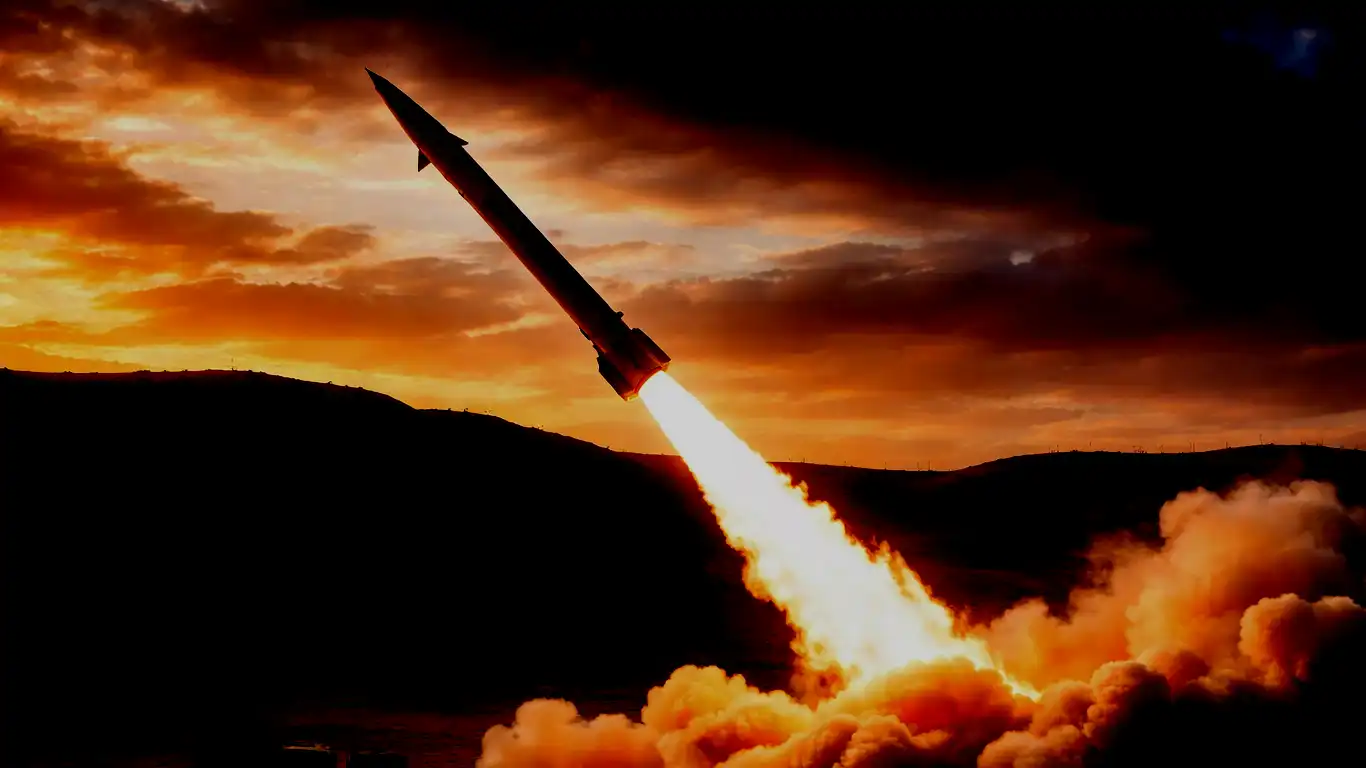
A newly established, highly fragile peace framework in the Middle East has suffered a catastrophic fracture, pushing global powers back into active military confrontation. On Friday, U.S. President Donald Trump accused Iran of executing a foolish and direct violation of the recently signed ceasefire agreement. The President revealed that Tehran launched at least four one-way attack drones at commercial cargo vessels transiting the strategically vital Strait of Hormuz, with one drone successfully striking the upper deck of a large shipping vessel. In swift retaliation, the U.S. Central Command, CENTCOM, launched a series of calculated airstrikes against Iranian military targets on Friday, completely shattering the initial calm of the truce.
The high-stakes maritime incident occurred on Thursday when a Singapore-flagged, Taiwanese-operated cargo ship named *Ever Lovely* came under sudden attack off the coast of Oman. According to naval reports, one of the four Iranian one-way attack drones solidly hit the upper deck of the large and highly expensive vessel, causing physical damage to its structure. While the drone strike disrupted the vessel’s path, the ship’s operator confirmed that the crew remained unharmed and the vessel was eventually able to proceed on its journey. Trump took to his social media service Truth Social to clarify that U.S. defensive forces successfully knocked down the three other incoming drones before they could hit their targets.
The White House and defense officials wasted no time in executing a direct military response to the shipping attack. On Friday afternoon, CENTCOM confirmed that American warplanes had launched a series of calibrated airstrikes against Iranian military bases, radar installations, and drone launch facilities. Washington defended the swift operation as a necessary and lawful action designed specifically to protect the freedom of navigation in the Strait of Hormuz while preserving room for ongoing diplomatic talks. However, the military strikes represent the most significant escalation of direct combat since the ceasefire was announced, putting an immediate end to the brief period of regional calm.
Tehran responded to the American airstrikes with immediate, defiant condemnation, launching its own counter-attacks against U.S.-linked targets across the region. Iran’s foreign ministry declared that the U.S. military operations represented a direct violation of the United Nations Charter and the war-ending memorandum of understanding between the two countries. Highlighting the rapid escalation, local defense forces reported that Iran launched a retaliatory drone attack targeting Bahrain on Saturday, while a separate commercial vessel came under attack in the Strait of Hormuz. The rapid exchange of fire has raised intense concerns among international observers that the conflict is spiraling out of control.
This sudden explosion of hostility has placed immense strain on the newly signed Islamabad Memorandum of Understanding, which established a 60-day roadmap toward a permanent peace deal. The preliminary agreement, which was digitally signed by both presidents on Wednesday, had raised global hopes that the devastating 110-day war was entering its final phase. Under the terms of the memorandum, both nations had agreed to a temporary truce to allow technical delegations to meet in Switzerland to resolve outstanding nuclear and security issues. By resuming active combat operations, both Washington and Tehran have effectively paralyzed the Swiss peace talks, leaving the diplomatic roadmap in deep ruins.
Faced with growing bipartisan criticism on Capitol Hill over the rapid collapse of the ceasefire, Vice President JD Vance strongly defended the administration’s handling of the crisis. Vance, who has taken a leading role as the President’s point person on the Middle East conflict, insisted that the United States has fully and honorably adhered to every clause of the signed memorandum. The Vice President declared that Iran had signed a formal ceasefire agreement and had subsequently chosen to violate its terms with its hostile drone actions. Vance warned that if Tehran has disagreements regarding the implementation of the truce, they must address them through the established diplomatic channels rather than launching lethal attacks on commercial shipping.
The immediate resumption of hostilities has also triggered a major humanitarian setback for thousands of merchant sailors trapped in the Persian Gulf. Following the drone strikes, the United Nations’ shipping agency, the International Maritime Organization, announced a temporary pause in its voluntary scheme to escort and evacuate over 11,000 stranded seafarers through the Strait of Hormuz. IMO Secretary-General Arsenio Dominguez confirmed that the agency cannot proceed with the phased rescue operations while active drone and airstrike campaigns continue to threaten the security of the shipping lanes. The pause leaves hundreds of cargo vessels in legal and physical limbo, stranded in waters littered with naval mines.
The dramatic flare-up of violence in the Gulf stands in sharp contrast to separate, highly significant diplomatic progress achieved along the Mediterranean coast. On Friday, Israel and Lebanon officially signed a U.S.-brokered framework designed to stabilize their volatile border and prevent future clashes. Under the newly signed security accord, the Lebanese Armed Forces will gradually assume full security responsibilities in designated parts of southern Lebanon, while the government in Beirut works toward disarming non-state armed groups, including the Hezbollah militia. The agreement also commits the United States to provide substantial humanitarian and military assistance to Lebanon, laying the groundwork for a broader regional security pact.
The high-stakes military escalation has triggered sharp fluctuations across global commodity markets, reversing a recent downward trend in fuel prices. Following the digital signing of the peace agreement earlier in the week, Brent crude and West Texas Intermediate futures had fallen significantly, with WTI dropping to settle at $69.06 per barrel. However, the news of the drone strikes and subsequent U.S. retaliatory attacks immediately sent oil prices rebounding, rising by 2.50% in late Friday trading. Energy traders warn that any prolonged disruption to the Strait of Hormuz, which handles nearly 20% of global petroleum supplies, will trigger severe global fuel shortages and reignite inflation.
Ultimately, the rapid collapse of the Middle East ceasefire and the subsequent U.S. airstrikes highlight the immense difficulty of securing a lasting peace through paper agreements. While the digital signing of the Islamabad Memorandum of Understanding was celebrated as a historic diplomatic breakthrough, the physical reality on the ground shows that regional security remains incredibly fragile. As Iran launches counter-attacks on Bahrain and the UN pauses its maritime evacuation efforts, the global community is learning that economic concessions cannot easily erase months of bitter military conflict. Until both Washington and Tehran can find a way to silence the drones and restore mutual trust, the critical Strait of Hormuz will remain a dangerous, highly volatile flashpoint.















