

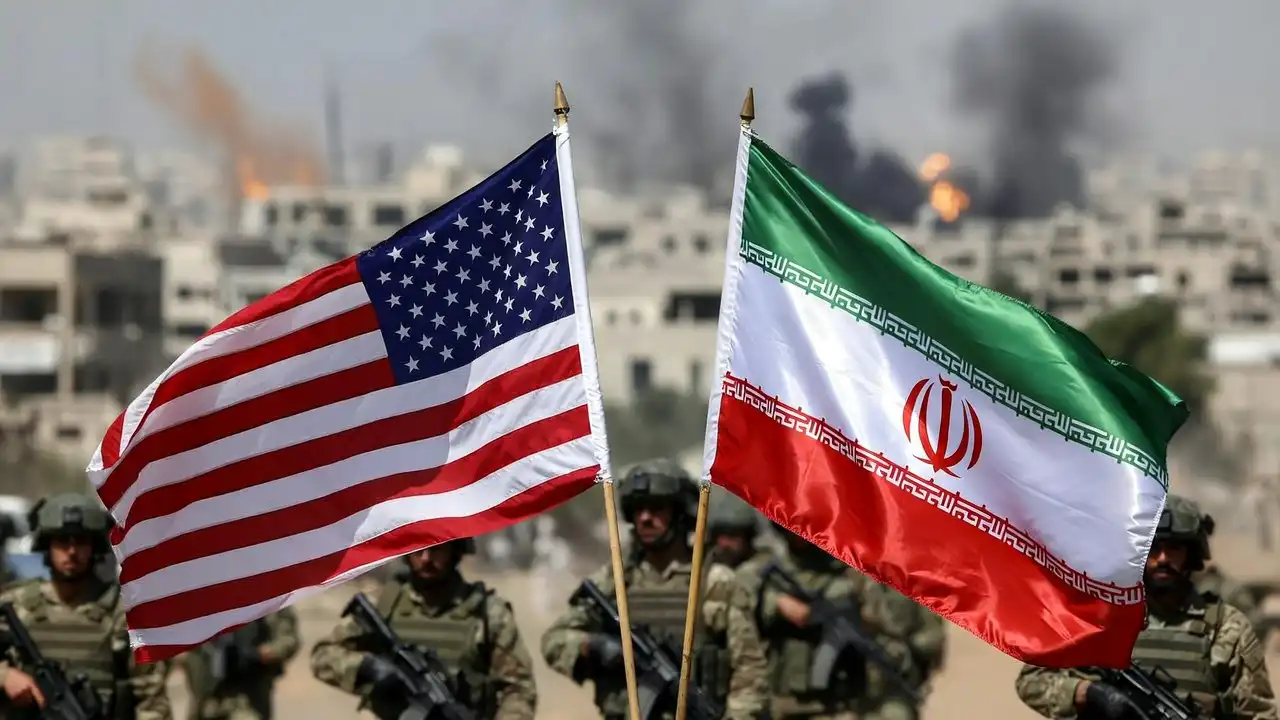
In a dramatic, high-stakes reversal of military escalation, the United States and Iran have agreed to immediately halt their tit-for-tat strikes across the Persian Gulf, raising hopes of saving a fragile interim peace agreement. The sudden stand-down comes after a weekend of heavy combat that pushed the recently signed ceasefire to the brink of a total, catastrophic collapse. Acting under immense pressure to prevent a wider regional war, international mediators have successfully established direct communication and de-escalation channels to stabilize the region. Senior technical teams from both countries are now preparing to resume face-to-face negotiations in Qatar, shifting the focus from military retaliation to the peaceful management of global energy corridors.
The frantic push to rescue the truce follows the digital signing of a landmark 14-point memorandum of understanding on June 17, which sought to end a devastating four-month conflict. Under the terms of the initial agreement, Washington and Tehran had established a temporary 60-day window to negotiate a permanent end to the war, which first erupted on February 28 with joint U.S.-Israeli air strikes on Iranian military facilities. The key achievement of the initial accord was the mutual commitment to halt active hostilities and reopen the strategic Strait of Hormuz, which serves as the primary exit route for nearly 20% of global oil and liquefied natural gas.
However, the fragile truce quickly began to unravel due to conflicting interpretations regarding how the strait should be governed. On Thursday, the Singapore-flagged, Taiwanese-operated cargo vessel Ever Lovely was hit by a suspected Iranian drone off the coast of Oman, prompting the United States to launch retaliatory airstrikes against ten military targets inside Iran. This U.S. response, in turn, triggered a massive counter-strike on Sunday morning, with Iran’s Revolutionary Guard launching drones and missiles at U.S. military bases in Kuwait and Bahrain. Both sides accused the other of violating the core ceasefire terms, threatening to bring all diplomatic processes to a complete and permanent halt.
The military exchange over the weekend was accompanied by a chilling political ultimatum from the White House, which supercharged regional anxieties. Shortly after U.S. Central Command confirmed the retaliatory strikes, U.S. President Donald Trump warned that the United States is fully prepared to resume its full-scale bombing campaign if Tehran continues to violate the agreement. The President declared on social media that if Iran fails to honor its commitments, the Islamic Republic will cease to exist, asserting that there may come a point when Washington is no longer able to be reasonable and will be forced to militarily complete the job.
Faced with the prospect of a devastating regional war that would disrupt global commerce and send energy prices skyrocketing, mediators from Qatar and Pakistan launched an emergency diplomatic channel. Working tirelessly behind the scenes, negotiators established direct hotlines between senior military commanders in Washington and Tehran to prevent accidental clashes from triggering a wider conflict. A senior U.S. official confirmed on Sunday that the de-escalation channels have successfully stabilized the situation, declaring that both sides will stand down for now to allow commercial vessels to move freely through the strategic waterway once again.
To build upon this temporary stand-down, a high-profile U.S. delegation is scheduled to travel to Qatar on Tuesday to resume technical-level talks. White House Press Secretary Karoline Leavitt confirmed that the U.S. team will include Trump’s special envoy, Steve Witkoff, and his son-in-law Jared Kushner. The U.S. representatives will meet directly with an Iranian technical team in Doha to discuss the practical implementation of the memorandum of understanding. Unlike previous technical rounds in Switzerland, which focused heavily on long-term nuclear enrichment targets, the upcoming Doha sessions will focus almost exclusively on managing maritime security in the Strait of Hormuz.
While the international community watches the high-stakes talks in Doha, regional coastal states are moving to establish their own administrative control over the strategic waterway. On Monday, senior representatives from Iran and the Sultanate of Oman convened the first meeting of their newly formed joint Hormuz committee in Muscat. The bilateral committee was created under the terms of the memorandum of understanding to exchange views and draft a shared administrative framework to govern vessel movements. The Omani delegation reiterated its commitment to international law and the safe, toll-free transit of commercial vessels, attempting to reconcile Iran’s demands for regulatory oversight with the global community’s insistence on free navigation.
While Washington emphasizes military de-escalation, Tehran has used the resumption of talks to showcase the massive economic benefits of the peace agreement to its domestic audience. In a public address on Monday, Iranian President Masoud Pezeshkian declared the agreement a great victory for the Iranian people, revealing that the U.S. has officially agreed to lift its strict embargoes on Iran’s oil and petrochemical exports. Pezeshkian also confirmed that under the terms of the treaty, approximately $6 billion out of the $12 billion in blocked Iranian assets currently frozen in Qatari banks will be released in the coming days, representing a 50% capital return that will be channeled directly into rebuilding the local economy.
The sudden de-escalation of the military crisis has also triggered sharp, volatile movements across global commodity markets. Following the initial drone strike on the Ever Lovely and subsequent U.S. airstrikes, Brent crude futures had surged, reversing a multi-day slide that had briefly brought prices down to around $77 per barrel. However, the news of the temporary stand-down and the upcoming Doha summit has calmed nervous energy traders, with Brent crude futures stabilizing at a minor 1.5% adjustment on Monday morning. Analysts warn that while the return to diplomacy has cooled paper prices, the physical cost of shipping through the region will remain high until a permanent, verified treaty is signed.
Ultimately, the rapid restoration of diplomatic channels and the planned Doha peace talks highlight the extreme, high-stakes nature of modern Middle Eastern diplomacy. By utilizing the joint influence of Qatar, Pakistan, and Oman to silence the guns in the Persian Gulf, the international community has successfully preserved the foundation of the wider U.S.-Iran peace treaty. While the postponement of the Swiss talks and the recent exchanges of strikes show that the road to a permanent, verified peace remains incredibly difficult, the willingness of both Washington and Tehran to stand down demonstrates a shared desire to avoid a total regional war. As the 60-day negotiation clock continues to tick, the global community can only watch and hope that this fragile, Qatar-brokered bridge will hold.















