

The landscape of the American automotive industry has undergone a massive, structural transformation as consumers pivot away from battery-electric cars. Following a series of sweeping federal policy rollbacks, new vehicle sales data reveals that hybrid vehicle sales have surged to record-breaking levels across the country. This rapid consumer pivot comes after President Donald Trump eliminated a critical $7,500 tax credit for electric vehicles, causing a severe drop in pure EV sales. Instead of returning to traditional, gas-only cars, shoppers are increasingly choosing hybrid models as a practical, friction-free way to save fuel during a period of high gas prices and elevated interest rates, completely reshaping the long-term production strategies of the world’s largest automakers.
The massive decline in the U.S. electric vehicle market was triggered directly by the premature termination of the federal clean vehicle tax credit program. Under the sweeping “One Big Beautiful Bill Act” signed last year, Trump terminated the $7,500 incentive for new EV purchases and leases seven years earlier than originally scheduled, ending the program on September 30. Additionally, used electric car buyers lost credits of up to $4,000, creating an immediate and punishing price hike for consumers. The administration also rolled back strict federal fuel economy standards, sending a clear, defensive signal to the market that the white house would no longer mandate or subsidize a rapid transition to an all-electric fleet.
The impact of this policy shift was both immediate and devastating for pure electric vehicle manufacturers. In the first quarter of the year, U.S. electric vehicle sales cratered by 27% compared with the same period last year, according to market reports from Cox Automotive. Faced with a sudden collapse in consumer demand, major automakers have been busy scrapping their planned EV models and writing off billions of dollars in stranded investments. Even the market’s dominant player, Tesla, took the drastic step of mothballing its legacy Model S and Model X lines to cut costs, while other manufacturing giants have recorded massive, multi-billion-dollar write-downs.
The financial toll of overestimating the speed of the electric vehicle transition has severely dented corporate balance sheets. In May, Japanese giant Toyota abandoned its highly publicized plans to develop a flagship Lexus EV—which was originally supposed to kick-start its goal of making the brand all-electric by 2035—citing the unfavorable surrounding environment. Meanwhile, Honda canceled three planned EV models for the North American market, taking a painful $9 billion asset write-down. European conglomerate Stellantis also announced a staggering $26 billion financial charge, admitting that it had severely overestimated the pace of consumer adoption.
However, while pure electric vehicles languish on dealership lots, consumers are not returning to traditional, gas-only vehicles in high numbers. Instead, they are turning to hybrids, which utilize a highly practical mix of electric and gasoline power. Sales of hybrid vehicles have surged by more than 80% since 2023, reaching a record-breaking annual pace of more than 2 million vehicles. In the first quarter of the year, hybrids captured a record-high 14.1% share of all new vehicle sales in the United States, representing a market footprint nearly three times larger than that of pure electric vehicles, which have slipped to less than 10% of overall sales.
This massive market pivot has delivered a highly significant, long-awaited vindication for Toyota’s original, slow-and-steady transition strategy. For years, the world’s largest automaker faced intense criticism from environmentalists and competitors for refusing to jump headlong on the all-electric bandwagon, choosing instead to slowly transition its entire fleet to hybrid-only configurations. This patient approach has paid off handsomely, as seen in the company’s regional sales figures. Since the beginning of the year, the firm’s hybrid-only models, including the Camry, the Sienna minivan, and the 2026 RAV-4—America’s best-selling compact SUV—have experienced relentless demand, allowing the company to capture massive market share.
The relentless demand for hybrid fuel efficiency is heavily driven by high prices at the pump, which have been exacerbated by ongoing geopolitical conflicts. While global oil benchmarks recently sank to $73.48 per barrel, the average price for a gallon of gasoline remains high at $3.92, representing a 1.5% adjustment in household transport budgets compared to previous spring forecasts. This sticky price inflation is directly linked to the war in Iran, which has severely disrupted global shipping lanes through the strategic Strait of Hormuz. Because hybrid vehicles require no behavioral changes or expensive charging infrastructure, they represent a low-friction purchase for consumers desperate to save fuel.
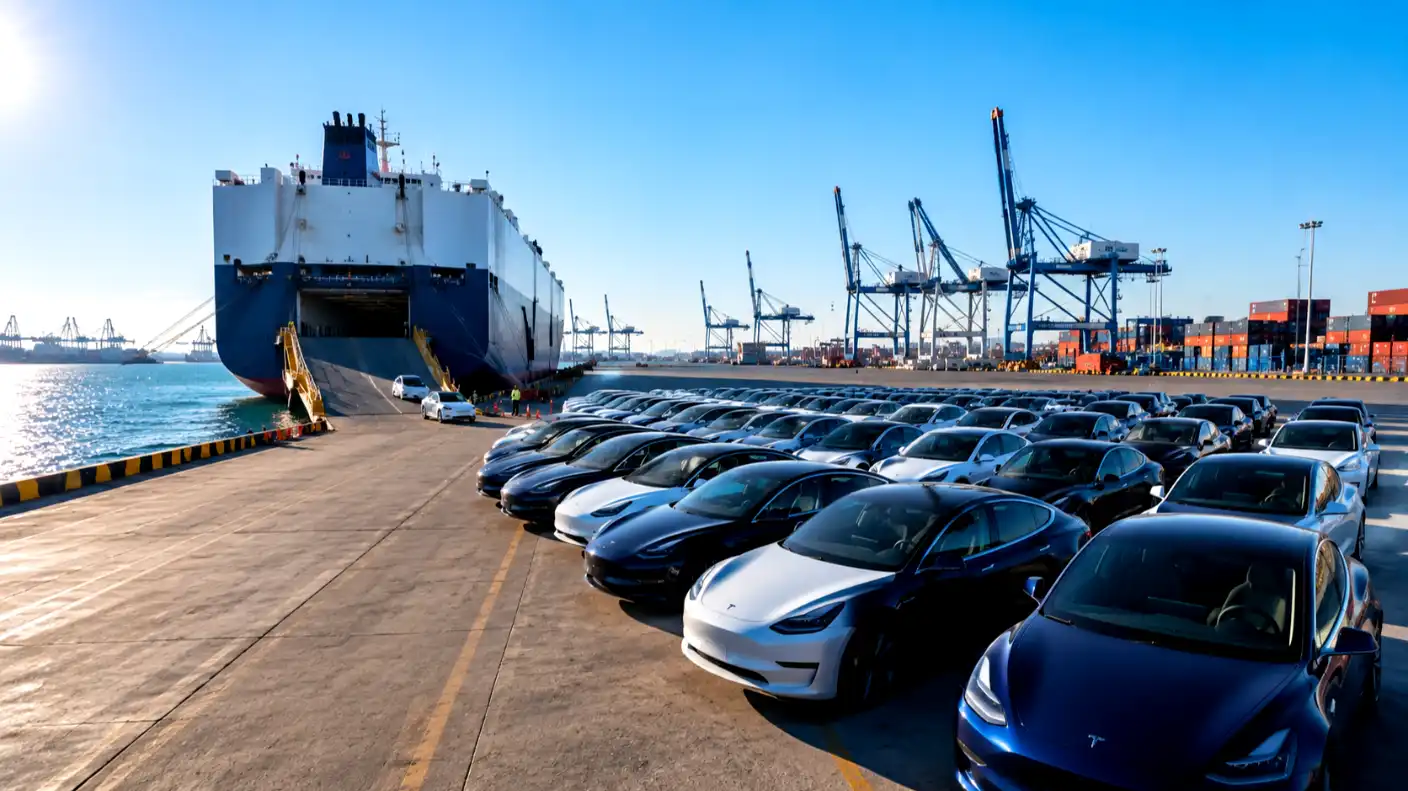
This sudden shift in consumer habits has forced the entire automotive logistical network to rapidly reset its operations. Detroit’s major manufacturing plants are shifting their assembly lines to accommodate the massive rise in hybrid production, while cutting back on expensive battery-cell procurement contracts. This logistical pivot has been welcomed by transport firms, which had struggled to manage the heavy weight and specialized shipping requirements of lithium-ion batteries. Industry analysts note that as automakers pause their pure EV plans, the focus has shifted entirely to optimizing the production of hybrid powertrains to meet immediate market demand.
While hybrids are undoubtedly having their moment, automotive analysts warn that the long-term future of the industry remains inevitably electric. According to a comprehensive mobility lens forecast, the timeline for battery-electric vehicles to capture 50% of the U.S. new-car market has simply shifted outward, moving from its original target of 2034 to approximately 2039. Experts argue that as charging infrastructure continues to expand and the cost of solid-state batteries falls over the next decade, electric cars will eventually achieve price parity with traditional vehicles. However, in the interim, the industry must accept that hybrids are the most effective bridge to meet current consumer needs.
Ultimately, the massive surge in hybrid vehicle sales highlights the limits of top-down government mandates when confronted with consumer reality. By choosing to eliminate the $7,500 EV tax credit, the Trump administration has successfully popped a subsidized electric vehicle bubble, forcing the market to realign with the immediate preferences of ordinary car buyers. While the long-term goal of zero-emission transit remains valid, the sheer momentum of hybrid sales demonstrates that consumers prefer a gradual, practical transition over a forced technological leap. As Toyota enjoys its massive market vindication and other automakers scramble to rewrite their playbooks, the hybrid has officially secured its position as the defining vehicle of the decade.















