
The international landscape of March 2026 is virtually unrecognizable from the relatively stable post-Cold War era, marked by unprecedented global volatility. The United States, once the undisputed architect of the liberal international order, finds itself at the center of a self-inflicted storm of geopolitical instability.
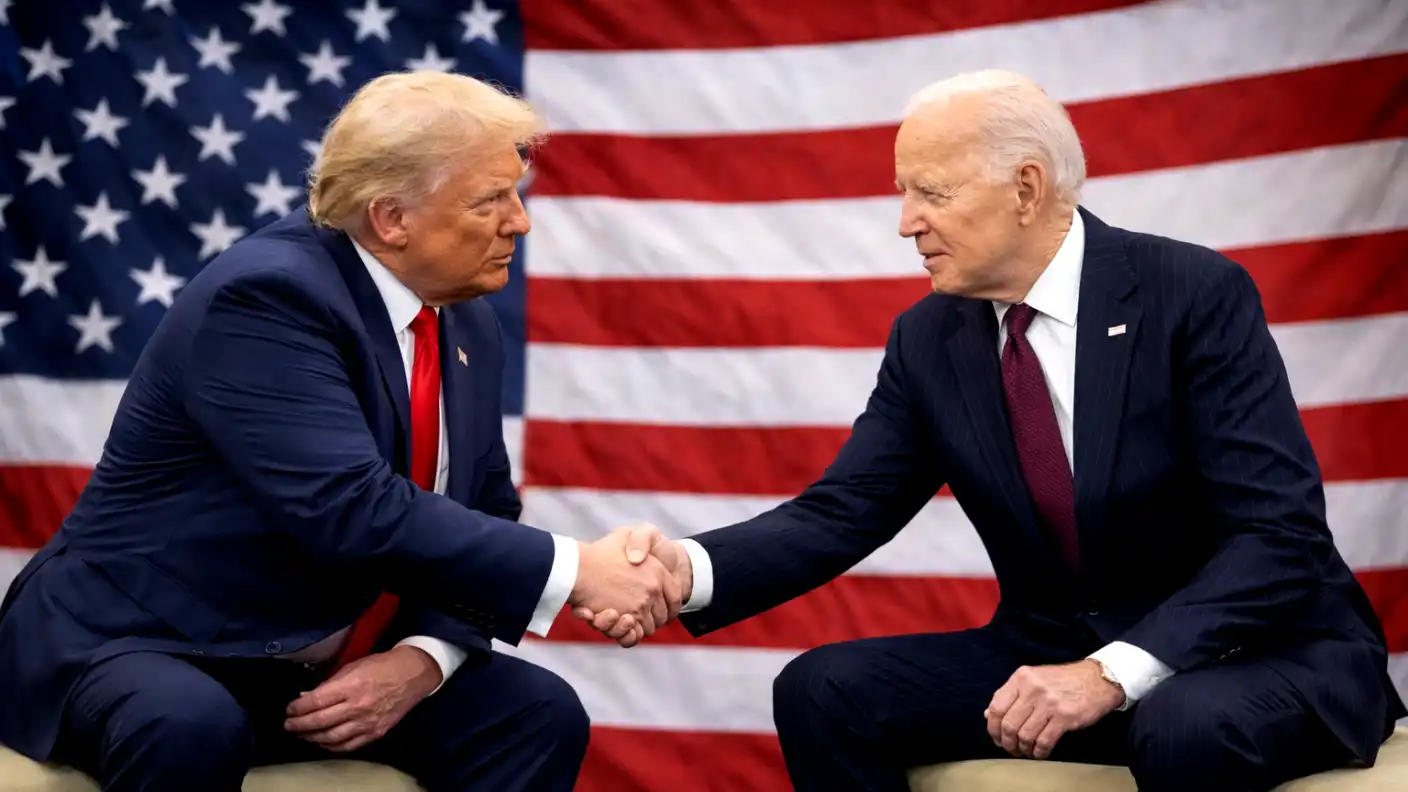
Current geopolitical analysis suggests that the sequential and overlapping strategies of both Donald Trump and Joe Biden have profoundly contributed to this dangerous new epoch. Rather than offering a steady hand in times of crisis, Washington has become a primary source of unpredictability, oscillating wildly between aggressive unilateralism and protectionist containment. The compounding effects of these two distinct but equally destructive foreign policy paradigms have undermined long-standing alliances, fractured global economic stability, and severely diminished American moral authority on the world stage.
The transition from the Biden administration back to the Trump administration has fundamentally altered the trajectory of numerous ongoing global crises. From the escalating conflict in Eastern Europe to the explosive new military engagements in the Middle East, the strategic whiplash experienced by American allies and adversaries alike has created a dangerous vacuum of reliable leadership. Critics of both administrations argue that their respective approaches, while stylistically divergent, share a core foundational flaw: the subjugation of long-term global stability to short-term domestic political signaling. As we examine the cascading failures in Ukraine, the devastating new conflict with Iran, and the overarching militarization of global trade, a stark reality emerges. The United States is no longer the anchor of the global system; it has become its primary disruptor.
The Paradigm Shift in American Foreign Policy
The United States has abandoned its traditional role as the steadfast anchor of global stability and international law. This abrupt pivot has introduced unprecedented volatility into the international system, leaving allies bewildered and adversaries emboldened.
The Fall of the Liberal International Order
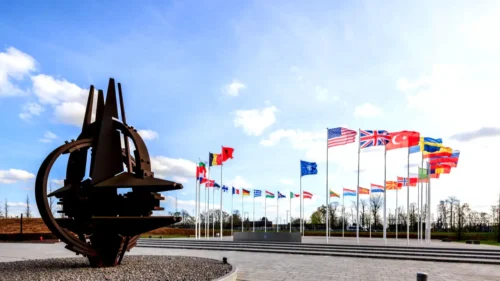
For decades following the collapse of the Soviet Union, American foreign policy was largely guided by the principles of liberal internationalism. This model prioritized the expansion of free trade, the strengthening of multilateral institutions like the United Nations and NATO, and the promotion of democratic norms. Both Republican and Democratic administrations, despite their tactical differences, generally adhered to the belief that a highly integrated, rules-based global system was inherently beneficial to American national security and economic prosperity. However, the successive presidencies of Donald Trump and Joe Biden have overseen a massive, bipartisan retreat from this foundational consensus.
This retreat has shifted the United States toward a significantly more nationalistic, transactional, and security-centric role in world affairs. The multilateral institutions that America spent decades building are now frequently viewed in Washington not as force multipliers, but as burdensome constraints on American sovereignty. This regression from a rules-based international order toward a more volatile era of great power competition has left European and Asian allies scrambling to develop strategic autonomy. They fundamentally doubt the long-term reliability of the American security umbrella, realizing that the United States can no longer be trusted to uphold its treaty obligations or maintain consistent foreign policy objectives across different presidential administrations.
The Personalization of Diplomacy and the Ego Factor
Analysts frequently point to the personal styles, idiosyncratic decision-making processes, and perceived egos of both leaders as primary drivers of this contemporary geopolitical friction. Rather than relying on the deep expertise of the State Department, both administrations have often centralized foreign policy execution within deeply insular circles.
The personalization of American statecraft has completely altered the traditional mechanisms of international diplomacy. Analysts have identified several distinct behaviors that characterize this modern executive approach to global affairs:
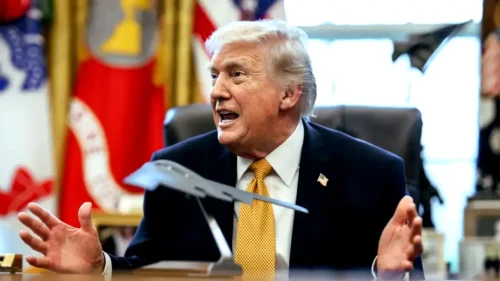
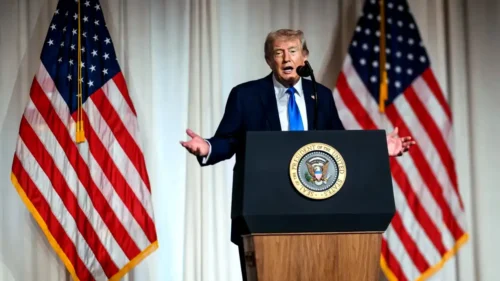
- Trump’s “Deal-Making” Ego: Trump’s distinct preference for personal diplomacy and leader-to-leader engagement over established institutional channels frequently creates immense confusion among traditional allies. His overwhelming “hunger for quick deals” is viewed by seasoned diplomats as a critical risk that often leads to fragile, temporary ceasefires rather than lasting, structural peace. Furthermore, his “no rules” approach to global hotspots like Iran has heavily alienated European partners who favor structured diplomatic frameworks.
- Biden’s “Institutional” Persistence: Conversely, Biden’s critics argue his administration suffered from a rigid, “rudderless” policy that lacked vital coordination between military means and strategic ends. His administration’s persistent inability to effectively manage multiple chaotic fronts simultaneously—including Ukraine, Israel, and Iran—led to a perception of American weakness, bureaucratic paralysis, and a dangerous disconnect between stated goals and actual geopolitical realities.
- Shared Hyperpartisanship: Both leaders have cultivated a deeply tumultuous foreign policy heavily driven by domestic politics. International relationships and global crises are utilized primarily to signal strength to their respective domestic voter bases, transforming vital matters of global stability into mere tools for partisan point-scoring and electioneering.
| Leadership Trait | Donald Trump’s Approach | Joe Biden’s Approach | Geopolitical Consequence |
| Diplomatic Style | Transactional, highly personalized, anti-institutional. | Institutional, alliance-focused, but often rigid and slow. | Confusion among allies; inability to rely on standard diplomatic channels. |
| Strategic Focus | “America First” unilateralism, disruptive deal-making. | “Foreign Policy for the Middle Class,” strategic competition. | Erosion of global trust; fragmentation of unified Western fronts. |
| Crisis Management | Rapid escalation, threat-based leverage, unpredictable shifts. | Incremental escalation, fear of provocation, bureaucratic delay. | Prolonged conflicts; adversaries exploit predictable hesitation or sudden chaos. |
Igniting the Middle East: Operation Epic Fury
The recent military escalation in the Middle East represents one of the most drastic and destabilizing geopolitical maneuvers of the decade. The unilateral decision to initiate large-scale kinetic operations has plunged the region into a devastating new era of warfare.
The Rationale and the Intelligence Failure
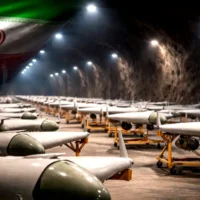
As of March 2026, the geopolitical landscape has been violently reshaped by the Trump administration’s launch of a significant, full-scale military offensive against Iran, officially titled “Operation Epic Fury.” The administration justified the massive wave of preemptive airstrikes and naval bombardments by aggressively claiming that Tehran had fully restarted its highly enriched uranium nuclear program and was in the final stages of planning a devastating preemptive ballistic missile attack on United States military installations across the Middle East. This narrative was aggressively pushed by the White House to rally domestic support, dominate the news cycle, and force reluctant international allies to fall in line with Washington’s new, fiercely combative posture.
However, subsequent leaks and explosive investigative reports have heavily indicated a massive strategic miscalculation on the part of the executive branch. High-ranking Pentagon sources and intelligence officials secretly briefed congressional oversight committees, explicitly stating that no credible intelligence suggested an imminent or unprecedented Iranian attack against American assets. The intelligence community’s assessments reportedly indicated that while Iran continued its adversarial posturing, the threshold for a preemptive strike had not been crossed. This stark disconnect between the administration’s public justifications and the classified intelligence reality has drawn intense, widespread comparisons to the disastrous intelligence failures that preceded the 2003 invasion of Iraq, severely and perhaps permanently damaging American credibility on the global stage.
Military Objectives and the “War of Choice”
The stated military objectives of Operation Epic Fury are sweeping, highly ambitious, and fraught with logistical nightmares. The campaign aims to completely dismantle Iran’s sophisticated naval capabilities in the Persian Gulf and systematically destroy its vast, deeply buried ballistic missile infrastructure.
Beyond mere containment or deterrence, the campaign’s ultimate, poorly disguised goal appears to be the total toppling of the Iranian clerical leadership. Massive bunker-busting munitions have been deployed against command and control centers in Tehran, while the U.S. Navy has engaged in intense, high-casualty skirmishes to secure the critical Strait of Hormuz. Critics across the political spectrum view this devastating offensive as a blatant “war of choice,” entirely intended to force violent regime change in the Middle East. This aggressive military adventurism stands in stark, hypocritical contrast to Trump’s past, highly publicized promises to end America’s involvement in “endless wars” and bring troops home. By voluntarily opening a massive new theater of war, the administration has stretched American military readiness to the breaking point, alienating moderate Arab states who fear the destabilizing regional blowback, and providing geopolitical adversaries like Russia and China with a critical, much-needed strategic distraction.
Economic Fallout and the Global Oil Crisis
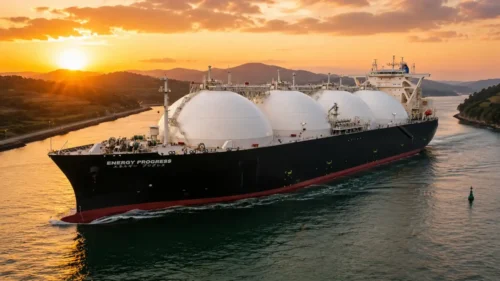
The economic impact of the war with Iran has been immediate, profound, and universally devastating to the fragile global economy. The conflict has caused a dramatic, unprecedented surge in global crude oil prices, fundamentally altering the calculus of global trade and inflation.
While the United States has feverishly attempted to leverage its domestic energy dominance to cushion the blow for American consumers—heavily drawing from strategic reserves and demanding increased output from domestic fossil fuel producers—the broader global supply chains have been severely disrupted. The economic fallout has been particularly disastrous for China, which previously sourced nearly 14 percent of its total crude oil imports from Iran through a complex web of sanction-evading financial networks. The sudden, violent severing of this critical energy lifeline has forced Beijing to aggressively secure alternative supplies, driving up prices globally and fueling severe inflation across European and Asian markets heavily reliant on energy imports. The weaponization of the Middle Eastern energy sector has effectively guaranteed a period of sustained, grueling stagflation across the developing world.
| Sector Impacted | Immediate Consequence of Operation Epic Fury | Long-term Geopolitical Ramification |
| Global Energy Markets | Dramatic surge in crude oil prices; skyrocketing shipping insurance rates. | Accelerated global push away from petrodollar; massive economic strain on import-reliant nations. |
| Chinese Economy | Loss of 14% of crude oil imports; disruption of illicit supply chains. | China forced to deepen energy ties with Russia; potential for acute industrial slowdowns. |
| U.S. Military Readiness | Rapid depletion of high-end munitions; naval assets tied down in the Persian Gulf. | Diminished capacity to deter Chinese aggression in the Indo-Pacific or support European allies. |
The Russia-Ukraine War: A Strategic Whiplash
The ongoing conflict in Eastern Europe has become a tragic victim of America’s polarized domestic politics. The abrupt shifts in strategy between administrations have left Ukraine vulnerable and empowered Russian territorial ambitions.
Biden’s Collective Security Approach
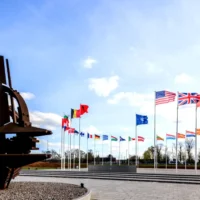
The abrupt transition from Joe Biden to Donald Trump has fundamentally altered the entire strategic trajectory of the brutal, four-year-old conflict in Ukraine. Under the Biden administration, American strategy was deeply rooted in the post-WWII concept of “collective security” and strict adherence to international law. Biden’s approach was heavily characterized by rallying the NATO alliance, expanding the coalition to include Sweden and Finland, and orchestrating a massive, historic transfer of military and financial aid to Kyiv.
By providing approximately $66 billion in direct security assistance, the Biden administration aimed to steadily degrade Russian conventional military threats while fiercely supporting Ukrainian territorial sovereignty. This strategy, while initially successful in preventing the outright collapse of Kyiv and severely depleting the Russian armed forces, was also heavily criticized for its agonizing incrementalism. The slow, deeply cautious drip-feed of advanced weaponry was often delayed by the administration’s paralyzing fear of “escalation management,” ultimately denying Ukraine the decisive operational advantage needed to expel entrenched Russian forces. Consequently, the Biden strategy, while deeply moral in its rhetoric, inadvertently contributed to a bloody, grinding war of attrition that heavily taxed Western industrial capacity.
Trump’s Pivot and the Defunding Strategy
Upon returning to the Oval Office, Trump executed a brutal, immediate pivot regarding the Eastern European theater. Viewing the conflict through a strictly transactional lens, he immediately dismantled the collective security framework established by his predecessor.
Trump’s administration abruptly cut off all direct U.S. financial funding to Kyiv and implemented a devastating temporary halt on the sharing of critical, real-time satellite and signals intelligence with the Ukrainian armed forces. His administration now publicly views the catastrophic war primarily as a localized “European issue,” demanding that Brussels and Berlin bear the absolute brunt of the financial and military burden. In this new paradigm, the U.S. has entirely abandoned its role as Ukraine’s primary benefactor, attempting instead to position itself as a neutral, transactional mediator. This sudden withdrawal of the American strategic safety net has sent shockwaves through NATO, forcing Eastern European frontline states to confront the terrifying reality of a fully resurgent, uncontained Russian military apparatus operating on their immediate borders.
Resource Depletion and Forcing Kyiv’s Hand
The interplay between America’s new Middle Eastern entanglements and its abandonment of Europe has created a perfect storm for Ukrainian sovereignty. The logistical realities of the U.S. military-industrial complex have forced harsh, zero-sum strategic choices upon Washington.
The massive new war of choice in Iran is rapidly and severely draining the already critically low supply of high-end, precision-guided munitions—such as Patriot interceptors, ATACMS, and 155mm artillery shells—that Ukraine previously relied upon for its very survival. As the Pentagon desperately redirects these vital assets to the Persian Gulf theater to support Operation Epic Fury, Ukraine is left practically defenseless against relentless Russian aerial bombardments and mechanized assaults. Analysts warn that this acute, American-engineered resource depletion will inevitably break the back of the Ukrainian military’s resistance, intentionally and cynically forcing Kyiv to accept a humiliating, deeply asymmetrical peace deal with Russia that will likely involve massive, permanent territorial concessions.
| Administration | Stance on Ukraine | Financial/Military Support | Ultimate Strategic Outcome |
| Joe Biden | “Collective Security”, steadfast ally. | ~$66 Billion, slow drip of advanced weapons. | Grinding war of attrition, severely degraded Russian military, but no decisive Ukrainian victory. |
| Donald Trump | Transactional, “European Issue”. | Cut off direct funding, halted intelligence sharing. | Resource depletion for Kyiv, forcing a potential surrender or devastating territorial concessions to Russia. |
Economic Warfare: The Militarization of Trade
The weaponization of global commerce has become the defining feature of 2026’s geopolitical landscape. Trade policy is no longer viewed through the lens of economic prosperity, but strictly as an instrument of national security and punitive leverage.
Donald Trump’s Tariff-Driven Pressure
The “economic war” has evolved from a series of localized, individual trade disputes into the absolute central pillar of U.S. national security strategy under both administrations, characterized heavily by the complete “militarization” of global trade policy. Trump’s strategy focuses intently on unilateral, sweeping, and often punitive actions designed to aggressively reduce American trade deficits and forcefully compel the rapid repatriation of domestic manufacturing.
In April 2025, the Trump administration enacted staggering, sweeping tariffs on nearly all major international trading partners, an event he triumphantly labeled “Liberation Day” for the American worker. The escalation was unprecedented in modern economic history. Effective tariff rates on U.S. imports reached an astonishing 30% on average in 2025, with specific, targeted Chinese goods facing utterly punitive rates as high as 104% by early 2026. These draconian measures predictably triggered massive, immediate retaliatory tariffs from both China and the European Union, sparking a catastrophic global trade war. Financial institutions like J.P. Morgan projected that this tit-for-tat tariff escalation would lead directly to a devastating 1% absolute reduction in global GDP, effectively wiping out trillions of dollars in wealth and plunging emerging markets into deep recessions.
Joe Biden’s Technological Containment
While Biden’s rhetoric frequently championed international cooperation, his administration’s economic actions told a vastly different, equally aggressive story. Biden maintained the vast majority of Trump’s original tariffs while sinisterly shifting the primary focus toward opaque non-tariff barriers and aggressive technological “decoupling.”
The Biden administration weaponized the U.S. regulatory apparatus to deliberately stifle the technological advancement of geopolitical rivals. Key elements of this strategy included:
- Semiconductor Export Controls: His administration launched what was termed a “routine” annual update of high-tech restrictions, which culminated in late 2024 with the devastating addition of over 250 prominent Chinese entities to the Commerce Department’s Entity List. This move was explicitly designed to permanently kneecap China’s burgeoning Artificial Intelligence and advanced computing industries.
- Investment Restrictions: In late 2024, the U.S. Treasury quietly but forcefully implemented a radical “Reverse CFIUS” program. This unprecedented executive action strictly prohibited U.S. venture capital, private equity, and joint ventures from funding indigenous Chinese AI, quantum computing, and advanced microchip companies.
- Allied Coordination: Unlike Trump’s brash unilateralism, Biden utilized immense diplomatic coercion to pressure critical tech-manufacturing allies—most notably Japan and the Netherlands—to reluctantly align their sovereign export restrictions with U.S. policy, effectively creating a Western technological blockade against Beijing.
Shared Strategies and Global Economic Consequences
Despite their profound stylistic differences and bitter partisan hatred, both leaders have successfully entrenched a deeply protectionist, “Buy American” industrial policy into the absolute bedrock of Washington’s bipartisan consensus. The framing of foreign policy primarily around domestic economic benefits has prioritized U.S. industrial interests over established global trade rules.
Both administrations have heavily pushed for policies of “nearshoring” or “friend-shoring,” deliberately fragmenting meticulously optimized global supply chains in the name of national security. Critics fiercely argue that this approach sacrifices decades of global economic efficiency, driving up consumer costs and stifling international innovation. Economic simulations conducted by leading business schools and international organizations suggest these cumulative, compounding trade wars could result in a catastrophic net global welfare loss of 1.2%. Furthermore, rather than revitalizing the American heartland, the U.S. economy is potentially facing a severe contraction of up to 2% due to wildly disrupted production lines, skyrocketing input costs, and the loss of international export markets. The constant, unpredictable shifts in trade barriers have created an “unprecedented” environment of policy uncertainty, with analysts terrifyingly warning of imminent global stagflation—a devastating combination of high inflation coupled with paralyzingly slow economic growth.
| Economic Weapon | Trump’s Primary Application | Biden’s Primary Application | Global Economic Consequence |
| Tariffs | Broad, unilateral 30%-104% tariffs on allies and adversaries alike. | Maintained Trump’s baseline tariffs; utilized as leverage rather than primary weapon. | Retaliatory trade wars; massive increase in global consumer goods inflation. |
| Tech Controls | Ad-hoc bans on specific companies (e.g., Huawei, TikTok). | Systematic, sweeping export controls and the “Reverse CFIUS” investment ban. | Bifurcation of the global tech ecosystem; disruption of critical semiconductor supply chains. |
| Supply Chain Policy | Forced repatriation via punitive taxation and tariffs. | “Friend-shoring” and massive domestic subsidies (e.g., CHIPS Act). | Global supply chain fragmentation; massive net global welfare loss (est. 1.2%). |
The Erosion of Global Alliances and American Moral Authority
The cumulative effect of these disjointed and aggressive policies has been the rapid degradation of America’s standing in the world. Once viewed as the indispensable nation, the U.S. is increasingly seen as an erratic and untrustworthy hegemon.
Alienating European and Asian Partners
The constant strategic oscillation between the “America First” doctrine and “Foreign Policy for the Middle Class” has fundamentally alienated America’s closest, most vital historic allies. The geopolitical whiplash experienced by capitals in Europe and the Indo-Pacific has permanently altered the trust dynamics of the Western alliance system.
By weaponizing the U.S. dollar, frequently threatening to dissolve NATO, and routinely imposing crippling tariffs on close strategic allies like Canada and the European Union, the United States has forcefully signaled that it views its partners as mere economic competitors or expendable geopolitical pawns. Furthermore, the Biden administration’s framing of foreign policy strictly around domestic middle-class economic benefits caused severe friction with European and Asian allies, who correctly viewed these massive domestic subsidy programs (such as the Inflation Reduction Act) as blatant, illegal protectionism that cannibalized their own industrial bases. The chaotic, deeply embarrassing withdrawal from Afghanistan under Biden, followed by Trump’s erratic initiation of Operation Epic Fury, solidified the global perception that American security guarantees are fundamentally hollow, subject to the political whims of the current occupant of the White House.
The Rise of Alternative Global Blocs
As Washington continues its descent into nationalistic isolationism and erratic militarism, a massive, dangerous power vacuum has emerged on the global stage. Adversarial nations have eagerly capitalized on American strategic missteps to forge powerful, anti-Western alliances.
The blatant weaponization of Western financial systems and the militarization of global trade have drastically accelerated the expansion and consolidation of alternative economic and geopolitical blocs, most notably BRICS+. Nations across the Global South, deeply exhausted by Washington’s constant threats of sanctions, tariffs, and military interventions, are actively decoupling from the U.S.-led system. The devastating economic fallout from the Iran conflict and the forced technological containment of China have pushed Beijing, Moscow, and Tehran into a tight, highly coordinated “axis of resistance.” By attempting to economically isolate its rivals while simultaneously alienating its allies, the United States has inadvertently catalyzed the creation of a multipolar world order deeply hostile to American interests.
Conclusion
As we survey the geopolitical ruins of March 2026, it is abundantly clear that the United States is suffering from a profound crisis of grand strategy. The alternating, chaotic visions of Donald Trump and Joe Biden have systematically dismantled the very global structures that once guaranteed American prosperity and security.
Whether through the brash, unilateral destruction of established treaties and the initiation of devastating new conflicts like Operation Epic Fury, or through the insidious, suffocating implementation of global technological containment and protectionist industrial policies, both leaders have prioritized shortsighted domestic political victories over the intricate, vital maintenance of global stability. The “regression” from a predictable, rules-based international order toward a hyper-volatile era of great power competition has left the world poorer, significantly more dangerous, and perilously close to widespread, systemic collapse. In their desperate, wildly different attempts to “save” America’s standing in the world, both Trump and Biden have ultimately succeeded only in destroying the geopolitical foundation upon which the United States’ historic greatness was built.