

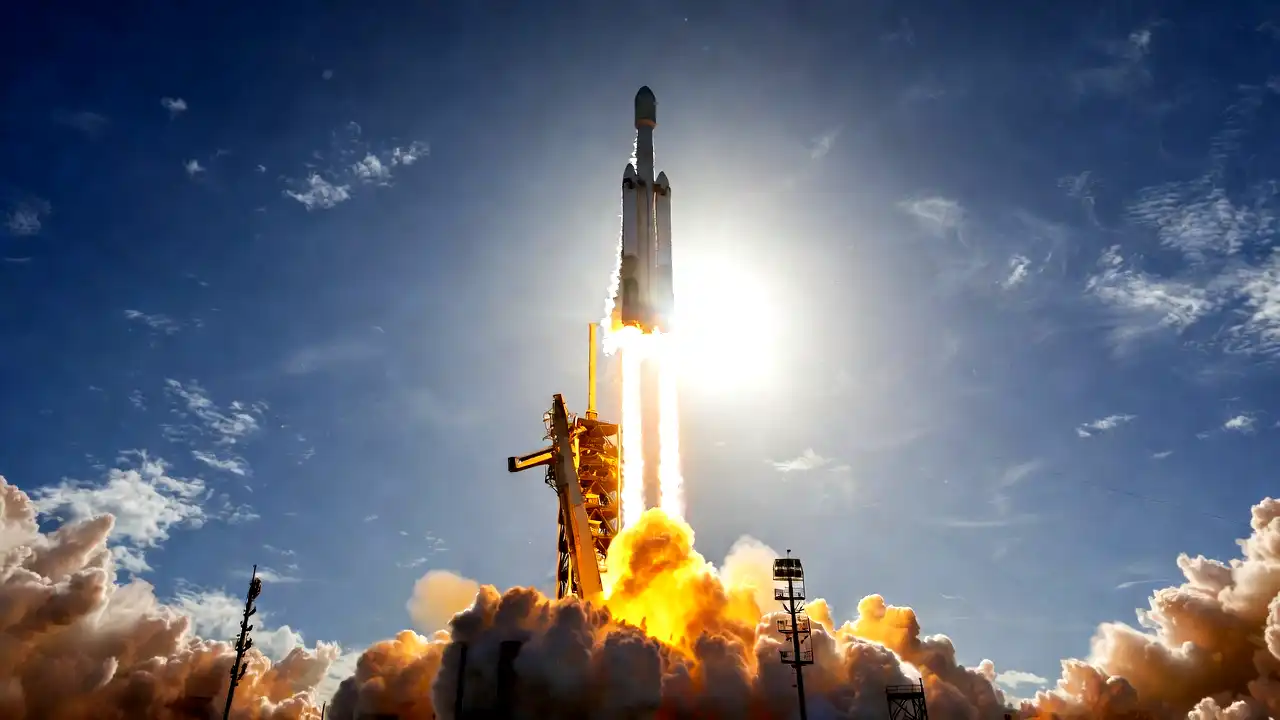
The global space economy is undergoing a metamorphosis, transitioning from a domain dominated by government-led scientific exploration to a bustling, commercially driven marketplace. This sector is no longer the exclusive preserve of superpowers; it has become the most promising frontier for unprecedented wealth creation in human history, with experts predicting the emergence of the world’s first trillionaires from among those who master the cosmos.
As launch costs continue to plummet due to reusable rocket technology and the democratization of satellite deployment, the barrier to entry has lowered significantly. This shift is fueling an explosion of innovation that spans asteroid mining, orbital manufacturing, and the vast, largely untapped potential of the lunar economy, signaling that the ultimate prize for industrial pioneers now lies beyond our atmosphere.
The Trillion-Dollar Catalyst: Why Space is the New Gold Rush
The underlying economics of the space industry are shifting rapidly as private corporations move from providing niche government services to establishing self-sustaining infrastructure. By tapping into resources that are physically impossible or prohibitively expensive to harvest on Earth, these enterprises are laying the groundwork for a multi-planetary industrial revolution.
Beyond Earth’s Gravity: The Value Proposition
The sheer scale of resources available in our solar system dwarfs the total combined wealth of all nations currently on Earth. Accessing these assets requires massive upfront investment, but the potential returns are high enough to redefine the global financial hierarchy.
- Near-Earth Asteroids: These celestial bodies contain vast quantities of platinum-group metals, rare earth elements, and water ice, which serves as the essential fuel—the “gas station in the sky”—for deeper space travel.
- Orbital Manufacturing: The unique environment of microgravity allows for the production of materials—such as high-purity optical fibers, advanced pharmaceuticals, and super-alloys—that cannot be perfectly synthesized in Earth’s gravity.
The Declining Cost of Access
Two decades ago, placing a kilogram of payload into Low Earth Orbit (LEO) was an endeavor costing tens of thousands of dollars, making most commercial ventures non-viable. Today, that cost has been slashed by orders of magnitude, turning previously impossible business plans into profitable enterprises.
- Reusable Launch Systems: The normalization of landing and reusing rocket boosters has transformed space travel from a “single-use” model into an airline-style logistics operation.
- Small-Satellite Constellations: The rise of CubeSats and modular spacecraft has enabled rapid iteration, allowing companies to build, test, and deploy infrastructure in a fraction of the time and cost compared to traditional, monolithic satellites.
The Pillars of the Space Economy: Where the Wealth Will Be Built
Wealth in the coming space age will not be found in a single endeavor but in a complex, interconnected ecosystem of services and manufacturing capabilities. The companies that establish “infrastructure as a service” in space—be it logistics, power, or communication—are the ones most likely to reach the trillion-dollar milestone.
Asteroid Mining: The Ultimate Resource Play
Asteroid mining represents the most direct path to immense wealth, as it addresses the scarcity of critical minerals that are increasingly difficult and environmentally damaging to extract from Earth. By targeting metallic-rich asteroids, companies could theoretically bring back enough precious metals to crash commodity markets or provide enough materials for massive in-space construction.
- Proximity and Accessibility: Identifying Near-Earth Objects (NEOs) with favorable orbits allows companies to minimize travel time and energy requirements for retrieval missions.
- Robotic Autonomy: The development of AI-driven, autonomous mining drones is the key technical challenge, as human operators are hindered by the time-delay of space communications.
Orbital Infrastructure and Energy
Energy is the lifeblood of any industrial society, and the space industry is no exception; by capturing solar energy directly from space, we can provide near-limitless power. Furthermore, building permanent orbital stations and fuel depots creates the necessary infrastructure for a permanent human presence, functioning as the “ports” of the high-frontier.
- Space-Based Solar Power: Large arrays in high orbit can beam energy down to Earth or power orbital factories, sidestepping the weather-related limitations of terrestrial solar and wind farms.
- In-Orbit Refueling: Developing depots where spacecraft can dock and refuel turns space into a navigable ocean rather than a series of one-way trips, drastically extending the life and reach of commercial missions.
The Risks and Regulatory Frontiers
While the potential for trillion-dollar returns is staggering, the path to space-based wealth is fraught with technical, legal, and environmental hazards. Establishing a stable business model in a vacuum requires navigating international treaties and the harsh physical realities of the space environment.
The Legal Landscape of the Celestial Commons
Current international law, primarily governed by the Outer Space Treaty of 1967, is increasingly ill-equipped to handle the realities of private commercial activity. Determining who owns the resources extracted from a moon or an asteroid is a foundational question that will define the winners and losers of this new era.
- Resource Ownership: There is currently significant debate over whether private entities can “own” resources they extract, a question that national governments are beginning to address through domestic legislation while waiting for a broader international consensus.
- Liability and Debris Management: As space becomes more crowded, the risk of “Kessler Syndrome”—a cascading collision event—threatens to destroy the very infrastructure companies depend on, making debris removal a lucrative and necessary service industry.
Overcoming the Human and Biological Barrier
Operating in space is inherently hostile to biological life, and the industry’s long-term success depends on advancing human life support and robotic integration. Whether through superior automation or breakthroughs in biotechnology, the entities that solve the “human factor” in orbit will dominate the sector.
- Radiation and Microgravity Mitigation: Protecting equipment and personnel from long-term exposure to space radiation and the bone-density loss associated with microgravity is the primary physical hurdle for deep-space settlement.
- Closed-Loop Life Support: The ability to recycle air, water, and waste with nearly 100% efficiency is essential for the sustainability of orbital outposts, making those who own these proprietary systems the “landlords” of space.
The Future of Global Economic Power
The emergence of space-based trillionaires will signal a massive shift in global economic power, potentially decoupling wealth from terrestrial geography. This transition will create a new class of global entities whose influence may eventually rival, or even supersede, the influence of mid-sized nations.
The Decentralization of Prosperity
The space industry offers a chance to bypass traditional terrestrial supply chains, allowing for a more decentralized global economy. As manufacturing shifts to orbit, the geographic accidents of birth and resource location on Earth will matter less, replaced by access to orbital lanes and launch facilities.
- New Economic Hubs: Cities and nations that position themselves as spaceports or technological hubs for aerospace R&D will attract the talent and capital of the next century.
- Strategic Autonomy: For emerging nations, participating in the space economy—even via small-satellite manufacturing or data processing—provides a lever for technological sovereignty that was previously inaccessible.
The Long-Term Vision: A Multi-Planetary Future
The ultimate goal of this trillion-dollar industry is not just to enrich a few individuals, but to expand the base of human civilization beyond the confines of a single planet. This transition is expected to take decades, but the current momentum suggests that the foundations are already being poured.
- Sustainable Human Presence: Establishing permanent outposts on the Moon and Mars will create a permanent demand for food, energy, housing, and telecommunications, fueling a multi-sector space economy.
- Cultural and Political Shifts: As humans live and work in orbit, new societal norms and governance structures will emerge, further defining the distinct culture of the “space-faring era.”
Conclusion: The Horizon of Unlimited Possibility
The space industry is rapidly transitioning from a speculative fantasy to a concrete pillar of the global economy, offering rewards that are fundamentally different from any market we have seen before. The trillions of dollars at stake represent not just a transfer of wealth, but the creation of entirely new categories of value, commodities, and human endeavor that are limited only by our engineering ambition.
While the path to becoming a trillionaire in space involves navigating unprecedented risks—from regulatory gray zones to the sheer technical difficulty of working in a vacuum—the relentless pace of technological advancement suggests that these barriers are becoming smaller every year. As we stand on the precipice of this new frontier, it is clear that the future belongs to those who have the vision to look upward and the courage to build in the silence of the stars.















