
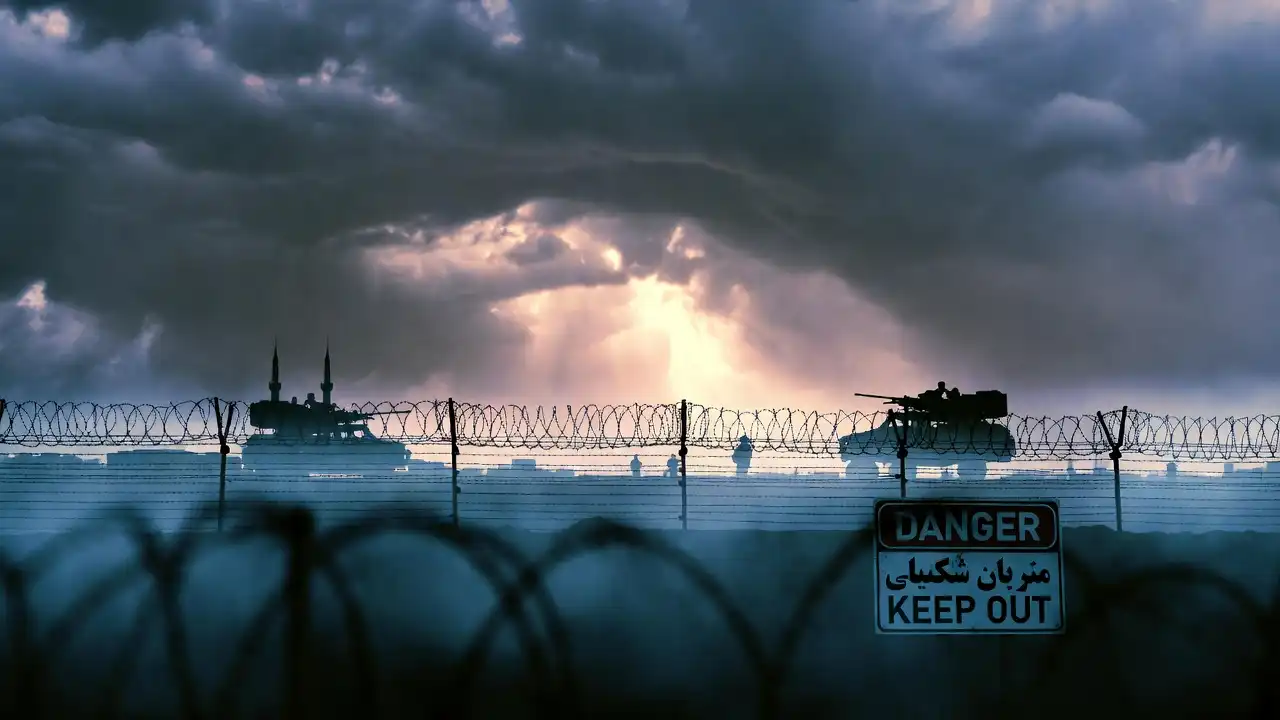
The Middle East has long been regarded as the “heartland” of global geopolitics, serving as a critical bridge between Europe, Asia, and Africa. In the contemporary era, the region is undergoing a profound transformation as traditional alliances shift and new power players emerge on the international stage.
The volatility currently witnessed across the Levant and the Gulf is not merely a localized phenomenon but a catalyst for a broader systemic change. As the United States recalibrates its global presence, the resulting vacuum is being filled by a complex mixture of regional ambition and eastern diplomatic surges.
The Historical Foundations of Middle Eastern Influence
To understand the current shifts in power, one must first analyze the historical frameworks that defined the region’s role in the 20th century. For decades, the Middle East was the primary arena for Cold War competition and the central pillar of the global energy market.
The strategic landscape was largely dictated by the “Oil for Security” paradigm, established primarily between Washington and the Gulf monarchies. This arrangement ensured a steady flow of hydrocarbons to the West while providing a military umbrella that deterred external aggression and internal instability.
The Legacy of Post-Colonial Borders and the Cold War
The current geopolitical map of the Middle East is deeply rooted in the post-World War I settlements, such as the Sykes-Picot Agreement, which created artificial borders. These boundaries often ignored ethnic and sectarian realities, leading to decades of internal strife that invited foreign intervention.
During the Cold War, the region was split into pro-Western and pro-Soviet camps, turning local conflicts into global proxy wars. This era cemented the Middle East’s status as a zero-sum game for superpowers, where any gain for one was viewed as a catastrophic loss for the other.
The Era of Oil Supremacy and the US Umbrella
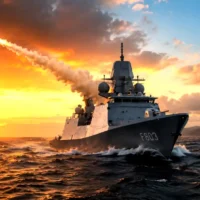
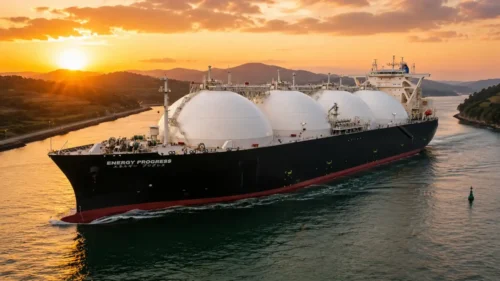
For the better part of seventy years, the global power balance relied on the stability of the Strait of Hormuz and the reliability of Middle Eastern oil. The US Fifth Fleet became a symbol of this stability, ensuring that energy prices remained manageable for the industrialized world.
This security architecture allowed the United States to maintain unipolar dominance after the fall of the Soviet Union. However, as the US achieved energy independence through the shale revolution, the fundamental motivations for its presence in the region began to change.
The Transition from Unipolarity to Multipolarity
The most significant development in modern geopolitics is the transition from a world dominated by a single superpower to a multipolar system. In the Middle East, this shift is characterized by the relative retrenchment of the US and the assertive entry of China and Russia.
Regional leaders are no longer content with being subordinates in a superpower’s grand strategy. Instead, they are practicing “strategic hedging,” maintain ties with Washington for security while embracing Beijing for trade and Moscow for energy coordination.
The US “Pivot” and Regional Strategic Autonomy
The American “Pivot to East Asia” has sent ripples of anxiety through Middle Eastern capitals, leading to a new era of self-reliance. Nations like Saudi Arabia and the United Arab Emirates are increasingly taking their security into their own hands, diversifying their military suppliers beyond the West.
This move toward strategic autonomy means that Middle Eastern states are acting as “swing states” in the global order. They now leverage their geographical and economic assets to extract better terms from both Western and Eastern powers, effectively playing them against each other.
China’s Diplomatic Surge: Brokering Peace and Trade
China’s role in the Middle East has evolved from being a purely mercantilist energy consumer to a major diplomatic heavyweight. The 2023 brokerage of the Saudi-Iran normalization deal signaled a “Sputnik moment” for Chinese diplomacy, proving that Beijing could achieve what Washington could not.
China’s Belt and Road Initiative (BRI) finds a natural home in the Middle East, connecting the region’s ports to the vast markets of Eurasia. By investing in infrastructure and digital technology, China is weaving the Middle East into an Eastern-centric economic order that bypasses traditional Western financial systems.
- The implementation of the Digital Silk Road in the Gulf.
- The 25-year strategic cooperation agreement between China and Iran.
- Investment in Egyptian and Saudi maritime ports as logistical hubs.
Russia’s Enduring Security Presence
Despite its focus on the conflict in Ukraine, Russia remains a pivotal player in the Middle Eastern security architecture. Through its intervention in Syria, Moscow proved its willingness to use hard power to protect its interests and support its allies, contrasting with perceived US hesitation.
Russia’s coordination with OPEC through the OPEC+ framework has also given it a significant say in global energy prices. This alliance with Saudi Arabia has occasionally frustrated Western efforts to isolate Moscow, demonstrating the Middle East’s ability to reshape global economic policy.
Regional Rivalries and Modern Coalitions
The internal dynamics of the Middle East—specifically the rivalries between Saudi Arabia, Iran, and Israel—are the primary drivers of localized tension. However, these rivalries have expanded into global issues that dictate the movement of navies and the flow of international capital.
As these regional powers compete for dominance, they draw in global stakeholders who provide technological, military, and diplomatic support. The result is a fragmented region where new, unexpected coalitions are constantly forming to balance against perceived threats.
Saudi Arabia’s Vision 2030 and Global Leadership
Under the leadership of Crown Prince Mohammed bin Salman, Saudi Arabia is attempting one of the most ambitious national transformations in history. Vision 2030 is not just an economic plan; it is a geopolitical statement of intent to move the Kingdom into the top tier of global powers.
By hosting G20 summits and mediating in conflicts as far away as Ukraine, Riyadh is asserting itself as a global leader of the “Middle Powers.” This new Saudi foreign policy is defined by pragmatism, prioritizing national economic growth over traditional ideological or sectarian alliances.
Iran’s Strategic Depth and the Proxy Network
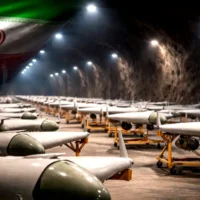
Iran continues to project influence across the region through its “Axis of Resistance,” a network of non-state actors including Hezbollah, Hamas, and the Houthis. This strategy of asymmetric warfare allows Tehran to exert pressure on global trade routes, most notably in the Red Sea and the Gulf of Aden.
The persistent tension between Iran and the West over its nuclear program remains a “wildcard” in global stability. A nuclear-armed Iran, or a military strike to prevent it, would fundamentally shatter the existing power balance and force a global realignment of security priorities.
The Abraham Accords vs. the Resurgence of the Palestinian Question
The Abraham Accords represented a revolutionary shift in Middle Eastern politics, as several Arab nations normalized relations with Israel based on shared economic interests and a common fear of Iran. This “New Middle East” aimed to create an integrated economic bloc.
However, the resurgence of the Israel-Palestine conflict in late 2023 and 2024 served as a reminder that the Palestinian question cannot be bypassed. The humanitarian crisis and regional fallout have slowed normalization efforts and forced global powers to reconsider the viability of a two-state solution as a prerequisite for regional stability.
- The suspension of Saudi-Israeli normalization talks.
- The mobilization of the Global South in support of Palestinian statehood.
- The increased role of Qatar and Egypt as indispensable mediators.
Economic Corridors and Technological Competition
The Middle East is no longer just a source of oil; it is becoming a central hub for the “Trade Corridors of the Future.” The competition between the West and China is manifesting in a race to build the infrastructure that will define 21st-century commerce.
These corridors are designed to reduce reliance on vulnerable maritime choke points and create a seamless digital and physical link between the Global North and the Global South. The Middle East’s geography makes it the “toll booth” of this new global economy.
The India-Middle East-Europe Economic Corridor (IMEC)
Announced at the G20, the IMEC is the Western-backed answer to China’s Belt and Road Initiative. It aims to connect India to Europe through a network of railways and ports in the UAE, Saudi Arabia, Jordan, and Israel.
This project is a clear attempt by the US and its allies to anchor the Middle East in a Western-aligned economic framework. If successful, IMEC would not only speed up trade but also foster deep political integration between some of the world’s most significant emerging markets.
The Digital Silk Road and 5G Geopolitics
The competition for digital dominance is particularly fierce in the Gulf, where nations are building some of the world’s most advanced smart cities. The choice between Western technology and Chinese 5G infrastructure (like Huawei) has become a litmus test for geopolitical alignment.
Middle Eastern states are increasingly opting for Chinese tech due to its competitive pricing and lack of political “strings.” This shift has alarmed Western security experts, who fear that an Eastern-dominated digital infrastructure in the Middle East will give China an unprecedented intelligence advantage in the region.
Energy Transitions and the Future of Geopolitics
As the world moves toward decarbonization, the Middle East is facing an existential challenge to its primary source of wealth. However, the region is leveraging its vast financial reserves to lead the global transition toward hydrogen and renewable energy.
This “Energy Pivot” ensures that even in a post-oil world, the Middle East will remain a critical node in global power. The ability to produce the cheapest solar power and green hydrogen on the planet gives the region a new kind of strategic leverage.
Hydrogen and Renewables: The New Strategic Assets
Saudi Arabia and the UAE are investing heavily in green and blue hydrogen, aiming to become the world’s leading exporters of clean fuel. By doing so, they are positioning themselves as the “OPEC of Renewables,” ensuring their continued relevance to the industrial giants of Europe and East Asia.
The global power balance will shift toward those who control the production of green energy. The Middle East’s transition from an “Oil Power” to a “Clean Energy Power” is a masterclass in long-term strategic planning, ensuring that the region’s tensions will always have a global audience.
- The development of the NEOM green hydrogen plant in Saudi Arabia.
- Masdar’s global expansion as a renewable energy powerhouse.
- European energy partnerships focused on North African solar exports.
Global Consequences: The Reshaping of the World Order
The culmination of Middle Eastern tensions is a world that is less Eurocentric and more multipolar. The region’s ability to defy the directives of any single superpower marks the end of the “Post-Cold War” era and the beginning of a more fluid, fragmented international system.
For the West, the Middle East is a test of its ability to maintain its traditional alliances while adapting to a world where it is no longer the only game in town. For the East, the region is a gateway to global leadership and a proving ground for a new model of non-interventionist diplomacy.
Conclusion
The Middle East geopolitical tensions are far from being mere regional squabbles; they are the fault lines of a new world order. As the region moves toward strategic autonomy, its leaders are reshaping the global power balance by demanding a seat at the table of the world’s elite.
Whether through the brokering of peace by China, the shifting of energy markets through renewables, or the development of new trade corridors, the Middle East is ensuring that its influence will only grow. The global power balance is no longer being decided in Washington or Brussels alone, but also in Riyadh, Tehran, and Abu Dhabi.