

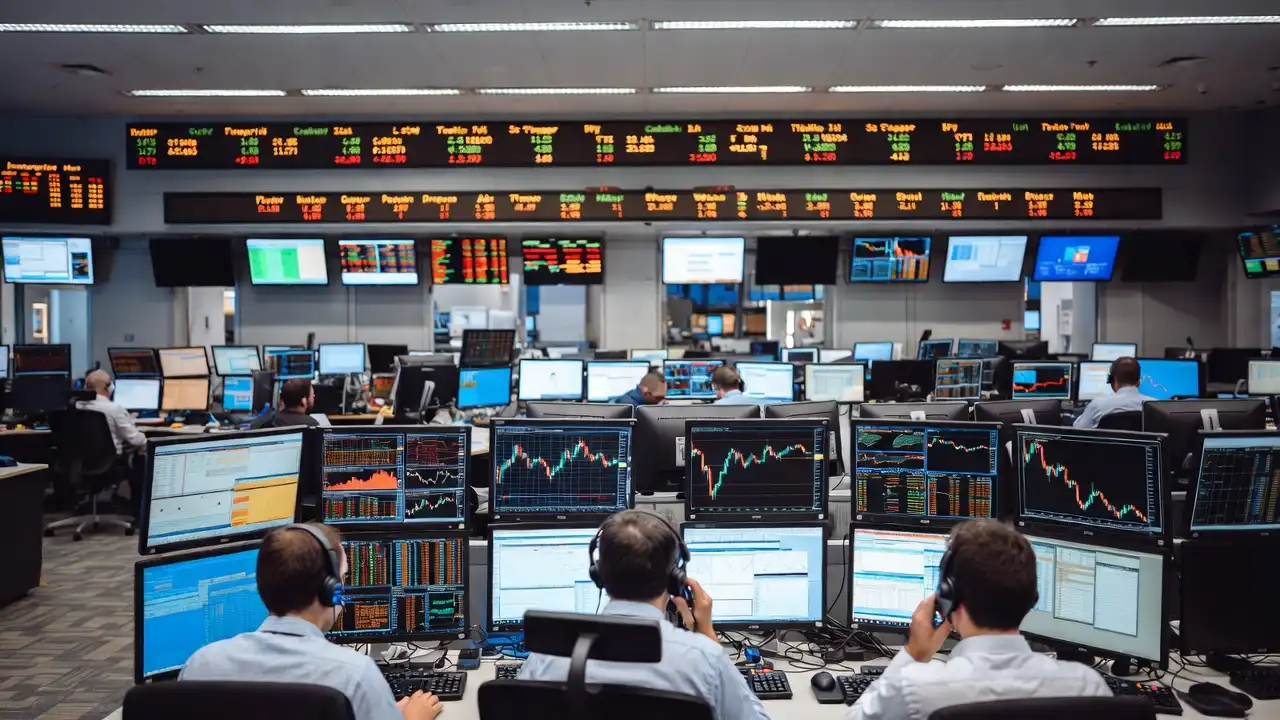
Germany has long been considered the industrial heartbeat of Europe, acting as a stabilizing force for the Eurozone and a premier destination for international capital. However, the current economic landscape is undergoing a profound transformation as the nation grapples with high energy costs, a shifting automotive paradigm, and an urgent need for digital modernization.
Global investors are increasingly looking past the traditional “safe haven” label to identify specific high-growth sectors and structural shifts that define the new German economy. Understanding these intricate market trends is essential for any institutional or private investor seeking to allocate resources within the European Union’s largest economy.
The Macroeconomic Shift: Moving Beyond Industrial Tradition
The German macroeconomic environment is currently defined by a delicate balancing act between managing the fallout of the energy crisis and fostering long-term resilience. While the nation faced a technical recession recently, the underlying infrastructure and fiscal discipline continue to provide a floor for investment valuations.
International analysts are closely monitoring how the “Zeitenwende” or historical turning point in German policy is translating into actual market opportunities. This shift encompasses everything from massive increases in defense spending to a total overhaul of the nation’s energy sourcing and distribution networks.
Resilience and Stabilization in a Post-Crisis Era
The resilience of the German economy is rooted in its highly diversified industrial base and its commitment to fiscal responsibility. Despite global volatility, the German government has maintained a high credit rating, which ensures that sovereign debt remains a foundational asset for global portfolios.
Stabilization efforts are now focused on bringing inflation back to the target rate while ensuring that the “Mittelstand” (small and medium-sized enterprises) remains liquid. The following factors are the primary drivers of this stabilization:
- The gradual reduction of natural gas prices through the diversification of LNG imports.
- The European Central Bank’s cautious approach to interest rate adjustments, which directly impacts German borrowing costs.
- Strong domestic employment levels that sustain consumer spending even during periods of low GDP growth.
- Increased government subsidies for high-tech manufacturing and semi-conductor production on German soil.
The Energy Cost Factor and Industrial Competitiveness
Energy costs remain the most significant variable influencing the competitiveness of German heavy industry and manufacturing. The transition away from cheap pipeline gas has forced many companies to innovate their production processes or risk relocation to more cost-effective jurisdictions.
Global investors are prioritizing companies that have successfully integrated energy-efficient technologies into their operations. This pivot is creating a secondary market for energy management software and industrial automation tools designed specifically for the German market.
The Green Transformation (Energiewende)
Germany’s commitment to becoming climate-neutral by 2045 is perhaps the single most influential trend for long-term investors. The “Energiewende” represents a multi-trillion euro investment opportunity spanning across renewable energy production, grid modernization, and hydrogen infrastructure.
The regulatory environment in Germany is heavily skewed in favor of green initiatives, providing a level of policy certainty that is rarely found in other major economies. This has made Germany a global laboratory for the energy transition, attracting some of the world’s largest sovereign wealth funds.
The Rise of the Hydrogen Economy
Germany is positioning itself to be a global leader in green hydrogen, viewing it as the missing piece for decarbonizing heavy industries like steel and chemicals. The government’s National Hydrogen Strategy has already unlocked billions in funding for research, development, and cross-border pipelines.
Investors are keeping a close watch on the development of the “Hydrogen Core Network,” a planned 9,700-kilometer pipeline system. This infrastructure project is expected to create several investment avenues, including:
- Electrolyzer manufacturing companies that provide the hardware for hydrogen production.
- Specialized engineering firms focused on retrofitting existing natural gas pipelines for hydrogen transport.
- Logistics and storage providers capable of handling liquified hydrogen for maritime and industrial use.
- Joint ventures between German utilities and international energy firms to secure green hydrogen imports.
ESG Mandates and the Supply Chain Act (LkSG)
Environmental, Social, and Governance (ESG) criteria are no longer optional in the German market; they are a legal and operational necessity. The German Supply Chain Due Diligence Act (LkSG) requires large companies to monitor and report on human rights and environmental standards throughout their entire global supply chain.
This strict regulatory framework is influencing global investors to favor German firms that possess transparent and ethical supply chain management systems. Companies that fail to comply face not only heavy fines but also exclusion from major ESG-focused investment indexes.
Technological Innovation and the Digital Push
For years, Germany was criticized for its slow adoption of digital services compared to its peers in the US and China. However, a significant digital push is now underway, driven by both private necessity and government mandates to modernize public administration.
This digital transformation is opening up massive opportunities in the fields of cybersecurity, cloud computing, and Artificial Intelligence (AI). Global investors are increasingly looking at Berlin and Munich as legitimate rivals to Silicon Valley for deep-tech and B2B software solutions.
The “Silicon Allee”: Berlin and Munich Tech Hubs
Berlin and Munich have emerged as the twin pillars of the German tech scene, each offering a unique value proposition to global venture capitalists. While Berlin remains the capital of consumer-facing startups and fintech, Munich has leveraged its proximity to industrial giants to become a leader in B2B and “Industry 4.0” tech.
The influx of international talent into these cities has created a vibrant ecosystem that is less susceptible to the volatility of local economic cycles. Key areas of growth in these tech hubs include:
- Fintech platforms that are disrupting traditional German banking with more efficient, digital-first solutions.
- Enterprise AI companies that help the Mittelstand automate complex administrative and manufacturing tasks.
- Healthtech startups utilizing data analytics to modernize the German healthcare and insurance systems.
- Cybersecurity firms that protect Germany’s critical infrastructure from an increasing volume of global threats.
AI Integration in the Mittelstand
The German Mittelstand is currently undergoing a “silent revolution” as it integrates AI into traditional manufacturing processes. These companies, which are often global market leaders in their specific niches, are using AI to optimize supply chains and predict equipment failure.
Investors who understand the specific needs of these specialized manufacturers can find high-alpha opportunities in companies providing tailored AI solutions. The goal is to marry Germany’s legendary engineering precision with the speed and scalability of modern artificial intelligence.
The Automotive Pivot: From Combustion to Connectivity
The German automotive industry is facing its most significant challenge since the invention of the internal combustion engine. The mandatory shift toward Electric Vehicles (EVs) and the rise of software-defined vehicles have forced iconic brands like Volkswagen, BMW, and Mercedes-Benz to rethink their entire business models.
Global investors are carefully weighing the risks of Chinese competition against the immense R&D power of the German automotive giants. The transition is not just about changing engines; it is about who will control the digital operating system of the car.
The Electric Vehicle (EV) Transition and Battery Tech
Germany is investing heavily in establishing a domestic battery cell manufacturing base to reduce its reliance on Asian suppliers. This effort is supported by the European “Battery Alliance,” which aims to create a sustainable and circular battery economy within the EU.
Investment trends in this space are moving toward the following sub-sectors of the automotive ecosystem:
- Companies developing solid-state battery technology that promises higher range and faster charging times.
- Infrastructure providers focused on building out the national EV charging network, particularly in urban areas.
- Material science firms specialized in recycling lithium, cobalt, and nickel from end-of-life EV batteries.
- Suppliers of high-performance electric motors and power electronics for premium vehicle segments.
Competition from the East and the Software Challenge
The rise of Chinese EV manufacturers like BYD and NIO in the European market has served as a wake-up call for German automakers. To compete, German brands are shifting their focus toward “Software-First” development, aiming to monetize vehicle connectivity and autonomous driving features.
Investors are monitoring the success of internal software divisions, such as Volkswagen’s CARIAD, as a bellwether for the industry’s survival. The ability to integrate seamless software updates and advanced driver-assistance systems (ADAS) will determine the future valuation of these legacy giants.
Real Estate and Infrastructure Trends
The German real estate market, once known for its boring but steady returns, has been rocked by the sharpest interest rate hikes in a generation. This has led to a significant correction in both commercial and residential valuations, creating a unique entry point for opportunistic global investors.
Infrastructure, meanwhile, remains a priority for the federal government, particularly in the areas of rail and digital connectivity. These long-term projects offer stable, inflation-indexed returns for institutional investors like pension funds and insurance companies.
The Commercial Real Estate Downturn and Recovery
The commercial real estate sector in Germany, particularly office and retail space in “A-location” cities like Frankfurt and Hamburg, is currently in a period of price discovery. The shift toward remote work has reduced demand for traditional office space, forcing developers to repurpose buildings for residential or mixed-use.
However, many analysts believe that the market is nearing its bottom, making it an attractive time for value-add investors. The current recovery is being shaped by several key trends:
- The demand for “Green Buildings” that meet high energy-efficiency standards and ESG certifications.
- The growth of the logistics sector, driven by the continued expansion of e-commerce across Central Europe.
- The repurposing of outdated retail spaces into urban fulfillment centers or co-working hubs.
- Data center development, which is surging to support the nation’s digitization and AI requirements.
The Residential Housing Shortage
Germany is facing a chronic shortage of affordable housing, especially in metropolitan areas where the population continues to grow. This supply-demand imbalance provides a strong fundamental case for residential real estate investment, despite high construction costs and interest rates.
Government initiatives to simplify planning permissions and provide subsidies for social housing are aimed at easing this crisis. For global investors, the residential sector offers high occupancy rates and stable rental income, provided they can navigate the complex German tenancy laws.
Financial Markets: The DAX 40 and Venture Capital
The German stock market, represented by the DAX 40, has evolved to include more technology and service-oriented companies, reducing its historical dependence on heavy industry. This modernization has made the index more attractive to a broader range of global institutional investors.
In the private markets, the venture capital landscape is maturing, with a growing number of “Unicorns” emerging from the German ecosystem. The availability of growth capital is improving, although it still lags behind the United States.
The Evolution of the DAX 40
The expansion of the DAX from 30 to 40 companies in 2021 was a turning point for the index, allowing it to better reflect the true diversity of the German economy. The inclusion of companies like Zalando, Airbus, and Sartorius has introduced more growth-oriented assets into the benchmark.
Global investors use the DAX 40 as a liquid instrument to gain exposure to European growth. The index’s performance is heavily influenced by the following global factors:
- International trade policies, given the export-heavy nature of many DAX components.
- The strength of the Euro against the US Dollar, which affects the competitiveness of German exports.
- Global commodity prices, which impact the input costs for German industrial and chemical companies.
- Regulatory changes at the EU level, particularly those related to tech and the environment.
Venture Capital and Private Equity Maturity
Germany’s venture capital scene has moved beyond the “copycat” phase and is now producing original, deep-tech innovations. Private equity firms are also finding fertile ground in the Mittelstand, where succession issues often lead to the sale of high-quality, family-owned businesses.
The maturity of the German private market is characterized by a more sophisticated exit environment. Successful IPOs on the Frankfurt Stock Exchange (Deutsche Börse) and acquisitions by global tech giants have proven that German startups can provide substantial returns for early-stage investors.
Key Challenges and Risks for Investors
While the opportunities in Germany are vast, global investors must also navigate a set of unique challenges that can impact returns. Bureaucracy, labor shortages, and geopolitical tensions are the primary hurdles that require careful risk management and local expertise.
A thorough understanding of these risks is essential for realistic financial modeling. Investors who ignore the structural headwinds may find their expected returns eroded by unforeseen operational costs or regulatory delays.
The Skilled Labor Shortage (Fachkräftemangel)
Germany is facing a demographic crisis, with an aging population and a significant shortage of skilled workers in the tech, healthcare, and engineering sectors. This “Fachkräftemangel” is driving up wages and limiting the growth potential of many German firms.
To combat this, the government has introduced new immigration laws designed to attract skilled workers from outside the EU. For investors, the labor shortage means:
- Increased investment in automation and AI to compensate for the lack of human workers.
- Higher operational costs for service-oriented businesses that rely heavily on manual labor.
- A premium valuation for companies that have successful internal training and retention programs.
- Opportunities in the ed-tech sector to reskill the existing German workforce for the digital age.
Bureaucracy and Regulatory Complexity
Germany is often cited for its high level of “Red Tape,” which can delay infrastructure projects and startup registrations for months or even years. The complexity of the tax system and the fragmented nature of federal vs. state regulations can be daunting for international investors.
However, the current government is actively working on the “Bureaucracy Reduction Act” to streamline these processes. Investors who have local partners or specialized legal counsel are better positioned to navigate these administrative hurdles and capitalize on opportunities before they become mainstream.
Strategic Advice for Global Investors
Investing in Germany requires a long-term perspective and a focus on quality over quick wins. The nation’s stability and commitment to transformation make it an ideal destination for capital that seeks to profit from the green and digital revolutions of the 21st century.
As the global economy becomes increasingly fragmented, Germany’s role as the industrial and technological anchor of Europe will only become more critical. Those who invest now, in the midst of the transition, stand to gain the most as the new German economy takes full shape.
Focus on “Future-Proof” Sectors
Global investors should prioritize sectors that are aligned with the government’s long-term strategic goals. Green energy, digital infrastructure, and advanced manufacturing are the three pillars that will define German prosperity for the next several decades.
When evaluating individual companies, investors should look for the following characteristics:
- A clear and executable roadmap for decarbonization and ESG compliance.
- High investment in R&D relative to competitors, particularly in AI and automation.
- A strong presence in international markets, reducing dependence on the domestic German growth rate.
- Resilient balance sheets that can withstand periods of high interest rates and energy price volatility.
Leverage Local Partnerships and Expertise
Navigating the German market is as much about understanding the culture and the regulatory nuances as it is about the financial data. Establishing partnerships with local banks, legal firms, and asset managers can provide invaluable insights that are not available to outsiders.
Whether it is participating in a private equity deal involving a family-owned Mittelstand firm or investing in a Berlin-based startup, the value of “boots on the ground” cannot be overstated. Local expertise is the key to identifying the subtle market trends that eventually influence global investment flows.
Conclusion
Germany is a market in the midst of a historic recalibration. While the challenges of high energy costs and demographic shifts are real, they are being met with a level of industrial and political will that is uniquely German. For the global investor, the current trends represent a transition from the old industrial model to a high-tech, green, and digitized future.
The resilience of the German economy, combined with its ambitious transformation goals, provides a fertile ground for diverse investment strategies. By focusing on the hydrogen economy, the digital modernization of the Mittelstand, and the evolution of the automotive sector, international capital can participate in the next phase of German economic leadership. Ultimately, the market trends in Germany are not just local phenomena—they are signals that will continue to influence global investment patterns for years to come.















