

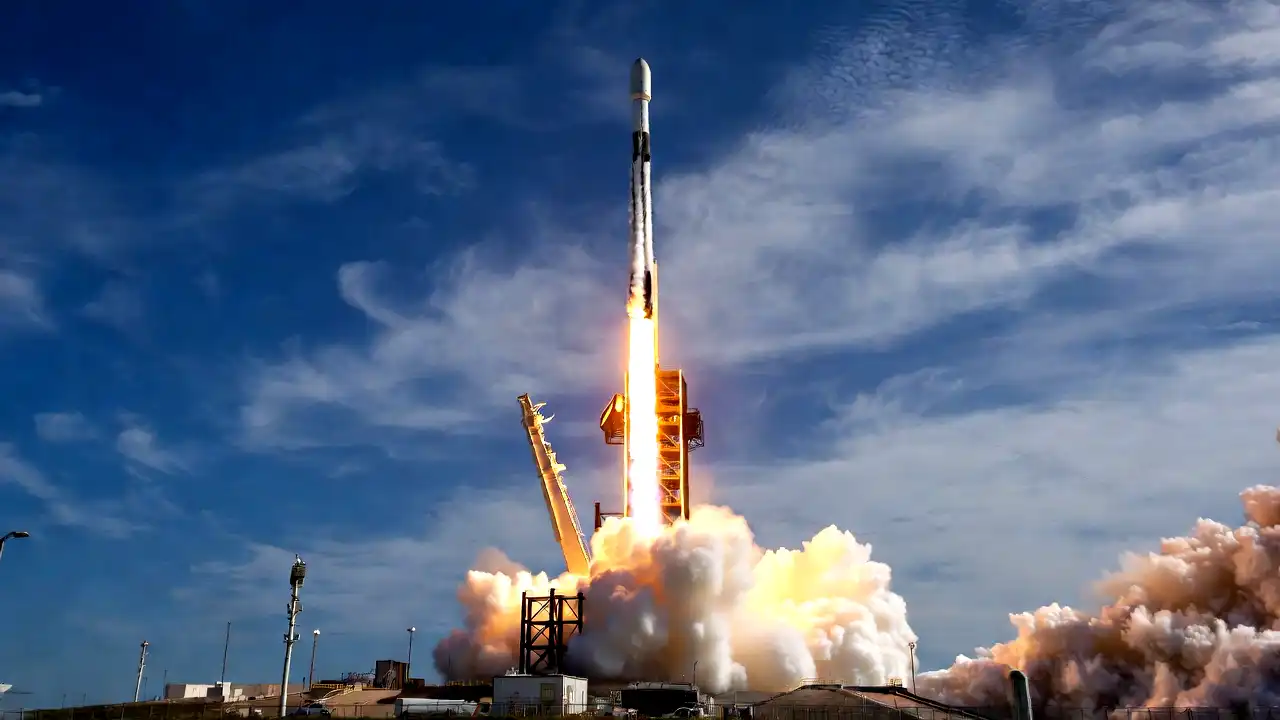
The global landscape of space exploration is currently undergoing a radical transformation, shifting from a domain dominated by two superpowers to a complex, multi-polar arena known as “New Space.” At the heart of this European resurgence is France, a nation that has historically served as the backbone of the continent’s galactic aspirations and is now aggressively pivoting to maintain its leadership. With the emergence of reusable rockets, massive satellite constellations, and the increasing militarization of Earth’s orbit, the stakes have never been higher for the French Republic.
The French government, under the ambitious “France 2030” investment plan, has signaled that space technology is not merely a matter of scientific curiosity but a fundamental pillar of national sovereignty and economic competitive advantage. By fostering a vibrant ecosystem of startups alongside its industrial giants, France aims to bridge the gap between traditional aerospace excellence and the agile, cost-effective innovations pioneered by commercial entities in the West and East.
The Historical Foundation of French Space Power
France’s journey into the cosmos began long before the current commercial boom, establishing itself as the third nation to achieve independent space access after the Soviet Union and the United States. This legacy of autonomy has deeply influenced the national psyche, ensuring that space remains a top priority for consecutive administrations in Paris.
The establishment of the Centre National d’Études Spatiales (CNES) in 1961 marked the formal beginning of a dedicated French space policy. Since then, the agency has acted as both a technical powerhouse and a strategic architect for European cooperation.
The Legacy of CNES and the Birth of European Autonomy
CNES was created during the De Gaulle era with the specific intent of ensuring that France, and by extension Europe, would not be entirely dependent on American or Soviet technology for satellite launches. This drive for “strategic autonomy” remains the guiding star of French space policy today, influencing everything from launcher development to secure communications.
The agency’s early successes, such as the Diamant rocket, paved the way for the creation of the European Space Agency (ESA) and the Ariane program. To understand the depth of this historical commitment, one must look at the key milestones that defined the early French space era:
- The 1965 launch of the Astérix satellite, making France a member of the elite club of space-faring nations.
- The selection and development of the Guiana Space Centre in Kourou, which offers an ideal equatorial launch location.
- The strategic decision to lead the Ariane program, providing Europe with guaranteed access to geostationary orbits.
- The development of the Spot satellite series, which pioneered civilian Earth observation and remote sensing.
The Ariane Legacy: Navigating the Launcher Crisis
For decades, the Ariane rocket family was the gold standard for commercial satellite launches, holding a dominant market share and providing an enviable record of reliability. However, the rise of SpaceX and its reusable Falcon 9 rocket has disrupted this dominance, forcing a painful but necessary period of introspection and technological evolution within the French aerospace sector.
The transition from the highly successful Ariane 5 to the next-generation Ariane 6 has been fraught with delays and geopolitical complications, particularly the loss of access to Russian Soyuz rockets. France is now leading the charge to modernize the European launcher strategy, focusing on lowering costs and embracing the inevitable shift toward reusability.
Ariane 6 and the Quest for Competitiveness
Ariane 6 is designed to be a versatile workhorse, capable of launching both heavy institutional payloads and smaller commercial satellite constellations. While it is not initially reusable, its modular design allows for significant cost reductions compared to its predecessor, aiming to keep Europe relevant in a market where launch prices are plummeting.
The success of Ariane 6 is vital for French sovereignty, as it ensures that sensitive military and governmental satellites can be launched without seeking permission from foreign entities. The following technical and strategic features define the Ariane 6 mission:
- The Vinci re-ignitable upper stage engine, allowing for complex multi-orbit deployments and de-orbiting to reduce space debris.
- A simplified production process utilizing 3D printing and horizontal assembly to speed up launch cadences.
- Two versions (A62 and A64) to provide flexibility for different payload sizes and mission profiles.
- The P120C solid rocket boosters, which are shared with the smaller Vega-C rocket to achieve economies of scale.
The Move Toward Reusability: Prometheus and Themis
France has recognized that the future of the space race belongs to those who can recover and reuse their hardware. Through CNES and ArianeGroup, the nation is investing heavily in the Prometheus engine and the Themis reusable stage demonstrator to ensure that the successor to Ariane 6 can compete directly with American commercial launchers.
Prometheus is a low-cost, liquid oxygen-methane engine that is intended to be highly versatile and reusable, representing a significant technological leap for European liquid propulsion. The development of this technology is a multi-stage process involving:
- Ground testing of the Prometheus engine to validate high-thrust methane combustion.
- Initial “hop” tests of the Themis stage to practice vertical takeoff and landing (VTOL) maneuvers.
- Integration of these technologies into a future “MaiaSpace” launcher to address the mini-launcher market.
- Eventually scaling these innovations up to create a fully reusable heavy-lift successor to Ariane 6.
France 2030: A Multi-Billion Euro Strategic Pivot
In 2021, President Emmanuel Macron announced the “France 2030” plan, a massive investment initiative aimed at reclaiming the nation’s industrial lead in several high-tech sectors. Space technology was identified as a critical priority, with €1.5 billion specifically earmarked to foster innovation and support the emergence of a domestic “New Space” ecosystem.
This funding marks a departure from the traditional model of awarding contracts solely to established giants like Airbus or Thales. Instead, it seeks to stimulate competition and agility by funding smaller, disruptive players that can challenge global incumbents.
Objectives of the National Space Investment
The primary goal of the France 2030 space pillar is to ensure that France remains at the cutting edge of the global space economy, which is projected to reach $1 trillion by 2040. This involves not only hardware but also the services and data generated by space assets.
By focusing on specific “frontier” technologies, France intends to build a comprehensive space stack that addresses modern geopolitical and environmental challenges. These strategic objectives include:
- Developing a domestic micro-launcher capability to capture the booming small-satellite market.
- Investing in space-based internet of things (IoT) and high-speed laser communications.
- Advancing space situational awareness (SSA) to protect assets from collisions and hostile acts.
- Enhancing Earth observation capabilities to monitor climate change and resource management in real-time.
Cultivating the French Mini-Launcher Market
A significant portion of the new funding is directed toward companies developing small rockets, often referred to as micro or mini-launchers. These vehicles are essential for the rapid deployment of small satellite constellations, a sector where France currently faces stiff competition from startups in the US, China, and Germany.
Several French companies are currently in a high-stakes race to reach orbit, each backed by a combination of public and private capital. The most prominent players in this burgeoning sector include:
- MaiaSpace: A subsidiary of ArianeGroup focusing on a reusable mini-launcher utilizing the Prometheus engine.
- Latitude (formerly Venture Orbit): Developing the Zephyr launcher, aimed at providing affordable and frequent access for small sats.
- HyPrSpace: Utilizing innovative hybrid propulsion technology to simplify rocket design and reduce costs.
- Dark: A startup focusing on emergency orbital interventions and debris removal using unique air-launch systems.
The Rise of the French New Space Ecosystem
Beyond the headline-grabbing rocket launches, the real power of France’s space ambitions lies in its diverse and rapidly expanding “New Space” ecosystem. Centered largely around the aerospace hub of Toulouse, often called the “Pink City,” this network of startups, research labs, and service providers is redefining what is possible in orbit.
These companies are moving away from the “one-off” bespoke satellite model of the past toward mass-produced, software-defined systems. This shift allows for faster iteration, lower costs, and the creation of constellations that can provide persistent global coverage for a variety of applications.
Satellite Constellations and the IoT Revolution
France is positioning itself as a leader in the industrialization of small satellites, leveraging its heritage in high-precision engineering. Companies like Kinéis and Anywaves are at the forefront of the satellite-based Internet of Things (IoT), enabling global connectivity for maritime, agricultural, and logistics sensors.
The Kinéis constellation, backed by CNES, is a prime example of how French space tech is solving real-world problems. By providing low-power, long-range connectivity from space, it allows for the tracking of everything from scientific buoys in the Antarctic to freight trains in Europe. This sector’s growth is driven by:
- The miniaturization of electronic components, allowing for sophisticated sensors in shoebox-sized satellites.
- Advances in phased-array antennas that can track multiple signals simultaneously from high altitudes.
- The integration of AI for on-board data processing, reducing the amount of raw data that needs to be sent back to Earth.
- New business models focusing on “Space-as-a-Service,” where users pay for data rather than owning the hardware.
Innovations in Orbital Propulsion and Logistics
As more satellites enter orbit, the ability to maneuver them effectively becomes a critical competitive advantage. French startups are pioneering new forms of in-space propulsion, including electric and chemical systems, to help satellites reach their final orbits and avoid collisions.
Exotrail is a standout in this niche, providing end-to-end space mobility solutions that include electric thrusters and mission design software. Their technology allows small satellites to extend their lifespans and optimize their orbital positions. The importance of orbital logistics is growing due to several factors:
- The need for “Last Mile” delivery, where a large rocket drops off multiple satellites that then must maneuver to specific locations.
- Regulatory requirements for end-of-life disposal to prevent the buildup of space debris.
- The emergence of in-orbit servicing, where robotic craft can refuel or repair existing satellites.
- Active debris removal missions to clear busy orbital planes of defunct hardware.
Space Defense: Protecting the “Final Frontier”
The French government has been remarkably transparent about the fact that space is no longer a sanctuary but a potential theater of conflict. In response to increasing threats from “stalker satellites” and the development of anti-satellite weapons by major powers, France has established a robust military space strategy.
Under the guidance of the Ministry of the Armed Forces, France has created a dedicated Space Command (Commandement de l’Espace or CDE) and is developing active defense capabilities. This shift signifies that protecting orbital assets is now as essential as defending national borders on land or at sea.
The Commandement de l’Espace (CDE)
Established in 2019 and headquartered in Toulouse, the CDE is responsible for the protection of French space assets and the monitoring of the orbital environment. It coordinates with international allies while maintaining a distinct French capacity to act independently if necessary.
The CDE’s mission is multifaceted, encompassing intelligence gathering, surveillance of the space environment, and the development of defensive measures. To sharpen its edge, France conducts “AsterX,” the first European space warfare exercise, which simulates various scenarios including:
- Jamming of satellite communications by hostile actors.
- Cyber-attacks against ground control stations.
- Close-approach maneuvers by unidentified “inspector” satellites.
- The management of space traffic during a localized conflict.
Active Defense and Laser Technology
France is not content with merely observing threats; it is actively developing technologies to neutralize them. One of the most controversial and innovative aspects of the French space defense strategy is the development of on-board lasers for satellites.
These high-power laser systems are intended to “dazzle” or disable the sensors of an attacking satellite without creating a cloud of dangerous debris. This “active defense” posture is part of the “Yoda” project, which involves deploying small “patrol satellites” designed to guard high-value assets in geostationary orbit. Key components of this defensive tech stack include:
- High-precision Lidar: For tracking incoming objects with centimeter-level accuracy.
- Adaptive Optics: To ensure that defensive lasers can maintain focus through various atmospheric or orbital conditions.
- Encrypted Satellite Links: To prevent the interception of commands during a defensive operation.
- Autonomous Maneuvering AI: Allowing defensive satellites to react to threats faster than a human operator could.
Sustainability: Leading the “Green” Space Movement
As the orbital environment becomes increasingly crowded, France has taken a leading role in promoting “Space Sustainability.” The nation recognizes that the “Kessler Syndrome”—a chain reaction of satellite collisions—would be catastrophic for the global economy and the future of space exploration.
French space policy emphasizes the responsible use of orbit, advocating for international norms and developing the technology necessary to clean up legacy debris. This commitment to sustainability is seen as both an ethical imperative and a prerequisite for long-term commercial growth.
Space Situational Awareness (SSA)
Effective space traffic management begins with knowing exactly where every object in orbit is located. France utilizes a sophisticated network of ground-based radars (such as the GRAVES system) and telescopes to track thousands of pieces of space junk and active satellites.
By providing highly accurate orbital data, France helps prevent accidental collisions that could generate thousands of new pieces of debris. The evolution of SSA technology involves:
- Moving from ground-based tracking to space-based sensors for better “up-close” monitoring.
- Utilizing machine learning to predict potential conjunctions (near misses) with greater reliability.
- Establishing international data-sharing agreements to create a comprehensive global “map” of orbit.
- Developing automated collision-avoidance systems that can be integrated directly into satellite flight software.
Debris Removal and Circular Space Economy
France is also exploring the feasibility of active debris removal (ADR) missions. Startups and established firms are researching methods to capture defunct satellites—using nets, harpoons, or robotic arms—and de-orbiting them into the atmosphere where they can burn up safely.
Furthermore, there is a push toward a “circular space economy,” where satellites are designed from the beginning to be refueled, upgraded, or recycled in orbit. This approach reduces the need to launch new hardware and maximizes the utility of existing assets. French initiatives in this area include:
- Standardizing docking ports on satellites to facilitate future servicing missions.
- Researching in-space manufacturing techniques to build components from recycled orbital material.
- Promoting international treaties that mandate “Zero Debris” policies for all new satellite launches.
- Developing low-impact propulsion systems that do not release harmful chemicals into the upper atmosphere.
International Cooperation vs. Strategic Autonomy
A recurring theme in French space technology ambitions is the tension between European cooperation and national independence. While France is a primary contributor to the European Space Agency (ESA) and the European Union’s space programs (like Galileo and Copernicus), it often pursues its own strategic interests when it believes European progress is too slow.
The signing of the Artemis Accords with NASA in 2022 marked a significant moment, as France signaled its intent to join the American-led effort to return humans to the Moon. This move demonstrates that while France values its European identity, it is also willing to engage in global partnerships to secure a seat at the table of the new lunar economy.
The Role of ESA and the European Union
France remains the leading financier of ESA, ensuring that the agency’s goals often align with French industrial strengths. The relationship is symbiotic: France provides the heavy-lift launchers and prime contractors, while ESA provides the multilateral framework and funding from other member states.
The European Union is also becoming a more prominent player through programs like IRIS² (Infrastructure for Resilience, Interconnectivity and Security by Satellite), which aims to provide Europe with its own high-speed satellite internet constellation. France’s contribution to these pan-European efforts is focused on:
- Securing European sovereignty in satellite navigation through the Galileo system.
- Maintaining the Copernicus Earth observation program, the world’s most advanced environmental monitoring system.
- Advocating for “European Preference” in launch contracts to support the domestic rocket industry.
- Coordinating cybersecurity efforts to protect European space infrastructure from state-sponsored threats.
France and the Lunar Economy: The Artemis Accords
By joining the Artemis program, France is ensuring that its scientists and astronauts will be part of the most ambitious exploration mission of the 21st century. This partnership allows France to contribute its expertise in life support systems, lunar robotics, and high-altitude communications to the NASA-led coalition.
French participation in Artemis is not just about exploration; it’s about the “Lunar Economy.” The Moon is seen as a potential base for resource extraction (such as Helium-3 or water ice) and a stepping stone for future Mars missions. French interests in the lunar domain include:
- The Lunar Gateway: Contributing modules to the space station that will orbit the Moon.
- Surface Mobility: Developing rovers and autonomous vehicles for lunar exploration.
- Communication Relays: Providing the high-bandwidth links necessary for lunar bases to stay connected with Earth.
- Scientific Payloads: Utilizing the unique lunar environment for astronomy and fundamental physics research.
Conclusion
France’s space technology ambitions are a masterclass in strategic long-term planning. By successfully navigating the transition from a state-controlled industrial era to the dynamic New Space race, the nation is ensuring its relevance for the next century. The combination of historical expertise, massive strategic investment, and a burgeoning startup ecosystem has made France the indispensable leader of European space efforts.
However, the path forward is not without challenges. Intense competition from American commercial giants, the rapid advancement of Chinese space capabilities, and the inherent risks of a contested orbital environment will test French resolve. Yet, with a clear focus on reusability, sustainability, and defense, the French Republic is well-positioned to remain a dominant force among the stars. Ultimately, France’s galactic journey is about more than just technology; it is a profound statement of national identity, sovereignty, and the enduring human spirit of exploration.















