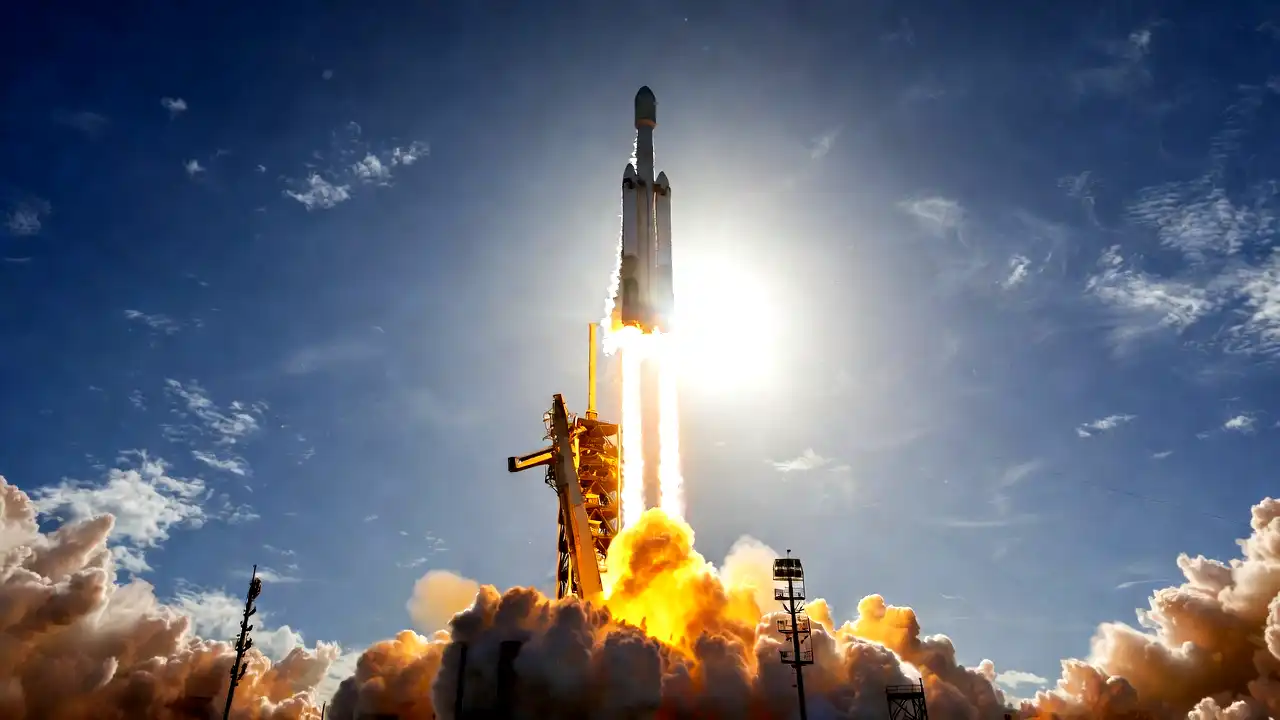
The contemporary world order is currently experiencing a period of profound fragmentation and realignment. As traditional geopolitical alliances undergo unprecedented stress, economic paradigms shift, and international diplomacy becomes increasingly complex, the theater of global competition has inevitably expanded far beyond terrestrial borders. Amid this pervasive global uncertainty, one reality has become distinctly clear: Chinese space exploration systems are accelerating at an extraordinary pace. Driven by a desire for technological sovereignty, national prestige, and strategic dominance, China has transformed its aerospace sector into a relentless engine of innovation. This rapid acceleration is not occurring in a vacuum; rather, it is both a direct response to and a symptom of the shifting power dynamics on Earth. As international cooperation in space faces bureaucratic and political hurdles, China’s autonomous and highly methodical approach is reshaping the future of human spaceflight, satellite infrastructure, and deep space exploration.
Understanding the sheer scale and trajectory of this aerospace revolution requires a comprehensive analysis of the technological systems, political motivations, and global repercussions involved. The acceleration of Chinese space exploration is simultaneously redefining humanity’s relationship with the cosmos and rewriting the rules of global power.
To fully grasp the magnitude of this extraterrestrial expansion, it is essential first to examine the terrestrial drivers that are fueling this unprecedented acceleration. The volatility of planetary politics serves as the primary catalyst for off-world ambitions.
The Catalyst of Global Uncertainty
The traditional frameworks of international cooperation that characterized the post-Cold War era are increasingly showing signs of structural fatigue. As economic protectionism rises and global supply chains become weaponized, nations are actively seeking environments where they can assert unmitigated control and demonstrate technological superiority. Space has emerged as the ultimate strategic high ground, and China’s accelerated investments in this domain are a direct reflection of its strategy to insulate itself from global instability while projecting power on a universal scale.
This drive for cosmic independence is deeply intertwined with shifting alliances and the pursuit of absolute technological self-reliance. As the global landscape becomes more unpredictable, the imperative to command the stars becomes a matter of national security.
Shifting Geopolitical Alliances
Historically, space exploration—particularly in the realm of orbital stations and scientific research—has been a unifying endeavor, famously bridging divides between rival nations. However, the current geopolitical climate has fractured these collaborative foundations. As Western nations impose stricter export controls and restrict technological transfers, China has been systematically excluded from legacy international aerospace projects. Rather than stunting its progress, this exclusion has acted as a powerful accelerant. Forced to innovate independently, China has cultivated an entirely sovereign aerospace ecosystem, free from the bureaucratic entanglements and diplomatic vetoes of rival powers. This independence has enabled rapid prototyping, streamlined decision-making, and uninterrupted execution of long-term strategic goals.
Economic Pressures and Technological Sovereignty
Beyond political rivalries, the acceleration of Chinese space exploration is fundamentally an economic imperative. The global economy is increasingly reliant on space-based infrastructure for navigation, telecommunications, climate monitoring, and financial transactions. Recognizing that reliance on foreign satellite networks poses a severe vulnerability, China has prioritized achieving absolute technological sovereignty. By developing indigenous space systems, China not only secures its own economic infrastructure against external disruptions but also positions itself as a premier provider of space-based services to the developing world.
To achieve these ambitious goals of sovereignty and security, China relies on a robust and continuously evolving array of technological systems. The physical infrastructure of this space program is a marvel of modern engineering.
The Architecture of Chinese Space Systems
The rapid acceleration of China’s space program is underpinned by a meticulously planned and flawlessly executed technological architecture. Unlike the fragmented, heavily privatized, and sometimes erratic aerospace sectors of Western nations, China’s approach is highly centralized, deeply integrated, and focused on incremental, highly reliable advancements. The physical systems driving this exploration encompass a wide spectrum of hardware, from versatile launch vehicles to permanent orbital habitats.
This comprehensive architecture is designed to provide seamless access to space, ensuring that Chinese astronauts, satellites, and scientific probes can reach their destinations with unmatched reliability. The foundational element of this capability is the nation’s evolving fleet of rockets.
Next-Generation Launch Vehicles
The backbone of any spacefaring nation is its ability to reliably and economically transport payloads beyond the Earth’s atmosphere. China has dedicated immense resources to diversifying and upgrading its primary launch vehicle fleet. The modern iterations of these rockets are designed to handle a wide array of mission profiles, ranging from deploying small constellations of low-Earth-orbit satellites to hurling massive robotic rovers toward neighboring planets. Furthermore, Chinese engineers are actively developing reusable rocket technologies, recognizing that dramatically lowering the cost of space access is key to maintaining a high cadence of exploration and infrastructure deployment.
The development of these launch systems follows a strategic roadmap designed to achieve specific capabilities. These targeted advancements include:
- The implementation of non-toxic, environmentally friendly cryogenic propellants to replace older, highly volatile fuel mixtures.
- The engineering of heavy-lift and super-heavy-lift vehicles capable of transporting the massive tonnage required for crewed lunar missions.
- The integration of advanced autonomous flight termination and guidance systems to ensure precision orbital insertions.
The Orbital Outpost: A Permanent Presence
Perhaps the most visible symbol of China’s accelerating space capabilities is its sovereign orbital space station. While legacy international stations face aging infrastructure and uncertain political futures, China has successfully constructed and continuously inhabited a state-of-the-art modular outpost in low Earth orbit. This station serves as a multi-disciplinary laboratory, a platform for testing long-duration human spaceflight systems, and a staging ground for future deep-space endeavors. By independently managing the life support, logistics, and scientific payloads of a permanent orbital habitat, China has proven its capacity to sustain a human presence in the hostile environment of space without external assistance.
While low Earth orbit provides a critical foundation, the true measure of a nation’s spacefaring prowess lies in its ability to navigate the vast distances of the inner solar system. China’s gaze is firmly fixed on the celestial bodies that neighbor our world.
Deep Space and Lunar Ambitions
Humanity’s focus has increasingly turned toward the Moon and Mars, and China is leading a significant portion of this vanguard. The nation’s deep space ambitions extend far beyond Earth’s immediate orbit, pushing the boundaries of scientific discovery, resource utilization, and strategic positioning. The acceleration of these programs amidst global uncertainty highlights a desire to secure precedence in the regions of space that will define the next century of human progress.
The Moon, in particular, is no longer viewed merely as a destination for brief exploratory visits. It is increasingly recognized as a vital strategic high ground and a foundational stepping stone for deeper cosmic exploration.
The Lunar Base Initiative
China has methodically executed a phased lunar program that includes orbiting, soft landing, deploying rovers, and conducting highly complex sample-return missions. However, the ultimate objective of this lunar acceleration is to establish a permanent, sustained research station on the lunar surface, likely near the resource-rich southern polar region. This initiative is designed to be a collaborative effort, deliberately welcoming participation from international partners—particularly those in the Global South—who seek an alternative to Western-led lunar coalitions. By leading the construction of this lunar infrastructure, China aims to dictate the norms, standards, and operational protocols of the future cislunar economy.
To achieve this unprecedented lunar goal, several critical systems are currently being developed and refined. These vital technological pillars include:
- Precision landing systems capable of autonomously navigating hazardous lunar terrain in real-time.
- Nuclear power generators are designed to survive the prolonged, freezing darkness of the lunar night.
- In-situ resource utilization (ISRU) technologies aimed at extracting water, oxygen, and building materials directly from lunar regolith.
Martian Exploration and Beyond
China’s deep space acceleration is not limited to the Earth-Moon system. The nation has achieved historic milestones in Martian exploration, successfully deploying orbiters, landers, and rovers in a single, highly complex mission architecture. These successes have laid the groundwork for future endeavors, including highly ambitious Martian sample return missions and eventual crewed expeditions to the Red Planet. Furthermore, Chinese space systems are targeting asteroids and the outer planets, demonstrating a comprehensive, solar-system-wide exploratory vision that rivals any legacy space agency on Earth.
However, the expansion of these exploratory and infrastructural systems inevitably intersects with the complex realities of global security. The dual-use nature of aerospace technology means that civilian achievements often cast a long shadow over military strategy.
The Militarization and Security Dimensions
The boundary between civilian space exploration and military space utilization has always been porous. As global geopolitical uncertainty intensifies, the militarization of space has accelerated in tandem with advances in exploration. Chinese space exploration systems, while officially focused on scientific and economic development, inherently possess profound security implications. The ability to launch, track, and maneuver assets in orbit is a fundamental requirement for modern warfare and strategic deterrence.
The deployment of vast orbital infrastructures provides unparalleled advantages in terrestrial conflicts. Nations lacking these capabilities find themselves at a severe strategic disadvantage.
Satellite Networks and Orbital Infrastructure
The rapid deployment of sovereign global navigation satellite systems is a prime example of space technology serving as a geopolitical tool. By finalizing an independent, highly accurate satellite navigation and timing network, China has immunized its military and civilian logistics against the denial of Western-controlled GPS signals. Additionally, China has accelerated the launch of advanced remote sensing, synthetic aperture radar (SAR), and signals intelligence satellites. These orbital assets provide continuous, high-resolution surveillance of the globe, dramatically enhancing maritime domain awareness, border security, and the ability to project power across vast distances.
Space Debris and Orbital Traffic Management
As the density of satellites in orbit increases exponentially, the management of space traffic and orbital debris has become a critical security concern. China is actively developing systems designed to service, refuel, and physically manipulate satellites in orbit. While these technologies are essential for maintaining sustainable space environments and removing dangerous debris, they inherently possess dual-use capabilities. A robotic arm designed to clear a defunct satellite from orbit can, in theory, be used to disable a rival nation’s strategic asset. This ambiguity surrounding orbital servicing systems heavily fuels the global anxiety and strategic paranoia that define the modern space race.
The rapid advancement of these multifaceted space systems has sent shockwaves through the international community. The responses from rival superpowers and emerging nations are actively reshaping global diplomatic relations.
Global Repercussions and the New Space Race
The relentless acceleration of Chinese space exploration systems has effectively ignited a new, multi-polar space race. Unlike the bipolar competition of the twentieth century, the modern space race features a complex web of national agencies, commercial enterprises, and shifting international coalitions. China’s ascent has fundamentally forced other spacefaring nations to reevaluate their timelines, budgets, and strategic priorities.
This competitive environment is generating a bifurcated global space architecture. The world is witnessing the formation of competing aerospace blocs, each vying for influence, partnerships, and dominance in the cosmos.
Western Responses and Strategic Partnerships
The acceleration of the Chinese space program has served as a powerful wake-up call for Western space agencies. In response, nations aligned with traditional aerospace powers have accelerated their own lunar and deep-space programs, seeking to ensure that the rules-based international order extends into the cosmos. These responses rely heavily on leveraging the agility of the commercial space sector and forging broad, multilateral agreements to govern the sustainable exploration of space. The strategic competition is not merely about who reaches a celestial body first, but about whose legal and ethical frameworks will govern the utilization of extraterrestrial resources.
Emerging Space Nations Joining the Fold
Perhaps the most significant global repercussion of China’s acceleration in space is its impact on emerging and developing nations. As global uncertainty complicates traditional Western alliances and makes them more financially demanding, China offers an alternative pathway to space. By providing satellite launch services, joint orbital research opportunities, and data-sharing agreements, China is actively exporting its aerospace influence to the Global South. This strategic integration binds the technological infrastructure of emerging economies to Chinese space systems, expanding Beijing’s geopolitical footprint and securing a vast network of international partners for future cosmic endeavors.
While state-led initiatives dominate the strategic narrative, the underlying mechanics of the aerospace sector are evolving. China has recognized the undeniable power and efficiency of market-driven innovation.
Commercialization and the Role of Private Enterprise
For decades, the Chinese space program was the exclusive domain of massive state-owned defense contractors and government agencies. However, the global success of private aerospace companies has clearly demonstrated the advantages of agility, rapid iteration, and market-driven cost reductions. In a calculated effort to accelerate its overall space capabilities, China has actively fostered the development of a domestic commercial space sector.
This hybrid approach, blending state guidance with private-sector dynamism, is designed to rapidly close the gap in areas such as reusable rocketry and mass-produced satellite production. The rise of these commercial entities is a critical component of China’s long-term space strategy.
The Rise of State-Backed Commercial Startups
A new wave of Chinese aerospace startups is currently disrupting the domestic launch market. While technically classified as private enterprises, these companies often benefit heavily from state-subsidized infrastructure, technology transfers from government agencies, and guaranteed institutional contracts. This unique ecosystem enables them to rapidly prototype and test new launch-vehicle architectures, including liquid-fueled, reusable rockets. By cultivating a competitive domestic market, China ensures that its broader space industry remains innovative, cost-effective, and capable of responding swiftly to shifts in the global technological landscape.
The true commercial value of space in the modern era lies in data transmission and global connectivity. The deployment of massive satellite constellations requires an industrial approach to aerospace manufacturing.
Satellite Constellations and Global Connectivity
Recognizing the strategic and economic necessity of low-latency global internet coverage, China is accelerating the development and deployment of its own mega-constellations in low Earth orbit. These vast networks of small, interconnected satellites are designed to provide uninterrupted broadband services across the globe. By controlling a sovereign mega-constellation, China aims to secure a dominant position in the future of global telecommunications, bridging the digital divide in allied nations while insulating its own data networks from foreign interference.
The deployment of these massive constellations requires a complete overhaul of traditional space manufacturing capabilities. The systems required to support this endeavor include:
- Automated, assembly-line manufacturing facilities capable of producing dozens of satellites per week.
- Highly efficient, multi-payload fairing systems to deploy dozens of satellites in a single launch event.
- Advanced laser inter-satellite link technologies to ensure rapid and secure data routing across the orbital network.
Conclusion
The vast expanse of space is no longer a distant frontier; it is the active, fiercely contested forefront of human civilization. Amidst an era defined by profound global uncertainty, economic realignment, and terrestrial political friction, Chinese space exploration systems are accelerating at a transformative pace. Driven by an unyielding pursuit of technological sovereignty and strategic independence, China has constructed a highly capable, comprehensive aerospace architecture. From deploying permanent orbital outposts and sophisticated lunar rovers to cultivating a burgeoning commercial space sector and expanding military orbital infrastructure, the nation’s off-world trajectory is resolute.
This acceleration is not merely a scientific endeavor; it is a fundamental reshaping of the global power balance. As China cements its position as a premier spacefaring superpower, it forces the international community to adapt to a new, multi-polar cosmic reality. The ultimate impact of this rapid advancement will not be confined to the vacuum of space. The technologies developed, the alliances forged, and the celestial resources secured by these exploration systems will indelibly dictate the economic, security, and diplomatic landscape of Earth for generations to come. In the face of terrestrial uncertainty, humanity’s future is being rapidly written among the stars, and the ascent of Chinese space capabilities ensures that they will be one of the primary authors of that unfolding narrative.