

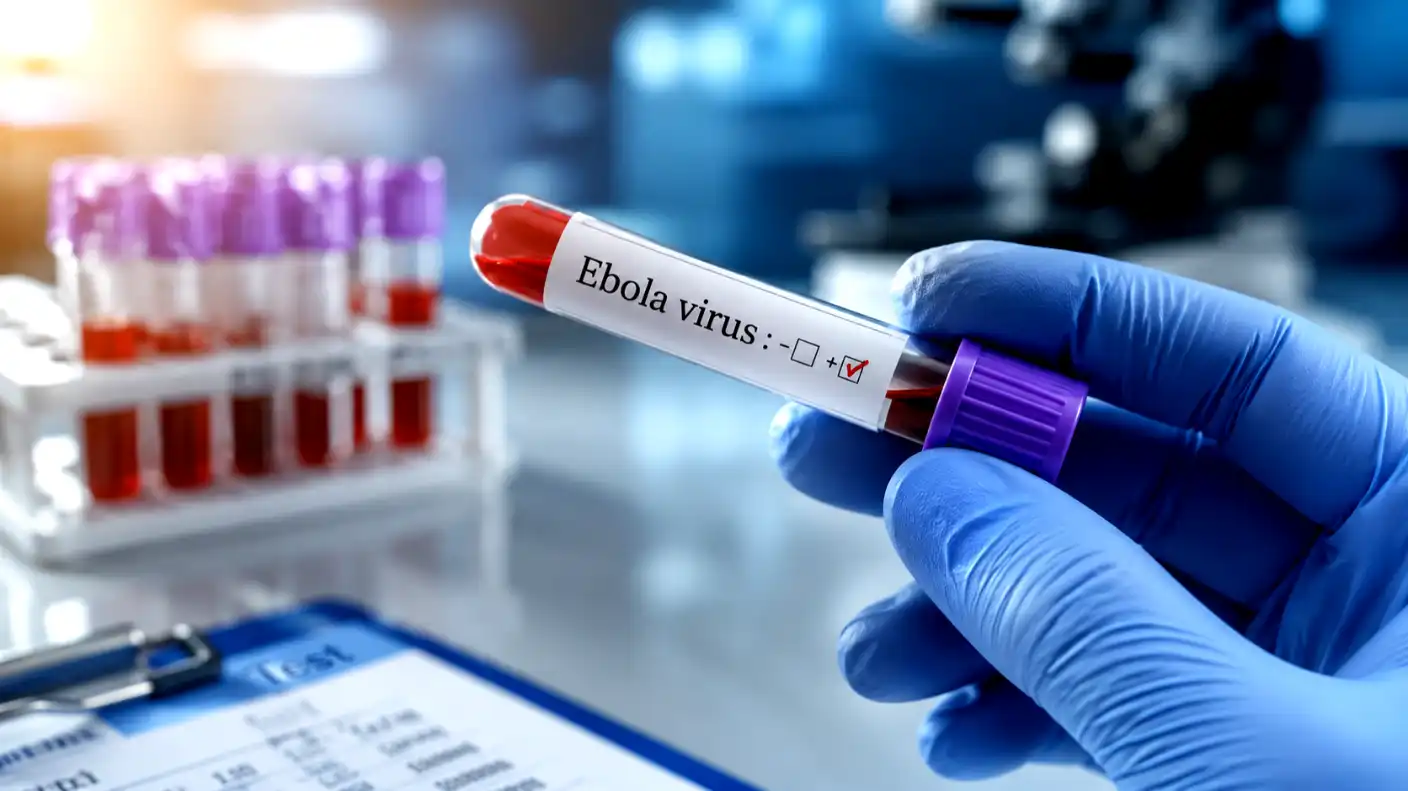
Brazil’s health ministry activated emergency protocols on Saturday after discovering a suspected case of the deadly Ebola virus in Sao Paulo. A 42-year-old Brazilian doctor, who recently returned from a humanitarian mission in the Democratic Republic of Congo, developed severe symptoms shortly after landing. Medical teams immediately isolated the patient in a specialized infectious-disease hospital to conduct diagnostic tests and protect the public.
The doctor returned to Brazil on May 27, 2026, after spending several weeks treating patients in Central Africa. He flew from the Congolese capital, Kinshasa, to Sao Paulo’s Guarulhos International Airport, making a brief layover in Addis Ababa, Ethiopia. Within 72 hours of his return, he began experiencing a high fever, severe headaches, muscle pain, and a sore throat. Realizing the danger, he immediately contacted local health services.
Paramedics wearing full protective suits transported the patient directly to the Emilio Ribas Institute of Infectious Diseases, a highly specialized hospital in the heart of Sao Paulo. Doctors placed him in a negative-pressure isolation room to prevent any potential airborne or contact transmission. Hospital directors confirmed that they have implemented strict biosafety measures and expect the first round of PCR blood test results to arrive within the next 24 to 48 hours.
The suspect case has triggered a massive, high-speed contact-tracing operation across multiple continents. Brazil’s health surveillance agency, Anvisa, is currently working to identify and locate every single passenger who sat near the doctor on his long flights from Africa. They need to warn these travelers to monitor their body temperatures daily and self-quarantine for the next 42 days, which represents the maximum incubation period of the virus. This rapid-response tracing is vital, as catching potential cases early is the only way to stop a full-scale outbreak on South American soil.
This scare in South America happens right as the World Health Organization struggles to contain a major Ebola outbreak in Africa. Just last week, the WHO officially declared the outbreak of the rare Bundibugyo ebolavirus strain in Congo and Uganda a public health emergency of international concern. The highly contagious virus has already killed at least 65 people and generated over 246 suspected cases in the region, including the deaths of four local healthcare workers.
The fact that the suspect patient traveled through Kinshasa, a megacity of approximately 20 million people, has deeply alarmed global health experts. They warn that if Ebola successfully establishes itself in large, crowded urban centers, it can spread exponentially. Sao Paulo itself is home to over 22 million residents, making a local outbreak a potentially catastrophic scenario. This high-density reality explains why Brazilian authorities are acting with extreme speed and caution.
The threat of a new global pandemic comes at a terrible time for the world economy. The ongoing war in the Middle East has already disrupted global trade, driving oil prices above $111 a barrel and pushing inflation up by 1.5% over the past two months. This persistent shipping blockade has cost the international transportation and tourism sectors over $1.5 billion every single week. The international community simply cannot afford the economic damage of another massive pandemic.
Brazil is not the only country dealing with potential imported cases this week. Northern Italy’s Lombardy region also activated an emergency alert on Monday after two humanitarian aid workers returned from the same African border region with high fevers and stomach distress. While European doctors suspect those patients actually contracted a severe strain of cerebral malaria, the dual scares in Italy and Brazil prove how easily modern aviation can transport deadly pathogens across the globe. Experts estimate that a major health crisis would cause a 1.5% drop in global economic output, complicating recovery efforts.
Ultimately, the citizens of Sao Paulo can only wait for the final laboratory results from the Emilio Ribas Institute. The Brazilian government has spent millions of dollars preparing its hospitals for this exact scenario since the West African epidemic years ago. If the doctor’s tests come back positive, Brazil will face its greatest public health test in years. If they come back negative, the close call will still serve as a vital warning that in our deeply connected world, a disease outbreak anywhere is a threat everywhere.















