
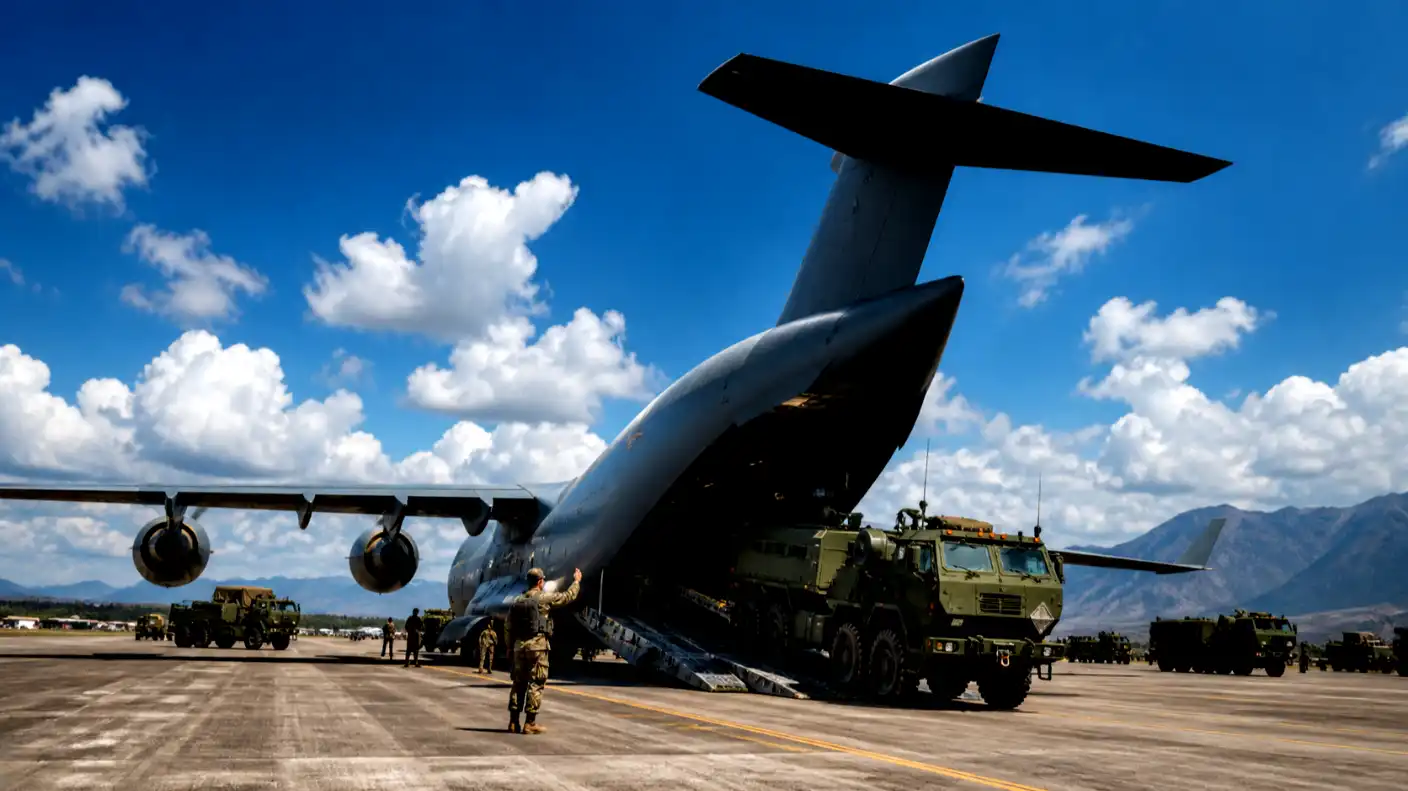
The United States State Department announced a massive military weapons deal on Friday. Officials approved over $8.6 billion in military sales to 4 key allies in the Middle East. The government will send high-tech defense systems and precision rockets to Israel, Qatar, Kuwait, and the United Arab Emirates. This major financial agreement underscores how strongly the United States wants to protect its friends in a very dangerous region.
This major announcement comes at a very tense time for the Middle East. Right now, the United States and Israel are exactly 9 weeks into a heavy war against Iran. Although a fragile ceasefire started just over 3 weeks ago, military leaders know the fighting could restart at any minute. Therefore, American allies want to buy as many weapons as possible to protect their borders and their citizens from future attacks.
Qatar easily made the biggest purchases in this new round of military sales. The State Department allowed Qatar to spend a staggering $4.01 billion to refill its Patriot air and missile defense systems. The Patriot system acts as a giant shield that shoots down incoming enemy rockets before they hit cities or military bases. Since the war with Iran creates a constant threat of missile attacks, Qatar desperately needs these replacement parts to keep its sky safe.
But Qatar did not stop there. The wealthy Gulf nation also agreed to spend another $992.4 million on Advanced Precision Kill Weapon Systems. Military experts usually refer to this technology as APKWS. This system basically turns standard unguided rockets into highly accurate, laser-guided missiles. This upgrade allows helicopter pilots and fighter pilots to hit enemy targets precisely without accidentally harming nearby civilians.
Kuwait also stepped up and signed a massive contract on Friday. The State Department approved a $2.5 billion sale of a brand-new integrated battle command system. This advanced computer network connects different radars, missile launchers, and command centers in real time. By sharing instant data, Kuwaiti generals can see the whole battlefield on their screens and make lightning-fast decisions during a sudden enemy attack.
Meanwhile, Israel matched Qatar in buying precision rocket technology. American officials approved a $992.4 million sale of the same Advanced Precision Kill Weapon Systems for the Israeli military. Because Israel currently fights directly against Iran, its military burns through missiles and rockets at a very fast pace. This new deal ensures Israeli forces will have enough laser-guided weapons to continue their military operations if the current ceasefire completely collapses.
The United Arab Emirates made the smallest purchase of the group, but it still spent a large amount of money. The UAE will buy $147.6 million worth of the Advanced Precision Kill Weapon Systems. Like its neighbors, the UAE wants to upgrade its older rockets to hit targets with pinpoint accuracy. Even a smaller $147.6 million investment dramatically improves their border security and helps their fighter pilots shoot better.
Several massive American and British defense contractors will make billions of dollars building all this equipment. The State Department named BAE Systems as the main contractor for the precision rocket sales. This giant company will build and ship the exact laser-guided systems requested by Qatar, Israel, and the United Arab Emirates. BAE Systems factories will stay very busy completing these 3 separate orders over the next few years.
For the heavier defense systems, other famous weapons manufacturers will step in. The government selected RTX and Lockheed Martin as the main builders for Kuwait’s $2.5 billion battle command system. These 2 companies will also manufacture the $4.01 billion Patriot missile defense parts for Qatar. Furthermore, Northrop Grumman will help design and build the complex computer networks for the Kuwaiti order.
Altogether, these large defense contracts show that the Middle East remains a highly profitable market for weapons manufacturers. As long as the conflict with Iran continues, neighboring countries will gladly spend billions to feel safe. The United States government clearly supports this strategy, using these $8.6 billion sales to strengthen its closest partners. Everyone hopes the 3-week ceasefire holds, but these 4 nations will soon have the latest weapons ready just in case the peace finally fails.