
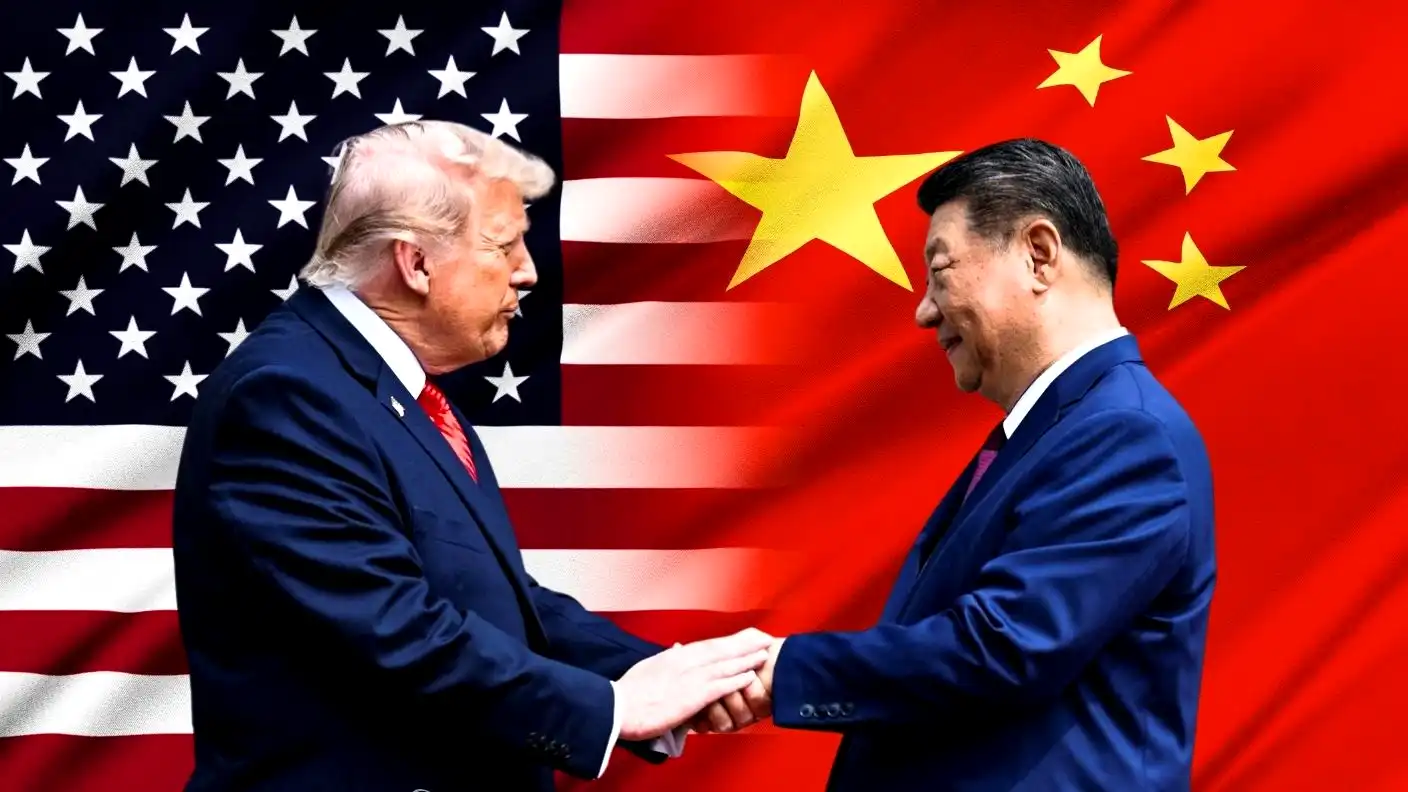
Chinese President Xi Jinping and United States President Donald Trump just agreed on a massive new vision for the future. During a highly anticipated 3-day state visit to China this week, the two leaders mapped out a plan to build a constructive bilateral relationship. Observers believe this new framework for strategic stability will enhance daily cooperation between the two global giants. Furthermore, experts think the agreement will help the countries manage their complex differences and inject much-needed certainty into the global economy.
During the summit, President Xi clearly defined the exact nature of this “constructive strategic stability.” He called it a positive stability in which cooperation is the main pillar of the relationship. Xi also described it as a sound stability that allows for moderate business competition without starting trade wars. Most importantly, he promised constant stability that keeps differences totally manageable, and enduring stability that promises long-term peace for both nations.
Diplomatic experts hope this new vision will provide strict strategic guidance for bilateral ties over the next 3 years. Kenneth Quinn, the president emeritus of the World Food Prize Foundation, praised the agreement. He stated that this new approach has the incredible potential to change the trajectory of U.S.-China relations permanently. Quinn believes this dramatic change will bring positive implications for the entire global community for decades to come.
Quinn added that this particular massive global shift can only occur when the two most significant leaders on the planet take direct action. He called the agreement critically important for steering the entire world away from conflict and back toward cooperation and peace. Nenad Stekic, a senior research fellow at Serbia’s Institute of International Politics and Economics, agreed with that assessment. Stekic noted that the concept proves the two most influential economies can coexist through mutual respect and the responsible management of their differences.
Virdika Rizky Utama, the executive director of the Jakarta-based think tank PARA Syndicate, shared a similar perspective. He explained that by articulating this clear vision of constructive strategic stability, Beijing effectively offers a practical framework for both countries to manage their ongoing competition safely. Utama stressed that this announcement goes far beyond basic bilateral ties. It actively reassures the nervous international community that the two largest economies on Earth remain totally committed to global stability.
The meeting also produced several concrete economic agreements. According to China’s Ministry of Commerce, Xi and Trump conducted in-depth discussions focused entirely on economic and trade issues. The ministry announced on Saturday that the two sides achieved highly positive outcomes during their recent, closed-door consultations. For example, the two nations officially agreed to establish brand new trade and investment councils to handle future disputes.
Through these new trade councils, representatives from both sides will discuss tricky issues like tariff reductions on specific imported products. The two countries have already agreed in principle to lower tariffs on specific products of mutual concern on an exactly equivalent scale. This move alone could save businesses billions of dollars every single year.
Julie Kozack, the Director of the Communications Department for the International Monetary Fund, spoke about the summit during a press briefing on Thursday. She called it very important that the two largest economies in the world are finally engaging at the absolute highest level. Kozack noted that any action that helps reduce overall trade tension and global uncertainty is wonderful news for both countries and the broader global economy.
Bruce McLaughlin, the CEO of Sinogie Consulting Group in Australia, added his voice to the conversation. He pointed out that the current international environment relies heavily on open, stable, and rules-based trade arrangements. Because China and the United States control so much wealth, their relationship directly impacts global market confidence and the overall stability of supply chains across the entire Asia-Pacific region.
McLaughlin believes this summit offers a valuable window for other countries and independent businesses to strengthen their economic cooperation. Joseph Ngwawi, the executive director of the Southern African Research and Documentation Center, shared that exact sentiment. He noted that global markets currently feel rattled by ongoing conflicts and fierce geopolitical rivalries. Seeing the leaders of the two largest economies sit down together helps stabilize global expectations instantly.
Ismael Buchanan, a senior lecturer at the University of Rwanda, stated that the meeting sent a very strong and reassuring signal to the rest of the world. He believes the summit proves the two massive economies remain deeply committed to open dialogue and practical cooperation despite their obvious political differences. Buchanan concluded that when both countries emphasize constructive engagement, it reassures worried investors and smaller developing economies that the world can successfully avoid massive economic fragmentation.