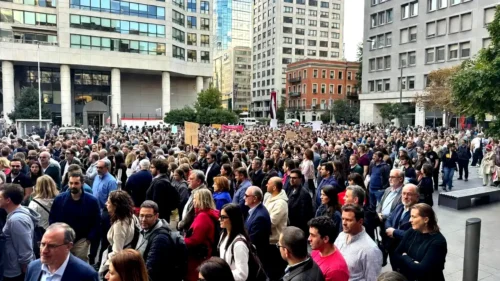

King Charles III will sit on a gilded throne inside the United Kingdom parliament on Wednesday to announce a year-long legislative plan for the government. However, a massive political problem casts a dark shadow over the historic event. Nobody actually knows who will lead the British government by Christmas. Prime Minister Keir Starmer faces an extraordinary crisis after suffering brutal losses in the mid-term elections just 5 days ago.
The pressure on Starmer grows heavier every single hour. A highly anticipated reset speech fell completely flat with the public. More than 90 of his 403 Labour members of parliament publicly demanded his immediate resignation. Exactly 4 junior ministers have already resigned in protest. Furthermore, at least 1 senior Cabinet member, Home Secretary Shabana Mahmood, privately urged Starmer to set a strict timetable for his departure from office.
Despite this massive rebellion, Starmer remains firmly planted inside No. 10 Downing Street. He survived the immediate threat because the Labour Party remains deeply divided. Party officials point to 2 main reasons for his survival. First, rival factions within Labour cannot muster enough allies to launch a decisive, unified strike against him. Second, no politician wants to look disrespectful by ruining the King’s speech on Wednesday.
The King’s speech acts as a temporary firebreak for the warring politicians. One anonymous Labour official explained that a strong sense of duty surrounding the monarchy forces angry members to pause their attacks. A government official agreed, noting that nobody wants to make a fool of the King. The royal team has already warned Starmer’s officials to ensure King Charles does not appear to be a pawn in a messy political fight.
During the speech, Charles will read words written entirely by Starmer’s government. The King will announce exactly 35 planned or draft bills, covering major issues like immigration crackdowns, health care reform, digital ID programs, and new energy infrastructure. However, if a new prime minister takes over next month, they could easily throw that entire legislative agenda directly into the garbage.
The sudden pause in hostilities followed a very tense Tuesday in Westminster. Starmer faced down his critics during a morning Cabinet meeting. He completely refused to allow any discussion regarding his own leadership. He also denied a request from Health Secretary Wes Streeting, a potential leadership challenger, to hold a private meeting right after the Cabinet finished. Instead, Streeting will meet Starmer on Wednesday morning, promising not to make any public statements that might distract from the King.
Removing a Labour leader involves a very complicated process. Unlike the Conservative Party rules that allow members to trigger a no-confidence vote easily, Labour rebels face a much steeper climb. To kick-start a leadership contest, rebels must unite exactly 81 members of parliament behind 1 single challenger. Right now, the rebels cannot agree on who that single challenger should be.
The party splits its support between several different candidates. Allies of former Deputy Prime Minister Angela Rayner want to wait until Greater Manchester Mayor Andy Burnham returns to parliament so they can form a powerful left-wing alliance. However, Burnham currently lacks a seat in parliament. He needs a sympathetic Labour member to resign and trigger a special by-election, but nobody has officially resigned yet.
On the other side of the party, allies of Wes Streeting want to act immediately. They argue that waiting several months for Burnham to return will turn Starmer into a useless lame duck. They believe the party needs new leadership right now to prepare for the expected 2029 general election. Since neither Streeting nor Rayner wants to throw the first punch, the entire Labour Party sits trapped in a messy political gridlock.
Global events also play a massive role in keeping Starmer in power. Downing Street relies heavily on the economic fallout from the ongoing war in Iran to scare members away from a leadership change. The cost of government borrowing surged on Tuesday after rumors spread that the prime minister was leaving. Many senior Labour figures believe voters will never forgive the party for toppling a leader during a period of global war and economic panic.
This endless political drama takes a heavy emotional toll on the exhausted politicians. One centrist member of parliament compared the situation to soldiers running over the trenches at the start of World War 1, totally blind to the danger. Another government official complained that everyone feels stuck in a crazy frenzy, completely forgetting that the party must eventually come back together and heal these deep family wounds. For now, the rebels will stay quiet for the King, but the knives will surely come back out by Thursday morning.