

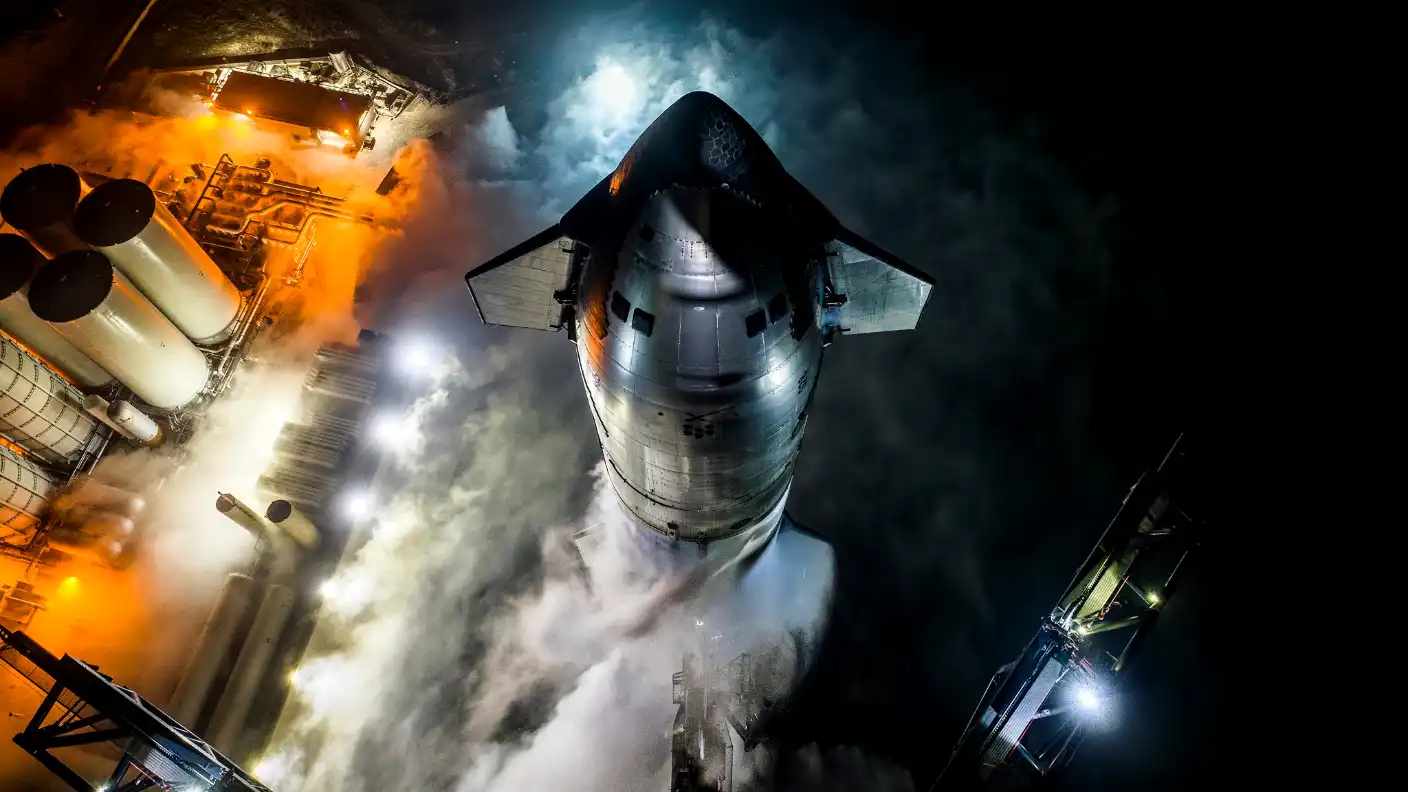
SpaceX introduced its third-generation rocket, Starship V3, on Tuesday. The company redesigned the entire Starship and Super Heavy system after gathering data from years of flight testing. This massive new vehicle will fly on powerful Raptor 3 engines and lift off from a brand-new pad at the Starbase facility in Texas.
Engineers made major changes to the Super Heavy booster. The giant rocket now uses 3 grid fins instead of 4. Designers made each fin 50 percent larger and much stronger than the older versions. They also moved the fins lower down the rocket to keep them away from intense engine heat. To protect the steering hardware, the team relocated the grid fin shafts and motors inside the main fuel tank.
The booster features a new integrated hot stage. This setup replaces the old protective ring that SpaceX threw away after every launch. Now, the top dome of the booster fuel tank takes the direct blast from the upper stage engines. A giant steel layer and internal fuel pressure keep the tank safe during stage separation.
Fluid delivery got a massive upgrade as well. The new fuel transfer tube roughly matches the size of an entire Falcon 9 first stage. Because of this massive pipe, the rocket can ignite all 33 engines simultaneously. This instant power allows the booster to perform faster, more reliable flips in the sky. The team also added a second connection point for loading fuel and oxidizer, providing the pad with an extra backup option.
The upper Starship vehicle received a total propulsion redesign. These updates increase the fuel tank capacity and improve the steering thrusters. Engineers also upgraded the rear flaps. They replaced the old dual-motor system with a single actuator that uses 3 motors. This simple change saves money, drops weight, and improves safety when the ship returns to the launch site. SpaceX also improved the Starlink dispenser to push satellites into space much faster.
SpaceX wants Starship to fly long missions deep into space. To make this happen, builders added 4 docking ports to the ship’s side. These ports allow two Starships to connect in orbit and transfer fuel from one to the other. The team also wrapped the fuel lines in 100 percent vacuum insulation to keep the liquid gas cold during long trips.
High-tech electronics run the entire new system. The rockets carry about 60 custom computers that deliver 9 megawatts of peak power. Advanced radio sensors measure the exact fuel levels while the ship floats in zero gravity. For the fans watching at home, the company installed upgraded cameras that provide 50 different views. These cameras stream high-quality video over a 480-megabit-per-second Starlink internet connection.
The new Raptor 3 engines pack a much harder punch. The sea-level engines now push with 250 tons of force, up from the older 230 tons. The vacuum engines, designed for deep space, increased their thrust from 258 tons to 275 tons. Designers also integrated the sensors directly into the engine, removing the need for bulky protective covers.
SpaceX put the Raptor 3 on a strict diet. The sea-level engine now weighs just 1,525 kilograms, down from 1,630 kilograms. When you add up the simpler engine design and the missing covers, the company saves about 1 ton of weight per engine on the rocket.
Starship V3 will make its debut during Flight 12. This mission will launch from Pad 2 at Starbase. To handle the bigger rocket, workers expanded the fuel farm with larger storage tanks and extra pumps. This upgrade lets the crew fill the rocket much faster on launch day.
The giant launch tower looks different now, too. The catching arms, known as chopsticks, are shorter and faster. Engineers removed the old hydraulic motors and installed new electromechanical actuators. This change helps the arms track and catch the returning booster with much better speed and precision.
Finally, the team rebuilt the launch pad’s base. The new steel mount shares the heavy rocket load much better. Inside the mount, a new bidirectional flame diverter blasts the engine fire away safely. This tough new deflector requires zero repairs after a launch, helping SpaceX prepare for the next flight almost instantly.















