

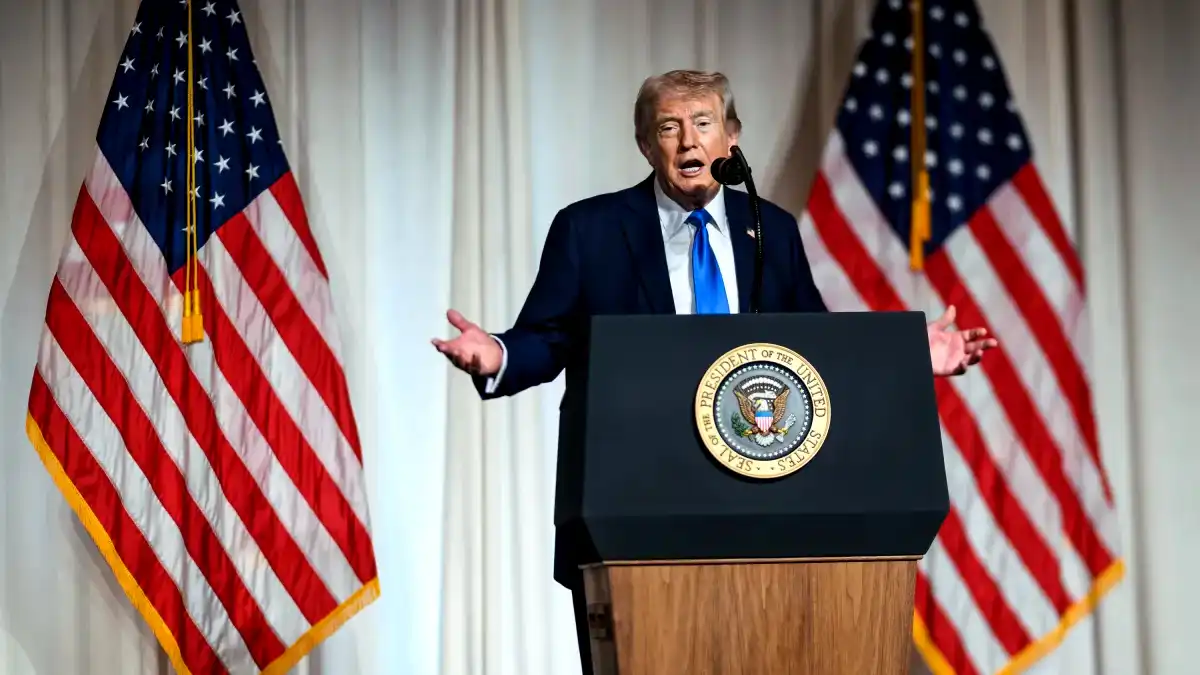
The United States Supreme Court has delivered a historic, monumental blow to President Donald Trump’s hardline immigration agenda. In a highly divided 6-3 decision on Tuesday, the high court struck down a controversial executive order that sought to end automatic birthright citizenship for children born on American soil to undocumented immigrants and temporary visa holders. The landmark ruling, in the case Trump v. Barbara, firmly upholds the constitutional guarantee of birthright citizenship, solidifying a century-old legal principle that almost everyone born in the United States is automatically an American citizen. The decision represents a sweeping, definitive rebuke of the administration’s attempts to restrict constitutional rights through unilateral executive decrees.
The historic ruling officially invalidates Executive Order 14160, which President Trump signed on January 20, 2025, his first day back in the Oval Office. The executive directive had ordered federal agencies to stop issuing passports and birth certificates with automatic citizenship to children born in the country if their parents lacked U.S. citizenship or permanent legal residency. The President had relentlessly campaigned against the practice for over a decade, claiming it acted as a massive magnet for illegal immigration. However, several lower courts quickly blocked the policy, preventing the sweeping restrictions from taking effect anywhere in the country while the legal challenges proceeded to the Supreme Court.
Writing for the majority, Chief Justice John Roberts delivered a powerful defense of the Fourteenth Amendment’s Citizenship Clause. Roberts was joined by the court’s three liberal justices—Sonia Sotomayor, Elena Kagan, and Ketanji Brown Jackson—alongside conservative Justice Amy Coney Barrett. Roberts wrote that citizenship, both historically and today, represents the fundamental right to have rights and to participate freely in the nation’s political community. The majority opinion declared that the framers of the Fourteenth Amendment deliberately extended this promise of automatic citizenship to every free-born person in the land, a constitutional commitment that the high court is legally bound to keep.
The high court’s majority based its constitutional reasoning on a deep, historical understanding of the Citizenship Clause and more than a century of settled legal precedents. Specifically, the justices pointed to the landmark 1898 case, United States v. Wong Kim Ark, which established that a child born to Chinese immigrants in San Francisco was automatically an American citizen under the Fourteenth Amendment, regardless of his parents’ nationality. Roberts explained that the Fourteenth Amendment automatically confers citizenship on almost any child born in the United States, with extremely narrow, historically established exceptions for the children of foreign diplomats and hostile occupying forces.
While six justices voted to strike down the executive order, the court’s internal reasoning featured significant divisions. Conservative Justice Brett Kavanaugh wrote a separate opinion, concurring with the majority’s judgment to block the policy but dissenting in part on the constitutional question. Kavanaugh argued that Trump’s executive order was unlawful because it directly violated existing federal laws, specifically the Immigration and Nationality Act, which clearly establishes who is eligible for citizenship. He suggested that the court should have resolved the case on these narrow statutory grounds rather than deciding the broader constitutional question of the Fourteenth Amendment itself.
Conversely, the court’s three most conservative members—Clarence Thomas, Samuel Alito, and Neil Gorsuch—filed fierce dissenting opinions, accusing the majority of misinterpreting the original meaning of the Constitution. In an extraordinary display of judicial disagreement, Justice Thomas penned a massive, 90-page dissenting opinion, marking the longest written dissent in his 35-year tenure on the high court. Thomas argued that children born to parents unlawfully or temporarily present in the country are not subject to the jurisdiction of the United States in a political sense, claiming that the framers of the Fourteenth Amendment never intended to grant automatic citizenship to those whose presence is momentary or unauthorized.
The President reacted to his legal defeat with characteristic defiance, using his social media platform to slam the high court’s decision. Trump called the ruling too bad for the country, but quickly attempted to shift his strategy, urging the Republican-controlled Congress to take up the matter legislatively. He asserted that a long and unwieldy constitutional amendment is not necessary to end the practice, claiming that Congress should start immediately to draft federal laws to strip citizenship from the children of undocumented immigrants. However, legal scholars pointed out that because the court’s ruling was based on the Constitution, any subsequent federal law attempting to restrict birthright citizenship would also be struck down as unconstitutional.
The dramatic defeat represents the second time this year that the Supreme Court has invalidated a major, signature initiative of Trump’s second term. In February, the high court delivered another blockbuster blow to the administration, striking down his sweeping global tariffs as a massive overreach of executive authority. These twin rulings have demonstrated that despite the court’s dominant 6-3 conservative majority, the justices are willing to act as an independent, constitutional check on the White House’s attempts to expand the imperial presidency, reasserting the court’s role in the nation’s system of checks and balances.
Demographic and economic analysts warn that if the court had upheld the President’s executive order, the ruling would have triggered massive, highly destructive social and economic ramifications across the country. Stripping automatic citizenship from the children of temporary visa holders and undocumented immigrants would have eventually created a permanent, stateless underclass of millions of people born in the United States but denied the country of their birth. This legal limbo would have significantly reduced the country’s labor force, representing an estimated 1.5% drop in long-term economic productivity while triggering a severe humanitarian crisis that would have overwhelmed local public services.
Ultimately, the Supreme Court’s historic decision to uphold birthright citizenship represents a vital victory for the core principles of American democracy. By choosing to strike down Executive Order 14160 and reaffirming the landmark Wong Kim Ark precedent, the justices have ensured that the definition of who is an American remains anchored in the Constitution rather than the politics of the moment. While the President’s demands for legislative action and the fierce dissents of justices like Clarence Thomas will continue to fuel intense national debates, the ruling provides a solid, long-term foundation of security for millions of families. As the country navigates a highly volatile transition period, the promise of the Fourteenth Amendment remains secure.















