

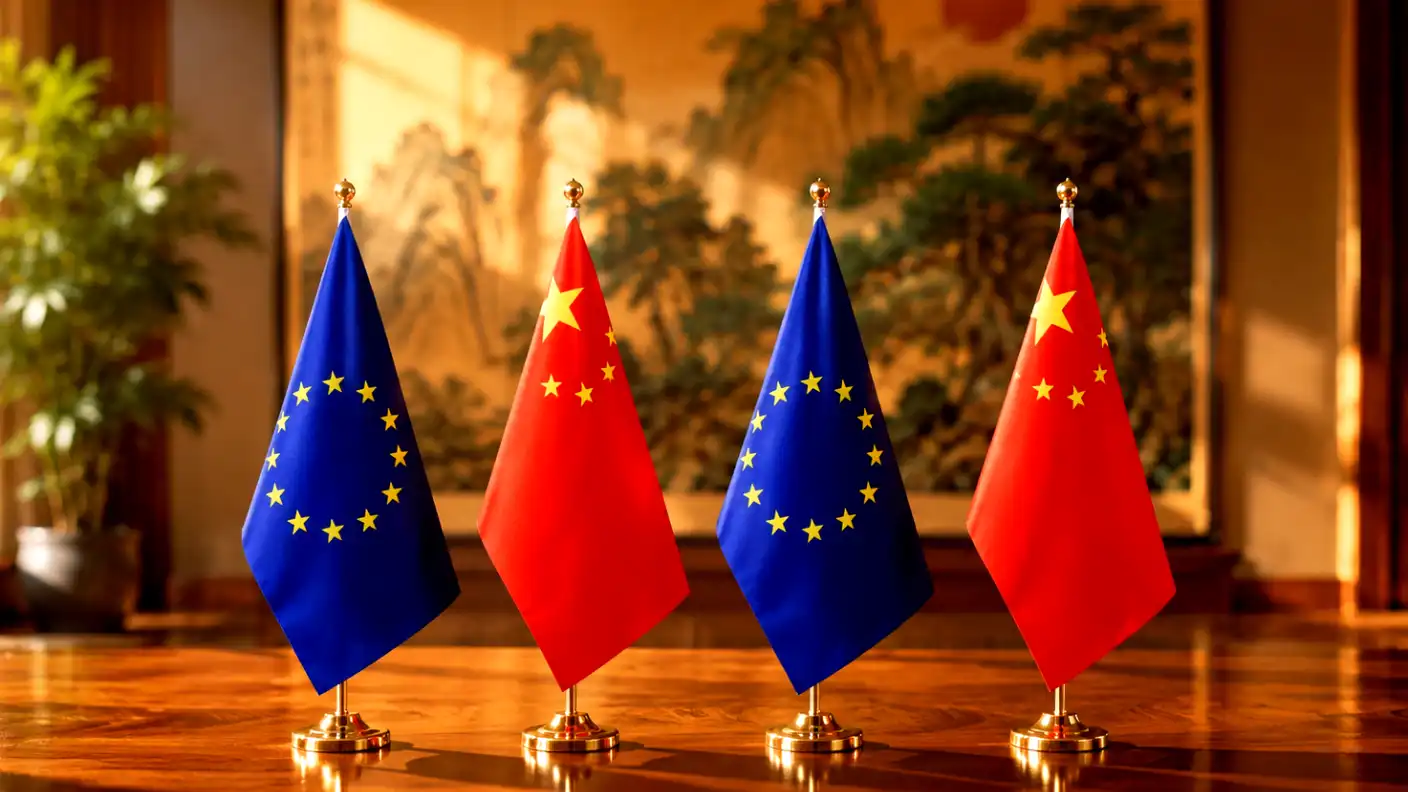
In a major move to expand its diplomatic influence across Northern Europe, China has announced a high-stakes, week-long ministerial tour of the Nordic region. China’s Foreign Minister, Wang Yi, will travel to Denmark, Sweden, Finland, and Norway from July 2 to July 8 to hold face-to-face bilateral talks with his respective counterparts. The high-profile tour comes amid rising global trade disputes and growing security anxieties, representing a coordinated effort by Beijing to rebuild political trust, promote multilateralism, and bypass the increasingly restrictive trade barriers erected by Western powers.
The upcoming tour reflects a highly calculated, long-term strategy to strengthen Beijing’s diplomatic and economic footprint across both the European Union and non-EU Nordic states. A spokesperson for the Chinese Foreign Ministry confirmed that the high-level discussions will focus on expanding practical cooperation in advanced technological sectors, circular economies, and climate coordination. By engaging directly with the wealthy northern nations, Beijing is attempting to position itself as a reliable partner for green energy transitions and maritime trade, hoping to soften the increasingly hawkish stance that Brussels and Washington have adopted toward Chinese industrial imports.
A critical, behind-the-scenes driver of China’s interest in the Nordic region is its highly ambitious Arctic strategy. Although its closest border lies roughly 900 miles from the Arctic Circle, Beijing has officially classified itself as a “near-Arctic state” since publishing its first Arctic white paper in 2018. All four nations on Wang’s itinerary—Denmark, Sweden, Finland, and Norway—hold direct sovereign territory within the Arctic Circle and serve as core members of the Arctic Council. By developing joint projects like the “Ice Silk Road,” Beijing is attempting to secure long-term access to the region’s massive, untapped reserves of oil, natural gas, and rare earth minerals.
To set a highly cooperative and friendly tone for the upcoming talks, Beijing recently implemented a major immigration reform that eliminates travel barriers for northern European citizens. Under the new policy, which took effect earlier this year, citizens of Denmark, Sweden, Norway, and Finland can now enter China without a visa for short stays of up to 15 days. This generous travel waiver represents a significant facilitation measure designed to promote cultural exchanges, tourism, and direct business connections between the Scandinavian countries and the Asian economic superpower, giving European executives easier access to China’s massive consumer market.
The July tour builds upon a series of significant, high-level diplomatic contacts that the countries have maintained over the past several months. In January, Chinese President Xi Jinping hosted Finnish Prime Minister Petteri Orpo at the Great Hall of the People in Beijing to discuss joint clean energy and circular economy projects. Additionally, Wang Yi held a highly productive meeting with Norwegian Foreign Minister Espen Barth Eide on the sidelines of the Munich Security Conference in February, where both officials reaffirmed their shared commitment to the principles of the United Nations Charter and free global trade.
The timing of the diplomatic tour is highly calculated to counter a rising tide of protectionism sweeping across the European continent. Over the past several weeks, the European Commission has moved to expand its trade defense arsenal, threatening to impose steep countervailing duties on Chinese electric vehicles and green technology imports to protect local manufacturers. By establishing permanent strategic dialogues with individual Nordic capitals, Beijing is hoping to build a network of pragmatic interlocutors within the European Union who can advocate for moderate, open-trade policies and prevent a full-blown transatlantic trade war.
However, the Chinese delegation will face a highly cautious and skeptical audience in several of the Nordic capitals. Regional defense ministries have expressed growing anxiety over national security and the protection of critical infrastructure, particularly after Sweden and Finland officially completed their integration into the NATO alliance. Nordic leaders are also under intense pressure from Washington to restrict the export of dual-use materials and specialized technologies that could support foreign military modernization. These security concerns have already led to a minor 1.5% adjustment in bilateral trade volumes for certain high-tech components, creating a complex challenge for negotiators.
During his scheduled stops in Copenhagen and Stockholm, Wang Yi will face direct pressure from his counterparts to address deep structural imbalances in global trade. Danish Foreign Minister Lars Løkke Rasmussen and Swedish Foreign Minister Maria Malmer Stenergard have previously urged Beijing to play a more active, constructive role in promoting balanced economic relations. While welcoming the new visa-free travel arrangements, the Swedish and Danish delegations plan to use the meetings to demand that China lower its regulatory barriers for European agricultural and medical exporters, ensuring that mutual trade is not a one-way street.
The inclusion of Norway—a non-EU member—on the itinerary highlights China’s desire to maintain flexible, alternative diplomatic channels on the continent. Because Oslo is not bound by the same regulatory mandates as Brussels, it has historically maintained a highly pragmatic approach to its relations with Beijing. Norwegian officials have repeatedly emphasized the importance of maintaining an open, constructive dialogue on global governance, maritime safety, and marine conservation. By strengthening its bilateral ties with Norway, China is ensuring it retains a highly cooperative partner in the strategic North Atlantic and Arctic shipping corridors.
Ultimately, the upcoming Nordic tour of Chinese Foreign Minister Wang Yi represents a highly significant milestone in the geopolitical struggle for influence in Northern Europe. By combining major trade incentives like visa-free travel with a long-term commitment to Arctic cooperation and green transition projects, Beijing is attempting to prove that its rise represents an opportunity rather than a threat. While the severe anxieties regarding NATO security and dual-use technology exports present ongoing challenges, the willingness of the Nordic capitals to host the top diplomat shows that the path to dialogue remains open. As the tour begins on July 2, the meetings will set the tone for the future of China-Europe relations.















