
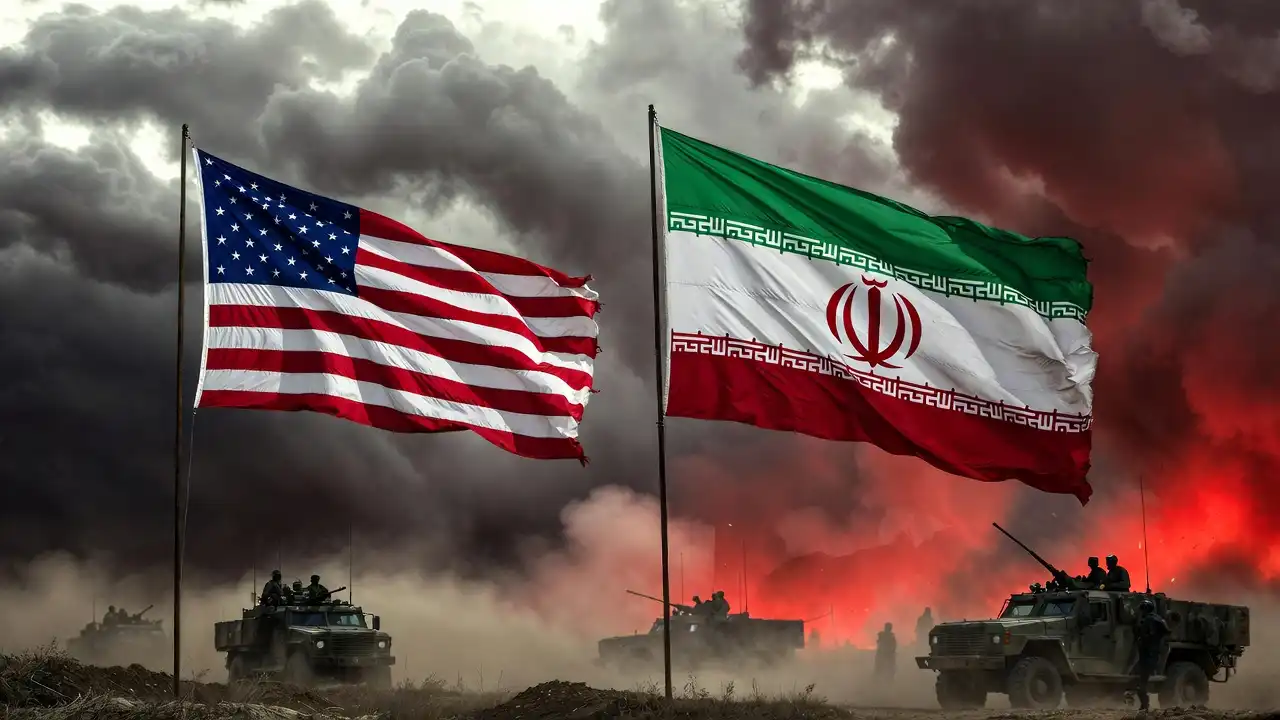
The geopolitical landscape of the Middle East has been violently fractured, plunging the world into a state of profound anxiety and economic instability. As of March 12, 2026, the devastating war between the United States, Israel, and the Islamic Republic of Iran shows little sign of a rapid conclusion. Initiated on February 28, 2026, the conflict has already fundamentally altered the balance of power in the region, resulting in unprecedented destruction, the loss of high-ranking leadership, and a staggering humanitarian crisis. Amidst the relentless bombardments and the deafening calls for maximalist victories from Washington, a critical diplomatic counter-narrative has emerged from Tehran. Following highly sensitive discussions with international power brokers, specifically leaders from Russia and Pakistan, Iranian President Masoud Pezeshkian has publicly outlined three non-negotiable conditions to halt the ongoing hostilities.
These demands—recognition of “legitimate rights,” payment of reparations, and firm international guarantees—represent a stark and calculated rejection of U.S. President Donald Trump’s uncompromising demand for an “unconditional surrender.” The impact of Iran’s 3 key points reverberates far beyond the immediate borders of the conflict zone. They serve as a strategic diplomatic maneuver designed to rally domestic resilience, appeal to sympathetic multipolar powers, and expose the sheer difficulty of achieving a purely military resolution to a deeply entrenched geopolitical crisis. This comprehensive analysis will deconstruct the multifaceted impact of Iran’s 3 key points, exploring how President Pezeshkian’s diplomatic framework challenges the military objectives of the United States and Israel, shifts the strategic calculus of global alliances, and sets the stage for what could become the most complex peace negotiation of the 21st century.
The Strategic Context of the March 2026 Conflict
Before analyzing the intricacies of Pezeshkian’s demands, it is absolutely essential to understand the catastrophic environment from which they were issued. The 2026 war is not a localized skirmish; it is a full-scale regional conflagration.
A Region Engulfed in Fire
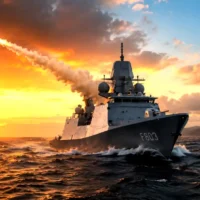
The outbreak of hostilities on February 28, 2026, marked the realization of the international community’s worst fears regarding Middle Eastern stability. The combined military operations of the United States and Israel have targeted Iran with an intensity unseen in the region since the Iran-Iraq War of the 1980s. The strategic objective, as signaled by the Trump administration and Israeli defense officials, appears to be the permanent dismantling of Iran’s military infrastructure and a forced restructuring of its political leadership. The sheer scale of the kinetic operations has rapidly overwhelmed diplomatic channels, transforming the Persian Gulf into an active, highly volatile war zone that threatens global energy supplies and maritime trade routes.
The civilian toll and physical destruction have escalated at an absolutely terrifying pace. The humanitarian consequences of the war have already reached disastrous proportions within the first two weeks of fighting.
- More than 1,300 Iranian civilians have been tragically killed in the crossfire of the massive aerial campaigns.
- Approximately 16,000 residential units have been heavily damaged or entirely destroyed across major urban centers.
- Critical civilian infrastructure, including power grids and water treatment facilities, has suffered severe operational degradation.
The Leadership Vacuum and Pezeshkian’s Ascendancy
Perhaps the most monumental development of the conflict thus far has been the reported death of Iran’s Supreme Leader, Ali Khamenei. For decades, Khamenei served as the absolute ideological and political anchor of the Islamic Republic, deeply shaping its domestic policies and its fierce “Axis of Resistance” regional strategy. His demise in the midst of a catastrophic war has created a profound leadership vacuum, thrusting immense pressure upon the civilian government and the remaining command structure of the Islamic Revolutionary Guard Corps (IRGC).
In this moment of unprecedented national crisis, President Masoud Pezeshkian has stepped forward as the definitive voice of the Iranian state. By articulating a clear, structured diplomatic stance amidst the chaos of war, Pezeshkian is attempting to project strength and continuity to both his traumatized populace and his international adversaries. The impact of Iran’s 3 key points is magnified by this context; it is an attempt by a surviving leader to assert sovereignty and maintain state cohesion when the very existence of the republic is under immediate, existential threat.
Deconstructing the First Condition: Recognition of Legitimate Rights
The first of Iran’s 3 key points demands that the international community, and specifically its active military adversaries, formally acknowledge Iran’s “legitimate rights.” This broad terminology carries profound historical and strategic weight.
Defining Sovereignty in a Multi-Polar World
From Tehran’s perspective, the term “legitimate rights” encompasses a wide array of sovereign privileges that they believe have been systematically denied to them by Western powers for decades. Foremost among these is the right to maintain a robust domestic defense infrastructure without the constant, looming threat of preemptive regime change. Furthermore, this demand inherently touches upon Iran’s long-standing nuclear program. By demanding the recognition of its rights, Iran is likely insisting on its absolute sovereign prerogative to pursue domestic technological and nuclear advancement for peaceful purposes, completely free from the crippling sanctions and military sabotage that have characterized Western policy since the early 2000s.
The impact of this specific demand is designed to resonate strongly with the broader Global South and emerging multipolar powers. By framing the conflict as a defense of fundamental national sovereignty against imperialist aggression, Pezeshkian is actively courting the diplomatic support of nations that harbor deep skepticism of American global hegemony. This condition challenges the United States to abandon its historical posture of treating Iran as a rogue pariah state and instead demands that Washington negotiate with Tehran as a legitimate, equal sovereign entity.
The Diplomatic Hurdle for Washington and Jerusalem
For the United States and Israel, accepting this first condition presents a nearly insurmountable political and strategic hurdle. The very premise of the military campaign launched on February 28 was rooted in the belief that Iran’s current political structure and military ambitions represent an intolerable, illegitimate threat to regional stability and Israeli survival.
The political rhetoric emanating from Washington completely contradicts the possibility of recognizing Tehran’s demands. The current administration has aggressively painted the Iranian government as an entity that must be dismantled.
- President Donald Trump has explicitly called for the “unconditional surrender” of the Iranian government, leaving zero room for the recognition of their sovereign rights.
- Israeli leadership views Iran’s regional influence and proxy networks not as legitimate defense mechanisms, but as existential terror threats that must be eradicated.
- Any formal recognition of Iran’s “legitimate rights” by the U.S. would be viewed domestically as a catastrophic capitulation to an enemy state.
Consequently, the first of Iran’s 3 key points serves as a massive diplomatic roadblock. It forces the U.S. and Israel to either publicly moderate their maximalist war aims—which would be perceived as a strategic defeat—or continue a grinding, highly destructive war of attrition that could destabilize the entire globe.
The Second Condition: The Demand for Financial Reparations
The second point in Pezeshkian’s framework is perhaps the most audacious and economically complex: the demand for the payment of reparations for the extensive damage caused to Iranian infrastructure and residential areas.
Counting the Cost of Infrastructure Damage
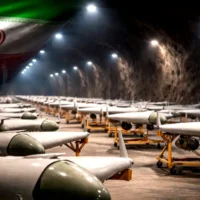
The scale of destruction currently unfolding in Iran is staggering. The loss of approximately 16,000 residential units in less than two weeks of warfare points to a military campaign characterized by incredibly heavy, sustained bombardment. Beyond the residential sector, the targeted destruction of Iran’s industrial capacity, military installations, and communication networks will require hundreds of billions of dollars to rebuild. By explicitly placing the financial burden of this reconstruction squarely on the shoulders of the United States and Israel, Pezeshkian is framing the military campaign not as a justified act of defense by the West, but as an illegal war of aggression that requires financial restitution under international law.
This demand serves a dual purpose for the Iranian leadership. Domestically, it reassures a deeply traumatized and economically devastated population that the government is fighting to hold their attackers financially accountable, thereby attempting to redirect internal anger outward toward Washington and Tel Aviv. Internationally, it highlights the immense, disproportionate civilian toll of the conflict, attempting to isolate the U.S. and Israel in the court of global public opinion by focusing heavily on the destruction of civilian livelihoods.
The Precedent and Improbability of War Reparations
Historically, war reparations are typically extracted by the absolute victor from a completely defeated nation, such as the punitive reparations imposed on Germany following World War I. The idea that a nation currently under massive, overwhelming military assault could successfully demand reparations from a global superpower like the United States is virtually unprecedented in modern geopolitical history.
The logistical and political reality of this demand makes its actual implementation incredibly unlikely. The mechanisms required to force the United States to pay damages to Iran simply do not exist in the current international system.
- The U.S. Congress, deeply polarized but largely unified in its aggressive stance against Iran, would never authorize the appropriation of taxpayer funds to rebuild the Islamic Republic.
- Israel, fighting what it perceives as an existential war for its very survival, would entirely reject any framework that requires it to compensate its sworn regional adversary.
- International judicial bodies lack the enforcement capability to compel sovereign superpowers to transfer massive sums of wealth against their national security interests.
However, the true impact of Iran’s 3 key points does not necessarily rely on the immediate, literal fulfillment of these demands. Instead, the demand for reparations could be a calculated opening bid in a complex negotiation strategy. By setting the bar incredibly high, Tehran may be aiming to eventually leverage this demand to secure the massive, unconditional release of hundreds of billions of dollars in frozen Iranian national assets currently locked in foreign banks due to decades of Western sanctions.
The Third Condition: Firm International Guarantees
The final pillar of Pezeshkian’s peace framework addresses the deep, historical deficit of trust that defines U.S.-Iranian relations. Tehran requires binding, ironclad assurances that it will not face similar military aggression or regime-change campaigns in the future.
Seeking Binding Assurances Against Future Strikes
The demand for “firm international guarantees” is deeply rooted in Iran’s historical experience with Western diplomatic agreements, most notably the spectacular collapse of the 2015 Joint Comprehensive Plan of Action (JCPOA). From the Iranian perspective, Tehran negotiated in good faith, strictly curtailed its nuclear program, and complied with international inspectors, only to watch the United States unilaterally withdraw from the binding agreement and impose a highly destructive “maximum pressure” economic blockade. This historical trauma heavily informs Pezeshkian’s third condition; the Iranian leadership fundamentally believes that bilateral promises from Washington are inherently worthless and strictly subject to the volatile whims of American domestic election cycles.
Therefore, the demand for guarantees is not merely a request for a ceasefire; it is a demand for a fundamental restructuring of the regional security architecture. Iran is insisting that any cessation of hostilities must be underwritten by mechanisms that make future U.S. or Israeli preemptive strikes physically, economically, or diplomatically impossible. This could involve demanding the permanent withdrawal of American forward-deployed military assets from the Persian Gulf, or the establishment of heavily monitored, demilitarized buffer zones.
The Role of Global Powers in Guaranteeing Peace
Because Iran absolutely refuses to trust the United States, the fulfillment of this third condition inevitably requires the deep, systemic involvement of powerful third-party nations. This represents a massive shift in Middle Eastern diplomacy, moving away from unilateral American mediation toward a deeply multipolar framework.
To secure the binding assurances that Tehran desperately demands, alternative global superpowers must be heavily integrated into the diplomatic resolution process. President Pezeshkian’s recent consultations heavily suggest which nations Iran views as viable guarantors.
- Russia, a strategic ally with veto power on the UN Security Council, could be leveraged to provide advanced air defense systems as a physical guarantee against future Israeli or U.S. aerial campaigns.
- Pakistan, a neighboring, nuclear-armed Islamic republic, possesses significant regional influence and could act as a vital, stabilizing intermediary in managing regional border security.
- China, heavily reliant on Middle Eastern energy and the broker of the recent Saudi-Iranian normalization, could offer immense economic guarantees and diplomatic leverage against Western aggression.
The impact of Iran’s 3 key points, particularly this third condition, is that it forcefully invites Russia and China deeper into the traditional American sphere of influence. By demanding guarantees that only multipolar coalitions can provide, Iran is accelerating the decline of unipolar American dominance in the Middle East, transforming a regional war into a massive proxy battle for the future of the global order.
The Geopolitical Impact of Pezeshkian’s Demands
When viewed collectively, the impact of Iran’s 3 key points extends far beyond a simple list of diplomatic requests. They represent a highly sophisticated, deeply strategic counter-offensive against the military and political objectives of the United States.
The Rejection of Unconditional Surrender
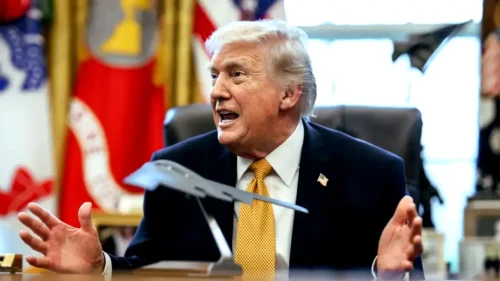
President Donald Trump’s aggressive demand for Iran’s “unconditional surrender” is modeled on the total defeats of the Axis powers in World War II. It relies on the assumption that massive, overwhelming kinetic force can completely break the psychological will of the Iranian state, forcing them to capitulate to all American demands, dismantle their military, and submit to foreign dictates.
President Pezeshkian’s articulation of the three conditions serves as a direct, highly public rejection of this American assumption. By laying out clear, structured terms for peace, Tehran is forcefully signaling that the state apparatus remains highly functional, diplomatically coherent, and entirely unbroken despite the massive devastation and the targeted assassination of the Supreme Leader. It completely shatters the American narrative of an imminent, chaotic regime collapse. The insistence on sovereign rights and reparations communicates to Washington that while Iran desires peace, it fundamentally refuses to be subjugated or humiliated. This creates a massive political dilemma for the Trump administration: either commit to a seemingly endless, highly unpopular ground invasion to force the demanded surrender, or quietly abandon the maximalist rhetoric and engage with Pezeshkian’s framework.
Shifting Global Alliances: Russia and Pakistan’s Involvement
The timing and context of Pezeshkian’s announcement—following direct, high-level discussions with leaders from Russia and Pakistan—is a deeply calculated geopolitical maneuver. It highlights that Iran is not fighting this war in total diplomatic isolation.
By actively coordinating its diplomatic demands with Moscow and Islamabad, Tehran is heavily leaning into a broader Eurasian alliance structure. This dynamic deeply complicates the military and diplomatic strategies of the United States and its Western allies.
- Russia’s active involvement signals to Washington that pushing Iran to the point of absolute state collapse could trigger a much wider, potentially catastrophic escalation involving a nuclear-armed superpower.
- Pakistan’s diplomatic engagement heavily restricts the ability of the U.S. to operate freely on Iran’s eastern borders, forcing the Pentagon to carefully manage relations with an incredibly volatile, heavily armed regional actor.
- The coordination with these nations demonstrates Iran’s successful efforts to internationalize the conflict, ensuring that any final peace settlement will heavily reflect the strategic interests of the broader multipolar world, rather than just American preferences.
The Humanitarian Crisis and the Urgency of Resolution
While the high-level geopolitical maneuvering surrounding the impact of Iran’s 3 key points is immensely complex, the grim, absolute reality on the ground demands urgent, immediate attention. The diplomatic standoff is occurring against the backdrop of a rapidly deteriorating, terrifying humanitarian catastrophe.
The Civilian Toll of the 2026 War
The statistics emerging from the conflict zone are deeply horrifying. The confirmed deaths of over 1,300 civilians in just the first two weeks of fighting indicate a devastatingly high tempo of urban warfare and aerial bombardment. The destruction of 16,000 residential units means that hundreds of thousands of Iranian citizens have been violently displaced, forced into overcrowded, deeply under-supplied temporary shelters amidst an active war zone. The systematic targeting of infrastructure has likely severely compromised access to clean drinking water, vital medical supplies, and basic sanitation, setting the stage for massive secondary waves of death due to entirely preventable diseases and severe exposure.
The absolute urgency of addressing this humanitarian disaster adds immense, crushing pressure to the diplomatic process. Pezeshkian’s demands, while deeply strategic, are also a desperate, frantic plea to halt the daily slaughter of his citizens. Conversely, the massive civilian toll is actively being utilized by the U.S. and Israel as an incredibly brutal form of leverage, a horrific demonstration of the unimaginable pain they can inflict if Tehran refuses to capitulate to the demand for unconditional surrender.
A Path Forward or a Recipe for Prolonged Conflict?
The ultimate question is whether the impact of Iran’s 3 key points will serve as a viable roadmap to peace or merely act as a diplomatic justification for endless, grinding warfare.
On the surface, the massive gap between Trump’s demand for total surrender and Pezeshkian’s demand for full sovereignty and massive reparations seems entirely unbridgeable. Both sides have deeply locked themselves into highly rigid, publicly uncompromising positions that leave almost zero room for traditional, face-saving concessions.
- If the United States violently refuses to acknowledge any aspect of Iran’s demands, Tehran will heavily utilize this rejection to justify the total mobilization of its populace for a decades-long, incredibly bloody war of asymmetric attrition.
- If Iran refuses to completely moderate its demand for massive financial reparations, the West will utilize this perceived stubbornness to justify the continuation of the brutal, highly destructive bombing campaign.
- The strict, unwavering adherence to these mutually exclusive maximalist positions heavily guarantees that the humanitarian suffering will exponentially multiply in the coming, devastating months.
However, in the deeply cynical, highly pragmatic world of international diplomacy, initial public demands are rarely the final terms of agreement. Pezeshkian’s three points firmly establish Iran’s opening negotiating parameters. The involvement of Russia, Pakistan, and potentially China provides the necessary back-channel mechanisms to eventually mold these rigid demands into a highly complex, heavily compromised ceasefire agreement.
Conclusion
As of March 2026, the Middle East stands on the precipice of absolute, total ruin. The war between the United States, Israel, and Iran has already unleashed unprecedented destruction, permanently reshaping the regional security architecture. In this atmosphere of immense chaos, the impact of Iran’s 3 key points cannot be overstated. President Masoud Pezeshkian’s demands for the recognition of legitimate sovereign rights, the payment of massive infrastructure reparations, and the establishment of firm, internationally backed security guarantees represent a monumental challenge to American geopolitical hegemony.
These conditions emphatically completely reject the U.S. demand for an unconditional surrender, forcefully asserting that the Islamic Republic, despite the tragic loss of its Supreme Leader and the massive devastation of its cities, remains an unbroken, deeply resilient sovereign entity. By actively aligning its diplomatic strategy with multipolar powers like Russia and Pakistan, Iran has brilliantly internationalized the conflict, ensuring that the final outcome will not be unilaterally dictated by Washington. While the immense, seemingly unbridgeable chasm between American ultimatums and Iranian conditions heavily points toward a prolonged, devastatingly bloody conflict, Pezeshkian’s three points have undeniably established the fundamental, incredibly complex framework around which the future of the Middle East will ultimately, and painfully, be negotiated.