

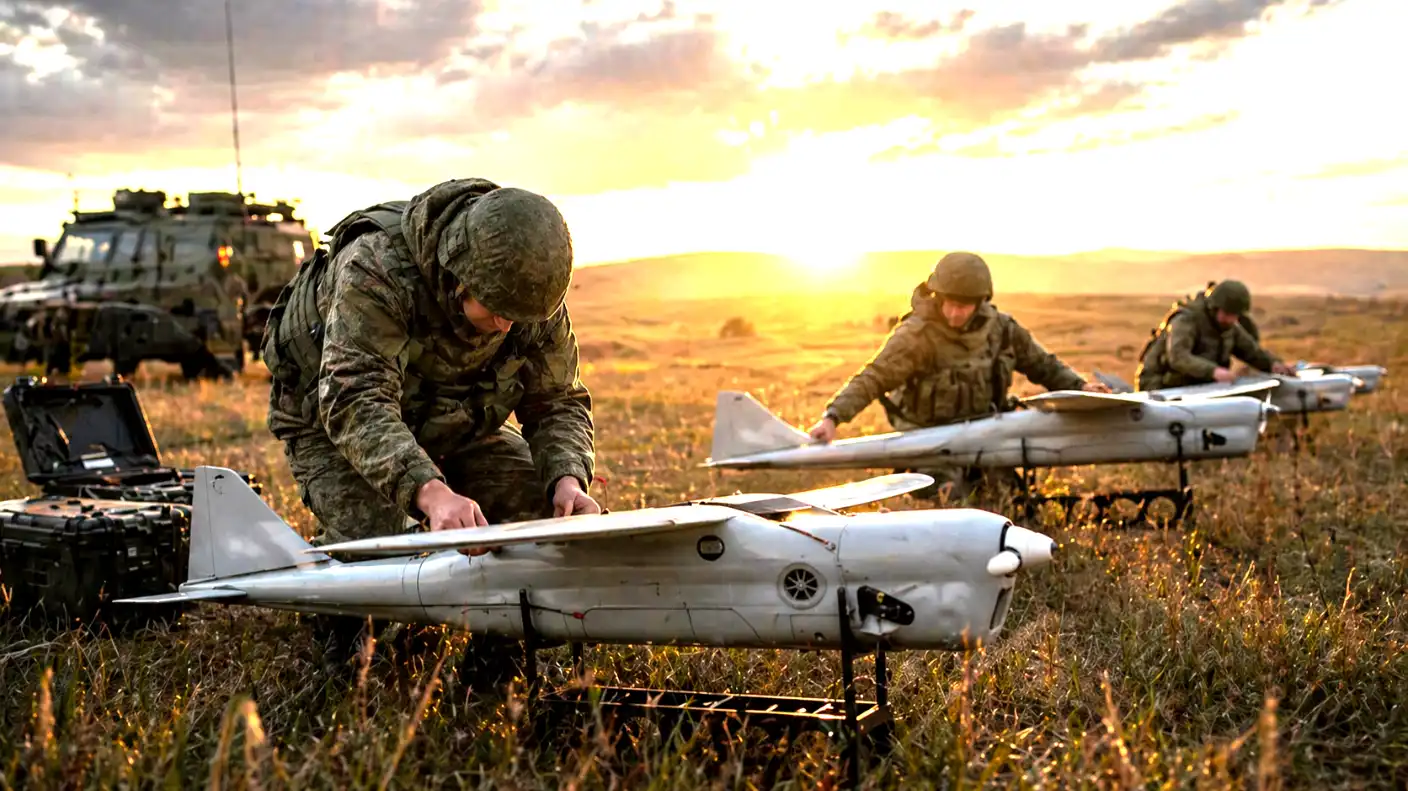
The United States and Japan plan to launch a new manufacturing framework later this year. The two nations want to connect their top technology companies to build dual-use equipment. Right now, the immediate focus centers on producing high-tech drones inside Japan. Officials from both countries want to use this partnership to directly challenge China and break its massive grip on the global drone market.
Under this new arrangement, American technology startups will design advanced drones, and Japanese factories will handle the physical production. Government sources say leaders will reveal the official details of this plan in the coming months. By working together, the two countries hope to secure reliable supply chains for critical defense equipment and reduce their daily reliance on foreign electronic components.
The project brings together a massive pool of corporate talent and resources. Both Japan and the United States have at least 50 companies currently working on drone technology. The new framework will link these 100 businesses together so they can share technology, human resources, and valuable factory space. American officials specifically want to bring in Japanese companies that have deep experience in heavy manufacturing. They have their eyes on massive industrial players like Mitsubishi Heavy Industries to handle the heavy lifting.
To ensure this collaboration runs smoothly, the United States also seeks assistance from the Japan Association of Corporate Executives. This major business lobby, known locally as Keizai Doyukai, will help organize Japanese manufacturers and expedite the planning process. This partnership perfectly matches a major shift in Japanese defense policy. Tokyo recently decided to scrap strict rules that previously stopped the country from exporting weapons and defense technology.
Under the old rules, Japan limited defense equipment exports to just 5 non-combat categories. The new policy completely changes the business landscape. Japan can now legally export lethal, locally manufactured defense equipment to countries that share a defense cooperation agreement with Tokyo. This historic rule change gives Japanese companies a massive reason to expand their operations. Factory owners can now hire more workers and build larger facilities because they can finally sell their goods to overseas military markets.
The Japanese government clearly sees the financial and military value of this shift. Officials recently named the defense industry as 1 of 17 specific sectors that will receive priority investment from the national government. Earlier this month, a special government working group focused on defense strategy released a new report. The group identified drones as an absolutely critical capability for modern military operations. They called drones the foundation of new ways of warfare and told the government that Japan must build a domestic base capable of rapid mass production.
The partnership solves a major problem for the United States. American technology companies lead the world in designing artificial intelligence and creating advanced flight software. However, the American manufacturing sector has lost a lot of its strength over the past few decades. Many companies moved their factory jobs overseas to save money, leaving the United States without the physical tools needed to build thousands of drones quickly.
The administration of President Donald Trump repeatedly called for a massive revival of domestic manufacturing. Despite these political pushes, major challenges still block the path to building hardware inside America. Securing stable supply chains for basic electronic components remains a constant struggle for American factory managers. By sending the production work to Japan, the United States avoids these local manufacturing roadblocks while still keeping the technology completely out of Chinese hands.
Global events over the past few years proved exactly why countries need thousands of cheap, reliable drones. Military leaders closely watched how drones completely changed the battlefield during the Russian invasion of Ukraine. Similar drone tactics played a massive role in the recent conflict involving the United States, Israel, and Iran. Small unmanned aircraft can destroy expensive tanks, spy on enemy troops, and deliver supplies without risking human pilots.
Because of these modern combat realities, the United States military desperately wants to buy drones on a massive scale. The Pentagon is actively pushing major defense contractors and small technology startups to ramp up production. By combining American software brains with Japanese manufacturing muscle, the two allied nations plan to build a massive drone fleet that can secure their interests in Asia and around the world.















