

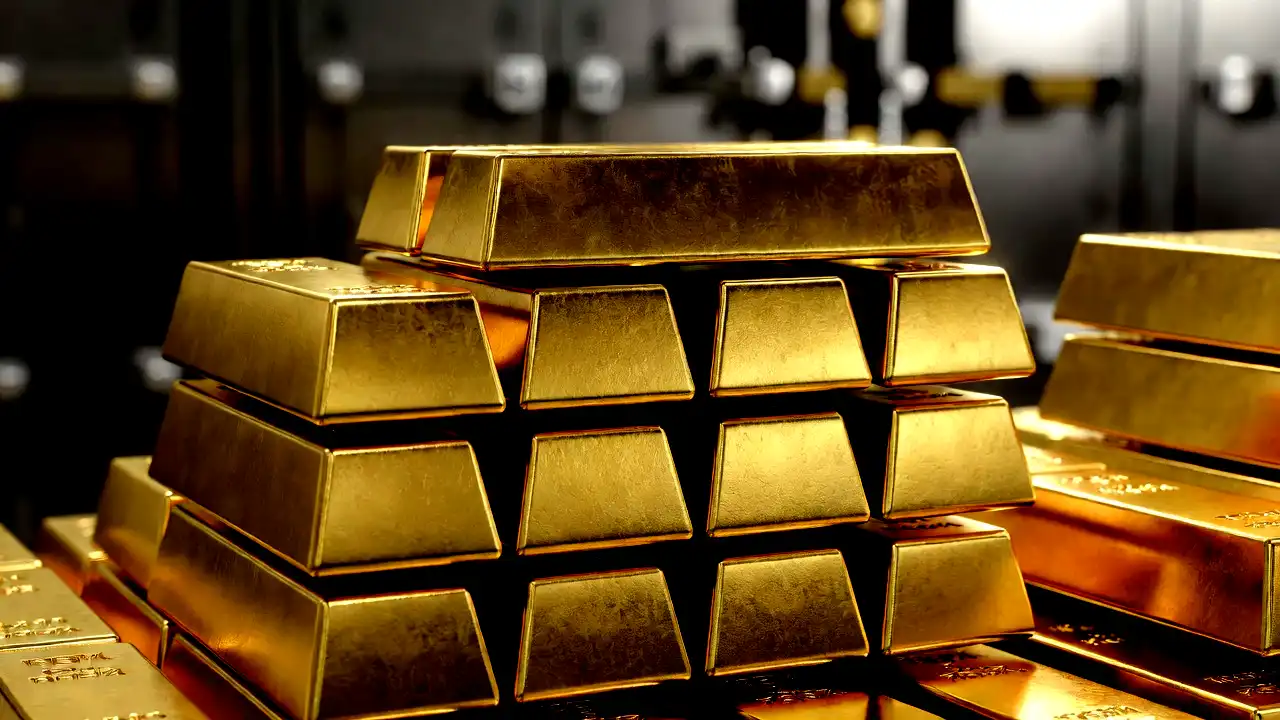
Gold prices dropped again this week as traders closely watched new political developments in the Middle East. The precious metal recorded its second weekly decline after President Donald Trump announced a new shipping plan for the Strait of Hormuz. Market watchers also monitored the ongoing negotiations for a potential deal between the United States and Iran.
Early Monday morning in Asian trading hours, bullion fell by 0.5%. The drop pushed the price of gold below the important $4,600 mark. Later in the day in Singapore, spot gold officially dipped 0.3% to settle at $4,599.90 an ounce. Other precious metals showed mixed results. Silver fell 0.1% to reach $75.28 an ounce. Platinum advanced 0.5%, while palladium prices remained completely flat.
President Trump caused some of this market movement with a weekend social media post. On Sunday, he declared that the US military will begin guiding specific commercial ships through the dangerous Strait of Hormuz. The plan targets vessels that have no involvement in the current Iran conflict. Trump said this escort mission would begin on Monday morning. However, global oil prices remained steady because many traders seriously doubt the government can actually make this complex plan work.
The political situation grew more tense over the weekend. On Saturday, Trump publicly rejected the latest peace proposal from the Islamic Republic. He stated that the new Iranian terms simply do not offer enough to satisfy his demands. This ongoing war, which officially began at the end of February, continues to disrupt global trade routes and supply chains.
Because of the war, global energy prices remain extremely high. Expensive oil creates a ripple effect across the entire economy. High energy costs cause stubborn inflation, which forces central banks to keep interest rates high. When interest rates stay high, investors prefer to invest in assets that pay a yield, such as government bonds. Gold pays no yield, so high interest rates usually push gold prices down. Overall, gold has lost roughly 12% of its total value since the war started.
Manav Modi works as a commodities analyst at Motilal Oswal Financial Services in Mumbai. Modi explained that a strong US dollar and deep fears about oil-driven inflation force central banks to send hawkish signals to the market. Policymakers refuse to cut rates while energy prices threaten to push inflation higher. The Bloomberg Dollar Spot Index, which measures the strength of the US currency, recently slipped by just 0.1%.
Traders now look forward to a busy week of critical economic news. The US Treasury Department will soon announce its official borrowing plans for the next 3 months. At the same time, several key speakers from the Federal Reserve will give public speeches about the economy.
A loaded calendar of economic releases will end with the highly anticipated monthly employment data. Investors eagerly await this jobs report. The new numbers will give financial markets strong clues about the future direction of interest rates. The data will also help experts calculate the exact trajectory of the massive US fiscal deficit.
Despite the recent price drops, many market experts maintain a very positive outlook for gold over the long term. Major buyers continue to purchase massive amounts of the precious metal every single week. They buy gold even when the price slumps because they want a safe place to store their wealth.
The World Gold Council recently released new market data for the first quarter of the year. The council data showed that central banks worldwide added massive amounts of gold to their national reserves. In fact, these banks bought gold at the fastest pace seen in more than 1 year. Sovereign nations clearly want to hold physical assets during times of war.
Private companies also see the value in holding physical metal. Tether Holdings SA recently extended a massive buying streak in the gold market. The crypto company now holds more bullion than any other private business on the planet. Today, only large commercial banks and sovereign nation-states hold more gold than Tether. This strong underlying demand prevents the price of gold from falling too far.















