

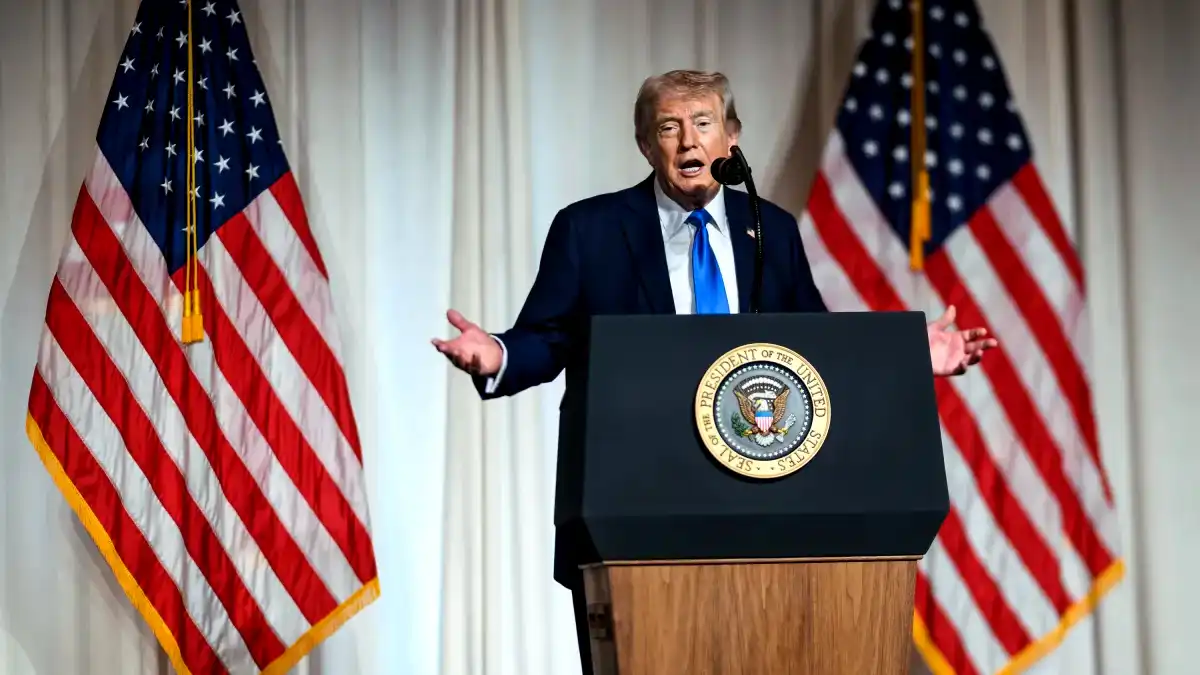
US President Donald Trump delivered a strong message to South Korea on Monday afternoon. The president stated that the Asian nation should immediately join the ongoing United States military efforts to protect commercial shipping movements near Iran. The tense waters of the Middle East currently pose a massive danger to global trade, and Washington desperately wants more international allies to help shoulder the heavy security burden.
The ongoing war between the United States, Israel, and Iran severely disrupted the safe passage of massive cargo ships. The vital Strait of Hormuz, which connects the Persian Gulf to the open ocean, remains a terrifying flashpoint. Under normal peacetime conditions, roughly 20 percent of the daily global oil supply passes directly through this narrow geographical chokepoint. With active hostilities threatening to sink expensive oil tankers, maritime insurance rates have skyrocketed, and some shipping companies simply refuse to enter the region.
Trump specifically called out South Korea because the country relies heavily on imported energy to power its massive manufacturing sector. South Korea buys millions of barrels of crude oil from the Middle East every single month. By urging Seoul to send military ships or financial support to the region, Trump wants the countries that benefit most from the safe shipping lanes actually to help protect them.
The United States Navy currently leads a massive maritime security operation in the region. American warships patrol the dangerous waters, providing armed escorts for commercial vessels navigating the strait. However, keeping massive guided-missile destroyers and aircraft carriers stationed in the Gulf costs American taxpayers billions of dollars. The White House actively pushes allied nations to contribute their own naval vessels, radar planes, and military personnel to spread out the high costs and risks.
To provide the public with a clear update on the military situation, Trump announced a major press event for the following day. He told reporters that Defense Secretary Pete Hegseth will hold a highly detailed news conference on Tuesday morning. This event will give the Pentagon a chance to explain exactly how the military plans to handle the ongoing maritime crisis and what it expects from its global allies moving forward.
Hegseth will not face the cameras alone. Trump confirmed that the Chairman of the Joint Chiefs of Staff, Dan Caine, will stand right beside the Defense Secretary during the Tuesday briefing. Having the top military commander present suggests the Pentagon plans to share very specific operational details about naval deployments and the current threat levels around the Iranian coastline.
The upcoming press conference will likely address the recent escalation of violence on the water. Over the past few weeks, several commercial ships suffered mysterious explosions and drone attacks while sailing near the strait. While the United States blames Iran for these violent strikes, Tehran routinely denies any involvement. The conflicting stories create a massive headache for international shipping executives trying to keep their crews safe.
South Korea now faces a very difficult political choice. The government in Seoul must balance its strong military alliance with the United States against its own economic interests in the Middle East. Sending South Korean warships to patrol the Strait of Hormuz would certainly please President Trump. Still, it could easily anger the Iranian government and drag Seoul directly into a messy, unpredictable foreign conflict.
As the world waits for the Tuesday press conference, global energy markets remain extremely nervous. The price of Brent crude oil continues to fluctuate wildly every time a politician speaks about the Middle East. If Defense Secretary Hegseth and Chairman Caine announce a massive escalation in American naval power, oil prices could easily spike again as traders panic over a potential total shutdown of the vital shipping channel.















