

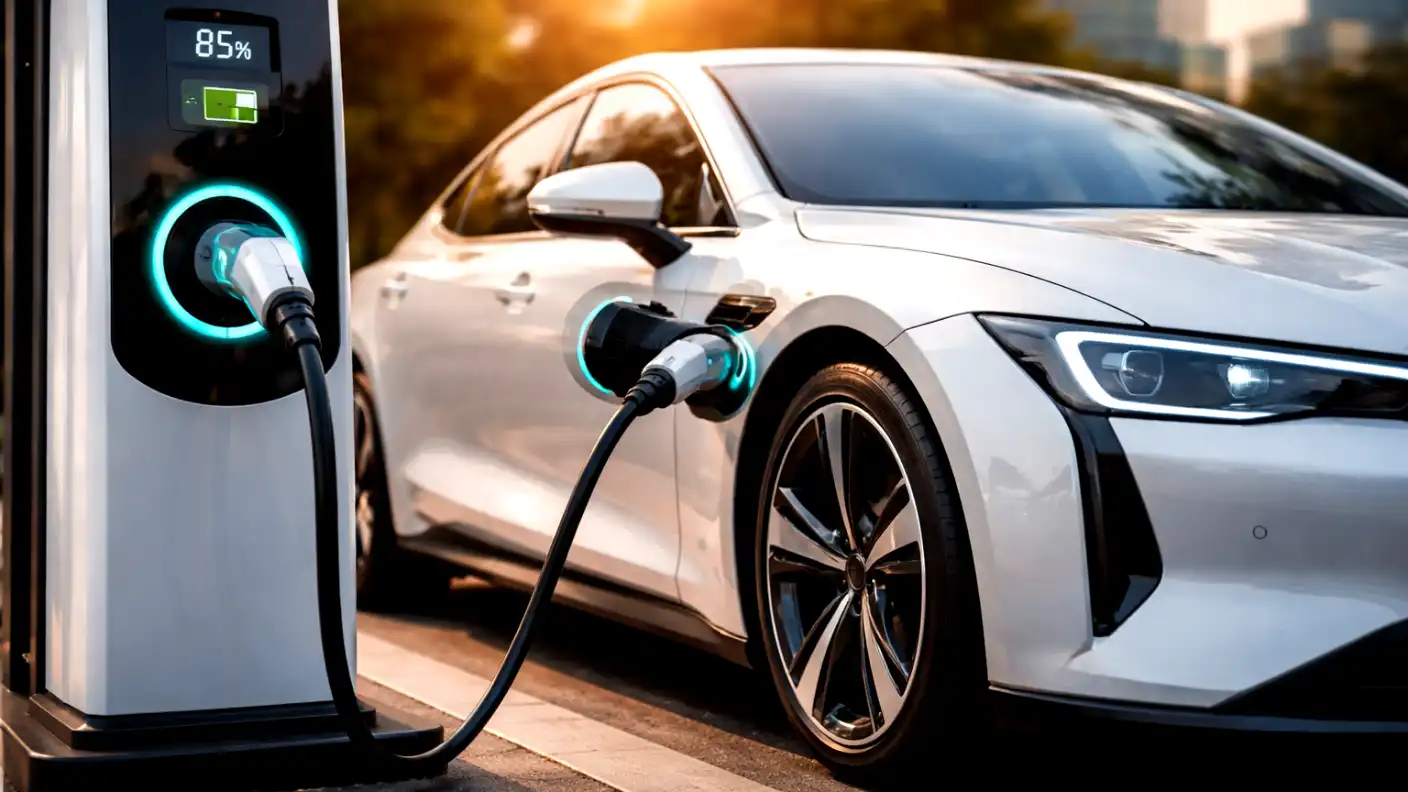
The Albanese government faces heavy criticism over a new plan to build electric vehicle charging stations. Under this proposal, every household in the country will pay a fee on their electricity bills to fund the rollout. Families will pay up to $1.44 every single year, even if they do not own an electric car. Critics call this an unfair tax that forces regular people to pay for politicians’ green-energy goals.
Aidan Morrison, the energy director at the Center for Independent Studies, slammed the idea. He said the plan exposes the extremely unfair reality of the shift toward renewable energy. Morrison told reporters that large companies want to cash in on the current government’s climate zealotry. He warned that Australians will suffer from even more expensive electricity bills so that leaders can eliminate fossil fuels.
The proposed model enables electricity network companies to lead the charge in addressing the lack of stations in rural and suburban areas. These companies will find suitable locations for new chargers and prepare the sites for construction. After the site is prepared, the network will offer private operators the first opportunity to use the space. If private companies refuse the offer, the electricity network will just build the station itself and pass the cost to consumers. A government spokesperson stated that households will not see this extra fee on their bills until the year 2029. Overall, officials expect the plan to deliver 14,000 brand new chargers across the nation.
Shadow Energy Minister Dan Tehan quickly attacked the government over the program’s true cost. While Energy Minister Chris Bowen claims the fee will only cost a few dollars, Tehan pointed to a long history of massive cost blowouts. Tehan reminded the public that the government previously allocated $40 million to build 117 charging stations. However, developers had finished only 45 stations before the entire project ran out of cash.
Tehan did not stop there. He listed several other green energy projects that went wildly over budget. He noted that the home batteries program jumped from an initial cost of $2.3 billion to an incredible $7.2 billion. He also highlighted the electric-vehicle fringe-benefits tax exemption policy. The government originally said the policy would cost $90 million a year, but it ended up costing taxpayers $3 billion a year. Tehan called the entire situation a mess and said this new charger scheme will only add to the financial disaster.
This new controversy hits the news right as the Labor government pushes aggressive climate targets. The government plans to reduce emissions from 2005 levels by 62 percent to 70 percent by the year 2035. They also want to ensure that renewable sources like wind, solar, and batteries generate 82 percent of the national energy grid by 2030. To hit these goals, officials rely on predictions from groups like the CSIRO and AEMO. These groups assume that pure electric vehicles will completely wipe out regular gas cars and hybrid models by the mid-2030s.
Morrison strongly disagrees with those sales predictions. He called the projections pure fantasy and said they were completely disconnected from actual sales numbers. He believes officials simply force these numbers to fit the political narrative of reaching Net Zero by 2050. Morrison argued that big network companies use these wildly unrealistic predictions as an excuse to charge electricity users for a massive, completely unwarranted rollout of chargers.
Morrison also pointed out the bad economics behind building thousands of public chargers on the street. He explained that most people who drive electric vehicles prefer to charge their cars slowly at home inside their own garages. They usually plug in during off-peak hours or use their own solar power because it costs very little money. Drivers avoid public chargers because companies charge much higher rates to use them. People only use public stations when they really need them, such as when returning home from a long road trip on a holiday weekend. Because everyone needs them at the same time, drivers end up waiting in massive queues.















