
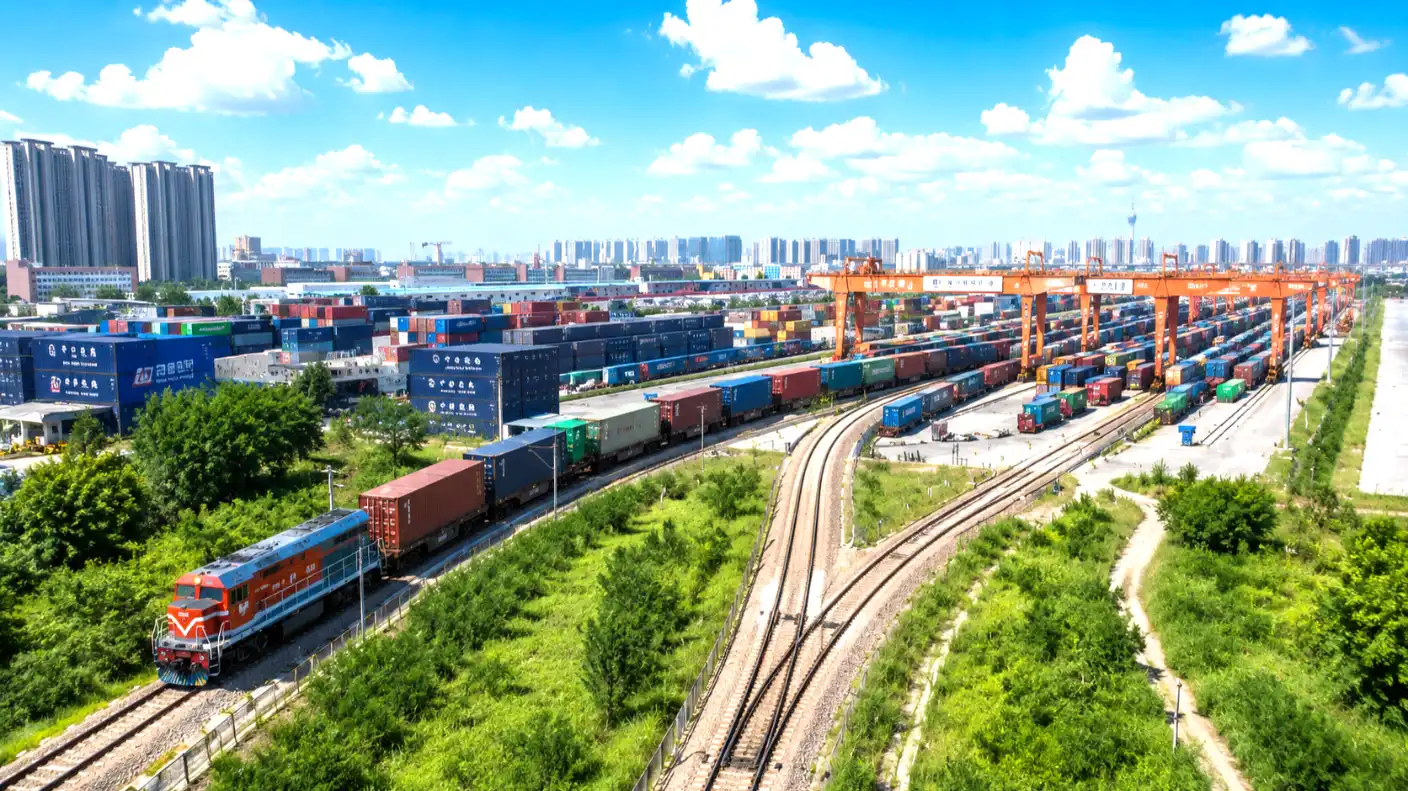
On Saturday morning at exactly 10 a.m. local time, a heavy freight train pulled out of a station in Zhengzhou. Zhengzhou acts as a massive logistics hub for Henan Province in central China. The train set its course for Hamburg, Germany. The loud blast of the train horn signaled a new era of land-based shipping. This departure marked a major milestone in international trade. It officially recorded the 130,000th trip for the China-Europe Railway Express.
The China State Railway Group Co., Ltd. released the official numbers right after the departure. The company reported that the total value of cargo transported on this network now exceeds $520 billion. To put that into perspective, that number rivals the entire economic output of many medium-sized countries. Moving this much wealth across land requires precise coordination and strict border security. The railway company manages all these details daily to keep the freight moving.
Over the past several years, the railway group has worked hard to optimize its operating routes. Engineers and logistics planners mapped out exactly 93 scheduled lines to keep traffic flowing smoothly across the continents. The trains run along these dedicated tracks at a designed speed of 120 kilometers per hour. This speed allows companies to deliver their products much faster than traditional ocean shipping. Ocean freighters often face delays at crowded ports or terrible weather at sea. The trains cut right through the continent, offering a reliable timeline for factory managers who wait for parts.
The logistics network stretches deeply across China. Currently, exactly 129 different Chinese cities operate services for the China-Europe Railway Express. This massive local coverage allows factories in inland provinces to ship their products directly to foreign markets. They no longer need to truck their cargo hundreds of miles to coastal seaports. A factory in the middle of China simply loads its goods onto a railcar, and the train crew handles the rest of the journey. This efficiency completely changes how business leaders plan their supply chains.
The international tracks span most of the Eurasian landmass. The trains pull into 235 different cities located across 26 European countries. In addition, the network connects to more than 100 cities spread across 11 Asian nations. This web of steel rails creates a direct land bridge linking multiple major economies. Crossing all these borders requires standard customs agreements and smooth transfers between tracks. The railway group negotiates with foreign governments to ensure the trains do not sit idle at checkpoints.
Cost savings drive a massive portion of this rapid growth. Since the company first launched the service, overall freight rates have dropped by over 40 percent. Lower shipping costs help small and large businesses alike. When companies save money on logistics, they can keep their product prices lower for everyday consumers at retail. Before this railway expanded, companies had to choose between slow, cheap ocean ships and fast, extremely expensive cargo planes. The train offers a perfect middle ground, blending decent speed with affordable pricing.
The sheer variety of items moving across these tracks shows the true scale of the operation. The trains currently transport more than 50,000 different types of goods. Logistics experts divide these items into exactly 53 distinct cargo categories. The cargo manifests read like a giant catalog of modern consumer and industrial life. You can find everything from children’s toys and clothing to advanced medical devices sitting inside the steel shipping containers.
Chinese factories use the outbound trains to export high-value products to European and Asian buyers. Workers pack the shipping containers with new automobiles and replacement auto parts. They also load heavy industrial machinery, consumer electronics, and complex electrical equipment. These valuable exports help drive steady economic growth in the Chinese manufacturing sector. European car dealers receive fresh vehicle shipments faster, while tech stores get the latest smartphones and tablets without paying exorbitant air freight fees.
The trains do not come back empty. European businesses use the same railway network to sell their goods to Chinese consumers. The return trips bring massive shipments of European timber and wood pulp to feed Chinese paper mills. The trains also carry specialty agricultural products and daily consumer goods that Chinese shoppers want to buy. Grocery stores in Beijing and Shanghai stock their shelves with European items that arrived by rail just weeks earlier.
This two-way street of commerce keeps the railway busy all year round. The steady flow of trains creates solid jobs for dock workers, train engineers, and logistics planners in dozens of countries. The network proves that physical land connections still hold immense value in a modern, digital world. Moving physical boxes across borders safely and cheaply remains the true backbone of global trade. As the China State Railway Group adds new lines and upgrades tracks, the total number of trips will continue to climb.