

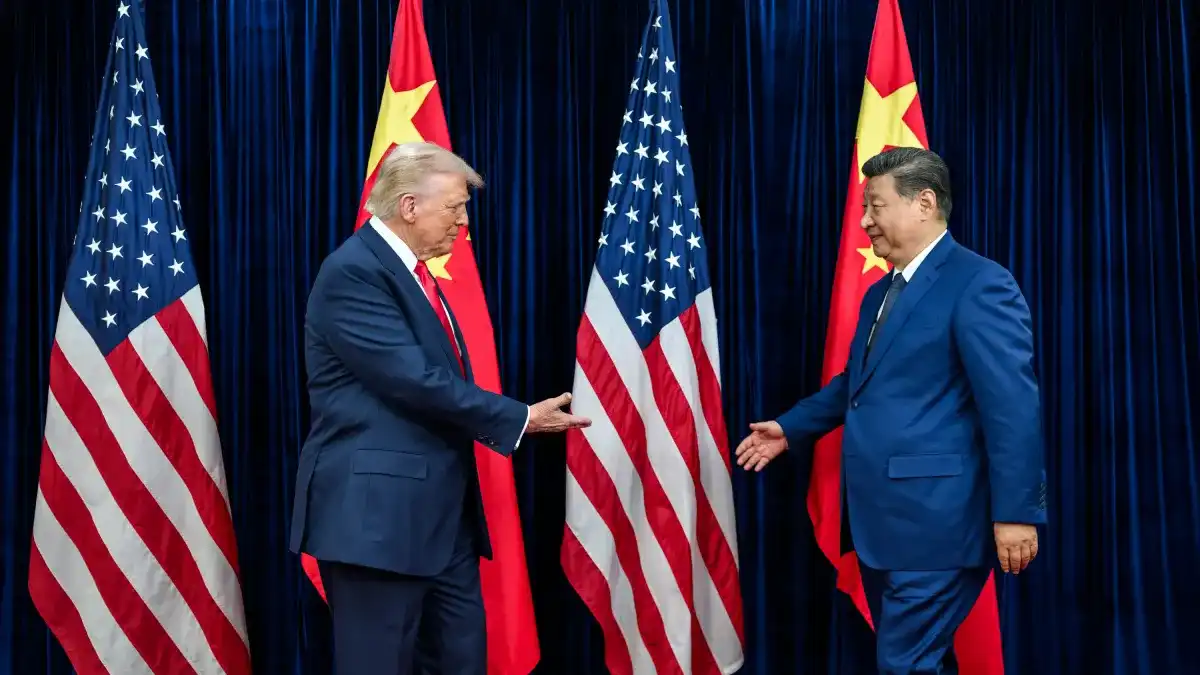
Donald Trump is heading to Beijing on May 14-15 to meet Xi Jinping. A year ago, Trump predicted that towering tariffs would force China’s economy to its knees. Now, court defeats and a highly unpopular war in Iran have severely weakened his hand. He heads to the Chinese capital with humbled goals, hoping to secure just a few minor purchasing agreements and some much-needed diplomatic help.
Trade analysts point out that Trump currently needs China far more than China needs him. He desperately needs a major foreign policy win to boost his low approval ratings back home. This meeting is the first face-to-face talk between the two leaders since they paused their intense trade war last October. During that brief meeting at a South Korean airbase, Trump agreed to suspend his massive import taxes, while Xi stopped his plans to choke off global supplies of rare earth elements.
Back in Washington, the president faces a mountain of political problems. A massive 60% of the American public disapproves of his ongoing war with Iran, which has thrown the Middle East into chaos and triggered a massive global energy crisis. Because voters will head to the polls for critical midterm elections this November, Trump needs to show he can stabilize global politics. He wants China to use its close ties and oil-buying leverage with Iran to convince Tehran’s leaders to sign a new peace deal with Washington.
Nobody expects a breakthrough in Beijing this week. Officials involved in planning the summit say the actual economic goals look incredibly small. Trump hopes to sign a few modest purchase agreements for American soybeans and beef, and perhaps a $1.5 billion contract for Boeing passenger jets. High-profile business executives will join the president, including Tesla’s Elon Musk and Apple’s Tim Cook. However, this corporate delegation is much smaller than the massive group of CEOs that accompanied Trump on his last official trip to Beijing in 2017.
While Trump spent the last year fighting US court battles over his illegal tariffs, Beijing quietly built a highly effective economic pressure toolkit. China recently enacted strict new laws to punish foreign companies that try to move their factories and supply chains out of Chinese territory. The Chinese government also tightened its licensing system for exporting rare earth elements. These elements remain absolutely vital for manufacturing high-tech military weapons and electric car batteries.
Chinese officials have their own aggressive list of demands for this week’s meetings. Beijing wants the Trump administration to promise that it will not launch future trade attacks, especially technology export controls. Specifically, China wants the US to roll back existing restrictions on advanced computer memory chips and semiconductor chipmaking equipment. They also want a firm commitment that Washington will stop pressuring European allies to block Chinese technology companies.
The democratically self-governed island of Taiwan sits at the absolute top of Xi Jinping’s agenda. China claims the island as its own territory and deeply resents US support for Taipei. Trump recently announced that he plans to discuss American arms sales to Taiwan during his talks with Xi. However, Chinese foreign policy experts warn that Trump must make it clear that he does not support Taiwanese independence. Even a tiny change in how Washington talks about Taiwan could terrify America’s Asian allies.
Trump also faces shifting attitudes at home regarding China policy. A poll published by the Chicago Council on Global Affairs revealed that 53% of Americans now believe the United States should actively cooperate with China. This is a massive jump from 2024, when only 40% of the public favored friendly engagement. This shifting public opinion means that simply maintaining stable relations and extending the trade war truce would count as a political victory for Trump.
Aside from trade and war, Trump will have to address several delicate human rights issues. He plans to raise the case of jailed Hong Kong media tycoon Jimmy Lai. Additionally, the families of two American citizens who have spent over a decade locked in Chinese prisons are begging the president to secure their release during the summit.
In the end, the grand state banquet at the Great Hall of the People and the scenic tea ceremonies will likely hide a very uneven outcome. Many political analysts believe the meetings will result in nothing more than a superficial ceasefire. Because Trump is so heavily distracted by his war in the Middle East and domestic legal defeats, this truce will likely end up heavily favoring China.















