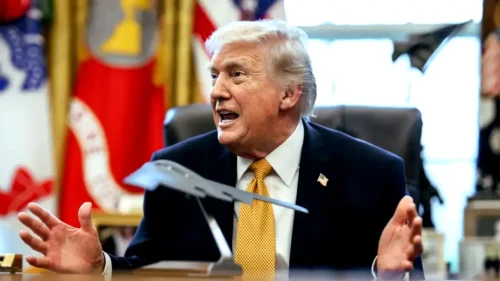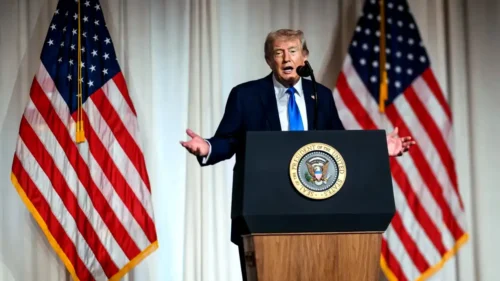


Greenland Prime Minister Jens-Frederik Nielsen confirmed on Tuesday that his government is actively negotiating a larger American military presence on the Arctic island. The talks follow repeated statements from President Donald Trump, who still wants the United States to acquire or exert total control over the semi-autonomous Danish territory. This ongoing push by the American president continues to create serious friction among Washington, the Greenlandic capital, Nuuk, and the Danish government in Copenhagen.
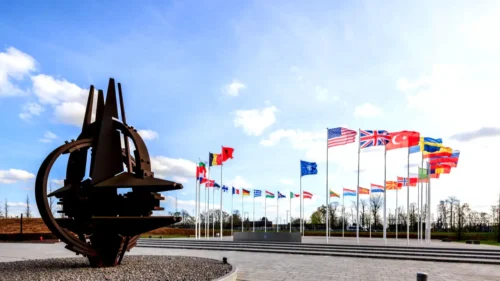
The intense diplomatic standoff has also worried military leaders across the broader NATO alliance. To calm the growing nerves, officials from Greenland, Denmark, and the United States formed a special working group earlier this year. The diplomats aim to resolve the crisis through high-level talks, though they have not yet presented any final decisions to the public. Prime Minister Nielsen struck a hopeful tone when he spoke to reporters in Copenhagen about the sensitive discussions.
Nielsen explained that American officials feel the local government does not allocate sufficient resources to national security and regional surveillance. Because of this specific concern, expanding the American military footprint serves as a core part of the current negotiations. The prime minister acknowledged that Trump still actively wants to control Greenland, but he remains confident the working group will find a workable compromise. He stated that local leaders want to strike a deal that satisfies American security needs without giving up local control.
The BBC reported on Tuesday that American negotiators want to open exactly three new military bases in southern Greenland. One source told the news network that Washington even suggested designating these new facilities as sovereign United States territory. Nielsen responded by reminding reporters that Greenland already operates under a long-standing defense agreement that allows America to build more bases. While he expressed openness to expanding military and business ties, he firmly stated that Greenland will never surrender its political sovereignty to a foreign power.
The United States currently operates just one active military installation on the island. The military operates the Pituffik Space Base in the remote northwest corner of the territory. This single facility marks a massive drop from the peak of American military presence at the end of World War II. Back in 1945, the United States military operated roughly 17 facilities and stationed thousands of active-duty personnel across the territory.
General Gregory Guillot, who leads the United States Northern Command, first shared the proposal for the three new bases during a public Senate hearing in March. The military general has remained highly involved in the diplomatic push over the last few months. An Instagram post from the American embassy in Copenhagen showed that Guillot visited the Danish capital just last week to discuss the expansion plans with key allies.
Local journalists recently identified two potential base locations: Narsarsuaq in the deep south and Kangerlussuaq in the southwest. The American military previously operated bases in both of these towns decades ago. Because of this history, both locations already feature usable airstrips and deep port infrastructure that the military could quickly upgrade. The American government has not yet specified the location of the third proposed base.
An airport manager at the Narsarsuaq facility confirmed to reporters that an American envoy recently visited the small town. The diplomat traveled from the embassy in Copenhagen to personally inspect the old runway and the nearby harbor. The envoy wanted to see if the military could successfully reopen the abandoned facilities and support modern military aircraft and naval ships.
Legal experts note that the two countries negotiate these expansions under an old defense agreement originally signed in 1951. This historic pact gives Washington broad military access to the entire island. Negotiators last updated the agreement in 2004 to officially include Greenland as a direct signing partner. Because of the broad legal wording in the 1951 document, experts point out that Denmark has almost no practical ability to block any American requests for new military bases.
The diplomatic push will continue next week when Jeff Landry, a political envoy for President Trump, travels to the island. Landry plans to attend a large business conference and explore opportunities for American companies. Greenland currently has a population of just 57,000 people spread across a vast, icy landscape, yet the land holds valuable, rare mineral resources. Leaders in Washington want to secure these minerals for American technology and defense companies. So far, Landry has not scheduled any official meetings with local politicians during his upcoming trip.