

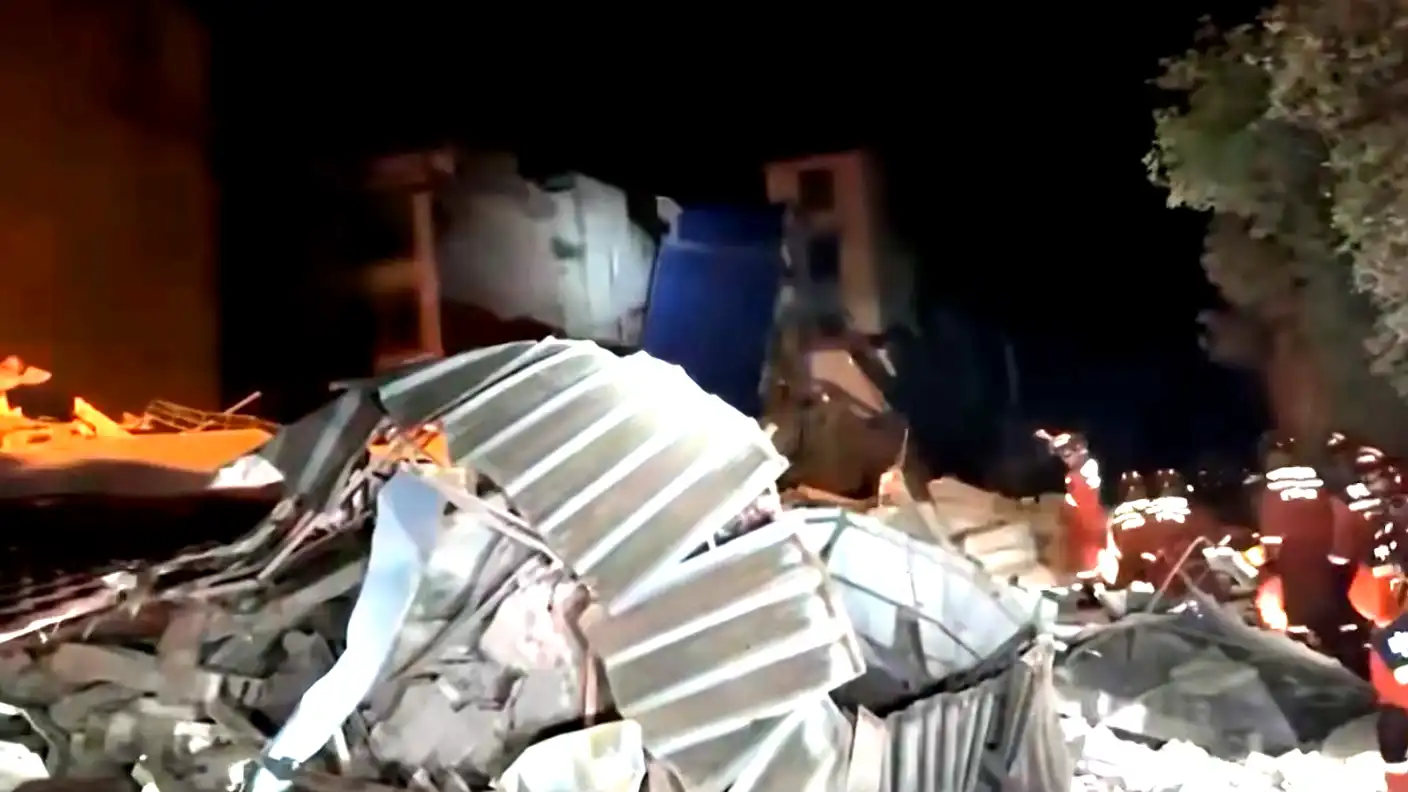
A magnitude 5.2 earthquake struck the southwest region of Guangxi, China, early Monday morning. The violent tremors woke thousands of people and caused immediate panic across the city of Liuzhou. Emergency teams confirmed that the disaster killed at least 2 people. Local authorities quickly sprang into action and forced more than 7,000 residents to evacuate their homes to seek safety in open public squares and parks.
The violent shaking proved too much for older structures in the city. State broadcaster CCTV reported that exactly 13 buildings collapsed during the early hours of the morning. Dust filled the air as concrete walls crumbled into the streets. Paramedics rushed 4 people to a local hospital for emergency treatment. Fortunately, doctors confirmed that none of these patients suffered life-threatening injuries. The medical staff treated them mostly for broken bones and minor cuts.
Search and rescue operations continue around the clock. Rescue workers wear bright orange vests and use heavy machinery to move massive slabs of concrete. They also use trained rescue dogs and thermal sensors to look for anyone trapped under the debris. Officials stated that 1 person remains missing. Friends and family members stand near the collapse sites, hoping rescue teams find their loved ones alive.
Moving over 7,000 evacuees requires massive logistical planning. City officials opened 5 large emergency shelters inside local schools and sports stadiums. Government trucks delivered thousands of blankets, bottled water, and hot meals to the displaced families. Relief groups estimate that setting up these temporary shelters costs roughly $500,000 on the first day alone. Volunteers work tirelessly to keep the frightened families comfortable while they wait for news about their damaged homes.
The earthquake also caused major problems for local commuters. Railway authorities immediately halted all train services passing through the Liuzhou area. Track engineers walked miles of steel rails to inspect the infrastructure for cracks or structural damage. They must ensure the tracks remain perfectly straight before they allow massive passenger trains to run again. These transport disruptions delayed travel plans for nearly 10,000 morning commuters across the region.
Despite the building collapses and transit delays, the city avoided a total infrastructure failure. State media outlets like Xinhua confirmed that vital utility services survived the tremors. Communication networks, power lines, and underground water pipes operate completely normally. Gas companies reported 0 leaks in their main supply lines. Local traffic lights still function, allowing emergency vehicles to navigate the city streets without major traffic jams.
The local government quickly organized a heavy financial response to the disaster. City leaders approved an emergency relief fund of 2 million yuan to help families rebuild. Officials promised to hand out exactly $150 to each displaced family to cover immediate basic needs like food and clothing. Construction crews have already started clearing the main roads to make way for heavy supply trucks.
Southwest China experiences seismic activity frequently. The region sits near several active fault lines that regularly shift and release pressure. Geologists estimate that roughly 20 percent of the Guangxi province rests on unstable ground. Because of this high risk, newer buildings in Liuzhou feature strict earthquake-resistant designs. However, older brick structures still face extreme danger when a magnitude 5.2 quake hits the area.
Medical teams remain on high alert. The main city hospital cleared out exactly 50 beds in the emergency ward to prepare for potential casualties. Doctors and nurses canceled their days off to help treat the injured. They expect a few more patients to walk into the clinic over the next 48 hours, complaining of stress or minor bruises from falling debris.
City leaders plan to inspect every building in the affected neighborhoods before allowing the 7,000 evacuees to return home. Structural engineers will check building foundations for dangerous cracks. If a home looks unsafe, the government will help the owners find a new place to live. Meteorologists predict exactly 7 days of clear, sunny weather, which will give the rescue and repair crews the perfect conditions to finish their difficult work.















