
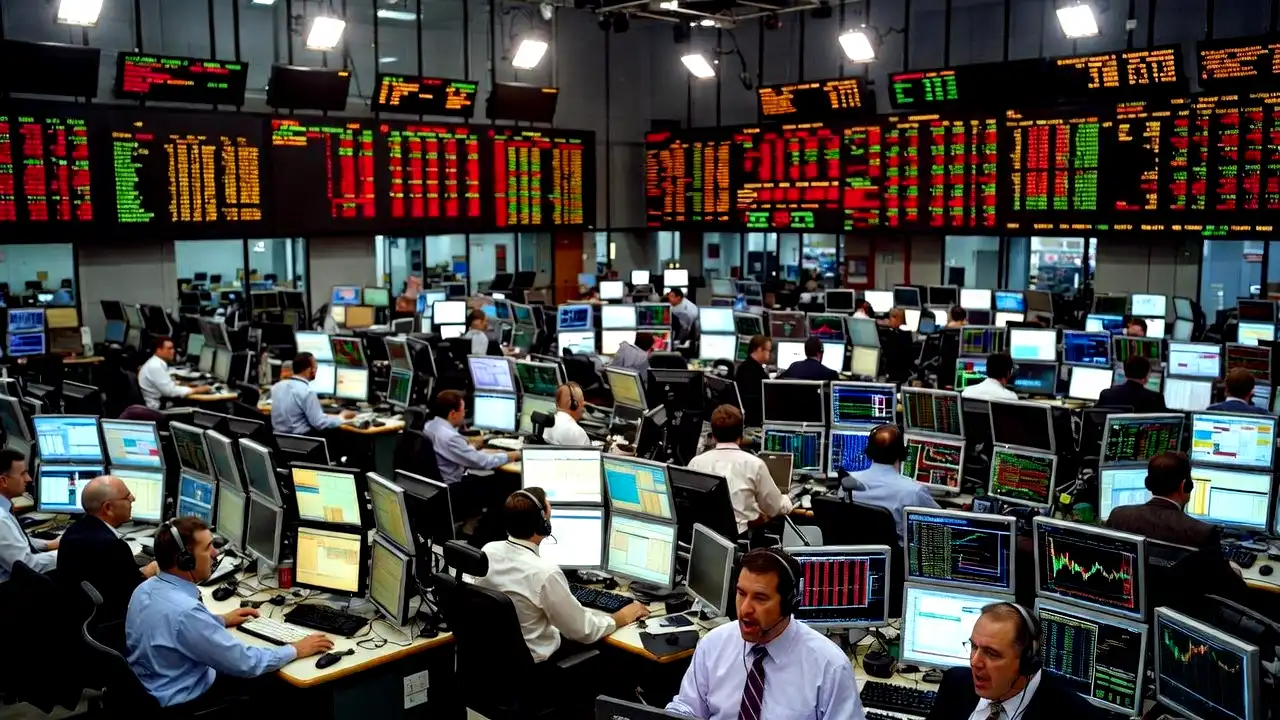
The Australian share market suffered heavy losses on Friday as traders panicked over a fresh naval skirmish in the Persian Gulf. Investors dumped stocks across the board, nervously reacting to the latest fallout from the ongoing Middle East conflict. The sudden spike in global oil prices added more fuel to the fire, causing deep uncertainty on the trading floor and pushing almost every sector into negative territory. Stockbrokers struggled to find buyers as negative sentiment swept through the exchange.
The benchmark ASX 200 index closed sharply lower, wiping out 133.70 points, or 1.51%, to finish the week at 8744.40 points. The broader All Ordinaries index mirrored this massive decline, dropping 126.50 points, or 1.39%, to settle at 8980.50 points. Currency markets showed a rare bright spot for the day, as the Australian dollar added 0.29% to buy 72.29 US cents. However, the stock market’s declines were widespread. A staggering 10 of the 11 market sectors traded in the red, dragging down 158 of the top 200 listed stocks. This massive decline shows just how much the international news rattled local traders.
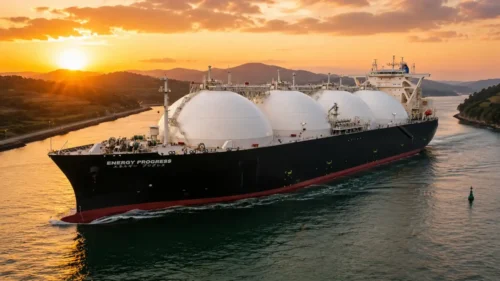
Geopolitical tension directly drove Friday’s market panic. Traders watched nervously as Brent Crude Oil prices jumped, finishing up 0.5% to $US100.60, or about $A139. At one point during the chaotic trading day, the oil price spiked by an alarming 2.9% before slowly sliding back down. Chris Weston, head of research at Pepperstone, pointed to reports that the United States and Iran had directly attacked each other. Weston noted this escalation increases the massive risk that Iran will reject US peace talks and keep the critical Strait of Hormuz completely closed to shipping traffic.
Weston detailed the specific military actions that spooked investors. He explained that US President Donald Trump revived a military initiative called Project Freedom. Soon after, news broke that US forces had attacked Iran at the Qasr port and Bandar Abbas. Iran immediately countered these moves by launching military strikes against three US destroyer vessels. Iranian officials also publicly claimed the United States had completely breached the strict terms of their recent ceasefire agreement. The sudden breakdown of peace efforts creates a highly volatile situation for global shipping lanes.
Interestingly, the rising oil prices did not help Australia’s major energy providers. The entire energy sector traded in the red alongside the rest of the market. Woodside shares lost 1.44% to hit $30.05. Santos shares matched that exact percentage decline, falling 1.44% to close at $7.52. Fuel retailer Ampol recorded a much smaller slip, edging down just 0.06% to sit at $34.20.
The major financial institutions led the steep market declines. Australia’s big four banks took a severe beating as investors shed financial stocks. Commonwealth Bank shares fell 1.85% to $175.91. Westpac suffered the most brutal sell-off among the majors, slumping 4.83% to $37.44. National Australia Bank dropped 2.91% to $38.36, and ANZ dragged the sector lower, falling 1.50% to $36.79. Retail shareholders and large institutions alike dumped bank shares amid offshore uncertainty.
Macquarie Group experienced a very strange day on the market. The investment and wealth management giant actually recorded its second-biggest annual profit ever, banking an enormous $4.85 billion. This massive figure represented a 30% jump compared to full-year 2025. The company’s biggest division, commodities and global markets, saw earnings surge 49% to $4.2 billion. Meanwhile, the banking and financial services wing added another $1.6 billion to the total profits. Despite these incredible financial results, Macquarie shares fell 1.09% to $239.23 as broader market panic dragged the stock lower.
The utilities sector also weighed heavily against the overall market performance. Investors backed away from major power providers throughout the afternoon. Origin Energy shares slumped 2.32% to $11.38. The APA Group dragged 1.99% lower to $10.32, and AGL gave up 1.09% to close the week at $9.06.
Despite the sea of red, a few companies managed to post solid gains. News Corp shares jumped an impressive 2.61% to $43.17. The media giant pleased investors by releasing strong third-quarter revenues, which climbed 9% to $US2.19 billion, or about $A3.03 billion. The company also announced its net income rose 13% to $US121 million, which translates to $A168 million.
Real estate advertising giant REA Group also defied the market crash. REA shares added 1.38% to hit $176.89. The company announced its revenue grew by 11% to $398 million. On top of that, management reported a 16% increase in underlying earnings to $220 million. This result proved that the local property market still holds value for investors even on a bad day.
Block, the parent company of the popular buy-now-pay-later service Afterpay, enjoyed a very strong trading session. Shares in Block firmed up 4.80% to reach $103.06. The stock rally followed a major company announcement revealing that gross profits surged to $US2.91 billion, or $A4.03 billion, during the very first quarter of 2026.
Finally, wagering giant Tabcorp faced an absolute disaster on the trading floor. The company continued a brutal sell-off, plunging a further 14.20% to just $0.76 per share. The stock crash occurred after Tabcorp informed the market on Thursday that the financial intelligence agency, Austrac, had issued the company a formal notice. Austrac is investigating the betting company for its compliance with strict anti-money laundering and counter-terrorism financing obligations.