
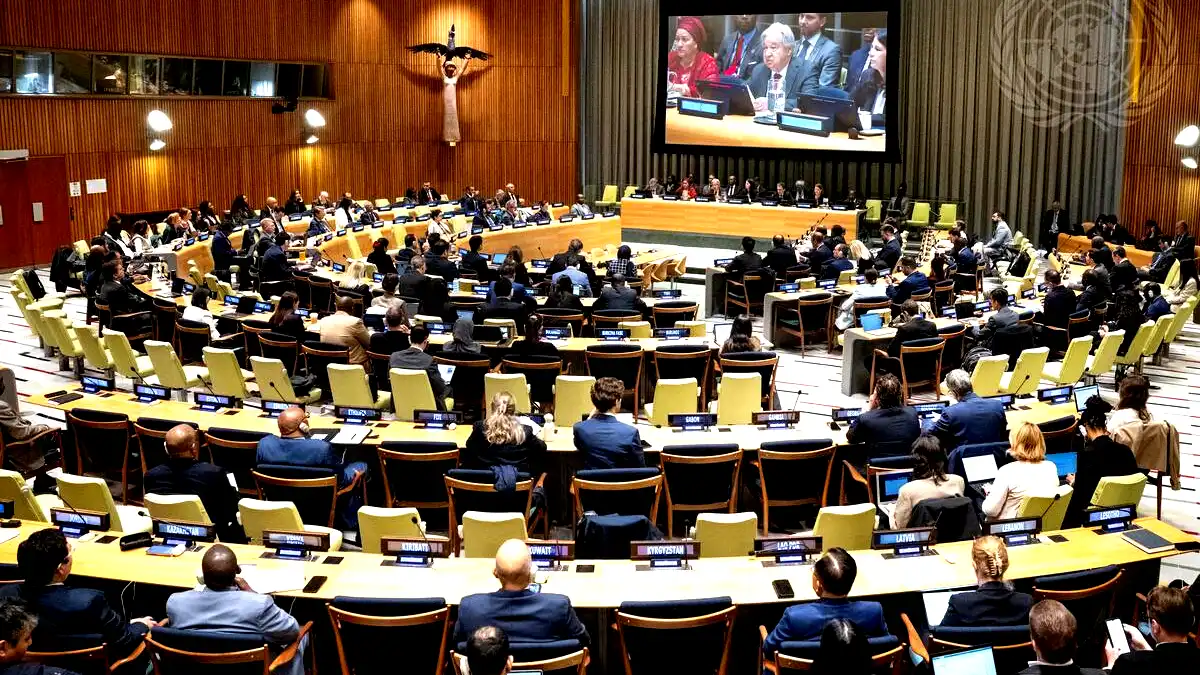
United States officials and several Gulf Arab nations are writing a brand new United Nations Security Council resolution. The document strongly condemns Iran for completely blocking the Strait of Hormuz. Iran closed the vital waterway recently after military forces from the United States and Israel launched a massive bombing campaign against Iranian targets. United States Ambassador to the United Nations Mike Waltz shared the details of the new diplomatic push on Monday.
Ambassador Waltz told reporters that diplomats will negotiate the final details of the document this week. The United States is partnering directly with Bahrain to draft the core text of the resolution. Other powerful Middle Eastern nations, including Kuwait, Qatar, the United Arab Emirates, and Saudi Arabia, are providing direct advice and key suggestions. These countries rely heavily on the Strait to sell their valuable oil to the rest of the world.
This new attempt comes exactly one month after a major diplomatic failure at the United Nations. Last month, American diplomats tried to pass a much broader resolution to force Iran to open the waters. However, Russia and China used their permanent veto power to block the document. Washington originally hoped that the first resolution would unite the globe and restore free navigation for massive cargo ships.
To avoid another veto, the new draft takes a completely different approach. Waltz explained that the current document serves as a much narrower effort. Instead of tackling the entire war, the text focuses purely on the immediate dangers to commercial trade. Diplomats hope this highly focused strategy will convince Russia and China to step aside and let the vote pass.
The resolution makes several strict demands. First, it requires Iran to instantly stop all attacks on civilian merchant ships passing through the area. Second, the document demands that Iranian forces stop forcing cargo ships to pay illegal tolls. Iran recently began charging steep fees to commercial vessels navigating the narrow waters, creating a heavy financial burden for global shipping companies.
The document also tackles a terrifying physical threat. The resolution orders the Iranian military to immediately stop placing explosive sea mines across the busy shipping lanes. Furthermore, it demands that Iranian commanders hand over the exact coordinates and locations of all the underwater explosives they have already dropped. Clearing these hidden weapons remains the only way to make the waters genuinely safe for standard cargo ships.
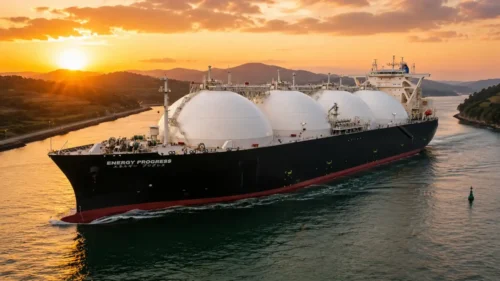
The Strait of Hormuz handles roughly 20 percent of the world’s daily oil supply. Every single day, tankers carry nearly 20 million barrels of crude oil through this tiny strip of water. When Iran blocked the passage, global energy markets panicked immediately. Gas prices spiked worldwide, costing drivers an extra $2 or $3 per gallon in some regions over the last few months.
Ambassador Waltz highlighted the severe economic damage this blockade causes worldwide. He noted that the illegal tolls and dangerous sea mines hurt everyday people everywhere by raising the cost of basic goods. However, he specifically pointed out that the blockade deeply damages Asian economies. Countries like Japan, South Korea, and China buy millions of barrels of oil from the Gulf nations every single month. The hidden sea mines put their energy security at massive risk.
Diplomats are rushing to pass this resolution while a fragile peace holds the region together. Right now, a temporary ceasefire keeps the American, Israeli, and Iranian militaries from shooting at each other. United States officials want to use this quiet window to solve the shipping crisis before the shooting starts again. They hope that clearing the water will lower the temperature across the entire Middle East.
Negotiations will continue inside the United Nations headquarters over the next 5 days. American diplomats will hold private meetings with Russian and Chinese representatives to secure their votes. If the United States and its Gulf partners succeed, international mine-clearing ships could begin cleaning the strait within a few short weeks. The entire global energy market is waiting to see whether the diplomats can finally secure a deal.