

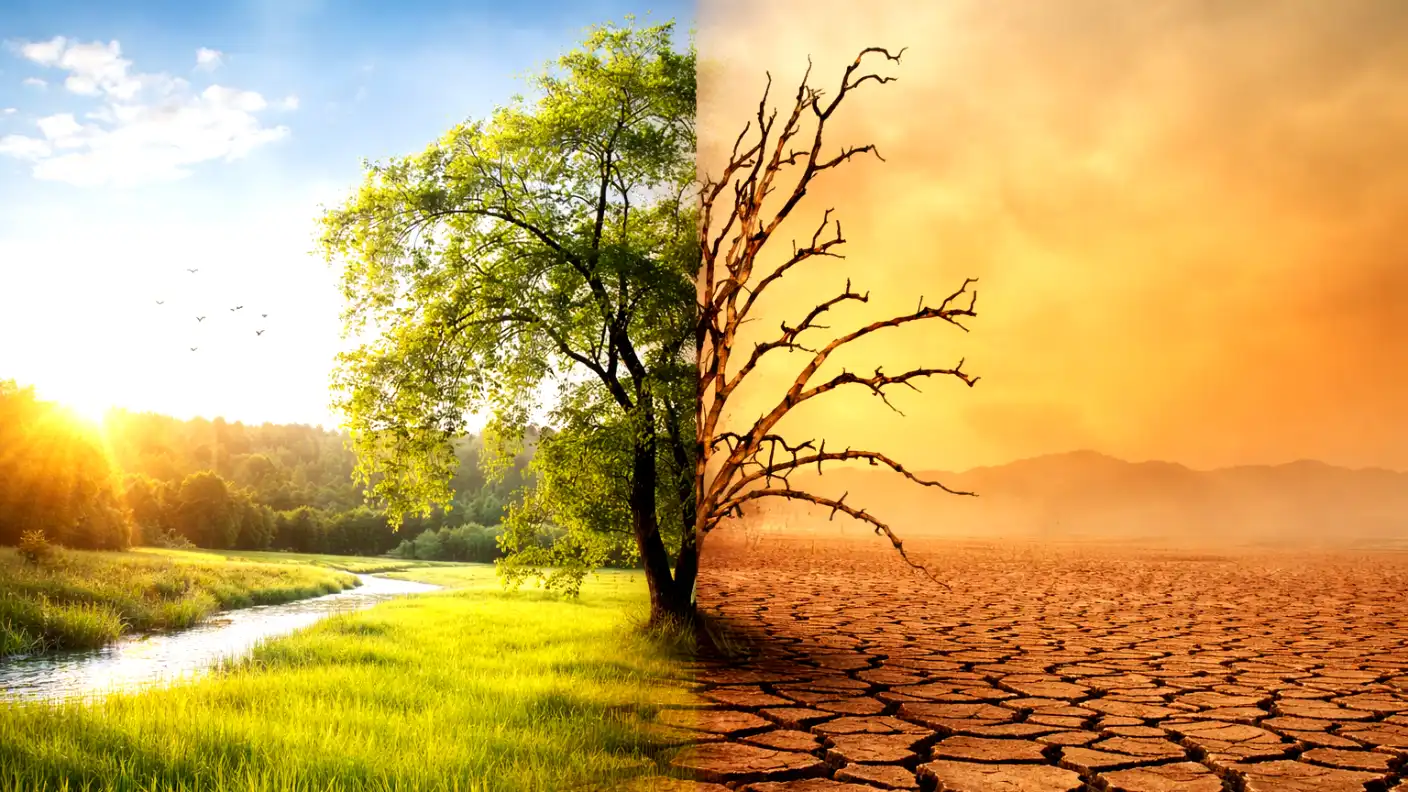
The undeniable reality of climate change has shifted from a distant scientific warning to an immediate, daily crisis affecting every corner of the globe. As greenhouse gas emissions continue to trap heat within the Earth’s atmosphere, the fundamental systems that support human civilization are being pushed to their absolute limits. We have entered an era defined by extreme weather, where historic heatwaves, catastrophic floods, and prolonged droughts are no longer anomalies but the new global baseline. This environmental destabilization is not merely an ecological tragedy; it is a profound economic and geopolitical threat. The continued impacts of climate change are systematically dismantling global agriculture, rapidly depleting vital natural resources, and fundamentally challenging the concept of energy security.
As the physical environment becomes increasingly volatile, the geopolitical landscape is mirroring this instability. Faced with unpredictable harvests and fragile energy grids, nations are increasingly turning inward. The fear of scarcity is driving a dangerous trend of resource hoarding and protectionism, fracturing global supply chains just when international cooperation is needed most. From the wheat fields of the global breadbaskets to the mining of critical minerals for the green energy transition, the fight for survival is reshaping international relations. Understanding this multifaceted crisis requires a deep examination of how extreme weather disrupts food production, threatens energy infrastructure, and triggers global resource anxieties. To navigate this perilous future, the global community must recognize the deep interconnectedness of climate, agriculture, and energy, moving away from isolationism toward comprehensive, resilient, and cooperative adaptation strategies.
The bedrock of human civilization has always been a stable climate that allows for predictable agricultural yields and resource extraction. However, the escalating severity of extreme weather events is fundamentally destabilizing these global systems.
The Relentless Assault of Extreme Weather on Global Agriculture
Agriculture is arguably the human endeavor most intrinsically linked to weather patterns and climatic stability. For thousands of years, farming communities have relied on predictable seasonal shifts, monsoon rains, and moderate temperatures to cultivate the crops that feed the world. Today, the rapid escalation of extreme weather is violently disrupting these cycles, turning the act of growing food into an increasingly precarious gamble. The global food supply chain, finely tuned to maximize efficiency, is proving highly vulnerable to the chaotic whims of a warming planet.
Extreme weather manifests most destructively through erratic precipitation patterns and temperature spikes, oscillating violently between severe aridity and catastrophic inundation. These sudden shifts devastate staple crops, undermine decades of agricultural progress, and threaten the food security of billions.
Droughts, Floods, and Crop Failures
The hydrological cycle has been fundamentally warped by the warming atmosphere. Because warmer air holds more moisture, rainfall is becoming increasingly concentrated in massive, destructive deluges, followed by agonizingly long periods of drought. In major agricultural hubs across the Americas, Europe, Asia, and Africa, farmers are watching crops wither under relentless heat domes, only to have the parched topsoil washed away by subsequent super-storms. The simultaneous failure of staple crops such as wheat, maize, rice, and soybeans across multiple regions poses a catastrophic threat to global caloric intake.
Furthermore, the extreme stress that heat places on plants reduces their nutritional value and makes them more susceptible to disease. The mechanisms by which extreme weather destroys agricultural output are multifaceted and deeply interconnected:
- Soil Degradation: Flash floods wash away nutrient-rich topsoil, while prolonged droughts bake the earth into an impermeable crust, rendering the land infertile for future planting seasons.
- Pest Proliferation: Warmer winters fail to kill off agricultural pests, allowing swarms of insects to expand their geographical territories and decimate crops that previously had no natural predators in those regions.
- Waterlogging and Root Rot: Unprecedented rainfall saturates the soil beyond its drainage capacity, depriving root systems of oxygen and causing massive crop losses before harvest.
- Heat Stress on Livestock: Extreme temperatures severely affect the health and reproductive capacity of livestock, reducing the global supply of dairy, meat, and poultry while driving up animal feed costs.
Beyond immediate weather disasters, the gradual warming of the planet is physically altering where and when food can be grown. This geographical shift is forcing farmers into a desperate race to adapt to an unrecognizable climate.
The Shift in Arable Land and Harvesting Seasons
As global temperatures rise, the traditional biomes that support specific types of agriculture are migrating toward the poles. Regions near the equator are becoming too hot and arid to support their historical staple crops, forcing a rapid, often chaotic geographical shift in global agriculture. While some northern regions are experiencing longer growing seasons, the soil quality and sunlight patterns in these areas are often insufficient to offset the massive agricultural losses in the traditional global breadbaskets.
This climatic shift is completely upending traditional planting and harvesting seasons. Farmers can no longer rely on the generational knowledge passed down through centuries. Unseasonable late frosts can destroy early-blooming fruit orchards, while unseasonably warm autumns can disrupt the dormancy periods required by many vital crops. This unpredictability creates massive financial instability for the agricultural sector, bankrupting smallholder farmers and consolidating food production into the hands of massive, multinational agribusinesses. The disruption of seasonal predictability ultimately leads to volatile food prices and empty supermarket shelves, disproportionately impacting the world’s most economically vulnerable populations.
Agriculture and energy production are both intrinsically tied to the availability of natural resources, the most critical of which is freshwater. As the climate warms, the global distribution and availability of these vital resources are being disrupted.
Dwindling Natural Resources and the Threat to Water Security
Water is the lifeblood of the global economy, essential not only for human consumption but for agricultural irrigation, industrial manufacturing, and energy generation. The climate crisis is effectively a water crisis. Global warming is accelerating the evaporation of surface water, shrinking vital lakes, and altering the snowpack and glacial melts that feed the world’s major river systems. As the water demand grows in tandem with the global population, the diminishing supply of freshwater is creating intense regional frictions and threatening the very foundation of societal stability.
Freshwater reserves are being drained at an unsustainable rate, masking the severity of the climate’s impact on surface water while setting the stage for future ecological collapse.
The Depletion of Freshwater Reserves
To compensate for the lack of reliable rainfall and shrinking surface water, nations are increasingly turning to underground aquifers. However, these subterranean reserves, which took millennia to accumulate, are being pumped dry in a matter of decades. In the world’s major agricultural basins, the relentless extraction of groundwater for crop irrigation is causing the physical sinking of landmasses, a process known as land subsidence. Once these aquifers are depleted or contaminated by saltwater intrusion—a growing threat as sea levels rise—the regions that rely on them will face absolute agricultural collapse.
The disappearance of mountain glaciers further exacerbates this crisis. Billions of people rely on the steady, seasonal meltwater from glacial ranges to sustain their rivers through the dry seasons. As these glaciers shrink and disappear, the seasonal flow of water becomes erratic, causing devastating downstream shortages. The rapid depletion of freshwater reserves impacts several critical areas of global survival:
- Drinking Water Scarcity: Major metropolitan areas are increasingly facing “Day Zero” scenarios in which municipal water supplies run entirely dry, leading to severe public health emergencies and social unrest.
- Agricultural Irrigation Collapse: Without access to reliable irrigation, modern high-yield farming is impossible, transforming fertile valleys back into arid wastelands and drastically reducing global food exports.
- Industrial Deceleration: Manufacturing processes, particularly those involving semiconductors, textiles, and heavy metallurgy, require immense volumes of water; water scarcity directly forces factory shutdowns and supply chain bottlenecks.
The impacts of climate change are not confined to the land and freshwater systems; the world’s oceans are absorbing the brunt of global warming. This heat absorption leads to ocean acidification and the destruction of marine ecosystems, threatening the primary protein source for billions of people.
The Ripple Effect on Marine and Coastal Resources
The world’s oceans serve as the ultimate climate buffer, absorbing massive amounts of carbon dioxide and the vast majority of the excess heat trapped by greenhouse gases. However, this buffering comes at a catastrophic cost to marine resources. The absorption of carbon dioxide lowers the pH of the ocean, a process known as ocean acidification. This chemical alteration severely impairs the ability of calcifying organisms, such as corals and shellfish, to build their skeletons. The collapse of coral reefs, which serve as nurseries for a large share of marine life, directly threatens the global fisheries that provide essential protein and livelihoods for billions of people living in coastal regions.
Furthermore, marine heatwaves are driving fish populations away from the equator and toward cooler, deeper waters. This massive migration of marine resources is completely disrupting the global fishing industry. Traditional fishing nations are watching their territorial waters empty out, while the sudden influx of fish into new territories sparks geopolitical disputes over fishing rights. The degradation of marine environments not only destroys biodiversity but also removes a critical pillar of global food security, placing even greater pressure on the already strained terrestrial agricultural systems.
The conversation surrounding climate change is inextricably linked to how the world produces and consumes power. Energy security faces unprecedented threats not just from geopolitical tensions but also from the changing climate itself.
Energy Security in an Era of Climate Instability
Energy security—the uninterrupted availability of energy sources at an affordable price—is a fundamental requirement for modern civilization. Historically, threats to energy security were viewed through the lens of political embargoes, armed conflict, or trade disputes. Today, however, extreme weather has emerged as one of the most formidable adversaries to global energy stability. The infrastructure designed to power our cities, heat our homes, and fuel our industries is proving dangerously fragile in the face of the very climate change that fossil fuel consumption has caused.
Fossil fuel refineries, power plants, and transmission lines were built to withstand historical weather patterns that are no longer relevant. Extreme heat waves, freezing storms, and rising sea levels are exposing the acute physical vulnerabilities of traditional energy grids.
The Vulnerability of Traditional Energy Infrastructure
The traditional energy sector is highly dependent on environmental stability. Thermal power plants, including coal, natural gas, and nuclear facilities, require immense volumes of cool water to regulate their core temperatures and generate steam. During severe droughts and heatwaves, river levels drop, and water temperatures rise to levels where it is no longer safe or effective for cooling. This forces power plants to dial back production or shut down entirely, exactly when public demand for electricity—driven by the need for air conditioning—is at its peak. This agonizing paradox frequently leads to rolling blackouts and grid failures during lethal heat events.
Additionally, the physical infrastructure that transports energy is under constant assault. High-velocity hurricanes and unprecedented super-storms routinely destroy offshore oil rigs and decimate coastal refineries. Terrestrial transmission lines, the arteries of the electrical grid, are highly susceptible to being toppled by erratic windstorms, buried by unprecedented blizzards, or melted by sprawling, climate-fueled wildfires. As extreme weather events become more frequent, the cost of repairing and maintaining this vulnerable legacy infrastructure is skyrocketing, threatening the economic stability of the global energy market.
Shifting away from carbon-intensive power sources is the ultimate solution to the climate crisis, but this transition is fraught with security challenges of its own. The race to build renewable infrastructure is creating fierce competition for the raw materials necessary to harness solar and wind power.
The Transition to Renewables and Its Bottlenecks
The global mandate to decarbonize the economy has accelerated the transition toward renewable energy sources like wind, solar, and hydroelectric power. While these technologies are essential for mitigating further climate change, integrating them into the global energy matrix presents complex logistical and security challenges. Renewable energy is inherently intermittent; the sun does not always shine, and the wind does not always blow. Achieving true energy security in a renewable-dominant future requires developing massive, grid-scale battery storage solutions to capture excess energy and release it during periods of high demand.
The creation of these new technologies relies heavily on a complex, globalized supply chain for critical minerals and rare earth elements, introducing a new dimension of geopolitical vulnerability. Navigating the transition to a renewable energy grid requires overcoming several significant hurdles:
- Supply Chain Constraints for Critical Minerals: The manufacturing of solar panels, wind turbines, and high-capacity batteries requires immense quantities of lithium, cobalt, nickel, and copper, materials that are concentrated in a few specific geographic regions.
- Grid Storage Capacity: The current global battery storage capacity is far insufficient to support the full transition away from fossil-fuel baseload power, necessitating massive investments in energy storage technology.
- Upgrading Legacy Transmission Lines: Existing electrical grids are antiquated and incapable of handling the decentralized, two-way flow of electricity generated by millions of individual solar panels and wind farms, requiring a complete overhaul of global transmission infrastructure.
- Vulnerability to Weather Extremes: While renewables are the solution to climate change, they too can be damaged by extreme weather; solar panels can be destroyed by massive hail, and wind turbines must be shut down during category-five cyclonic storms.
As extreme weather disrupts agriculture and threatens energy grids, fear and uncertainty have begun to dictate international trade policies. Instead of fostering cooperation, the climate crisis is sparking a dangerous era of protectionism and resource hoarding.
The Age of Resource Hoarding: A Fractured Global Response
In times of global crisis, the ideal human response is international solidarity and the equitable sharing of resources. However, the realities of climate-induced scarcity are driving the international community in the opposite direction. As nations witness the fragility of their domestic food and energy supplies, a survivalist mentality has taken root. The fear of domestic shortages and civil unrest has prompted governments to aggressively prioritize their own populations, leading to a surge in resource nationalism. This inward-looking approach fractures the global economy, weaponizes trade, and disproportionately harms developing nations that rely heavily on imports to survive.
When domestic harvests fail due to extreme weather, nations instinctively prioritize protecting their own populations. This knee-jerk reaction leads to sweeping export bans on vital agricultural commodities, sparking global food price inflation and panic.
Protectionism and Food Export Bans
The global food market is highly integrated, meaning that a weather-related crop failure in one hemisphere instantly affects the price of bread in another. When extreme heat or floods decimate yields of major agricultural exporters, these nations frequently impose sudden, sweeping bans on the export of staple crops such as wheat, rice, and cooking oils. The rationale is to keep domestic prices low and prevent food riots. However, the global impact of these protectionist policies is devastating. Export bans artificially constrict the global supply of food, causing prices on international markets to skyrocket overnight.
For nations that lack the arable land to feed their own populations, these export bans are catastrophic. Developing countries are overpriced in the global market, leading directly to severe food insecurity, malnutrition, and famine. Food hoarding triggers a domino effect; as one nation closes its borders to trade, others panic and do the same, completely paralyzing the global agricultural supply chain. This climate-driven food nationalism threatens to undo decades of progress in the fight against global poverty and hunger.
The global energy transition has sparked a new geopolitical arms race, not for fossil fuels, but for the rare earth elements and critical minerals required for green technology. Nations are hoarding these resources to secure their own energy independence, leaving developing countries at a severe disadvantage.
The Scramble for Critical Minerals and Energy Dominance
Just as the 20th century was defined by the geopolitical struggle for control over oil, the 21st century is being defined by the scramble for the critical minerals necessary for the renewable energy transition. Nations that possess vast reserves of lithium, cobalt, and rare earth elements recognize that they hold the keys to the future of global energy security. To maximize their leverage and ensure their domestic industries are supplied first, many of these nations are heavily restricting the export of raw minerals and demanding that foreign companies build processing and manufacturing plants within their borders to access the resources.
Wealthy nations, terrified of being left behind in the green energy transition, are aggressively stockpiling these materials and engaging in exclusive, bilateral trade agreements that lock poorer nations out of the market. The geopolitical hoarding of resources is manifesting in several highly disruptive ways across the global market:
- Export Quotas on Raw Materials: Nations artificially limit the amount of critical minerals that can be sold abroad to manipulate global prices and force domestic industrialization.
- Monopolization of Refining Capabilities: Strategic efforts by global superpowers to control not just the mining, but the highly complex chemical refining processes required to make rare earth elements usable for technology.
- Aggressive Stockpiling by Wealthy Nations: Wealthy countries utilize their vast financial resources to buy up global reserves of critical minerals and agricultural products, ensuring their own security while creating artificial scarcity for the rest of the world.
- Weaponization of Energy Exports: Using the supply of natural gas, oil, or critical technology as geopolitical leverage to force other nations to comply with specific political or diplomatic demands.
Despair in the face of the climate crisis is not a viable strategy; humanity must pivot toward proactive, systemic transformation. Ensuring future resource and energy security will require an unprecedented level of global solidarity and technological innovation.
Forging a Path Forward: Mitigation, Adaptation, and Cooperation
The compounding crises of extreme weather, agricultural disruption, and resource hoarding paint a grim picture of the global future. However, humanity is not powerless against these forces. Averting the worst-case scenarios requires a dual-pronged approach: aggressive mitigation to halt the progression of climate change by reducing emissions, and rapid adaptation to survive the environmental changes that are already locked in. The era of resource nationalism must be replaced by a renewed commitment to multilateral cooperation, recognizing that in a highly interconnected world, no nation can secure its own survival by sacrificing its neighbors.
To secure the global food supply against the ravages of extreme weather, the agricultural sector must undergo a radical reinvention. This involves embracing cutting-edge agritech, restoring soil health, and transitioning away from fragile monocultures.
Building Climate-Resilient Agricultural Systems
Adapting global agriculture to a volatile climate requires abandoning the industrial farming practices that have severely degraded the environment. The future of food security lies in climate-resilient agricultural systems. This involves the widespread adoption of precision agriculture, utilizing satellite imagery, AI, and soil sensors to optimize the use of water and fertilizers. Genetic engineering and advanced crop breeding must be deployed to develop staple crops that are intrinsically resistant to drought, extreme heat, and emerging pests.
Furthermore, farming practices must pivot toward regenerative agriculture, which focuses on rebuilding soil organic matter and restoring degraded biodiversity. Healthy, carbon-rich soil acts as a sponge, drastically improving water retention during droughts and preventing erosion during floods. Diversifying the types of crops grown globally will also build resilience by shifting away from a dangerous overreliance on a handful of vulnerable staple grains toward highly adaptable, localized food sources.
Energy security in a volatile climate requires grids that are decentralized, diversified, and highly adaptable. Governments and the private sectors must collaborate to build infrastructure capable of withstanding the increasingly violent forces of nature.
Strengthening Global Energy Grids
To ensure that the lights stay on and the global economy continues to function, the world’s energy infrastructure must be drastically hardened and modernized. The era of relying on a few massive, highly vulnerable centralized power plants is coming to an end. The future of energy security lies in decentralization. By utilizing smart grid technology, energy systems can instantly detect physical damage caused by extreme weather and automatically reroute power around damaged infrastructure, preventing cascading blackouts.
Additionally, the physical infrastructure of the grid—transmission towers, substations, and coastal facilities—must be physically fortified to withstand category-five storms, historic flooding, and unprecedented heatwaves. Building a climate-resilient energy future relies on the implementation of several key strategies:
- Microgrid Development: Creating localized, self-sufficient energy networks powered by local solar and wind, capable of disconnecting from the main grid to maintain power during regional blackouts.
- Cross-Border Energy Sharing: Developing massive, international high-voltage transmission lines that allow nations experiencing extreme weather to import clean energy from neighboring countries experiencing favorable renewable conditions.
- Investing in Next-Generation Battery Storage: Scaling up the research and deployment of solid-state batteries, flow batteries, and thermal storage to capture renewable energy and provide reliable, uninterrupted baseload power.
- Diversification of the Supply Chain: Fostering international treaties that guarantee the equitable, transparent, and sustainable mining and distribution of the critical minerals required for the green energy transition.
Conclusion
The global crisis driven by climate change and extreme weather is the defining challenge of our time. It is a complex, deeply interconnected web of vulnerabilities within which a drought in one hemisphere can trigger a food crisis in another, and a heatwave can simultaneously cripple agricultural output and collapse energy grids. The continued impacts of this environmental destabilization are forcing a profound reckoning regarding how humanity shares, manages, and secures its most vital resources. The current trend toward resource hoarding, export bans, and energy protectionism is a reactionary and ultimately self-destructive response to a problem that transcends all borders.
To navigate this precarious era, the global community must recognize that true security—whether in food, water, or energy—cannot be achieved in isolation. The path forward demands unparalleled technological innovation to build climate-resilient agricultural systems and robust, decentralized renewable energy grids. More importantly, it requires a fundamental shift in international diplomacy, moving away from resource nationalism toward a cooperative, equitable, and sustainable global framework. The fight against climate change is not merely an environmental crusade; it is the ultimate fight for global stability, prosperity, and the enduring survival of human civilization.















