
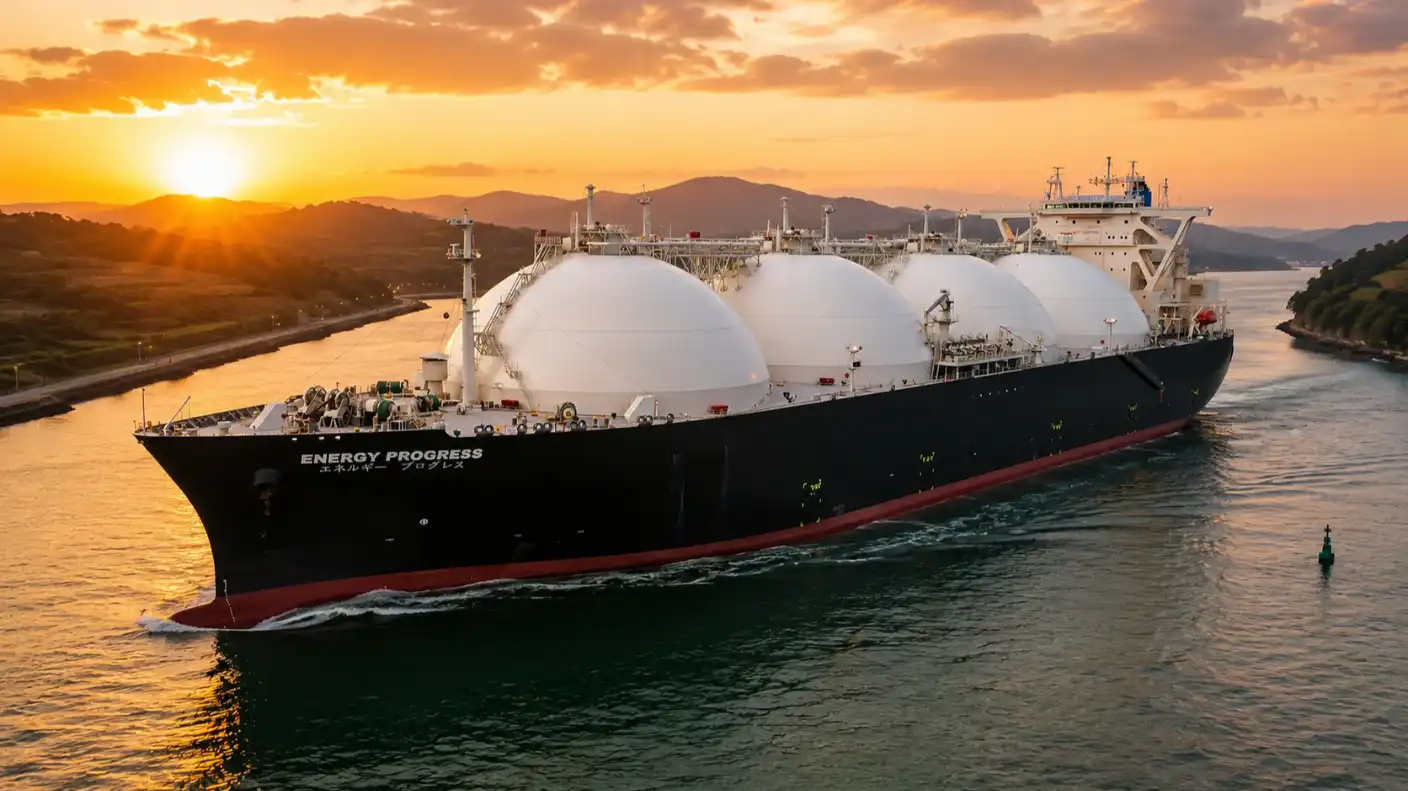
A fragile, highly anticipated peace agreement in the Middle East has collapsed into active military conflict after a series of hostile naval attacks targeted commercial vessels near the Persian Gulf. In the early hours of Tuesday, a Qatari-owned liquefied natural gas carrier came under a suspected drone strike off the coast of Oman, triggering a severe fire that put the massive vessel at risk of exploding. The high-stakes assault, which occurred alongside separate strikes on a Saudi-flagged oil tanker and a third commercial ship, has prompted the United States military to launch a series of powerful retaliatory strikes inside Iran, ending a brief period of regional de-escalation and sending global energy markets into a chaotic spiral.
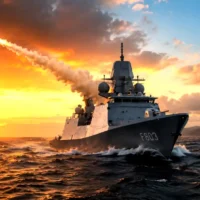
The primary target of the overnight strike was the Al Rekayyat, a high-tech carrier loaded with highly volatile liquefied natural gas. The vessel, owned by Qatar’s state-run shipping firm Nakilat, was transiting the Gulf of Oman roughly eight nautical miles, or 15 kilometers, east of Limah, Oman, when an unknown projectile struck its port side. The impact triggered a major fire in the engine room, filling the space with thick smoke and disabling the ship’s power systems. The captain issued an urgent “Mayday” distress signal, warning that the heavy smoke made it impossible to immediately assess the extent of the damage. While the ship’s 29 crew members were safely evacuated, the vessel remained stationary and at risk of a catastrophic explosion.
The attack on the Qatari gas carrier was part of a highly coordinated, 24-hour campaign targeting international shipping lanes. Maritime security sources confirmed that a Saudi-flagged crude oil tanker, believed to be the supertanker Wedyan, also sustained significant physical damage in a separate attack off the Omani coast. Managed by the prominent Saudi shipping firm Bahri, the vessel was departing the region when it was hit, though the precise cause of the damage remains unconfirmed. A third commercial ship was also hit by a projectile in the same area, marking the highest density of hostile maritime incidents since the United States and Iran initiated their tentative truce in late June.
With the Al Rekayyat stranded near the narrow entrance of the Strait of Hormuz, international salvage teams are working frantically to stabilize the vessel. Two specialized ships, including a heavy tugboat and a maritime service vessel, are currently positioned alongside the gas carrier to help contain the remaining engine room fire. Industry specialists noted that the ship’s main LNG storage tanks remain completely intact, with no signs of leakage or structural breaches. Experts warn that as long as the vessel is not subjected to any further attacks, it is highly likely to remain stable, but emphasize that any breach of a main liquefied gas tank would result in an absolute environmental and physical catastrophe for the region.
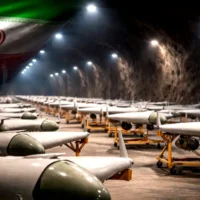
The rapid breakdown of the ceasefire triggered an immediate, heavy military response from Washington. On Tuesday night, U.S. Central Command announced that American warplanes had executed a series of powerful air strikes against military installations inside Iran. U.S. defense officials accused the Iranian Revolutionary Guard Corps of executing unwarranted and dangerous attacks against innocent civilian crews in international waters. Washington defended the retaliatory operation as a necessary and lawful step to impose high costs on those who threaten the global freedom of navigation, warning that the U.S. is prepared to revoke the temporary licenses it recently granted to allow Iran to sell its oil on the global market.
The targeting of a Qatari vessel represents a major diplomatic disaster for regional peace efforts, as Qatar has functioned as the primary mediator in the secret negotiations between the United States and Iran. The strike marks the first time that a Qatari gas carrier has been targeted since the wider Iran war erupted on February 28. In a strongly worded public statement, Qatari Foreign Ministry spokesperson Majed Al Ansari condemned the attack as a grave and blatant violation of international law, declaring that Tehran bears full legal responsibility for the physical damage. To demonstrate its displeasure, the Qatari government officially summoned the deputy Iranian ambassador to deliver a formal, high-stakes protest against the targeting of its sovereign merchant fleet.
The Iranian government has reacted to the accusations with characteristic defiance, choosing to blame the United States for the breakdown in security. At a diplomatic briefing in Tehran, foreign ministry officials argued that Washington’s efforts to establish alternative shipping corridors along the Omani coastline constitute a direct breach of the recently signed peace memorandum. Tehran claims the agreement was specifically worded to leave the management of the Strait of Hormuz to Iran and Oman, allowing the coastal state to collect regulatory fees from transiting vessels. Iranian authorities asserted that the Qatari gas carrier came under attack only after its captain repeatedly ignored verbal instructions and attempts by naval units to redirect the vessel.
In response to the volatile security environment, the U.S. Navy-led Joint Maritime Information Center has officially raised the threat level for all vessels transiting the Strait of Hormuz to “severe,” its highest warning category. The maritime security agency advised commercial operators to exercise extreme vigilance, warning them to expect a highly dense military presence, heavy congestion along temporary shipping corridors, and aggressive hailing by the Iranian navy. The center warned that the risk of sudden, hostile action remains elevated, leaving many international shipping lines with no choice but to route their vessels around the southern tip of Africa, which represents a minor 1.5% adjustment in global transit times but adds millions of dollars in operating costs.
The sudden re-escalation of the military conflict has sent shockwaves through global financial and commodity markets. Following the news of the tanker attacks, Brent crude futures jumped by more than 3%, reclaiming a key trading position above the $80 mark as traders factored the geopolitical risk premium back into energy prices. Simultaneously, European natural gas futures spiked by 6% on Tuesday, reflecting deep anxieties that a prolonged blockade of Qatari gas shipments will trigger severe fuel shortages ahead of the winter heating season. This sudden market volatility has wiped out weeks of economic optimism, reminding global leaders of their extreme vulnerability to energy chokepoints.
Ultimately, the devastating attacks on the Al Rekayyat and the Wedyan have proven that a lasting peace in the Middle East cannot be secured through paper agreements alone. While the digital signing of the Islamabad Memorandum of Understanding was celebrated as a historic diplomatic breakthrough, the physical reality on the ground shows that the Strait of Hormuz remains a highly volatile flashpoint. As salvage teams work to prevent a catastrophic gas explosion and American warplanes target Iranian military assets, the prospects for a permanent treaty have never been more uncertain. Until all parties can agree on a shared, verified framework for maritime navigation, the world’s most critical energy corridor will remain a dangerous war zone, keeping global commerce on a knife-edge.