

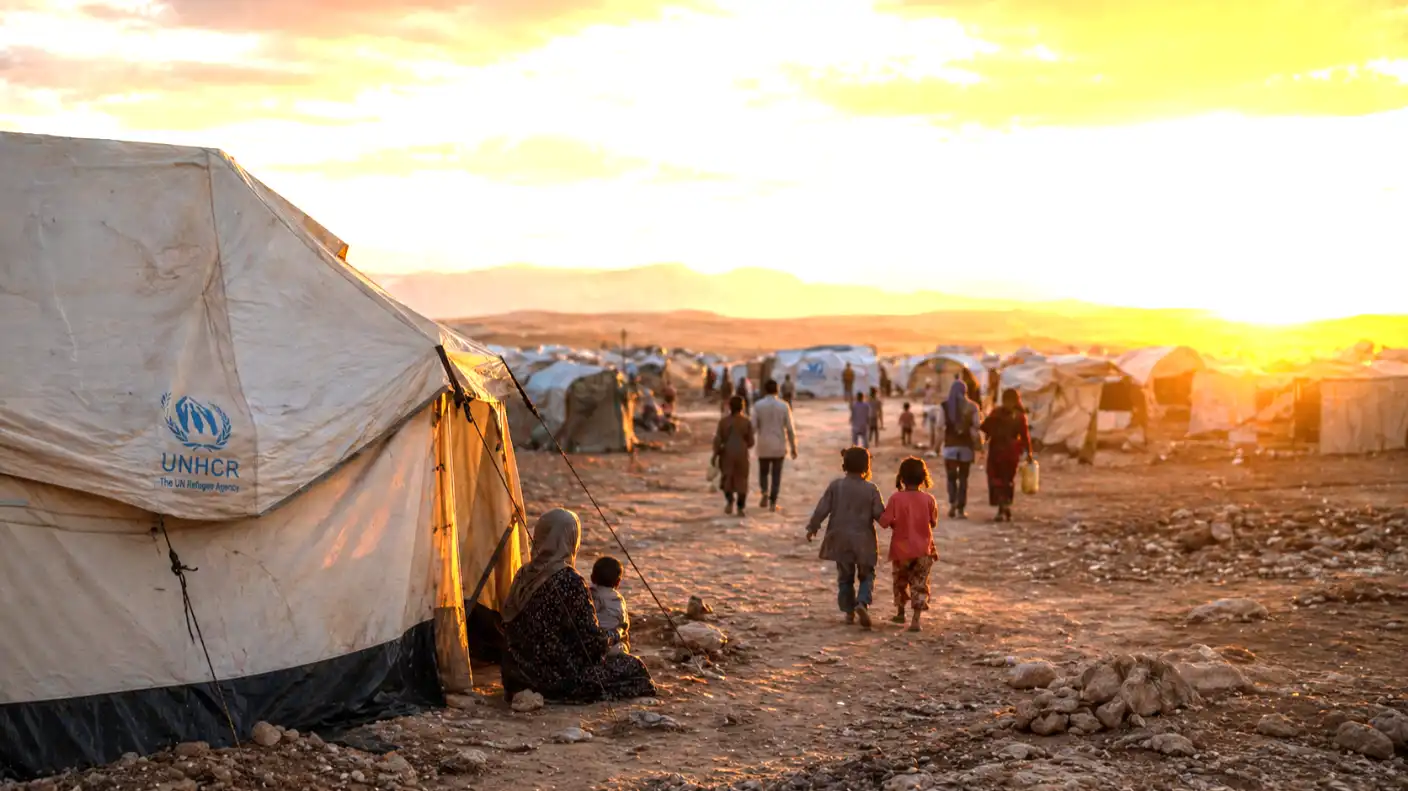
The movement of people across borders is a phenomenon as old as human history, driven by the timeless pursuit of safety, prosperity, and a better life. However, the contemporary era has witnessed a dramatic and unprecedented escalation in human displacement, transforming global migration into one of the most pressing humanitarian and political challenges of our time. Millions of individuals are currently fleeing their homes due to a complex convergence of armed conflict, political persecution, economic collapse, and the increasingly devastating impacts of climate change. Yet, as the number of asylum seekers and refugees reaches historic highs, the international response has grown increasingly fractured and defensive. We are now witnessing a profound global refugee and deportation crisis, characterized by significant shifts in immigration policies across the Western world.
These policy shifts mark a stark departure from the post-World War II consensus on asylum and international protection. In the United States, immigration enforcement has pivoted toward aggressive internal deportation drives and hardened border security measures aimed at deterring unauthorized entry. Simultaneously, across the Atlantic, European nations are heavily focused on refugee return efforts, the externalization of their borders, and the renegotiation of what constitutes a “safe” country of origin. These restrictive measures are largely driven by surging populist political movements, domestic economic anxieties, and a growing public weariness regarding the integration of large migrant populations. This article provides a comprehensive global view of this escalating crisis, examining the shifting immigration paradigms in the U.S. and Europe, the burden placed on developing nations, and the profound humanitarian and socio-economic consequences of a world rapidly closing its doors.
The Evolving Landscape of Global Human Displacement
To understand the current crackdown on immigration, it is essential first to comprehend the sheer scale and changing nature of global human displacement. The modern refugee crisis is not confined to a single geographic region or a solitary geopolitical conflict; it is a decentralized, multi-faceted emergency.
The drivers of this displacement are compounding and intersecting, creating complex emergencies that defy simple policy solutions.
The Surge in Global Asylum Seekers
The global community is currently grappling with the highest number of displaced persons ever recorded by international humanitarian organizations. Across the Middle East, prolonged civil wars and sectarian violence have decimated national infrastructures, forcing millions to seek refuge in neighboring countries and beyond. In various regions of Africa, political instability, militant insurgencies, and economic stagnation have triggered massive exoduses of young, working-age populations desperate for survival and opportunity. Similarly, parts of Latin America and Eastern Europe have seen sudden, massive outflows of people due to gang violence, collapsing state institutions, and sudden geopolitical invasions. As these diverse groups of asylum seekers converge on international borders, the sheer volume of processing requests has overwhelmed traditional immigration systems, leading to immense backlogs, prolonged detention, and growing political frustration in destination countries.
The Intersection of Climate and Conflict
Adding a highly unpredictable and rapidly expanding dimension to this crisis is climate-induced migration. While international legal frameworks like the 1951 Refugee Convention specifically protect those fleeing targeted persecution and war, they currently offer no legal protection for “climate refugees.” Yet, changing environmental conditions are acting as a massive threat multiplier. Severe, prolonged droughts are destroying agricultural livelihoods, rising sea levels are threatening coastal communities, and extreme weather events are displacing millions overnight. When vital natural resources such as water and arable land become scarce, localized conflicts inevitably erupt, which in turn drives further displacement. This intersection of climate change and violent conflict guarantees that the flow of displaced persons will only increase in the coming decades, demanding a fundamental rethinking of how the global community defines and accommodates those seeking refuge.
The United States’ Hardline Shift on Immigration
The United States, a nation whose very identity is deeply intertwined with a history of immigration, is currently experiencing a profound and highly polarized ideological shift regarding border control. Facing surges of migrants at its southern border, the U.S. government has increasingly turned to stringent deterrence strategies.
These policies reflect a growing domestic demand for definitive border security, resulting in aggressive enforcement mechanisms that extend deep into the country’s interior.
Accelerated Deportation Drives and Border Control
In recent times, the United States has significantly ramped up its internal deportation drives, utilizing vast resources to locate, detain, and remove individuals living within the country without legal authorization. These enforcement operations are often highly visible and intensely controversial, targeting not only recent border crossers but also individuals who have resided in the U.S. for years, established deep community roots, and contributed to the local economy. The mechanisms of these deportation drives are multifaceted, relying on expanded funding for immigration enforcement agencies, increased cooperation—and sometimes intense conflict—between federal agents and local law enforcement, and the use of expedited removal processes that bypass traditional immigration court hearings. Concurrently, the physical and technological fortification of the border continues to expand, featuring enhanced surveillance systems, drone patrols, and physical barriers intended to funnel migrants toward highly restricted ports of entry.
The Legal and Human Rights Implications in America
The aggressive escalation of deportation drives in the United States has sparked widespread alarm among human rights organizations and legal scholars. The primary concern revolves around the erosion of due process. Immigration courts are burdened with a staggering backlog of cases, meaning that asylum seekers often wait years for a hearing, while those caught in expedited removal processes may be deported back to dangerous environments with little to no legal representation.
The human rights implications of these American policies manifest in several deeply concerning ways:
- The separation of families, where parents are deported while their children—often birthright citizens—are left behind in the United States.
- The prolonged use of immigration detention facilities, which frequently face allegations of overcrowding, inadequate medical care, and poor living conditions.
- The return of vulnerable individuals to countries heavily controlled by cartels and organized crime essentially results in a death sentence for those denied asylum.
- The creation of a pervasive atmosphere of fear within immigrant communities leads to underreporting of crimes and a reluctance to seek necessary medical care or public services.
Europe’s Shifting Stance on Refugees and Asylum
Across the Atlantic, the European Union is navigating its own profound crisis of identity and policy. Following historic influxes of refugees that tested the limits of European solidarity, the political pendulum has swung sharply toward restriction, deterrence, and removal.
European nations are increasingly focused on reducing their hosting burdens through complex geopolitical maneuvers and stringent domestic policy overhauls.
The Push for Refugee Repatriation and Return Efforts
A cornerstone of Europe’s current immigration strategy is the aggressive push for refugee repatriation and return. As conflicts in certain regions are deemed to have stabilized by European governments—regardless of the actual reality on the ground—host nations are increasingly revoking temporary protection statuses. This policy shift means that refugees who have spent years integrating into European societies, learning the language, and finding employment are suddenly facing the threat of forced return to their countries of origin. The implementation of these return policies is highly controversial, as human rights advocates argue that declaring a nation “safe” for return is often a politically motivated decision rather than an objective assessment of human security. Furthermore, executing these returns requires complex bilateral agreements with the countries of origin, many of which are reluctant to accept the mass return of their citizens.
The Externalization of European Borders
To prevent asylum seekers from ever reaching European soil, the EU has aggressively pursued a strategy known as the “externalization of borders.” This involves shifting responsibility for border control and asylum processing to third countries outside the European continent.
This strategy relies heavily on funding and empowering foreign entities to intercept migrants before they can cross the Mediterranean or enter European territory. The primary tactics utilized in this externalization strategy include:
- Providing massive financial incentives and border security equipment to North African and Middle Eastern nations to intercept and detain migrants on their own soil.
- Exploring controversial bilateral agreements designed to physically relocate asylum seekers who arrive in Europe to processing centers in third countries, effectively outsourcing the legal asylum process.
- Increasingly penalizing and criminalizing the activities of non-governmental organizations (NGOs) that operate search and rescue missions in the Mediterranean Sea.
- Deploying advanced surveillance technology and reinforced border forces along the external perimeters of the Schengen Area to physically repel unauthorized entries.
The Impact on Developing Nations and Transit Countries
While the political discourse surrounding the global refugee crisis is overwhelmingly dominated by the policy shifts of wealthy Western nations, the demographic reality is vastly different. The true weight of human displacement does not fall upon the United States or Europe.
It is the developing nations of the Global South that host the overwhelming majority of the world’s refugees, absorbing immense economic and social pressures.
Overburdened Host Nations in the Global South
Contrary to popular Western narratives, over eighty percent of the world’s refugees and displaced people remain in developing countries that border conflict zones. Nations in the Middle East, South America, and Sub-Saharan Africa are hosting millions of displaced individuals, despite struggling with their own domestic challenges of poverty, high unemployment, and fragile infrastructure. The presence of massive refugee populations places an extraordinary strain on these host nations. Public services such as schools, hospitals, and water and sanitation systems are frequently pushed beyond their breaking points. While international humanitarian aid provides some relief, it is chronically underfunded, leaving these developing host nations to shoulder the long-term socio-economic burdens of integration and camp management. The hardening of borders in the West only exacerbates this dynamic, effectively trapping refugees in impoverished regions and turning temporary sanctuaries into permanent, under-resourced settlements.
The Perils of Transit Routes
As legal pathways to asylum in developed nations disappear, desperate migrants are forced into increasingly dangerous and unregulated transit routes. The journey to safety has become a deadly gauntlet. In the Americas, migrants brave the treacherous jungles of the Darién Gap, facing natural hazards, extortion, and rampant violence from cartels. In Europe, the Mediterranean Sea remains one of the deadliest border crossings on the planet, claiming thousands of lives as unseaworthy vessels capsize. The closure of borders does not stop migration; it merely empowers vast, transnational human smuggling networks. These illicit syndicates profit enormously from the desperation of refugees, exploiting them financially and subjecting them to horrific abuses, human trafficking, and modern-day slavery along the transit routes.
The Humanitarian and Socio-Economic Consequences
The global pivot toward deportation drives and forced returns is not merely a bureaucratic adjustment; it carries profound and lasting consequences for the individuals involved and the global economy at large.
The implementation of these restrictive policies creates a cascading series of humanitarian tragedies and surprising economic contradictions.
The Trauma of Deportation and Forced Return
The psychological and physical trauma inflicted by deportation drives and forced return efforts cannot be overstated. For many migrants, the threat of deportation means living in a perpetual state of anxiety, hiding in the shadows of society, and being entirely marginalized. When deportation is executed, individuals are often forcibly uprooted from their families, their jobs, and the only communities their children have ever known. Returning a refugee to a country they fled out of fear for their life is a profound violation of the principle of non-refoulement—a core tenet of international refugee law. Many returned individuals face immediate persecution, imprisonment, or extreme poverty upon their arrival, lacking the social networks or resources required to survive in a homeland that has been ravaged by war or economic collapse.
Economic Repercussions and Labor Shortages
The aggressive deportation of migrants and the tightening of asylum policies also present a profound economic irony for Western nations. Many developed countries are currently facing severe demographic crises, characterized by rapidly aging populations and plummeting birth rates. This demographic shift has resulted in chronic labor shortages across critical sectors, including agriculture, construction, healthcare, and hospitality.
The paradox of deporting working-age individuals amidst severe labor shortages creates distinct economic consequences:
- The crippling of agricultural and food processing industries that rely heavily on migrant labor to harvest crops and maintain supply chains.
- A significant reduction in tax revenues and consumer spending, as deported migrants are no longer contributing to the local economies where they once lived and worked.
- The severe economic destabilization of the migrants’ countries of origin, which heavily rely on global remittances sent home by workers abroad to sustain their own fragile economies.
- Inflation in costs for domestic consumers occurs as businesses are forced to raise prices due to a lack of available, affordable labor in essential service sectors.
Rethinking Global Migration: Toward a Sustainable Future
The current global trajectory of militarized borders, mass deportations, and the externalization of asylum responsibilities is fundamentally unsustainable. It fails to address the root causes of migration and exacts an unacceptable human toll.
If the international community is to manage the inevitable movement of people in the 21st century, a radical paradigm shift in global migration policy is urgently required.
The Need for International Cooperation and Burden Sharing
The global refugee crisis cannot be solved by nations acting in isolation or by building taller walls. It requires a revitalization of international cooperation and a genuine commitment to equitable burden-sharing. Wealthy nations must step up to support the developing countries that host the vast majority of refugees, providing robust, long-term developmental aid rather than just short-term emergency relief. Furthermore, the international legal framework governing refugees, primarily the 1951 Refugee Convention, must be updated and modernized to reflect contemporary realities. This includes establishing legal definitions and protections for climate refugees, ensuring that those displaced by environmental collapse are afforded the same dignity and legal avenues to safety as those fleeing political persecution.
Creating Safe and Legal Pathways
The most effective way to dismantle illicit human smuggling networks and prevent the chaotic scenes at global borders is to create and expand safe, legal, and orderly pathways for migration.
Governments must pivot away from a policy of pure deterrence and embrace practical, managed migration solutions, which should include:
- Expanding humanitarian visa programs, refugee resettlement quotas, and community-sponsorship initiatives to allow vulnerable people to travel safely to destination countries.
- Implementing flexible, demand-driven work visa programs that match the labor needs of aging Western economies with the youthful workforce of the developing world.
- Enhancing educational and academic pathways, allowing young migrants to access international universities and contribute to global innovation.
- Fostering robust regional integration agreements that allow for the free movement of labor and capital, helping to stabilize volatile regions and create economic prosperity at home.
Conclusion
The global refugee and deportation crisis is one of the defining moral and political challenges of our era. The current significant shifts in immigration policies—highlighted by aggressive deportation drives in the United States and stringent return efforts and border externalization in Europe—represent a retreat from international humanitarian obligations in favor of short-term political expediency. While these policies may project an image of secure borders, they fail to address the profound root causes of displacement, placing immense burdens on developing nations, empowering criminal smuggling syndicates, and inflicting devastating trauma on millions of vulnerable human beings. Furthermore, they contradict the pressing economic realities of developed nations, which desperately need the demographic vitality and labor migrants provide.
Moving forward, the global community must recognize that human mobility is an inevitable feature of an interconnected, unequal, and warming world. Only by abandoning punitive deterrence in favor of international cooperation, equitable burden-sharing, and the establishment of safe, legal pathways can we navigate this crisis with the pragmatism and humanity that the future demands.















