

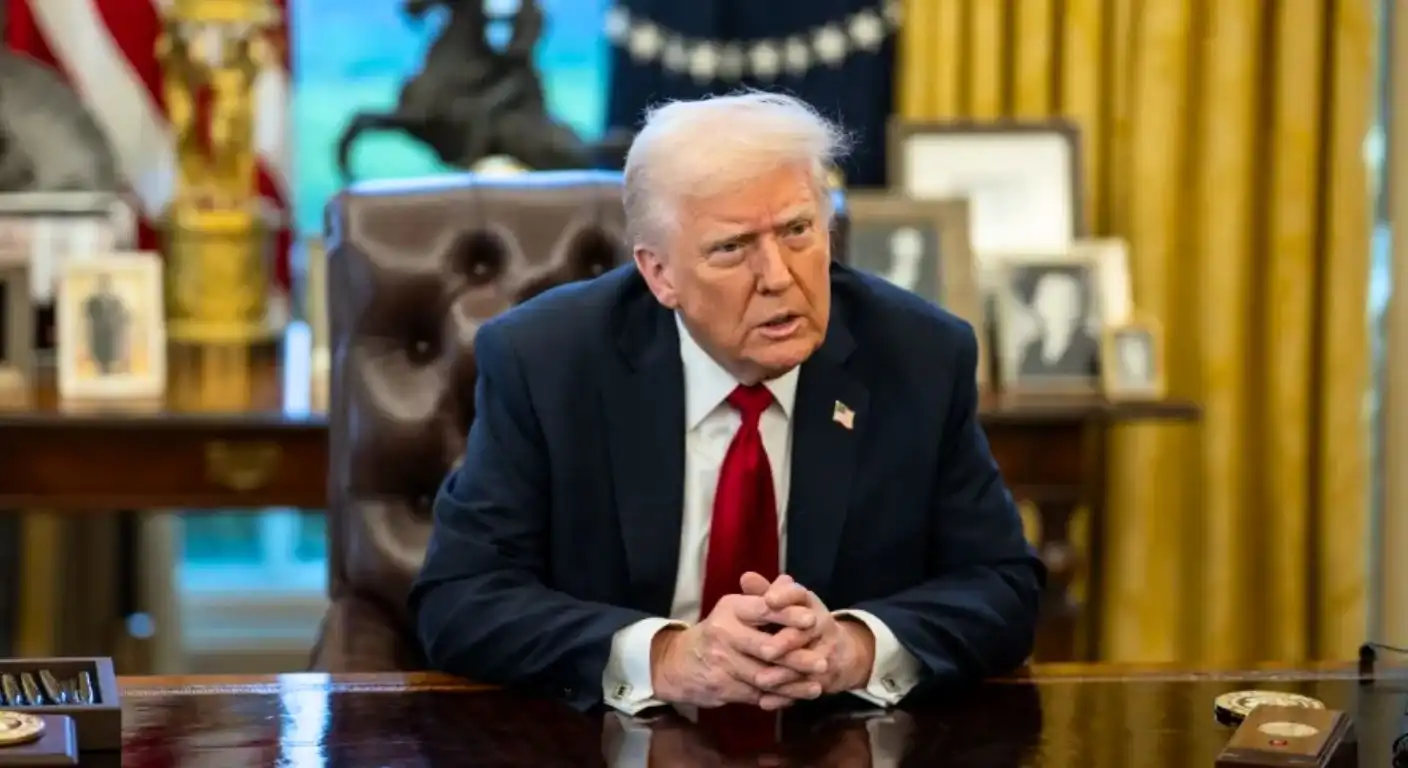
President Donald Trump strongly backed the United Arab Emirates on Wednesday after the nation’s shocking decision to leave the global oil cartel, OPEC. Trump spoke to reporters gathered at the White House and predicted the historic exit would force global energy costs to fall. He shared his thoughts shortly after wrapping up a high-profile meeting with the 4 astronauts assigned to the upcoming Artemis II space mission.
“I think it’s great,” Trump announced to the press. He praised UAE President Sheikh Mohamed bin Zayed Al Nahyan, calling him a highly intelligent leader who knows how to navigate tricky situations. Trump suggested the UAE leader simply wants to chart an independent path for his country moving forward. “That’s a good thing. I think ultimately it’s a good thing for getting the price of gas down, getting oil down, getting everything down,” Trump said. He then casually noted that the remaining members of OPEC are currently battling internal problems.
Global energy markets have suffered wild price swings recently. The cost of crude oil skyrocketed almost immediately after the United States and Israel launched a coordinated war against Iran on February 28. Gasoline prices quickly followed the upward trend. Some analysts estimate that average fuel costs jumped by nearly 15 percent over the last two months, hitting drivers hard at the gas station.
The UAE completely stunned the energy sector on Tuesday. Officials announced that the country will officially withdraw from OPEC on May 1. Market experts immediately labeled this exit a devastating blow to the cartel’s remaining 11 members. For exactly 64 years, this powerful alliance has joined forces to limit production quotas and manipulate global oil prices.
The UAE brought massive firepower to the cartel. In February, the nation ranked as the third-largest daily oil producer within OPEC. Only Saudi Arabia and Iraq pumped more barrels of crude out of the ground. Losing such a heavy hitter removes millions of barrels from OPEC’s daily control and severely weakens its grip on the market.
Leaders in Abu Dhabi issued a formal statement explaining their sudden departure. The energy ministry stated that officials spent months reviewing their domestic production limits and maximum output capacity. Ultimately, they decided that leaving the group serves their national interest best. They politely expressed deep appreciation for the alliance and valued their decades of teamwork.
However, the raging regional war clearly sparked this massive split. The UAE constantly faces deadly incoming attacks from Iranian missiles and explosive drones. Iran also belongs to OPEC, creating severe tension inside the alliance. Tehran began attacking its neighbors after American and Israeli forces kicked off the war in late February.
Iran escalated the conflict by effectively shutting down the Strait of Hormuz. This critical waterway serves as the primary outlet for Middle Eastern oil. Closing the Strait completely traps the UAE, destroying its ability to ship millions of barrels of crude oil to international buyers. This aggressive tactic costs the UAE economy roughly $100 million in lost revenues every single day.
The Trump administration hit back hard against this economic warfare. American naval forces established a massive blockade around Iran’s major shipping ports. This retaliatory strike aims to destroy Tehran’s export economy completely. The dueling blockades have essentially frozen all major negotiations and created a tense military standoff.
Iranian diplomats recently floated a new compromise to ease tensions. They offered to mutually reopen the busy strait for normal commercial traffic right away. In exchange, they demanded that the United States postpone all talks regarding Iran’s controversial nuclear program until a later date. Trump flatly rejected this deal during an interview on Wednesday morning.
Trump used colorful language to describe the pain his blockade inflicts on the Iranian government. “They are choking like a stuffed pig, and it is going to be worse for them. They can’t have a nuclear weapon,” Trump told reporters. Later that afternoon, he stood in the Oval Office and declared his naval blockade a 100 percent foolproof strategy. He called the military tactic absolute genius.
The president vowed to maintain the strict blockade until Iranian leaders give up completely. “They have to cry uncle,” Trump demanded. When reporters asked if the economic squeeze would actually push Iran to sign a peace treaty, or if the military needs to launch more missiles, Trump kept his options open. He simply replied that it depends. Meanwhile, military sources say the United States Central Command is actively planning a short, powerful wave of tactical strikes to break the deadlock.















