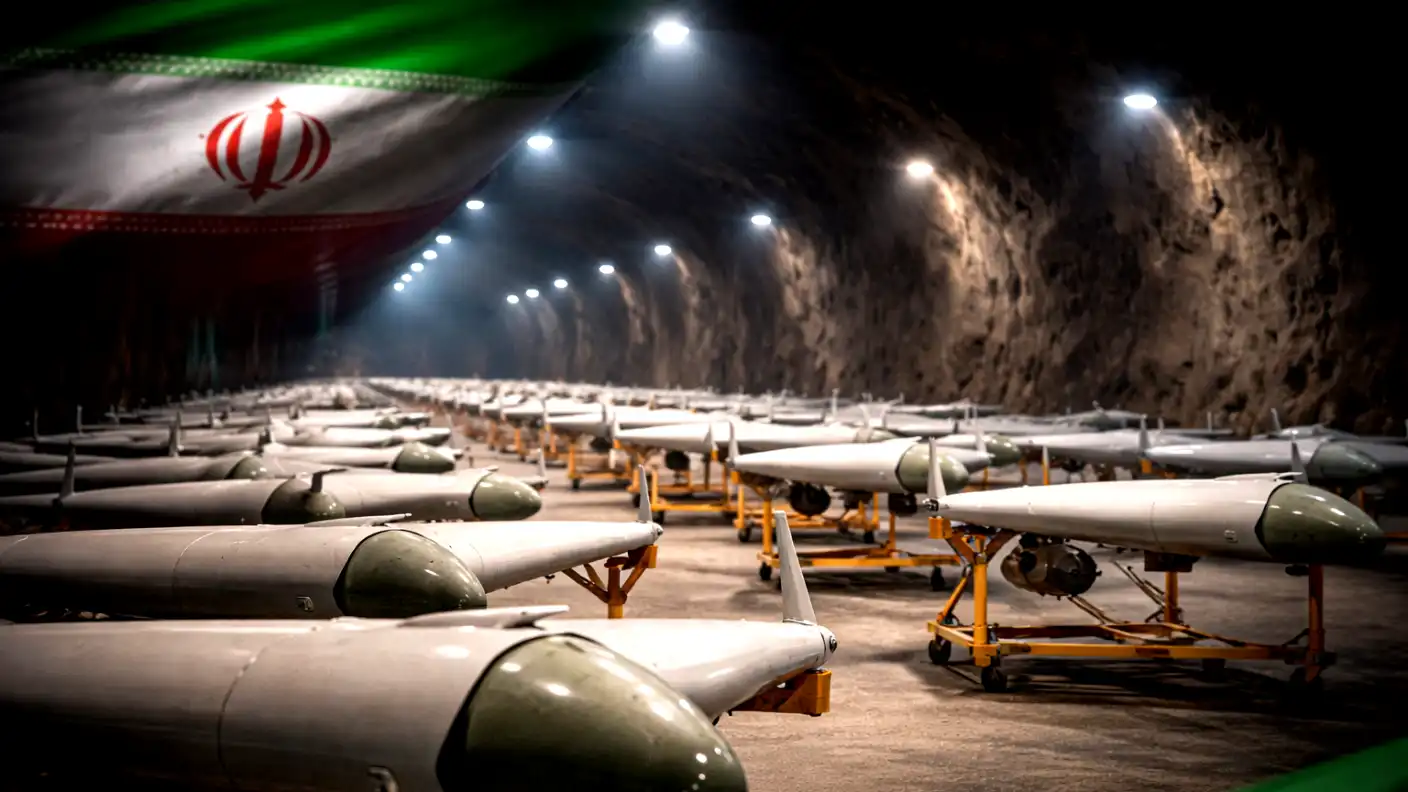
A highly fragile, three-week-old ceasefire in the Middle East has collapsed into intense military conflict after both sides traded their heaviest airstrikes and rocket barrages since the war began. On Thursday, the Iranian armed forces targeted multiple U.S. military bases and intelligence assets across Kuwait, Bahrain, Qatar, and Jordan in a highly coordinated, overnight counter-offensive. The massive assault was launched in direct retaliation for back-to-back waves of destructive American airstrikes that targeted strategic ports and military corridors along Iran’s southern coastline. The rapid return to active warfare has ended weeks of diplomatic optimism, sending shockwaves through global energy corridors and throwing the region back into a state of total, unpredictable war.
The severe military escalation follows a dramatic decision by the White House to expand its strategic bombing campaign against the Islamic Republic. Over Tuesday and Wednesday nights, U.S. Central Command warplanes targeted more than 170 distinct military installations situated along Iran’s coastline. The U.S. air campaign successfully hit approximately 80 strategic targets on Tuesday, followed by an even larger wave of 90 airstrikes on Wednesday, specifically targeting air defense batteries, drone launch infrastructure, and coastal surveillance networks. The Pentagon defended the operations as a necessary and lawful action designed to systematically degrade Tehran’s ability to execute future attacks against commercial shipping lanes.
The physical toll of the massive, two-day American bombing campaign has been exceptionally severe across Iran’s southern and eastern provinces. According to reports from regional medical authorities, the U.S. airstrikes successfully hit several high-value military targets, including port facilities in Chabahar, an aerospace command center in Bushehr, and a railway bridge near the eastern border that connects Iran’s shipping lines to China and Russia. The state’s health ministry confirmed that the relentless bombardments killed at least 14 people and injured 78 others across five distinct provinces, including three civilians killed in Khuzestan and a firefighter killed when a missile struck the perimeter of Iranshahr Airport.
Refusing to back down, the Iranian military command executed a highly synchronized counter-strike against U.S. strategic assets in the early hours of Thursday morning. Iranian forces launched a massive, high-performing wave of 68 missiles and 351 one-way attack drones targeting U.S. bases in neighbouring Gulf states. The primary targets of the Iranian barrages included a Patriot missile defense system operating in Kuwait, an early-warning space-satellite antenna site in Qatar, and a fuel storage facility in Bahrain. While local air defenses successfully intercepted several incoming targets, falling debris caused minor injuries to civilians and prompted several Gulf governments to activate emergency security alerts.
The rapid breakdown of the peace process directly follows a series of highly combative statements from the U.S. President. On Wednesday afternoon, Trump officially declared that he believes the tentative truce is over, accusing Tehran of demonstrating a total lack of sincerity after Iranian drones targeted three commercial tankers in the Strait of Hormuz earlier in the week. The President warned that any future attempts to disrupt global shipping routes or threaten American military personnel will trigger even more destructive retaliatory strikes, asserting that his administration will not allow a hostile regime to dictate terms to the United States.
The sudden explosion of regional violence has coincided with a highly emotional, historic day of national mourning across the Islamic Republic. In a dramatic split-screen, as military units traded missile fire in the south, millions of black-clad mourners gathered on Thursday in the northeastern city of Mashhad to attend the burial of their late Supreme Leader, Ayatollah Ali Khamenei. Khamenei was assassinated on February 28 during a massive U.S. airstrike on his compound at the very start of the war, but the security risks of the conflict had delayed his formal burial for over four months. He was laid to rest at the Imam Reza Shrine, the country’s holiest pilgrimage site.
At the core of the ongoing war is the unresolved dispute over the physical control of the strategic Strait of Hormuz. The narrow waterway handles approximately 20% of global oil shipments, making it a critical chokepoint for the international economy. While the initial peace memorandum signed on June 17 had aimed to establish a temporary framework to allow commercial vessels to navigate the passage safely, negotiations quickly stalled as neither side proved willing to compromise on transit rights and tolls. The immediate return to active hostilities has forced shipping companies to turn off their tracking signals and route tankers around Africa, adding millions of dollars to global fuel costs.
Global commodity exchanges have reacted with high volatility to the reignition of the war, shifting rapidly as traders evaluate the risks of a long-term blockade. While crude prices initially spiked by more than 3% following the news of the first shipping attacks, they fell back slightly on Thursday afternoon. Financial analysts noted that the return of Saudi oil loadings and a minor 1.5% adjustment in global trading volumes have helped to prevent an immediate panic. However, energy traders warn that if the Technical Negotiations in Qatar fail to establish a stable security corridor, prices are bound to skyrocket again.
Despite the active military strikes, international mediators from Pakistan and Qatar are working frantically behind the scenes to keep the technical negotiations from collapsing completely. Technical teams from both countries are scheduled to meet in Doha next week, but diplomats acknowledge that the extensive physical damage and Trump’s declaration have made a breakthrough highly unlikely. The newly appointed Iranian Supreme Leader, Ayatollah Mojtaba Khamenei, has signaled a highly rigid posture, warning that Tehran will not negotiate under the threat of U.S. bombs.
Ultimately, the collapse of the U.S.-Iran ceasefire and the subsequent trade of strikes highlight the immense difficulty of securing peace in a highly polarized world. By choosing to launch massive retaliatory airstrikes and targeting U.S. bases in the Gulf, both Washington and Tehran have proven that they remain locked in a dangerous cycle of escalation. While the formal burial of Ali Khamenei marks the end of an era for the Islamic Republic, the immediate future of the region remains highly volatile. As both sides prepare for further military operations, the global community must brace for a prolonged energy and security crisis, where the hope of a lasting peace remains a distant illusion.