

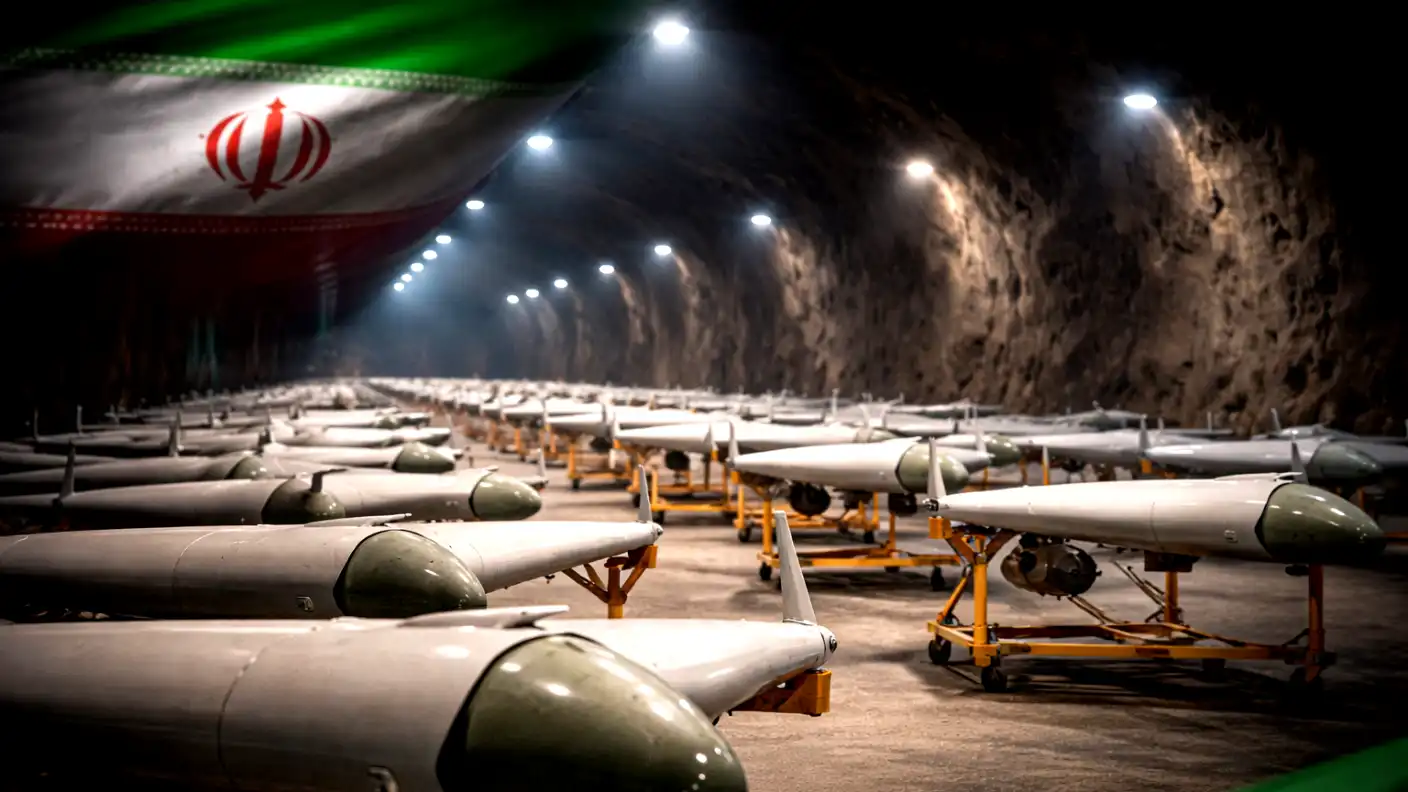
Iran prepares to fight again. State media and military leaders openly reject any major compromises in their peace talks with the United States. To show their anger, authorities organized massive military parades across the streets of Tehran on Tuesday night and Wednesday. These street rallies happened exactly when a 2-week ceasefire was supposed to end. US President Donald Trump extended this pause indefinitely after diplomats failed to attend meetings in Pakistan. However, Iran clearly signals it prefers battle over surrender.
The street demonstrations featured heavy weapons and angry crowds. In the middle of Tehran, military trucks hauled a giant Khorramshahr-4 ballistic missile past cheering supporters. Just a few miles away, masked soldiers stood on top of a Ghadr missile launcher while loudspeakers blasted chants against America. Some crowd members yelled for their military commanders to strike Tel Aviv with more rockets. State television aggressively pushes this pro-war message. One television host recently claimed that 87 percent of citizens would rather return to war than give up ground to the Americans.
Tensions on the water remain incredibly high. The United States Navy continues its strict blockade of Iranian ports to squeeze the local economy. President Trump insists Iran faces total financial collapse and cannot even pay its own police forces. In response, the military issues warnings to neighboring countries. A top commander stated that if Arab neighbors help the Americans, they can say goodbye to their own oil production. Furthermore, Iranian forces recently seized 2 commercial ships trying to cross the Strait of Hormuz. As the government’s strict internet blackout enters its 54th day, local news outlets threaten to cut underwater high-speed cables, creating a massive digital crisis across the Middle East.
Behind closed doors, Iranian leaders argue over the best path forward. Hardline politicians refuse to accept any deal that makes the country look weak. Mohammad Bagher Ghalibaf, the parliament speaker, told citizens that the government will not surrender to Trump. He admitted the United States possesses vastly superior military power and more money, but he still claimed Iran holds the real victory. Meanwhile, President Masoud Pezeshkian takes a softer approach. He told reporters that fighting benefits nobody and begged for logic and dialogue to prevent further ruin.
The country already suffered massive destruction before the temporary truce. During 40 intense days of combat, American and Israeli forces dropped thousands of bombs across Iran. The explosions completely ruined oil facilities, steel factories, power plants, and major railway bridges. The violent strikes also hit schools and local hospitals. Trump openly threatens to bomb even more civilian targets and send the nation back to the Stone Age if they refuse to sign a peace deal.
Some local leaders worry the country simply cannot survive another round of heavy bombing. Abdolhamid Ismaeelzahi, an influential religious leader in the southeastern province, publicly demanded a fair peace agreement. He pointed out that enemy jets completely control the sky and Iranian forces lack the necessary air defense weapons to stop them. He aggressively questioned the hardliners, asking how they would justify the destruction of their homeland. Right now, Iran refuses to send negotiators back to Pakistan until Washington lifts the crippling port blockade, leaving the entire region waiting for the next spark.















