

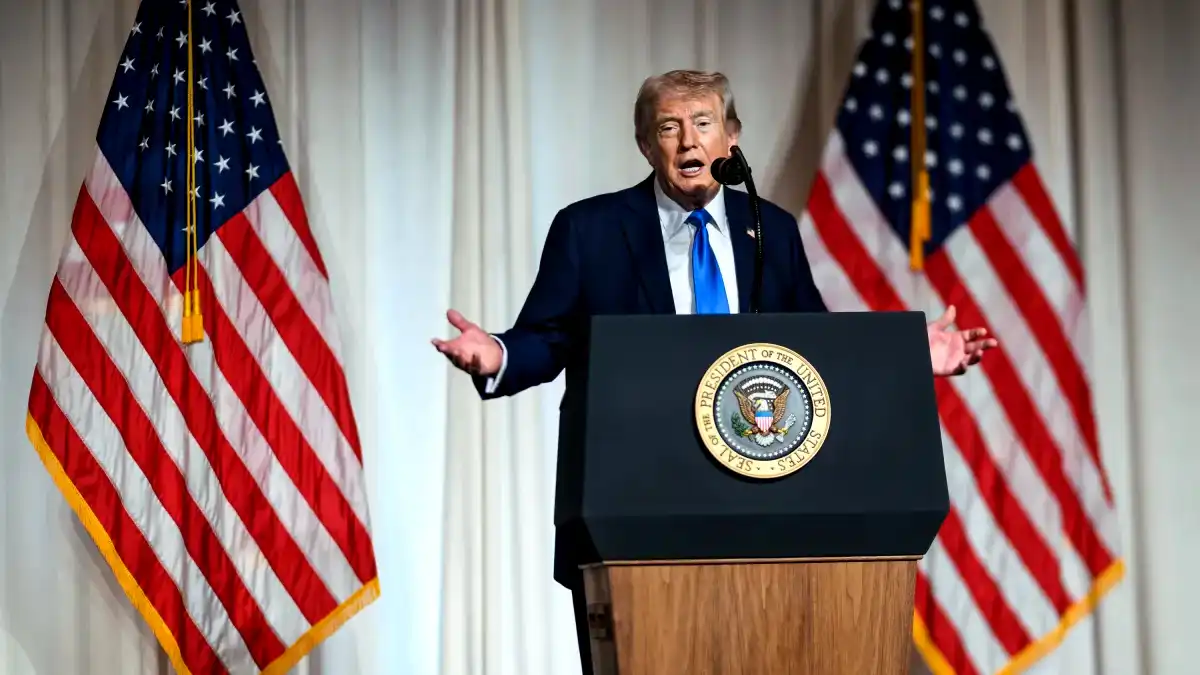
The legal landscape for hundreds of thousands of humanitarian migrants in the United States has shifted dramatically following a watershed judicial decision. In a highly contentious 6-3 ruling split along ideological lines, the United States Supreme Court cleared the way for the administration of President Donald Trump to strip deportation protections from over 356,000 Syrian and Haitian immigrants. The landmark decision overturned several lower court orders that had previously blocked the administration’s efforts to wind down the decades-old humanitarian program. The high court’s ruling represents a massive victory for Trump’s hardline immigration agenda, opening the door for some of the largest coordinated deportations of legally residing foreign nationals in modern American history.
The legal battle centers on the Temporary Protected Status program, commonly known as TPS, which Congress created under a landmark 1990 immigration statute. The humanitarian program allows the Department of Homeland Security to grant temporary residency and work permits to fully vetted foreign nationals already inside the United States if their home countries are suffering from ongoing armed conflict, natural disasters, or other extraordinary and temporary conditions. Since its dedication, successive administrations from both parties have routinely utilized and extended these designations to protect vulnerable populations. However, Trump has made terminating these temporary protections a core priority of his broader effort to roll back both legal and illegal immigration since returning to office in January 2025.
The sudden violence stands in sharp contrast to the diplomatic breakthroughs celebrated just hours earlier. The ruling successfully reverses several injunctions issued by federal judges in New York and Washington, D.C., which had indefinitely postponed the administration’s planned terminations. Immigrant rights organizations had filed class-action lawsuits to preserve the legal status of more than 350,000 Haitians and 6,100 Syrians, arguing that conditions in their home countries remain far too dangerous to permit a safe return. While the lower courts agreed that the Department of Homeland Security did not follow proper administrative procedures when deciding to end the protections, the Supreme Court’s conservative majority ruled that the executive branch has virtually unchecked authority to manage the program.
Writing for the conservative majority, Justice Samuel Alito declared that the original 1990 statute enacted by Congress explicitly prohibits the judicial branch from reviewing administrative decisions to extend or terminate TPS. Alito wrote that the plain text of the law bars federal courts from considering non-constitutional legal challenges brought by immigrants or advocacy groups over how the Department of Homeland Security manages the program. The majority opinion asserted that Congress deliberately chose to give the executive branch unilateral, unreviewable authority over these humanitarian designations, meaning that federal judges exceeded their constitutional boundaries by interfering with the administration’s policy decisions.
In a sharp and highly critical dissent, the court’s three liberal justices, Sonia Sotomayor, Elena Kagan, and Ketanji Brown Jackson, strongly objected to the majority’s hands-off approach. Sotomayor argued that while the Secretary of Homeland Security holds broad discretion, the 1990 law does not completely immunize the department from judicial scrutiny, particularly when officials fail to follow the proper procedural steps required to terminate a designation. The dissenting justices warned that by stripping federal courts of their traditional oversight role, the majority has effectively handed the President an unrestricted tool to deport hundreds of thousands of people who have lived, worked, and paid taxes in the country legally for years.
The real-world consequences of the high court’s ruling will be felt immediately by hundreds of thousands of families across the country. The decision directly impacts approximately 350,000 Haitian immigrants, many of whom arrived after a catastrophic 2010 earthquake, and roughly 6,100 Syrian nationals who fled a brutal civil war in 2012. Together, these protected individuals make up nearly 1.5% of the total foreign-born population in several major metropolitan areas. Legal observers warn that with their protected status terminated, these families will lose their legal work authorizations, revert to undocumented status, and face immediate deportation, forcing many parents to make the agonizing choice of leaving their American-born children behind.
The impending deportations are particularly alarming given the catastrophic security conditions currently plaguing both target nations. The U.S. State Department maintains its strongest travel warnings against visiting either Haiti or Syria, advising Americans in the absolute strongest terms to avoid travel due to widespread gang violence, lawlessness, kidnapping, and active armed conflict. In Haiti, armed gangs have successfully seized control of major urban centers, parlaying the local government into complete collapse, while Syria remains deeply fractured by years of civil war and terrorism. Human rights advocates argue that forcing families back to these unstable environments represents a direct violation of international humanitarian norms.
The successful termination of the Haitian and Syrian programs is part of a highly coordinated, nationwide effort to dismantle humanitarian relief channels. Homeland Security Secretary Kristi Noem has aggressively moved to terminate TPS designations for 13 of the 17 countries currently protected under the program, putting more than one million immigrants at risk of removal. This aggressive push follows another major victory for the administration last year, when the Supreme Court allowed federal officers to end temporary protected status for hundreds of thousands of Venezuelan migrants while their legal challenges proceeded, demonstrating a consistent judicial deference to executive power in immigration matters.
Beyond the immense humanitarian toll, business groups warn that the sudden loss of hundreds of thousands of legal workers will deal a severe blow to several critical sectors of the American economy. TPS holders from Haiti and Syria are heavily employed in healthcare, construction, hospitality, and agriculture, helping to fill vital labor shortages across the country. Local chambers of commerce have warned that forcing these fully vetted, tax-paying employees out of the labor force will disrupt business operations and worsen localized inflation. These economic concerns have prompted some moderate lawmakers to call for legislative fixes, though the prospects of passing an immigration reform bill remain highly unlikely.
Ultimately, the Supreme Court’s ruling on the Temporary Protected Status program marks a highly significant turning point in the nation’s ongoing debate over executive authority and immigration. By declaring that the President’s decisions to end humanitarian protections are entirely shielded from judicial review, the conservative majority has handed the Trump administration a powerful and unrestricted tool to execute its mass deportation agenda. While the administration defends the policy as a necessary step to restore the rule of law and protect national security, the severe backlash from families, advocates, and business groups highlights the immense human and economic cost of the decision. As federal immigration officers prepare to begin enforcement operations, the future for hundreds of thousands of legally residing families has never been more uncertain.















