

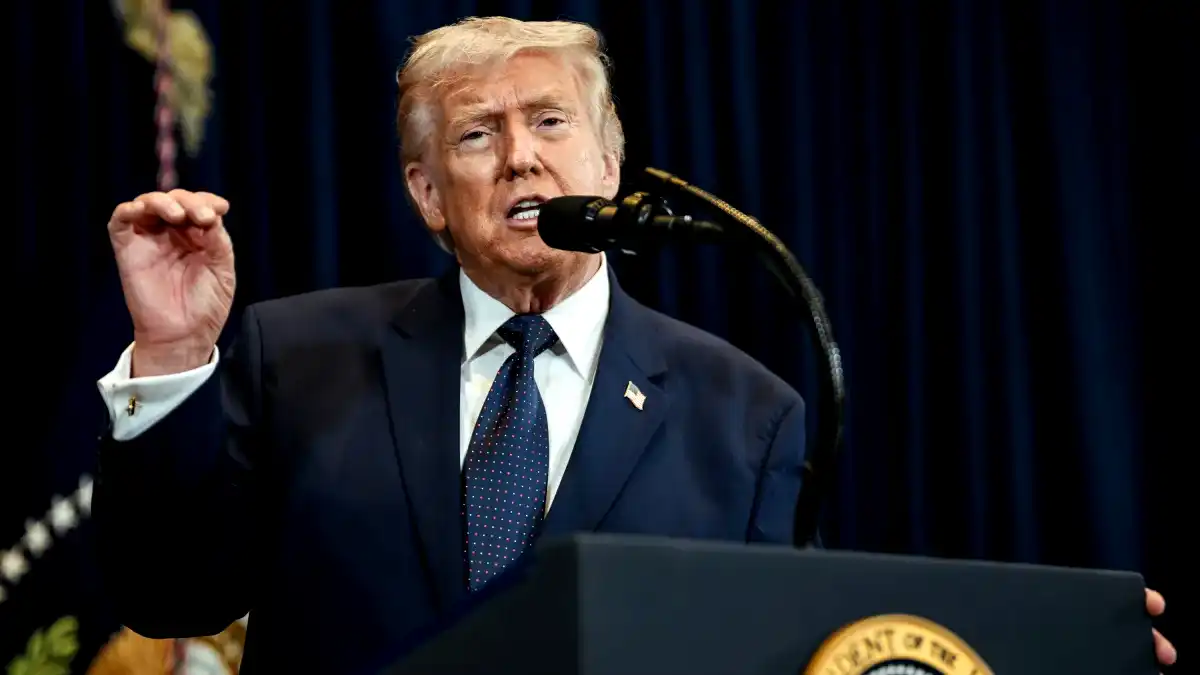
A massive economic confrontation is brewing between the United States and its global trading partners after President Donald Trump threatened to impose a catastrophic 100% tariff on any nation that levies a digital services tax on American technology giants. The aggressive ultimatum has sent shockwaves through international markets, threatening to completely dismantle hard-won trade treaties and wipe out years of careful economic diplomacy. The dramatic move has ignited severe trade war fears, particularly in Europe, where several countries are preparing to implement new tax structures to ensure multinational tech corporations pay a fair share of domestic revenues.
The President delivered his sweeping ultimatum via a highly combative social media post, warning global leaders of immediate and severe economic retaliation. Trump declared that numerous European countries have been discussing the imminent implementation of a digital services tax on American firms like Alphabet, Amazon, and Meta. He made it clear that any country imposing such a tax would immediately face a 100% tariff on any goods sent to the United States. Crucially, the President asserted that this new punitive tariff would supersede any existing trade agreements with the United States, whether they have been signed or not, leaving international trade rules in complete disarray.
This sudden tariff threat represents a massive blow to a hard-fought trade deal that the United States and the European Union agreed to last year. Under that bilateral framework, Washington agreed to cap its tariffs on European imports at 15% in exchange for EU countries reducing their tariffs on American industrial goods to zero. This compromise was hailed as a major victory for transatlantic trade, providing a stable environment for manufacturers and exporters. However, Trump’s latest declaration has thrown this entire agreement into jeopardy, proving that the administration is willing to ignore formal treaties to protect the interests of its domestic tech sector.
The timing of the threat is particularly frustrating for European policymakers, who have spent weeks scrambling to meet a strict July 4 deadline imposed by the President. Trump had previously threatened to trigger a devastating 25% tariff on imports of European cars unless the bloc rapidly implemented the promised industrial tariff cuts. While EU lawmakers successfully met the deadline to avoid the automotive levies, the sudden emergence of the 100% digital tax threat has completely overshadowed that legislative progress. This rapid shift in demands has convinced many European trade officials that they are dealing with a highly unpredictable partner.
At the center of this escalating dispute is France, which has maintained an exceptionally firm stance against American pressure. French President Emmanuel Macron stated recently, shortly before meeting with Trump at a summit, that France would not bow to external threats and has no intention of scrapping its domestic digital services tax. Paris has enforced a 3% levy since 2019 on revenues earned from digital services by companies with annual turnover exceeding €25 million in France and €750 million worldwide. Before setting off for the summit, Trump had warned he would target French wine with a 100% tariff unless the levy was eliminated, but his latest threat expands the target to all French goods.
While France has been the most visible target of Washington’s anger, several other European nations are moving ahead with their own digital tax plans to capture revenues from massive tech multinationals. Countries like Spain, Italy, Austria, and the United Kingdom have already implemented or are actively discussing similar digital services taxes, arguing that global tech firms profit immensely from local consumers while paying virtually no domestic taxes. These countries argue that traditional tax rules, which require a physical corporate presence to levy taxes, are outdated in a digitized global economy where a company can generate billions in revenue through virtual transactions alone.
The threat of a 100% tariff on all European goods has sent shockwaves through the continent’s industrial and manufacturing sectors, which rely heavily on access to the lucrative American market. Economists warn that if Trump carries out his threat, it could trigger a massive decline in transatlantic trade, which currently supports millions of high-paying jobs on both sides of the Atlantic. A full-blown trade war would likely choke off Europe’s gradual economic recovery, potentially shaving off up to 1.5% of overall global gross domestic product. This risk of a global recession has prompted business groups to plead with both sides to return to the negotiating table.
The European Commission issued a firm and dignified defense of its economic policies. An official spokesperson for the Commission stated on Friday that the European Union and its individual member states hold the absolute sovereign right to regulate economic activity within their own territories. The spokesperson clarified that any digital taxes currently in place or under discussion are non-discriminatory by design and apply equally to all large companies based on their global revenues, regardless of their country of origin. The Commission warned that the bloc will respond swiftly and decisively to any unjustified, unilateral U.S. trade retaliation.
This sharp escalation in trade tensions also arrives at a highly sensitive time for transatlantic security cooperation, which has already been severely strained by recent military conflicts. EU and G7 leaders have spent the past several weeks coordinating a delicate, high-stakes peace process in the Middle East, attempting to secure the permanent reopening of the vital Strait of Hormuz after months of devastating blockades. While the initial diplomatic breakthroughs had briefly brought some economic stability, the sudden threat of a major trade war between Washington and Brussels threatens to derail this strategic coordination, leaving the Western alliance deeply fractured.
Ultimately, the European Union’s firm defense of its digital tax policy and Trump’s aggressive tariff threats mark a highly volatile new chapter in transatlantic relations. By asserting its sovereign right to regulate economic activity while remaining open to a global tax solution, Brussels has successfully demonstrated its refusal to succumb to unilateral intimidation. However, as the July 4 tariff-cut deadline passes and the threat of a 100% U.S. embargo looms over European exporters, the path to a sustainable economic partnership remains blocked. Until both sides can find a way to compromise on digital taxation, the trade ties that have anchored the global economy will remain on a dangerous knife-edge.















