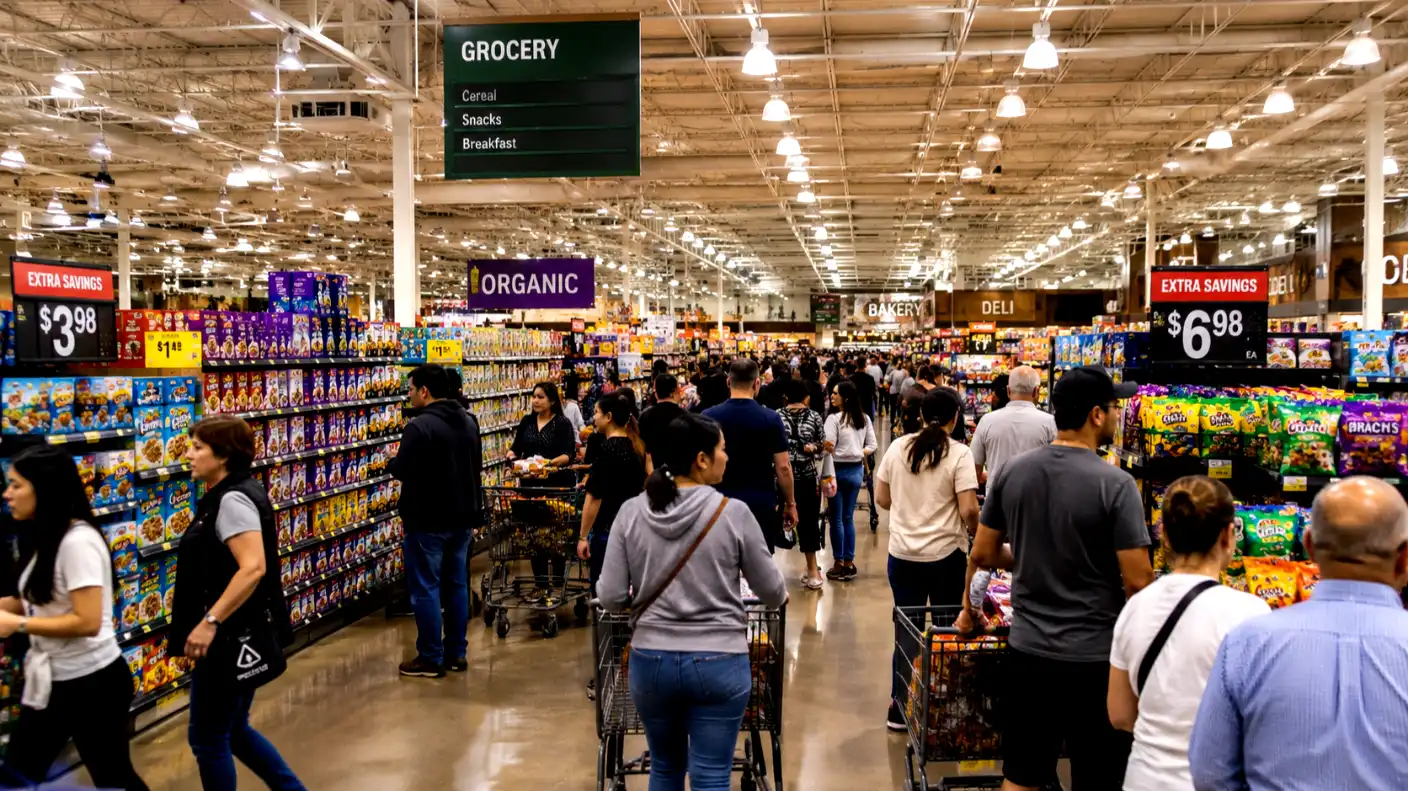
A stark and highly concerning divide is fracturing the American economy, revealing that the wealthy are single-handedly propping up national consumption while the majority of households face intense financial strain. According to a comprehensive consumer report published by a major Wall Street banking group’s research division, the top 10% of households by income now spend nearly as much money on nonessential, discretionary items as the bottom 70% combined. This extraordinary imbalance highlights the emergence of a deeply entrenched economic divergence, where a small cohort of affluent consumers remains entirely insulated from the rising rents, high borrowing costs, and energy shocks that are currently crushing the broader population.
To map this spending gap with precision, researchers led by senior economist Shruti Mishra analyzed credit and debit card transactions across millions of active customer accounts. Crucially, the analytical team stripped out non-discretionary expenditures—the basic necessities of housing, monthly utilities, and healthcare services. The remaining capital, representing discretionary outlays on apparel, dining out, and leisure travel, revealed an astonishing concentration of buying power at the very peak of the income ladder. The data show that while the wealthy continue to consume luxury goods and premium services at a record pace, the middle and lower classes have been forced to systematically eliminate nonessential purchases from their daily budgets.
While the discretionary spending gap is the most dramatic finding, the concentration of total national consumption is similarly lopsided. According to historical data from the U.S. Bureau of Labor Statistics, the top 10% of households by income account for an impressive 23% of all physical and digital consumption across the country. In sharp contrast, the lowest income decile—representing the bottom 10% of households—contributes a meager 4% of total aggregate demand. This stark statistical divide means that overall retail sales figures and national consumption benchmarks are heavily dictated by the balance sheets and wealth effects of the most affluent Americans, creating a misleading picture of economic health.
The underlying source of this spending divide is found in the highly unequal composition of household consumption baskets. Economists pointed out that the bottom 10% of families must allocate a staggering 63% of their total monthly income to survive, paying for necessities like groceries, gasoline, housing, and healthcare. Conversely, high-income families in the top 10% spend only 31% of their budget on these basic necessities, leaving a massive 69% of their wealth available for high-end retail, investments, and luxury services. When inflation drives up the cost of food or electricity, the impact lands with devastating force on lower-income families while barely affecting the lifestyle of the rich.
This severe asymmetry successfully explains why aggregate U.S. consumer spending has remained remarkably resilient despite months of high interest rates and economic uncertainty. As long as high-income consumers—who benefit from a soaring stock market and rising equity portfolios—continue to spend freely, their high-value transactions mask the deep stress bubbling beneath the surface. The stock market has surged by over 20% during the past year, inflating the assets of the top income cohorts while offering no relief to the bottom 70% of households, who hold virtually no stock market wealth and remain highly vulnerable to job market cooling.
The physical strain on everyday consumers is highly visible in the earnings reports of the country’s largest retail corporations. In a recent investor briefing, executives at retail giant Walmart provided visceral, real-world proof of this budget squeeze. For the first time since the high-inflation days of 2022, the company’s finance chief revealed that the average motorist visiting Walmart fuel stations is now purchasing less than 10 gallons of gas per fill-up. This cautious, gallon-by-gallon purchasing behavior shows that lower-income households are running on empty, unable to afford the cost of a full tank of fuel even as regional oil prices stabilize.
This lack of purchasing power has also thrown the domestic restaurant and fast-food industry into complete disarray. Historically, when data showed budgets tightening, consumers would trade down from sit-down restaurants to cheap drive-thrus. However, in today’s atypically split economy, even the largest fast-food giants are reporting softer demand and declining foot traffic among lower-income households. To lure back cash-strapped families, national chains are increasingly turning to aggressive discount bundles and five-dollar meal promotions as a primary marketing strategy. Deals and promotions currently drive an unprecedented 29% of all foodservice traffic, marking the highest rate recorded in 50 years.
The deep K-shaped split has also divided the retail fashion sector into clear winners and losers, depending on which consumer cohort they target. Mid-tier, mass-market apparel brands have struggled immensely to attract buyers, leading to disappointing earnings and a minor 1.5% adjustment in overall market sales projections. This consumer divide has left mid-market brands with over $1 billion in unsold inventory globally, as buyers simply refuse to pay full price for nonessential clothes. Conversely, retailers that cater to affluent demographics or offer affordable luxury items have posted spectacular quarterly gains. Affluent shoppers continue to show up in high numbers, allowing premium brands to sell full-price items with zero need for markdowns.
This intense economic divide has created a highly complex, painful policy dilemma for the Federal Reserve. In their joint report, the economists warned that the central bank’s high-interest-rate policy is both a partial cause of this divergence and completely powerless to directly fix it. By keeping borrowing costs high to cool the overall economy, the Fed is disproportionately punishing lower-income groups who rely heavily on high-interest credit cards to make ends meet. At the same time, high interest rates do nothing to cool the spending of the wealthy, who do not need credit and instead earn high yields on their cash savings and bond portfolios.
Ultimately, the extreme concentration of discretionary spending highlights a permanent structural shift that is fracturing the U.S. consumer landscape. While top-line economic indicators and strong retail sales figures suggest that the national economy is performing well, the reality is that the top 10% of earners are carrying the entire weight of aggregate demand on their shoulders. As everyday working-class families struggle to navigate high rents, expensive groceries, and a cooling labor market, the illusion of a strong economy grows increasingly fragile. Until policymakers can address the underlying forces driving this K-shaped divergence, the economic security of the nation will remain hostage to the spending habits of its wealthiest citizens.