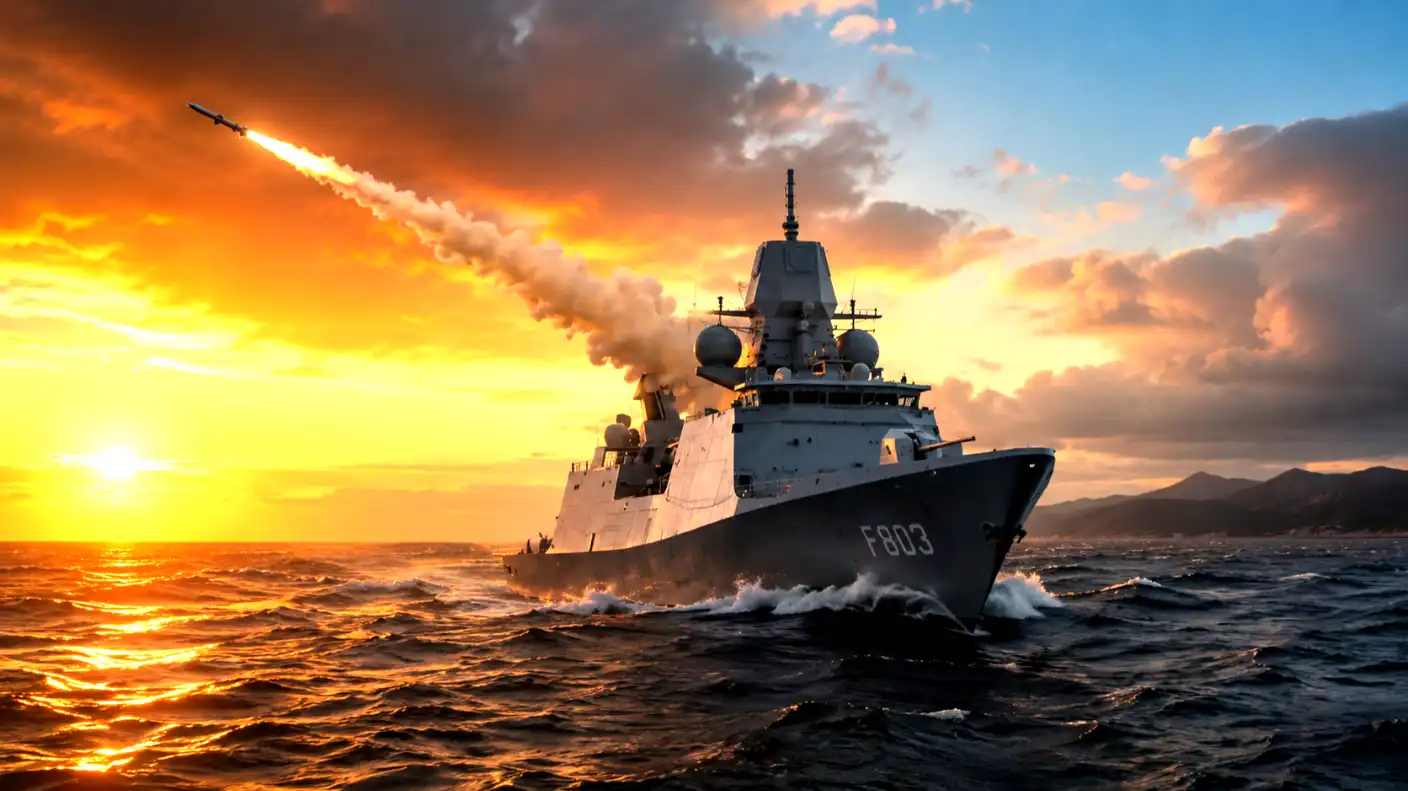
Germany has struck a historic military agreement with the United States to purchase long-range Tomahawk cruise missiles and station them on German soil, marking a major turning point in European defense strategy. Chancellor Friedrich Merz announced the high-profile transaction before the Bundestag on Thursday, revealing that both governments successfully finalized the contract during a high-stakes NATO summit in Ankara, Turkey. The acquisition will allow Berlin to operate its own long-range deterrent forces rather than relying on U.S. military personnel, closing a key strategic capability gap that has left European borders vulnerable to external pressures.
Under the terms of a bilateral letter of intent signed by both defense ministers, the United States has committed to granting formal, official approval for the sale by August. In addition to the long-range cruise missiles, Germany will acquire ground-based Typhon launcher platforms, which are highly capable of firing both land-attack Tomahawks and advanced SM-6 air defense interceptors. While the exact quantity of missiles and launchers remains strictly classified for national security reasons, the deal represents a massive transfer of advanced military technology, helping to reorganize European defense along a more self-reliant path.
The final agreement represents a major, face-saving alternative to a previous deployment plan that had recently collapsed. In 2024, the administration of former President Joe Biden had pledged to temporarily deploy a U.S. Army Long-Range Fires Battalion to Germany by 2026, keeping the missiles under American command. However, the plan fell apart when U.S. President Donald Trump returned to office and announced a sweeping pullback of U.S. forces from Europe, including a planned drawdown of approximately 5,000 U.S. troops from German bases. Rather than leaving the country without a long-range shield, Merz successfully negotiated to purchase the weapons outright, aligning with Trump’s demands that European allies pay for their own security.
The transaction fits perfectly into the Trump administration’s aggressive push to force European countries to expand their defense budgets by purchasing American-made hardware. Throughout the recent summit in Turkey, Trump criticized several NATO partners for chronic free-riding, warning that the U.S. would reduce its military footprint unless European capitals took immediate steps to equalize the burden of transatlantic defense. By agreeing to spend hundreds of millions of dollars directly with U.S. defense contractors, Germany has successfully demonstrated its willingness to meet Washington’s demands, helping to defuse a period of intense diplomatic friction between Merz and the U.S. President.
The acquisition of the Tomahawk provides the German military with an exceptionally powerful, low-flying precision weapon system. Developed during the Cold War and continually upgraded, the Tomahawk cruise missile boasts an impressive operational range of up to 2,500 kilometers, or roughly 1,600 miles. While relatively slow compared to hypersonic missiles, the weapon is designed to fly extremely low, traveling just 30 meters off the ground to bypass hostile radar networks and strike deep inland targets with absolute precision. This specialized flight profile makes it the premier weapon for destroying heavily defended command centers and military logistics hubs.
The addition of the U.S.-made cruise missiles will fundamentally expand Germany’s strategic reach, which has historically been limited by the shorter range of its domestic weapons systems. Germany currently manufactures and operates its own highly advanced air-launched cruise missile, the Taurus. However, because the Taurus has a maximum range of only 500 kilometers, or roughly 311 miles, its strike envelope is three to five times shorter than that of the Tomahawk. Because Berlin sits approximately 1,600 kilometers away from Moscow as the crow flies, the newly acquired American missiles will allow German forces to reach deep into hostile territory from secure domestic bases, establishing a credible deterrent.
The urgent drive to close this strategic capability gap has been heavily accelerated by a series of aggressive military deployments by Moscow along NATO’s eastern frontier. German defense planners have warned that Russia has already stationed nuclear-capable Iskander cruise missiles and hypersonic-equipped fighter jets in its Kaliningrad exclave, which borders Poland and Lithuania. Furthermore, the Kremlin has proceeded with plans to station tactical nuclear weapons inside Belarus, placing European capitals under the shadow of a sudden, high-intensity missile strike. Stationing German-owned Tomahawk batteries in Western Europe is viewed by Berlin as a necessary counterweight to restore regional stability.
While Germany’s immediate priority is to purchase American hardware to close its defensive gap, the country is simultaneously partnering with other European nations to build its own independent weapons systems. On Wednesday, a dozen European NATO allies, including the United Kingdom and Germany, announced plans to jointly spend about $50 billion over the next decade to develop an indigenous European long-range precision strike weapon. Under this initiative, known as the European Long-Range Strike Approach, or ELSA, Berlin plans to contribute approximately half of the project’s total cost, working to build a European-made cruise missile with a range of over 2,000 kilometers.
Despite the optimism surrounding the agreement, international security analysts warn that the actual delivery of the missiles could face significant delays due to ongoing global conflicts. The U.S. defense industrial base is currently experiencing severe resource strains as the United States military continues its intensive bombing campaign against Iran. The naval blockades in the Strait of Hormuz and subsequent proxy clashes in the Persian Gulf have forced the U.S. Navy to deplete its own stockpiles of precision-guided munitions, representing a minor 1.5% adjustment in delivery schedules for foreign allies as Washington prioritizes its own immediate combat operations.
Ultimately, the historic agreement to purchase and station American Tomahawk missiles on German soil marks a highly significant milestone in the evolution of European security. By transitioning from planned U.S. military deployments to direct German ownership of long-range precision strike capabilities, Berlin is demonstrating its determination to assume greater responsibility within the transatlantic alliance. While the high costs of the procurement and the threat of regional energy bottlenecks present ongoing challenges, the deal has successfully restored a sense of unity to U.S.-German relations. As technical working groups prepare to finalize the delivery timelines by August, the new missile batteries will establish a powerful deterrent to protect European sovereignty for years to come.