

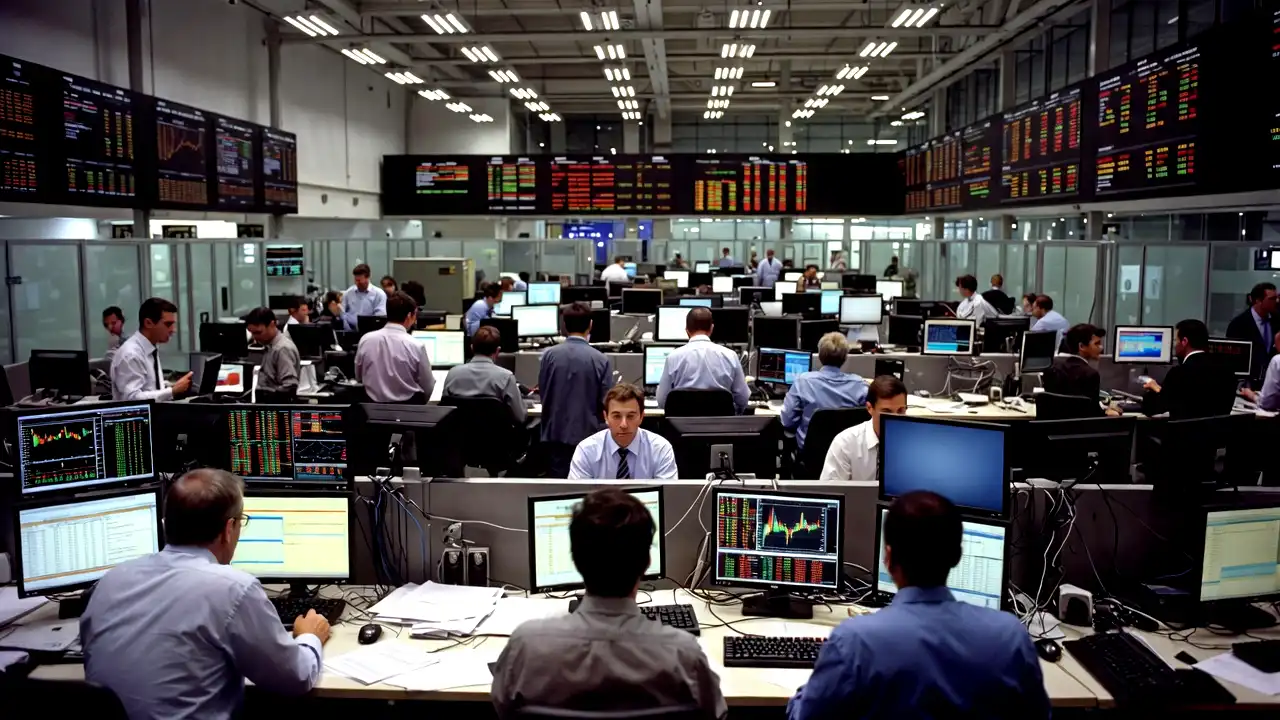
Financial markets hate uncertainty. Traders, fund managers, and everyday investors all crave a clear picture of the future so they can make smart decisions. Yet, right now, that picture looks incredibly blurry. Across the globe, investors are watching a high-stakes drama unfold in the Middle East. When reports emerge about potential threats to the Strait of Hormuz—one of the world’s most critical shipping lanes—it sends a shiver through every major stock exchange. This isn’t just a regional issue; it is a global economic problem that forces us to rethink how we value everything from oil stocks to your local grocery bill.
When oil supplies face threats, the global economy feels the pain almost immediately. Because the Strait of Hormuz acts as a choke point for roughly a fifth of the world’s oil and gas, any sign of trouble there makes energy prices jump. Higher energy prices mean higher costs for businesses, which eventually turn into higher prices for consumers. This domino effect creates inflation, which forces central banks to raise interest rates, often leading to a drop in stock prices. It is a complex, interconnected chain reaction that unfolds in real time on trading floors everywhere.
Understanding the Strait of Hormuz: The World’s Oil Choke Point
To understand why the markets panic when news comes out of the Middle East, you have to look at a map. The Strait of Hormuz is a narrow stretch of water that separates Iran from the Arabian Peninsula. Every day, massive supertankers laden with millions of barrels of oil and liquefied natural gas navigate this passage to reach markets in Asia, Europe, and North America. It is, quite literally, the jugular vein of the global energy supply.
When tensions flare in this region, the cost of insurance for those tankers goes up. Sometimes, shipping companies decide to reroute their ships altogether, which adds weeks to their journeys and drives up fuel costs even further. If the Strait were to close, even for a short time, the global economy would face a massive shock. This is why traders watch every tweet, statement, and military movement near the strait with such intensity; they know that one wrong move could trigger a massive energy price spike.
Why Energy Stocks Are the First to React
In times of instability, energy stocks become the focal point for almost every investor. When news of potential supply threats surfaces, investors rush to buy shares in oil and gas companies. They expect that companies already sitting on oil supplies will be able to sell them at much higher prices. This buying frenzy often pushes energy stock prices to record highs within days.
However, this surge in energy stocks is a double-edged sword:
- Sector Rotation: When money floods into energy stocks, it often pulls money out of other sectors like technology or retail, causing those stocks to drop.
- Volatility Spikes: Energy stocks are already known for being jumpy; in a crisis, their prices can swing wildly, making them very risky for anyone who isn’t a professional day trader.
- Government Intervention: If oil prices rise too high and hurt the economy, governments often step in with new taxes or regulations on “windfall profits,” which can quickly crush an energy firm’s stock price.
- Demand Destruction: If energy prices remain too high for too long, businesses and consumers use less fuel. This eventually hurts energy companies themselves because it kills demand for their products.
Inflation: The Silent Tax That Follows Energy Spikes
We often hear the word “inflation” thrown around by economists, but it really just means that the money in your pocket buys less than it did before. Energy costs are a hidden tax that hits almost every single product you buy. Think about it: a truck needs diesel to deliver food to the store. A factory needs electricity to run its machines. When energy prices climb, truck drivers and factory owners have to charge more for their services, and those extra costs are passed along until they reach the final price tag on the shelf.
Investors watch inflation reports as closely as they watch war news because inflation changes everything:
- Interest Rates: When inflation gets too high, central banks (like the Federal Reserve in the U.S.) raise interest rates to cool the economy down.
- Borrowing Costs: Higher interest rates make it more expensive for companies to take out loans to expand, slowing growth.
- Consumer Spending: When you spend more on gas and groceries, you have less money for things like new electronics or vacations, which hurts the bottom lines of retail and tech companies.
- Fixed Income: High inflation is the enemy of bonds and savings accounts, as the value of the interest you earn fails to keep pace with the rising cost of living.
The Role of Macroeconomic Data in an Uncertain World
This week, investors aren’t just watching the Middle East; they are also waiting for the latest macroeconomic figures—jobs reports, manufacturing data, and consumer price indices. In a stable market, good news (like low unemployment) is seen as a sign of growth. But in the current environment, “good news” for the economy might actually be “bad news” for the stock market. Why? Because if the economy looks too strong, central banks might feel they need to keep interest rates high to stop inflation from spiraling out of control.
This creates a “lose-lose” atmosphere for many investors:
- Strong Growth: Leads to fears of high interest rates and inflation.
- Weak Growth: Fuels fears of a recession and declining corporate profits.
- Mixed Data: Keeps traders guessing, causing the stock market to move up and down on rumors rather than real value.
How Global Investors Can Protect Their Portfolios
So, what should you do when the world feels this unstable? Panic is rarely a good strategy. The best investors know that you cannot control the Strait of Hormuz or the next inflation report. You can, however, control how you prepare your portfolio. Diversification is your best tool when global events threaten to break the market.
Consider these strategies to handle the noise:
- Stay Diversified: Don’t put all your money into one sector. If your energy stocks go up, your tech stocks might go down. A mix of assets helps you smooth out the ride.
- Focus on the Long Term: If you are investing for your retirement ten or twenty years away, the news headlines of this week will likely be a footnote in the history books. Don’t sell your investments based on a single news alert.
- Hold Cash Reserves: Having a bit of extra cash allows you to buy quality stocks when the market dips due to temporary fear.
- Avoid Over-leveraging: When the market is volatile, don’t use debt to buy stocks. If the market takes a sudden turn, debt can wipe out your entire investment.
Is This the “New Normal” for Markets?
Some people wonder if we will ever go back to a time when we didn’t have to worry about global supply chains, energy choke points, and sudden economic shocks. The truth is that the global economy has always been fragile; we are just more aware of it now because information travels so quickly. We live in a time of instant connection, which means problems in the Gulf of Oman are felt in American living rooms within seconds.
The “new normal” is not about finding a world without tension; it is about learning how to operate within a world that is always under stress. Successful companies and investors will be those who build systems to handle uncertainty rather than those who wait for the world to return to “normal.” This requires a shift in mindset from “chasing the next big gain” to “building a resilient portfolio.”
The Psychological Burden of Modern Investing
We should also talk about the toll this takes on the average investor. Staring at stock charts that flash red, green, and red again while news about potential military conflict plays in the background is mentally exhausting. It is easy to develop “doomscrolling” habits, checking the market every five minutes to see if your account value has changed. This is the fastest way to make a poor investment decision.
Investing should be about your life goals, not about reacting to the latest bulletin. If you find yourself losing sleep over market swings, it is a sign that your portfolio is too risky for your comfort level. A portfolio should support your life, not make it a source of constant stress. Sometimes, the bravest thing you can do as an investor is to turn off the news, log out of your brokerage app, and trust the strategy you set during quieter times.
Conclusion: Staying Steady in the Storm
The ongoing drama in the Strait of Hormuz is a stark reminder that our global economy relies on a very thin, very fragile thread. As investors, we are along for the ride. There will always be crises, there will always be supply chain threats, and there will always be macroeconomic data that confuses the experts. But there will also always be growth, innovation, and recovery.
We can’t stop the world from being uncertain. We can, however, make sure that our financial foundations are strong enough to withstand the shaking. By focusing on diversification, keeping a long-term view, and resisting the urge to react to every single headline, we can stay steady even when the seas of the global economy are rough. Keep your eyes on your goals, do your research, and remember that for every crisis that the market has faced in the past, it has eventually found a way to move forward.















