

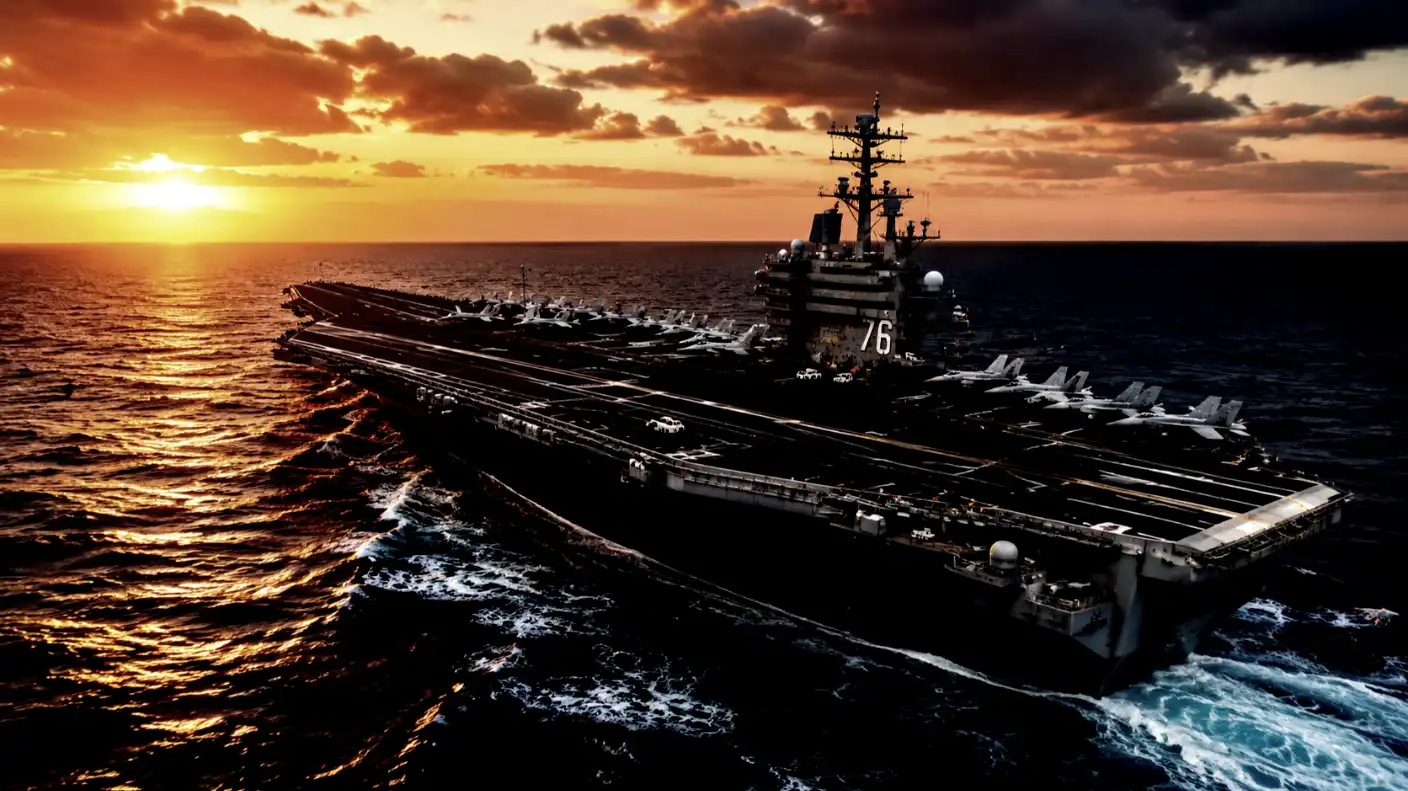
France sent its flagship aircraft carrier, the Charles de Gaulle, through the Suez Canal on Wednesday. The massive warship now sails into the Red Sea. Naval commanders set a direct course for the blockaded Strait of Hormuz. Paris hopes this deployment will restore safety to one of the most critical waterways on the planet.
The French government wants to speed up a joint initiative it launched with Britain in April. The two European powers convinced exactly 51 countries to join a massive effort to reopen the strategic shipping chokepoint. The Strait of Hormuz usually handles around 20 percent of the world’s daily crude oil supply. However, commercial maritime traffic basically stopped after the United States and Israel started a war against Iran on February 28.
The French defense ministry released a public statement explaining the carrier movement. Military leaders sent the Charles de Gaulle and 4 heavily armed escort ships to the southern Red Sea to put their plan into action. Commanders will evaluate the current threat level in the region. They also hope the visible military presence will reassure shipping companies that lose up to $5 million every day the blockade continues.
French President Emmanuel Macron first announced his maritime strategy back in March. He outlined a strictly defensive mission. He invited both European and non-European countries to provide warships to escort commercial freighters safely through the strait.
European nations strongly hesitate to join the actual shooting war launched by US President Donald Trump. Leaders want to avoid a broader military conflict in the Middle East. Despite this reluctance, Europe desperately needs the strait to reopen. The total blockade created a severe commercial and energy emergency for the entire continent.
Meanwhile, Trump shifted his own naval strategy earlier this week. The US president initially promised the American military would escort commercial vessels through the strait under a mission he called Project Freedom. Yet, on Tuesday night, Trump suddenly canceled the escorts. He told reporters he would pause the operation for a short time because his team made great progress in peace negotiations with Iranian diplomats.
A French presidency official discussed the carrier deployment on the condition of anonymity. The official explained that France wants to show the world it means business. By moving the Charles de Gaulle closer to the war zone, France sends a collective message. The French military is fully prepared to secure the Strait of Hormuz and possesses the firepower to do so.
France strictly focuses on restoring normal global shipping. The official noted that Paris holds a very simple goal today. French leaders want to completely separate the issue of maritime freedom from the complex political war. They believe cargo ships should move freely regardless of the fighting.
To achieve this, Paris proposed a specific compromise to both sides. French diplomats asked Iran to allow all commercial ships to pass through the passage without harassment. In return, Iran must promise to negotiate with the Americans on major issues. These issues include missile development, nuclear matters, and regional conflicts. If Iran agrees, the Americans must lift their naval blockade and guarantee they will negotiate in good faith.
The danger in the strait remains extremely high right now. On Tuesday evening, an attack struck a large container ship right in the middle of the waterway. The French shipping company CMA-CGM owns the vessel. The strike caused significant damage and injured 3 crew members on board.
A French government spokesperson quickly addressed the attack. The spokesperson pointed out that the ship flew a Maltese flag rather than a French flag at the time of the strike. Because of the flag, the government concluded the attackers did not intentionally target France. Still, the spokesperson warned shipping companies that the incident proves the waters remain incredibly dangerous for anyone trying to cross.















